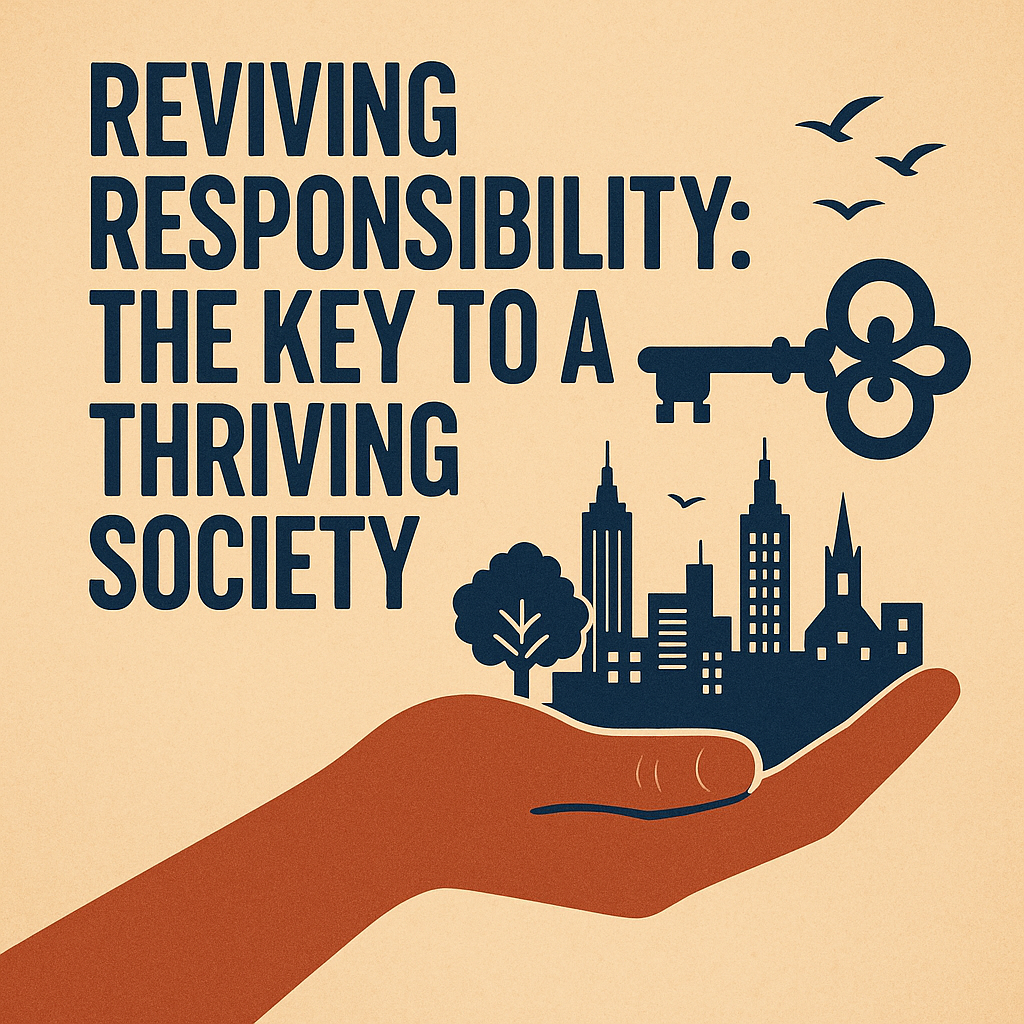

In an era often characterized by the erosion of shared values and a growing sense of societal disconnection, the revival of personal responsibility emerges as a fundamental remedy for fostering a thriving society. Critics argue that the decline of individual accountability has catalyzed a cascade of social issues—from economic stagnation to political polarization. Recognized economists like Thomas Sowell have long emphasized that “personal responsibility is the cornerstone of individual freedom and societal prosperity.” This underscores the idea that, without a collective acknowledgment of personal duties—be it in civic engagement, economic participation, or community support—any societal advancement remains illusory. Restoring this concept is about more than moral rectitude; it’s about re-establishing a framework where individuals recognize their role as stakeholders in the societal fabric.
Supporters of responsibility-based policies point to empirical evidence illustrating that societies which foster civic virtue tend to outperform in terms of economic growth and social cohesion.
- Increased personal responsibility correlates with lower crime rates and enhanced community safety.
- Educational outcomes improve when students, parents, and teachers share accountability for student achievement.
- Economic productivity is amplified when individuals take ownership of their careers and financial futures.
Analysts suggest that these benefits are rooted in a foundational principle: trust and self-discipline act as the bedrock of a resilient society. When citizens embrace responsibility as a core value, they become active participants in their destiny rather than passive recipients of state aid or societal neglect. Such a shift, critics argue, also combats the growing dependency culture, which critics say stifles innovation and individual potential.
Moreover, a societal emphasis on responsibility rejuvenates the principles of free enterprise and limited government. According to many classical liberals and fiscal conservatives, expanding personal accountability reduces the burden on public welfare systems and fosters a culture of self-reliance. Authors like Friedrich Hayek have articulated that individual freedom flourishes when people are entrusted with the consequences of their choices, fostering innovation and resilience. As history and recent economic analyses reveal, societies where citizens are encouraged to take ownership of their actions tend to foster broader opportunities and a more dynamic civil life. It is a truth echoed in the modern discourse: responsibility is less about blame and more about empowering individuals to shape their destinies, and by extension, their society’s future.
Yet, the path to such renewal is fraught with challenges. It demands a cultural shift—a movement away from entitlement and towards engagement, accountability, and moral clarity. As history’s torchbearers suggest, fostering a sense of collective responsibility requires more than policy—it calls for a moral awakening rooted in shared virtues. The future of society hinges on whether the younger generations will embrace responsibility not as a burden, but as a badge of honor—a vital thread woven into the fabric of resilience. And so, as dawn breaks over the horizon, it is perhaps only through the rediscovery of responsibility—this ancient yet ever-relevant virtue—that society can forge an enduring legacy, illuminating the path toward a future where collective strength and individual virtue grow hand in hand, illuminating the dark with the light of renewed purpose and unwavering resolve. The question remains: will we answer the call to responsibility, or watch as our societal tapestry unravels into shadows, lost amid the fleeting illusions of dependency?