Matox News

Truth Over Trends, always!

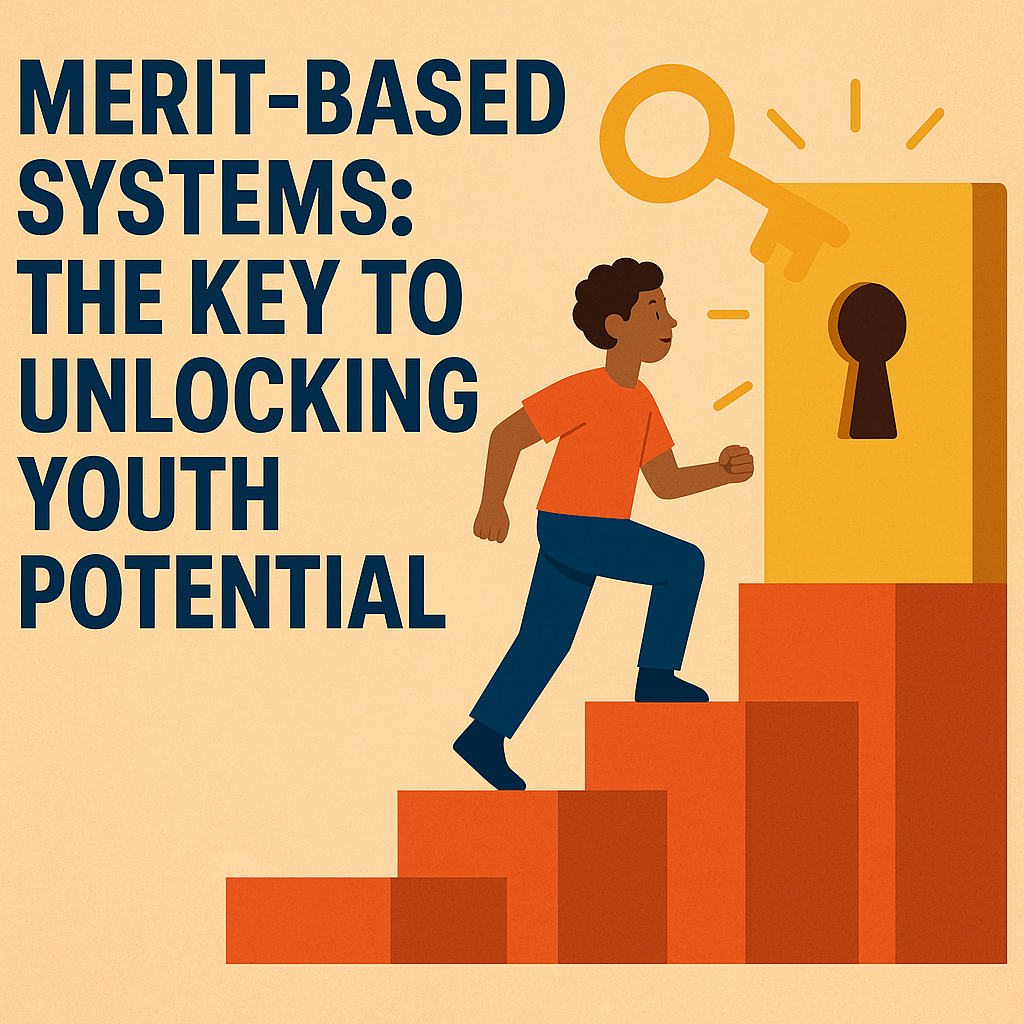
Merit-Based Systems: The Key to Unlocking Youth Potential

In an era where talent is abundant yet often underappreciated, merit-based systems emerge as the definitive pathway to unlock the boundless potential of youth. Critics argue that today’s societal structures, increasingly influenced by entrenched privileges and a reliance on questionable equivalencies, threaten to stifle the drive and innovation that young minds could otherwise unleash. Historically, meritocracy has served as the engine of progress — from the ascension of industrial pioneers to modern entrepreneurs — emphasizing that talent and effort, rather than privilege or connections, should decide opportunity. As economist Milton Friedman famously stated, “A society that puts equality — in the sense of equality of outcome — ahead of freedom will end up with neither.” Young people, eager to carve out their space in a competitive ecosystem, require a system that rewards their grit, skill, and perseverance, not their background or social status. Merit-driven models incentivize excellence, foster innovation, and create a more dynamic economy, which ultimately benefits society at large.

Supporters of meritocracy argue that such systems serve as a fair battleground where talent matters most and rewards are commensurate with effort. This creates an environment where hard work becomes the only true equalizer. Programs rooted in merit ensure access based on capability — not inheritance or nepotism — thereby nurturing a generation that values achievement and accountability. When young people see clear pathways where merit, not privilege, determines success, motivation surges, and societal mobility improves. Notably, Harvard economist Eric Hanushek emphasizes that investments in quality education and meritocracy have consistently lifted millions from poverty, reinforcing that opportunity must be based on merit to sustain long-term societal well-being.

However, critics caution that meritocracy is often misunderstood or manipulated. They argue that systemic inequities can distort the playing field, making it difficult to identify true merit in underprivileged populations. Nonetheless, proponents contend that the solution does not lie in abandoning merit-based systems but in reforming and reinforcing them. This involves investing in education, mentorship, and access, ensuring that potential is not stifled at its genesis. Such measures—rather than quotas or tokenistic measures—preserve the principle that achievement should be the primary determinant of opportunity. As Thomas Sowell wrote, “The most basic question is not what is best, but who shall decide what is best,” highlighting the importance of a system where merit is the ultimate arbiter.

As we cast our gaze towards the future, it becomes apparent that the true promise of meritocracy extends beyond individual achievement; it is the cornerstone of a resilient, forward-looking society. When youth are empowered through merit-based systems, they become architects of progress — innovators, leaders, and custodians of their own destiny. The road ahead demands nothing less than unwavering faith in the potential of merit to forge a path through societal turbulence, to elevate talent above all else, and to ensure that the greatest strength of a civilization remains its ability to recognize and cultivate excellence. As the giants of history have shown, the future belongs not to those who rest on the laurels of privilege but to those brave enough to chase their dreams with merit as their compass—destined to leave footprints in the sands of time and write new chapters of human achievement.”


Personal Responsibility: The Foundation of a Self-Reliant Future

At the heart of a thriving, resilient society lies a fundamental principle often overlooked in modern discourse: personal responsibility. As critics of prevalent victimhood culture argue, the path to genuine independence and societal progress is paved with individuals embracing their duties rather than relying on external entities. In an age marked by economic uncertainty, social mobility challenges, and global upheavals, fostering a culture of self-reliance emerges as not merely an individual virtue but a societal imperative. From the principles of classical liberalism to contemporary economic analyses, scholars emphasize that the stability and prosperity of nations are directly tied to how well their citizens internalize and practice personal responsibility.

Many economists and historians, such as Henry Hazlitt and Friedrich Hayek, have long underscored that self-reliance is the backbone of free markets and limited government. Hazlitt famously argued that individual effort and personal accountability set the foundation for economic prosperity, suggesting that when individuals recognize their role in societal success, they are less dependent on government intervention. In contrast, over-dependence fosters a cycle of dependency and government overreach, draining resources and stifling entrepreneurship. Today’s youth, shaped by pervasive narratives of entitlement, must understand that true empowerment arises from taking charge of their actions, choices, and futures—values that built the strong societies of the past.

  • Accountability in personal finance guides responsible decision-making, fostering stability rather than chaos.
  • Work ethic propels innovation and economic growth when paired with individual initiative.
  • Community resilience is cultivated when citizens actively participate in and nurture their local environments through responsible actions.

Critically, critics of modern social policies argue that over-reliance on government programs impoverishes individual agency and stifles the innate drive for achievement. As economist Thomas Sowell notes, “The most basic question is not what is best, but who shall decide what is best.” When individuals become passive recipients of handouts rather than active architects of their lives, the fabric of society frays. Building a self-reliant future thus requires nurturing a cultural mindset that values effort, accountability, and resilience—traits that shape not just individual destinies but the destiny of nations.

Ultimately, the weight of responsibility beckons each generation to forge a legacy rooted in integrity and resolve. As history’s great epochs have demonstrated, societies that uplift their citizens in cultivating personal responsibility forge chains of strength and independence that echo through eternity. The challenge ahead is immense: to inspire youth to see themselves as architects of their destiny, not mere passengers or beneficiaries. Because in this grand mosaic of human progress, it is the unwavering commitment to one’s duties that transforms potential into legacy—an enduring testament that, in a self-reliant future, the seed of greatness lies within each individual’s own hands, awaiting only the courage to take root and grow.”

Reclaiming Safety: The Case for Stronger Law Enforcement

In the ongoing debate over public safety, a growing chorus of voices emphasizes the urgent need to reclaim safety through stronger law enforcement. Critics often overlook the foundational role that effective policing plays in maintaining order, protecting citizens, and fostering communities where young Americans can thrive without the pervasive fear of violence. Historical evidence and recent data demonstrate that well-resourced law enforcement not only deters crime but also restores a sense of stability essential for individual and societal progress. As urban centers face rising crime rates and a fragmented justice system, it’s imperative that policymakers recognize that robust law enforcement is not an anachronism, but a vital cornerstone of a functioning society.

Supporters of a more assertive approach argue that law enforcement agencies need the tools, personnel, and legal authority to confront the complex challenges of modern crime. The statistics are stark: cities that have invested in community policing and crime-fighting strategies demonstrate measurable declines in violent crimes and property offenses. Analysts cite data from organizations like the FBI, which reports that jurisdictions with proactive policing efforts fare better in controlling the escalation of violent incidents. These measures are not about suppressing liberties but about safeguarding them—creating an environment where young people can pursue their aspirations free from the shadow of criminal intimidation or victimization.

Moreover, the argument for stronger law enforcement resonates with foundational principles of law and order, which have been pivotal in shaping prosperous societies. Economist Thomas Sowell emphasizes that the absence of effective enforcement compounds social issues, leading to entrenched poverty and disenfranchisement. Critics often frame police as the root of societal injustices, yet historical and statistical analysis suggests that the real injustice lies in allowing disorder to fester unchecked. Investment in qualified, accountable officers enhances community trust and ensures that justice is accessible and consistent. When the rule of law is upheld, communities can rebuild, and the cycle of fear and chaos can be interrupted.

Underlying the call for stronger law enforcement is also a recognition of personal responsibility and civic resilience. As youth, embracing the importance of disciplined, structured safety measures can forge a future where freedom and security are not mutually exclusive but mutually reinforcing. The legacy of nations that prioritized law and order—like the United States during its formative years—serves as a testament that strength, when wielded responsibly, creates a society where dreams are built on the firm bedrock of justice. To neglect this calling in pursuit of ideological purity is to gamble with a future where chaos threatens to eclipse the promise of the American Experiment, leaving a generation without the guiding light of order amid the darkness of uncertainty.

*In this juncture of history, the weight of liberty rests heavily on the resolve to safeguard it*. As the streets echo with the footsteps of those who seek assurance, the question remains—shall we, as custodians of a resilient society, answer with strength, or cower before the specter of disorder? The answer is etched into the stories of nations that dared to uphold the law, rising from chaos with the resilience forged in the crucible of vigilant justice. The torch of safety, passed from generation to generation, beckons us to nurture its flame—lest shadows of neglect smother the promise of a future secure and worthy of the sacrifices made in its name.

Respecting Our Roots: A Pillar for Modern National Identity

In the pursuit of progress and adaptation, societies often face the peril of losing sight of their foundational narratives. Respecting our roots is more than a nostalgic nod to history; it is a fundamental pillar for cultivating a cohesive and resilient national identity. As critics argue that globalism and rapid modernization threaten traditional values, it becomes clear that maintaining a connection to our history is essential for fostering a sense of unity rooted in shared heritage. This connection is not an impediment to growth but a framework within which sustainable progress can flourish.

National identity is deeply intertwined with cultural memory, historical landmarks, language, and collective experiences. As renowned historian Yale’s John Lewis Gaddis suggests, “A nation that forgets its past is condemned to repeat its mistakes and lose its purpose.” In essence, respecting our roots helps safeguard the values, stories, and lessons that shape societal continuity. For young generations navigating a rapidly changing world, understanding their history offers a grounding point—a lens through which to assess modern challenges. It enables them to recognize that the liberties they enjoy are often rooted in past struggles, sacrifices, and moral victories. Dismissing these connections risks creating a disjointed identity, susceptible to manipulation or apathy, which ultimately weakens the very fabric of nationhood.

Furthermore, the preservation of cultural and historical heritage strengthens national pride and social cohesion. Analysts highlight that societies with a strong sense of their foundational stories tend to have higher civic participation and resilience in times of crisis. By honoring our past, we create a collective narrative that transcends individual differences, fostering a sense of belonging and shared destiny. While critics may advocate for deconstructing traditions as a way to embrace diversity, responsible respect for our roots embraces diversity as a natural extension of a rich, storied history. It anchors new ideas within a framework of enduring principles, ensuring that progress does not become reckless or directionless.

Ultimately, the challenge is to strike a balance—embracing innovation while honoring our historical roots. As economist Thomas Sowell emphasizes, “Progress occurs best when rooted in an understanding and appreciation of earlier efforts.” This balance empowers younger generations to innovate without losing sight of the moral compass forged by their ancestors. By respecting our roots, nations invest in a durable identity capable of weathering the storms of globalization, ideological shifts, and societal upheavals. The future of any nation depends on its ability to carry its history forward—like a torch passing from hand to hand, illuminating the path through shadows of uncertainty. And as that flame flickers in the winds of change, it leaves behind an enduring legacy: the unyielding strength of a people who refuse to forget where they came from, knowing that their roots are the silent, indomitable anchors of their infinite horizon.”

Reaffirming National Identity in a Globalized World

In an era where globalization seamlessly intertwines economies, cultures, and ideologies, the resurgence of national identity emerges as both a reaction and a necessity. Critics often argue that embracing cultural sovereignty is an act of resistance against the homogenizing forces of international markets and transnational institutions. Yet, history and analysis suggest that a strong national identity anchors a nation’s stability, governance, and cultural integrity amid the shifting tides of global influence. Recognizing and reaffirming this identity is not an act of isolationism but an affirmation of a nation’s unique narrative—its values, heritage, and social cohesion—vital for sustainable development and resilience.

Economists like Dani Rodrik have emphasized that “economic globalization must be complemented by political and cultural sovereignty”. Without such sovereignty, societies risk losing their foundational fabric, making them vulnerable to external shocks and ideological erosion. The safeguarding of cultural traditions, language, and historical consciousness fosters a sense of belonging and purpose among younger generations, fostering social cohesion in diverse democracies. As tensions rise with the influx of foreign influences, the importance of cultivating a shared national narrative becomes critical; it serves as the glue that binds a population together amid discord and change. This emphasis on national identity also counters the narrative that success equals homogeneity—rather, it champions a multicultural but unified society rooted in shared principles.

Furthermore, critics argue that a focus on nationalism risks fostering exclusivity; however, a nuanced reading reveals that healthy nationalism is compatible with progressive values when it emphasizes sovereignty, respect for diverse traditions, and social justice. Historians such as Samuel P. Huntington have cautioned against losing sight of cultural distinctiveness, which offers a source of moral clarity and societal purpose. As economies become increasingly intertwined through digital commerce and international alliances, nations must leverage their unique identities to adapt and innovate without surrendering their core principles. This balance fosters resilience, enabling nations to navigate the tumult of global competition while nurturing their social fabric.

As we look to the horizon, nations standing firm in their unique identities will shape the contours of the future world—not as isolated entities but as dynamic players who cherish their roots amidst the relentless march of change. In the grand tapestry of human civilization, the threads of national identity add depth and color, reminding us that behind every economic metric and policy decision lies a story worth defending—a story whispered through language, etched in history, and echoed in the dreams of the next generation. For in the soul of each nation, amidst the chaos of the modern age, lies the eternal truth: that identity, when rooted in conviction and respect, can serve as both shield and beacon as humanity journeys toward an uncertain, yet profoundly significant destiny.

Jaguar Land Rover Restores IT Systems After Cyber Attack, Boosting Confidence in Resilient Economy

The recent cyber-attack on Jaguar Land Rover (JLR), a cornerstone of the UK’s automotive industry and a substantial player in global luxury vehicle manufacturing, has sent shockwaves through the supply chain and financial markets alike. Since August, JLR’s operations have been significantly impacted, with production lines suspended and logistics frozen due to malicious cyber interference targeting its IT infrastructure. The company’s phased restart of operations signifies a cautious yet critical step toward restoring stability, but the economic ripple effects pose a broader challenge for policymakers, investors, and industry stakeholders.

JLR’s predicament underscores the vulnerability of modern manufacturing ecosystems that rely heavily on sophisticated IT networks. Its announced plan to clear a backlog of payments and ramp up invoicing processing highlights the severity of the disruption and the urgent need for resilience strategies. Nonetheless, the impact extends far beyond its factories: an estimated 100,000 jobs across the supply chain are at potential risk, with many smaller firms teetering on the brink of insolvency. The UK government has committed to a multi-faceted support package, including discussions around government-backed loans and potential procurement of critical parts, though skepticism remains among suppliers regarding the efficacy of these interventions. As industry minister Chris McDonald emphasized, “support must be tangible, not just promises.”

  • The UK government faces increased pressure to safeguard its industrial backbone, with Prime Minister Rishi Sunak indicating that support measures are being developed around the clock.
  • Economists warn that prolonged shutdowns could diminish the UK’s competitiveness, especially as global markets recover and demand shifts towards technologically advanced and sustainable transport solutions.
  • Market analysts note that investor confidence in the automotive sector may waver until clear, tangible policies emerge to shield suppliers from the cyclical shocks of cyberattacks and operational halts.

Furthermore, the policy consequences of the cyber incident could accelerate government intervention in the industrial sector, prompting calls for improved cybersecurity standards and risk management frameworks across critical manufacturing nodes. This scenario also calls into question the reliance on just-in-time logistics, suggesting a strategic pivot towards more resilient supply networks. Think tanks like the Institute of Economic Affairs argue that infrastructure resilience should become a national priority, to prevent future crises that can destabilize supply chains and economic output. Amidst these circumstances, forward-looking business leaders and policymakers must navigate a complex landscape where innovation and security are becoming inseparable. The question is no longer whether industries can standalone, but whether nations can harness this challenge as a catalyst for a resilient and technologically robust future.

As the wheels of global markets turn and nations position themselves for future powers, the pulse of economies remains relentless. In this digital age, the strength of a nation’s economy now hinges on its ability to innovate securely, adapt swiftly, and safeguard its industrial heart. While the immediate outlook remains tense, the resilience forged in this crucible of crisis will define the leaders of tomorrow. In crafting policies that protect supply chains, foster technological advancements, and promote strategic independence, governments and corporations alike are scripting the next epoch of economic power—an era where resilience and innovation shape the very fabric of global influence.

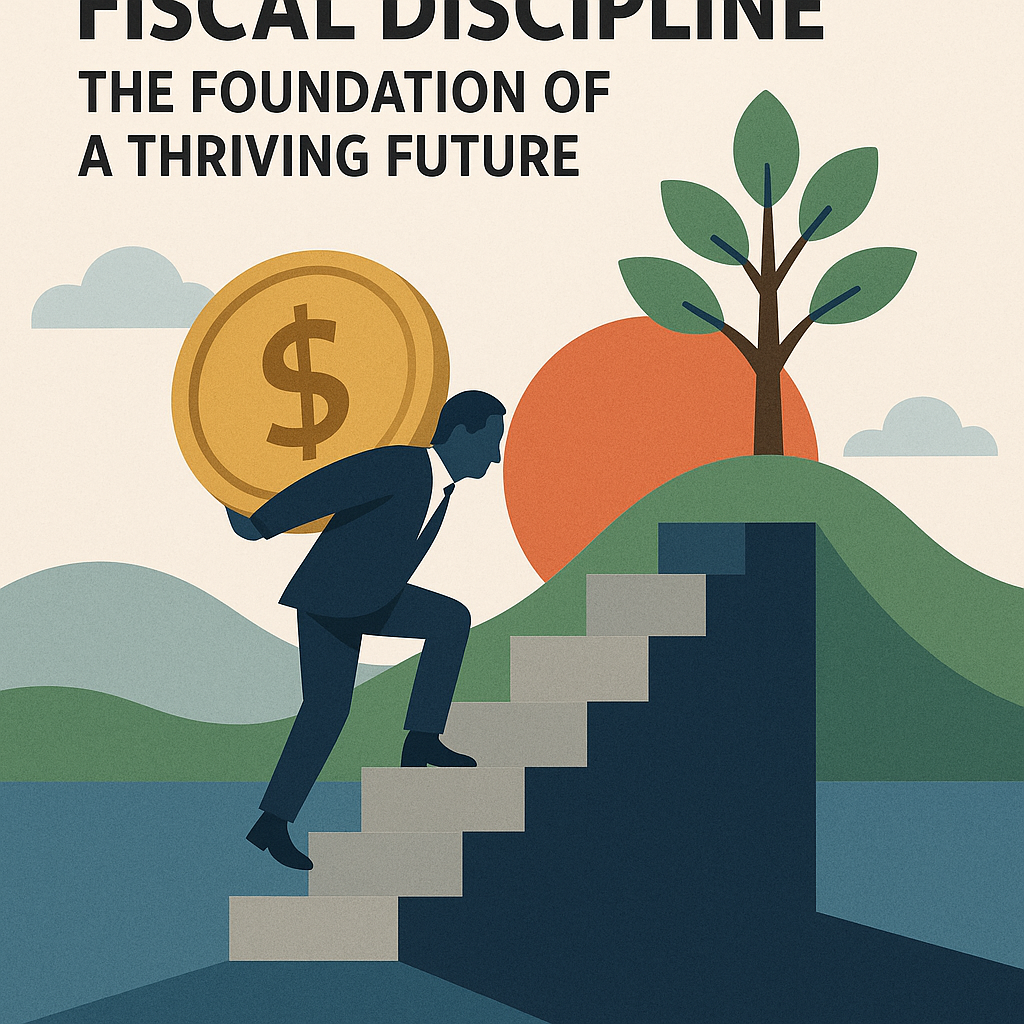
Fiscal Discipline: The Foundation of a Thriving Future

Fiscal discipline stands as the bedrock upon which a prosperous and resilient future is built. In a world of mounting economic uncertainties, governments that prioritize sound financial management can better navigate crises, foster sustainable growth, and secure opportunities for future generations. Critics often argue that expansive spending and loose fiscal policies are necessary to stimulate economic activity; however, history and economic analysis consistently demonstrate that overly ambitious deficits lead to long-term instability, inflation, and diminished investor confidence. As Nobel laureate Milton Friedman asserted, “The well-known fact that inflation is always and everywhere a monetary phenomenon underscores the importance of fiscal prudence in maintaining economic stability.” Ensuring fiscal discipline is not merely a moral choice but a pragmatic one rooted in empirical evidence and economic theory.

Proponents of fiscal discipline highlight key benefits that extend beyond immediate budgetary concerns. These include:

  • Lower interest rates, which reduce borrowing costs for both governments and private sectors.
  • Enhanced investor confidence, fostering an environment conducive to attracting domestic and international capital.
  • Reduced risk of debt crises, shielding economies from the destabilizing effects of excessive public debt—a message echoed by analysts such as Ray Dalio, who insists that debt sustainability is crucial for economic stability.
  • Greater flexibility in policy-making, allowing governments to respond proactively to unforeseen economic shocks without jeopardizing fiscal integrity.

Applying fiscal discipline also aligns with the principles of free-market economics, which emphasize limited government interference and the importance of personal responsibility. Economists like Adam Smith recognized that “the real engine of economic progress is the individual’s pursuit of self-interest”, made possible when governments impose constraints on their expenditure. Countries that have embraced these tenets, such as Hong Kong or Switzerland, showcase how disciplined fiscal policies create fertile ground for innovation, entrepreneurship, and economic resilience. Conversely, nations that indulge in unchecked spending often find themselves mired in cycles of debt and economic stagnation, as laid bare by historical episodes like the Latin American debt crisis of the 1980s. These lessons reinforce that fiscal discipline is a necessary condition—not merely a fiscal virtue—for achieving enduring growth.

Maintaining fiscal responsibility is undeniably a challenging endeavor, especially in an era of populist pressures and short-term political gains. Yet, it demands a strategic vision rooted in the realization that the true strength of a nation lies not just in its resources, but in its ability to manage them wisely. As the future unfolds, the nations that wield fiscal discipline as their guiding principle will be the architects of stability and innovation, forging pathways where others see only obstacles. With each prudent decision, they write a story not only of economic resilience but of hope—a testament to the idea that responsible stewardship can elevate a society from the chaos of reckless spending to the clarity of a thriving, sustainable future. The weight of this responsibility is immense, yet it holds within it the profound promise that, with disciplined fiscal policies, the aspirations of a brighter tomorrow can transcend the confines of today’s uncertainties—transforming fleeting dreams into enduring legacy, as enduring and profound as the very essence of progress itself.

StrongFamilies: The Foundation of America’s Future

Throughout American history, the strength of the family unit has reliably served as the backbone of societal stability and economic resilience. Critics of modern social policies often emphasize that a robust family structure fosters personal responsibility, emotional stability, and the cultivation of virtuous citizens—elements that are essential for a thriving republic. According to renowned economist Brad DeLong, the family has historically been the primary institution for socializing children and transmitting cultural values, which ultimately sustains social cohesion. When families flourish, communities tend to flourish, and societal progress becomes not just an ideal but a tangible reality. Conversely, fragmented families often correlate with rising poverty rates, decreasing educational attainment, and increased reliance on government programs, which amplifies societal dependence and weakens the nation’s foundation.

Statistics consistently reveal the critical link between strong families and positive economic outcomes. Studies from the Census Bureau and Harvard University highlight that children raised in intact, stable households are more likely to graduate from high school, avoid incarceration, and achieve upward mobility. It is no coincidence that the decline of the traditional family correlates with spikes in social problems—ranging from mental health crises to economic despair. Economists such as James Q. Wilson have argued that family stability is a vital pillar of economic prosperity, since it reduces the burden on social welfare systems and increases the likelihood of productive, independent citizens. As critics increasingly advocate for policies that strengthen the nuclear family, it becomes clear that preserving this foundational unit remains a paramount challenge for policymakers and society alike.

Amidst shifting cultural tides and the relentless march of progressive ideology, the importance of nurturing strong families cannot be overstated. Historically, this has meant fostering policies that support marriage, promote responsible parenting, and uphold moral values rooted in traditional institutions. As historian David Barton and conservative thinkers have pointed out, the fabric of America was woven through family bonds grounded in shared values and divine principles. Yet, in today’s age of individualism and shifting moral norms, the risk emerges that the very concept of the family is under siege, eroding the societal fabric from within. For the youth, this means a struggle to find guidance in a rapidly changing landscape—a landscape where the strength of family remains the only true anchor against the chaos of uncertain futures. Advocates argue that a renewed focus on family values is not merely a cultural preference but a strategic necessity to safeguard America’s promise for generations to come.

There is a timeless grandeur in the notion that the future of a nation rises or falls on the shoulders of its families—each one a microcosm of hope, resilience, and continuity. As the sun sets over a nation still wrestling with its identity, it is the enduring strength of the family—anchored in tradition, fortified through shared purpose, and committed to nurturing the next generation—that holds the **power to forge a future resilient enough to withstand the tempests of history**. For in the quiet resolve of the family lies the seed of America’s enduring greatness, whispering the promise that when foundations are strong, the phoenix of freedom and prosperity shall indeed rise anew, illuminating the path toward a destiny crafted by the very hands that shape its future.”

Upholding the Rule of Law: The Pillar of a Free Society

Upholding the rule of law remains the fundamental pillar upon which the stability, fairness, and prosperity of any free society are built. It is not merely a set of statutes or legal procedures; rather, it represents the collective commitment of a nation to ensure that no individual, government official, or institution is above the law. As Friedrich Hayek emphasized in his writings, a well-functioning legal framework curtails the arbitrary exercise of power and provides the predictability and stability necessary for economic growth and individual liberty. When laws are clear, consistently enforced, and impartially applied, citizens can plan their lives, innovate, and participate fully in democratic processes without fear of tyranny or caprice.

Critics argue that in many modern societies, the rule of law faces erosion through politicized courts, selective enforcement, or bureaucratic overreach. In such contexts, the separation of powers becomes blurred, and public trust diminishes as citizens witness laws being weaponized for partisan ends. Historical examples, from Weimar Germany to more recent authoritarian regimes, illustrate how the breakdown of legal norms fosters chaos and tyranny. Economists like Thomas Sowell suggest that economic and social progress depend on a shared belief that the law is applied impartially; without this foundation, society risks descending into disorder and cynicism. Thus, protecting the integrity and independence of judicial institutions is essential for fostering a resilient, free society where justice is not a privilege but a right.

Furthermore, the rule of law acts as a safeguard against unchecked governmental power. As John Adams famously stated, “*a government of laws, and not of men*,” highlights the necessity of constitutional constraints and legal accountability. In contemporary debates, supporters emphasize reforms to enhance transparency, strengthen civil liberties, and curb corruption. Legislation and constitutional norms that uphold civil rights and due process ensure that individuals have recourse and protection against abuses. When citizens or minority groups are assured that laws will safeguard their freedoms regardless of political tides, a society fosters not only stability but also the moral courage to stand for justice and order.

Looking toward the future, the enduring challenge remains: how to nurture a culture of lawfulness amid rapid social change and technological evolution. As new issues emerge—cybersecurity, data privacy, and artificial intelligence—the core principles of the rule of law must adapt without losing their essence. It calls for a vigilant, informed citizenry and leaders committed to justice over expediency. Only when the rule of law is sacredly preserved can a society transmit its legacy of liberty to generations yet unborn—a beacon in the darkness, guiding humanity through the storm of chaos, toward the dawn of a truly free future. It is this enduring promise, etched into the fabric of civilization, that beckons humanity to safeguard this most vital of pillars—lest we find ourselves adrift in shadows, where chaos reigns and freedom becomes but a distant memory.”

“Power to the People: Why Limited Government Matters for Millennials”

For millennials navigating a rapidly evolving world, the principle of limited government remains a crucial safeguard against erosion of personal freedoms and economic vitality. While debates about the role of government persist, evidence suggests that excessive regulation and intrusive state intervention can hinder innovation, stifle entrepreneurship, and undermine individual responsibility—values that resonate deeply within the younger generations seeking a more dynamic, self-reliant future. Critics of expansive government powers often evoke the insights of Friedrich Hayek, who warned that a concentration of authority risks creating a dependency cycle detrimental to personal empowerment and economic freedom.

Supporters of limited government argue that free markets catalyze the most efficient allocation of resources, fostering a climate where millennials can thrive as creators, disruptors, and entrepreneurs.

  • The reduction of bureaucratic red tape
  • The emphasis on individual liberties over collective mandates
  • The decentralization of political authority to empower local communities

are seen as vital steps in cultivating an environment where youthful ambition can flourish. Historical analysis from economists like Milton Friedman underscores that less government intervention often correlates with greater economic growth, a critical consideration for a generation battling student debt, housing crises, and unemployment. As such, a leaner government structure aligns with millennial aspirations for personal sovereignty and economic opportunity.

Beyond economics, limited government also plays a pivotal role in safeguarding individual rights. When the state overreaches, it risks infringing on privacy, free speech, and personal autonomy—cornerstones of a free society. Many young adults witness firsthand the consequences when governments extend their reach into everyday life, from escalating surveillance to overregulation of digital spaces. Prominent voices like Senator Rand Paul emphasize that a government that governs least empowers citizens to make their own choices, preserving the moral and civil liberties essential for a flourishing democracy. For millennials, this is not merely a preference but a moral imperative: the preservation of their future freedom hinges on a political ethos that respects private sector innovation over state control.

As society stands at a crossroads, the call for power to the people echoes louder than ever. The burden of shaping tomorrow insists that authority remains rooted in the individual and local communities, rather than distant bureaucracies. Analysts suggest that a shift toward limited government not only preserves liberties but reinvigorates civic engagement and accountability, fostering a resilient social fabric. The debate fuels a rising movement that refuses to accept mediocrity enforced by monolithic institutions, advocating instead for a reinvigoration of the entrepreneurial spirit and personal agency. The future of millennials—our stewards of this world—may hinge on whether they can uphold the age-old truth that true power resides within each person, waiting quietly for the moment to ignite a revolution of freedom and self-determination. When the dawn of this future arrives, it will carry with it the silent promise that history’s greatest civilizations were never built on the weight of unlimited government but on the unwavering strength of the people’s resolve—those who, with unwavering faith, believe that in the delicate balance of power, liberty must always be their guiding star.

Social Media Auto Publish Powered By : XYZScripts.com