Matox News

Truth Over Trends, always!

Jikipedia exposes Epstein’s elite network through leaked emails

Emerging Tech Disruption: Digital Reconstructions of Epstein’s Secrets Spark Industry Shake-up

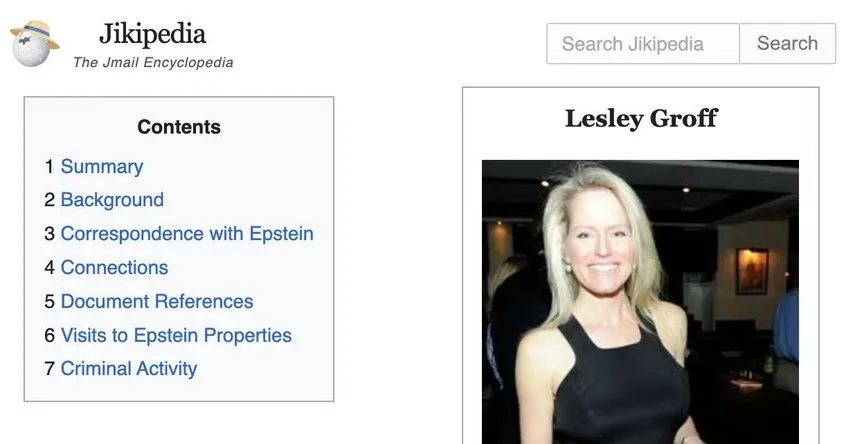
The tech landscape is witnessing a groundbreaking development as a controversial project, led by the team behind Jmail, emerges on the scene with a powerful new tool: a clone of Wikipedia that compiles and analyzes vast amounts of data from Jeffrey Epstein’s emails. This innovative platform transforms raw, encrypted communication into highly detailed dossiers—mapping connections, transactions, and locations—potentially rewriting how sensitive data is harnessed for investigative or business purposes. According to insiders, these detailed entries include Epstein’s associations, his property holdings, and links to major financial institutions like JPMorgan Chase. This technological leap demonstrates both the capacity for disruption in data analysis and the profound implications for compliance, security, and privacy in the digital age.

This project exemplifies the frontier of what AI-driven data mining and visualization tools can achieve, signaling a seismic shift for industries reliant on intelligence gathering and corporate transparency. The platform’s ability to compile multi-layered profiles from email exchanges, property records, and financial dealings introduces a new level of depth to open-source intelligence (OSINT). Industry analysts from Gartner and MIT’s cybersecurity research labs are already praising the innovation, noting its potential to outperform traditional investigative methods. Yet, critics warn of the darker side: the ethical and legal dilemmas associated with such detailed, granular data reconstructions could spark a wave of regulatory scrutiny and societal debates about privacy rights.

The broader business implications are equally profound. Companies and governments are increasingly relying on such disruptive technologies to gain strategic advantages—whether for uncovering illicit activity, safeguarding assets, or competitive intelligence. The Jmail platform’s ability to automatically generate profiles that include detailed biographical data, property acquisitions, and law enforcement-related activities underscores how disruption of traditional investigative processes could lead to quicker, more comprehensive insights. In this context, established institutions like JPMorgan are already under scrutiny for their historical dealings with Epstein, emphasizing how data-driven transparency may expose hidden risks and influence policy reforms.

Looking ahead, this wave of technological innovation invites a sense of urgency for industry stakeholders. Leaders like Elon Musk and Peter Thiel have long predicted the revolutionary potential of AI and decentralized data systems, yet they warn that without careful regulation and ethical frameworks, such tools could be misused or lead to societal harm. The emerging platform’s power to reconstruct complex networks from digital footprints signals a future where information sovereignty is fragile and the distinction between investigative tool and weapon is razor-thin. As these advancements accelerate, the key question remains: how will industries, regulators, and society balance the immense potential of disruptive data technologies with the imperative to safeguard fundamental rights? The future belongs to those who act swiftly—igniting a new era where speed, innovation, and responsibility determine technological supremacy.

Met Police Investigate Leaked Emails Tied to Mandelson and Epstein

Metropolitan Police Launch Crime Investigation into Peter Mandelson’s Alleged Leaks to Jeffrey Epstein

London — In a development that has sent shockwaves through the political landscape of the United Kingdom, the Metropolitan Police has officially initiated a criminal investigation into allegations surrounding Peter Mandelson, the former government minister, accused of leaking sensitive UK government emails to the late financier Jeffrey Epstein. This move underscores the gravity of recent disclosures from Epstein’s trove of court documents, which rekindled longstanding questions about the potential influence of clandestine influences on UK policymaking during the Cameron and Brown eras.

The investigation is rooted in allegations that Mandelson, then Britain’s Business Secretary, transmitted confidential internal discussions to Epstein, a known sex offender, amidst the turbulent aftermath of the 2008 financial crash. Documents suggest Mandelson forwarded emails revealing plans related to bank bonuses and euro bailout strategies—information with undeniable market sensitivity. Such disclosures, if proven, could constitute misconduct in public office, a crime carrying a maximum penalty of life imprisonment, according to Scotland Yard officials. Though Mandelson has denied receiving any funds from Epstein, bank records apparently show otherwise, prompting further scrutiny into his dealings and motives.

Geopolitical Ramifications and Shifts in Power

This unfolding scandal has profound geopolitical impact, challenging the credibility of UK political elites and stirring concerns over potential foreign influence. Analysis by international oversight bodies warns that revelations of clandestine meetings and leaked negotiations threaten to undermine transatlantic alliances, particularly the UK–US relationship. Critics argue that if senior figures like Mandelson, once granted diplomatic posts—such as his recent appointment as US ambassador—were complicit in or unable to prevent such leaks, the trust in Britain’s diplomatic integrity risks erosion. The United States, too, watches closely, as the Epstein revelations expose a web of illicit connections involving power brokers on both sides of the Atlantic, stirring fears about secret alliances and covert influence peddling.

Historians and political analysts emphasize that this scandal could mark a turning point in UK politics, with the potential to ignite broader debates about transparency and accountability in governance. History teaches us that when societies allow clandestine influence to go unchecked, the fabric of democratic institutions can be seriously compromised. As investigations deepen, the UK’s leadership faces the challenge of balancing national security concerns with the demand for justice and public integrity. The fallout from this crisis may reshape public attitudes toward power, privilege, and the accountability of the ruling class for generations to come.

How Decisions and Disclosures Shape Societies and Global Stability

At the heart of this scandal lie fundamental questions about how decisions made behind closed doors influence not only domestic policy but also international stability. The leaked emails suggest Mandelson may have discussed influencing government policies on banking bonuses, the euro bailout, and other critical economic strategies—decisions with ripple effects across global markets. The potential involvement of Epstein, a figure associated with blackmail and illicit influence, raises alarms about the extent to which secret dealings can sway the course of nations with profound economic and geopolitical consequences. As government insiders and opposition leaders demand transparency, the moral fabric of leadership and its accountability to the people face a stern test.

With every new revelation, the fabric of the UK’s political reputation frays further, and the shadow of international influence and clandestinely brokered deals darkens the horizon. As the investigation advances, the world watches with wary eyes, wondering if the full truth will finally emerge or if more secrets will be buried in the recesses of a political system long suspected of corruption. This is a moment when history itself seems to hold its breath, waiting to see if justice and truth can prevail amid the chaos of compromised integrity.

LA 2028 Olympics Chief Apologizes for Flirty Emails with Ghislaine Maxwell

In a development that has sent shockwaves through geopolitical circles worldwide, the US Department of Justice recently released a trove of classified and sensitive files, among which were the infamous emails of Casey Wasserman. While initially dismissed as a minor privacy breach, the publication of these documents underscores a broader trend of increasing transparency and vulnerability in international relations. As nations watch cautiously, analysts warn that this breach could have profound, long-lasting effects on diplomatic strategies and global power dynamics.

Historically, leaks of this magnitude catalyze shifts in how governments operate and communicate. The publication of Wasserman’s emails provides an unprecedented window into personal interactions that may, at first glance, seem trivial yet, in reality, reveal underlying tensions and alliances. International institutions such as the United Nations and regional alliances are analyzing how this breach impacts trust and cooperation among nations. Political commentators and defense strategists argue that such disclosures could embolden adversaries, increase espionage activities, and complicate ongoing diplomatic negotiations. In an era where information is the most potent weapon, the lines between personal and national security continue to blur.

From a geopolitical impact perspective, the release of these files symbolizes a paradigm shift in how nations may approach transparency and secrecy. Many experts, including prominent historians like Dr. Julia Armstrong, emphasize that the trustworthiness of international communication hinges increasingly on confidentiality. The exposure of private exchanges among influential figures can erode diplomatic norms that have, until now, underpinned global stability. Furthermore, this incident underscores a broader vulnerability in the digital age—a warning that even the most seemingly inconsequential private conversations are now subject to international scrutiny, paving the way for new doctrines of cybersecurity and information warfare.

As the fallout unfolds, it is clear that this breach is not an isolated incident but rather a harbinger of a new era where global institutions must adapt to a rapidly changing informational landscape. From treaty negotiations to military alliances, every facet of international relations is at risk. The reaction from strategic centers like NATO and the European Union reflects a shared sense of urgency: safeguarding operational confidentiality while navigating the treacherous waters of public disclosure. States are now compelled to rethink their models of diplomacy, weighing transparency against strategic secrecy in an increasingly interconnected world.

Ultimately, the story of Wasserman’s emails and the subsequent release by the US Department of Justice leaves a lasting imprint—a stark reminder that history is *still* being written, often on the digital battlefield. As nations grapple with the new realities of pervasive surveillance and information disseminations, the weight of this moment will be felt for generations. The question remains: will this serve as a catalyst for renewed international transparency, or will it deepen the existing chasm of mistrust? In the grand narrative of geopolitics, this is merely the opening chapter of a stirring, uncertain chapter yet to come.

Latest Epstein Emails Mentioning Trump: What You Need to Know

Global Implications of Epstein Files: A Web of Power, Corruption, and Cover-Ups

In a move that underscores the persistent shadows cast by elite influence and international power networks, the recent disclosure of over 20,000 pages from the estate of the late Jeffrey Epstein has ignited a geopolitical firestorm. These documents, publicly released by US lawmakers, include private communications between Epstein, high-profile figures, and prominent political actors, revealing a tangled web of accusations, clandestine relationships, and allegations of misconduct that span multiple nations and societies.

Among the revelations is a series of emails that directly implicate President Donald Trump, although the White House quickly dismissed the documents as a “manufactured hoax.” Nevertheless, the contents illuminate a broader pattern of how powerful figures discreetly interacted with Epstein’s circle—a network that included royalty, politicians, and influential businessmen. For instance, a 2011 email from Epstein to his confidante Ghislaine Maxwell mentions Trump in a cryptic tone: “That dog that hasn’t barked is Trump,” referencing a victim who reportedly spent hours at Epstein’s residence with the president. The White House vehemently denies any involvement or wrongdoing, emphasizing Trump’s past actions of expelling Epstein from his club years earlier. Yet, the issue persists: how much did known elites know, and what consequences did their associations entail?

The Depths of Power and International Ties

Beyond the American scandals, the documents reveal troubling links to international figures, notably Lord Peter Mandelson, a key British political figure previously associated with the UK’s Labour Party. An email from Epstein in 2016 highlights ongoing contact, with Epstein commenting on Mandelson’s birthday and referencing the forthcoming US presidential election. These exchanges point to a disturbing reality: epitome of elite complicity stretches across borders, shaping policies and attitudes that influence millions. Moreover, the inclusion of Prince Andrew and the mention of allegations involving minors and massaging scandals exposes a pattern of powerful individuals attempting to shield their reputations amid mounting evidence.

Historic analysts warn that such exposure challenges the veneer of civility projected by global elites, hinting at a larger narrative: the entrenchment of social hierarchies that perpetuate misconduct and undermine transparency. International organizations and human rights advocates have long called for full accountability and the dismantling of covert influence networks. As the documents continue to surface, the international community faces a pivotal choice: either continue to turn a blind eye or confront a deeper truth about power’s corrupting influence on society’s foundations.

Voices of Survivors and the Weight of History

Victims and advocates have responded passionately, demanding complete transparency. A prominent survivor emphasized that the emerging revelations raise more questions than answers, asserting that the survivors deserve justice and full disclosure. The public now watches as the narrative shifts from whispered rumors to documented proof, challenging the very fabric of political and social foundations worldwide. These revelations are more than scandal—they are a mirror reflecting the urgent need for systemic reforms.

As history’s pen continues to write, the once-hidden depths of Epstein’s network have begun to expose a global system where influence, greed, and depravity intersect with devastating consequences. The documents serve as a stark reminder: history’s most pivotal moments are often born in darkness, waiting for the light of truth to break through. The question remains—how will the weight of this emerging chapter reshape society’s understanding of justice, power, and accountability?
For now, the story unfolds—an unending saga of shadows lurking behind the corridors of power, waiting to be illuminated.

Georgia Election Board Pays $50K to Settle Ethics Lawsuit Over Private Emails

Georgia Election Board’s Transparency Bid Sparks National Debate

In a notable development that underscores ongoing tensions over election integrity and transparency, the Georgia state election board recently settled a lawsuit brought by American Oversight, a watchdog organization. The lawsuit revealed that key officials within the Republican-controlled board had been conducting official matters through private email accounts and ephemeral messaging platforms, bypassing established public records laws. The settlement, amounting to $50,000, mandates the board to implement stricter protocols requiring members to use official email accounts for all correspondence, and to cease reliance on private messaging apps such as Snapchat and Signal with disappearing messages. This case exemplifies the increasing scrutiny faced by election authorities to adhere to transparency standards in an era marred by skepticism over electoral processes.

Critics argue that such violations, particularly amidst the ongoing debate over the 2020 presidential election results, threaten the foundational trust in democratic institutions. The lawsuit was initiated after it was discovered that Janice Johnston, a member of the board, had been conducting business via her personal Gmail account and refused to produce those emails despite a public records request. The controversy intensified when the Georgia attorney general, Chris Carr, declined to defend the board, signaling a significant divergence within state authorities regarding transparency and accountability. Historians and legal analysts warn that political actors leveraging secretive communications threaten the integrity of electoral oversight, potentially fueling division and undermining democratic legitimacy in vital swing states like Georgia.

This incident is part of a broader international trend where democratic institutions are increasingly scrutinized for hidden agendas and opaque decision-making. The inclusion of ephemeral messaging in the settlement highlights the modern challenge of digital transparency, with authorities being urged to retain and produce all forms of communication consistent with *open records laws*. As American Oversight continues to pursue related litigation, many fear this case exemplifies the ongoing struggle to balance political influence with the principles of an open democracy. The international community watches as the U.S. grapples with these domestic conflicts, their outcomes carrying potential ramifications for US geopolitical credibility, especially as allies and adversaries alike decode the signals sent by America’s democratic processes.

The geopolitical impact of such internal disputes cannot be overstated. In a world where trust in democratic institutions is often leveraged as a tool of soft power, the degree to which the U.S. can uphold transparent governance influences its standing abroad. The rising tide of partisan accusations and legal battles, exemplified by Georgia’s election controversies, risks sowing disillusionment both in the U.S. and amongst international allies seeking reassurance of American stability. For nations observing from afar, these internal conflicts serve as a stark warning about the fragility of democratic systems that allow, or fail to prevent, corruption and opacity at critical levels of governance—an issue that toughens ideological divides and makes international diplomacy more complex.

As history beckons, the ongoing courtroom battles and political turbulence in Georgia serve as a stark reminder of the *unfinished story of democracy*. How these legal and institutional reforms evolve could anchor a new chapter—one where the principles of openness and accountability are no longer just ideals, but established norms enshrined in law. Yet, beneath the surface lies the somber truth: the balance of power and the integrity of election systems remain fiercely contested. As the nation stands at a crossroads, the weight of history presses down, waiting to see whether American democracy will emerge more resilient or if it will succumb to its internal divisions, forever marked by these turbulent landmark moments.”

Social Media Auto Publish Powered By : XYZScripts.com