Matox News

Truth Over Trends, always!

Tide’s Evo Tiles: The Next-Level, Overengineered Spin on the Classic Pod

In an industry historically characterized by mundane chores and incremental improvements, procter & gamble’s Tide is spearheading a disruptive innovation that promises to redefine the future of laundry. With over a decade of meticulous research and development, the company has unveiled Tide Evo Tiles, an advanced single-use detergent technology designed to enhance user convenience, improve ecological impact, and bolster competitive positioning in the bustling $100 billion global laundry market. This breakthrough signals a pivotal shift in how consumers and businesses approach cleaning routines, echoing trends in smart packaging, sustainability, and engineering innovation.

What sets Tide Evo Tiles apart is their groundbreaking engineering, blending sleek design with powerful cleaning technology. Unlike traditional liquids or pods, these dry, fibery tiles dissolve effortlessly in cold water, delivering a robust high pH clean adaptable to various load sizes. According to Tide’s senior director of R&D, Marcello Puddu, “This is really a feat of engineering,” highlighting the complex formulation work involved in creating a user-friendly, eco-conscious product that simplifies laundry routines while maintaining cleaning efficacy. Industry experts like Gartner and MIT researchers emphasize that such innovations exemplify the ongoing trend of disruptive packaging and functional design, positioning Tide as a leader in this transformation.

From a business perspective, the emergence of Tide Evo Tiles exemplifies how established firms can leverage innovation to redefine market standards. Priced between $5 and $20 per box depending on retailer, with roughly 50 cents per tile, the product balances affordability with premium appeal. Its ease of deployment—just a single tile for regular loads—addresses the needs of a broad demographic, including individuals with limited motor skills. Moreover, this product endorses a strategic shift toward eco-friendly, lightweight solutions that reduce plastic waste and energy consumption, aligning with modern consumer values and regulatory pressures for sustainability.

Looking ahead, the rollout of Tide Evo Tiles signals more than just incremental product improvement—it signifies a broader industry wave of innovation driven by heightened consumer demands and technological advances. As companies like Procter & Gamble and competitors invest in novel delivery systems that combine engineering mastery with environmental responsibility, the laundry sector is poised for unprecedented disruption. Forward-thinking entrepreneurs and tech giants alike must scrutinize this evolving landscape, where innovation and ecological considerations are no longer optional but essential for market relevance. The future belongs to entities capable of harnessing smart packaging, sustainable materials, and engineered formulas—a race that will determine the leaders of tomorrow’s cleaning industry.

Peer Calls Out Environment Agency for Neglecting Toxic Dump in Wigan—Rats, Maggots, Fumes Threaten Local Youth

In a troubling display of environmental negligence with significant geopolitical impact, the recent revelations from the United Kingdom expose a deepening crisis that extends beyond local concerns. A 25,000-tonne illegal waste dump adjacent to a primary school in Wigan serves as a stark reminder of how unchecked waste crime can threaten public health, undermine local governance, and challenge national sovereignty over land management. Despite claims by agencies like the Environment Agency that they lack sufficient funds to tackle such dumps, the problem persists, casting doubt on the UK government’s capacity to uphold environmental standards amid rising criminal activity and economic constraints.

Historian and environmental analyst Dr. James Craig warned that the proliferation of waste crime across the UK reflects a broader, international trend of environmental disorder that threatens to destabilize societal norms. The infamous incident last summer, when the Wigan dump caught fire for ten days—forcing school closures and releasing hazardous fumes—illustrates how such illegal activities can escalate into major public safety emergencies. Meanwhile, drone footage reveals a “mountain” of fly-tipped waste in Oxfordshire, with videos circulating as grim visual evidence of a crisis spiraling out of control. These events are no longer isolated; they are part of a pattern that analysts say risks undermining trust in local authorities and national institutions.

For international organizations and environmental watchdogs, this crisis signals a danger that transcends national borders. The United Nations and the European Union have long emphasized the importance of international cooperation in combating transnational waste crime, which often involves cross-border smuggling and organized networks. Yet, the UK’s internal refusal or inability to mobilize sufficient resources to clean up sites like Bolton House Road in Wigan exposes a key vulnerability: when nations falter in enforcing environmental laws, the ripple effect weakens global efforts against ecological degradation. Experts like environmental lawyer Laura Simmons warn that if this trend continues, it will embolden criminal syndicates and erode the foundations of international environmental agreements.

While the government highlights ongoing criminal investigations—four arrests have been made in relation to the Kidlington site—the overarching issue of land ownership complicates efforts to remediate the damage. Ownership of the affected land in Wigan now rests with the Duchy of Lancaster, which, under common law principles, complicates enforcement. Critics argue that bureaucratic delays and ambiguity in land rights serve as barriers to swift cleanup, thereby prolonging environmental hazards and endangering communities. Such procedural bottlenecks, according to political analyst Mark Selby, threaten to undermine public confidence and exemplify how bureaucratic inertia can impede national security and environmental resilience.

In an age where global instability often arises from internal fault lines, the UK’s waste crisis is a microcosm of larger, geopolitical struggles over sovereignty, resource management, and law enforcement. As nations across the world grapple with similar issues—whether in former colonial territories, emerging economies, or established powers—the question remains: are current political and economic frameworks equipped to confront the rising tide of environmental chaos or will the shocks of future crises catch them unprepared? The unfolding story of illegal waste dumping and legislative inertia underscores a profound truth: history is still shaping itself at the intersection of environmental stewardship and national security, with the weight of the future resting heavily on the decisions made today.

Data centers fuel a new era for gas—powering the future of innovation

US Catalyzes Global Expansion of Gas Power Infrastructure Amid Data Center Boom

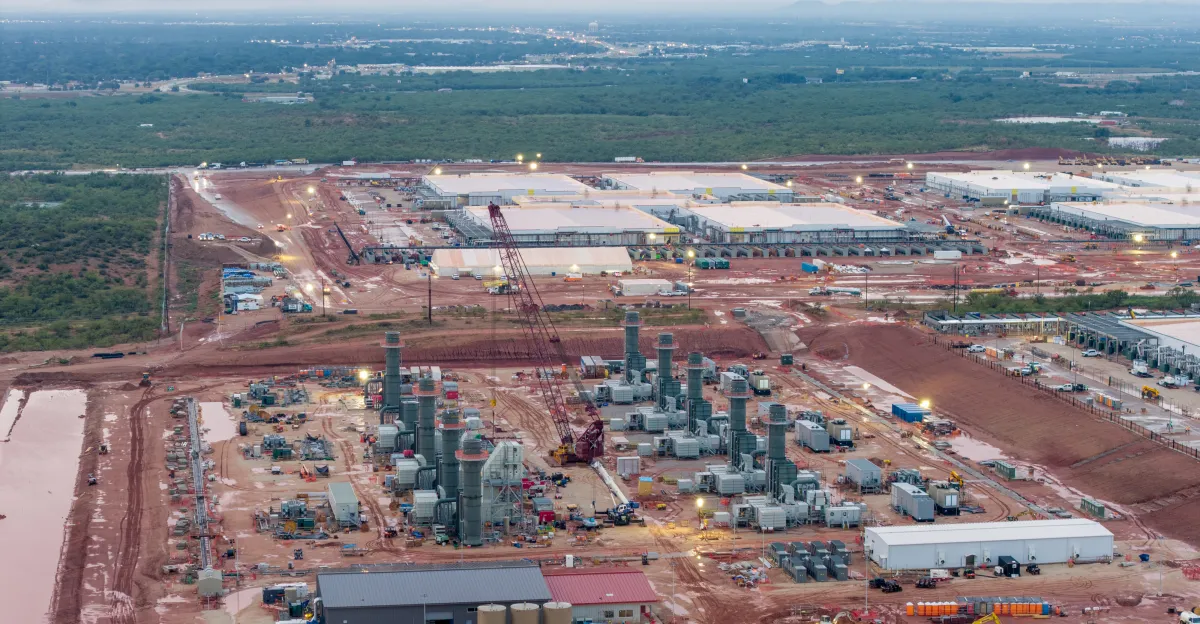
In a move signaling disruption across the energy sector, gas-fired power generation is experiencing a historic surge, with the United States at the forefront of this transition. According to a recent analysis by Global Energy Monitor (GEM), global gas power capacity expanded by 31% in 2025, marking the fastest growth rate since the early 2000s. Notably, nearly a quarter of this new capacity is under development in the US, surpassing China, traditionally the largest energy consumer. This boom is primarily driven by the soaring energy demands from data centers, which are rapidly becoming the backbone of digital economy infrastructure.

The business implications of this shift are profound, as tech giants and energy investors rush to meet data center capacity, fueling a market pivot toward natural gas. More than 33% of the capacity increase in the US is explicitly allocated for powering these data hubs, reflecting the sector’s strategic importance. Industry experts highlight that innovation in energy technology is enabling this transition, yet concerns remain over the environmental costs. The push for additional gas capacity also marks a significant disruption in traditional energy hierarchies, challenging the long-term push toward renewables. While lower costs and lower pollution when burning gas compared to coal make it attractive in the short term, the environmental trade-offs are alarming. Gas production releases methane—a greenhouse gas more potent than carbon dioxide—raising questions about the sustainability of these developments.

Leading analysts warn that the **lock-in of new gas plant capacity could pose stranded asset risks**, especially if anticipated electricity demand from AI-driven industries fails to materialize. Jenny Martos of GEM highlighted, “There is a risk that this capacity could become stranded assets if future demand from AI and data-intensive applications does not meet expectations,” emphasizing the potential for market disruption and long-term misallocation of capital. Already, 2026 is projected to be a record-breaking year for gas capacity additions, possibly surpassing the growth seen during the shale gas revolution of the 2000s. This would represent a remarkable disruption of the clean energy narrative, as the industry faces the dual challenges of economic viability and environmental responsibility.

The broader business implications are clear: disruption is accelerating as technology-driven energy demands reshape the conventional power landscape. Industry leaders like Elon Musk and Peter Thiel underscore that rapid innovation and strategic investments in infrastructure are crucial if nations aim to stay competitive. Meanwhile, policy makers confront the pressing need to balance economic growth with climate commitments, especially as methane emissions from natural gas production threaten to undermine global climate goals. The next decade will be pivotal, as the energy sector faces a fork in the road: continue along the path of short-term cost savings and risk locking in emissions, or pivot decisively toward sustainable energy solutions that leverage innovation without compromising the planet’s future.

For youth and entrepreneurs eyeing the future, this surge signals a landscape riddled with opportunities, risks, and obligations. Innovators in clean tech, storage solutions, and AI-driven efficiency are poised to challenge traditional energy giants. Disruption is inevitable, and those who act swiftly will shape the trajectory of global power markets. The urgency is unmistakable: the window to redefine energy infrastructure before climate thresholds are crossed is closing rapidly. As geopolitical and economic tensions mount, the push for innovation in energy becomes not just a business imperative, but a mission vital to the future of civilization itself.

Next-Gen Carbon Removal Tech Fails to Make a Splash

Innovative Ocean Geoengineering Firm Fades Amidst Unforeseen Risks and Funding Woes

In a striking example of the volatile intersection between technological innovation and environmental risk, Running Tide, a pioneer in marine geoengineering, has effectively shut down its operations following mounting financial challenges and unresolved scientific concerns. Despite promising early commitments from industry giants such as Stripe, Shopify, Microsoft, and the Chan Zuckerberg Initiative, the company’s ambitious plan to utilize ocean-based wood-chip dumping to sequester atmospheric carbon has encountered fundamental scientific obstacles and public skepticism. Odlin, the company’s CEO, publicly confirmed in June 2024 that “there simply isn’t the demand needed to support large-scale carbon removal,” marking a sobering end to a venture that once captured the imagination of climate tech advocates.

The core innovation behind Running Tide was its attempt to leverage natural ocean processes by sinking biomass—primarily wood chips—in hopes of accelerating carbon sequestration. However, scientific feedback from oceanographers and deep-sea experts reveals that such interventions may have unpredictable and potentially devastating ecological effects. For instance, Odlin himself admitted that monitoring the fate of Wood-chip deposits proved impossible after just a few hours post-release, raising serious questions about the viability of accurately assessing the environmental impact of such efforts. Environmental scientists, including Samantha Joye of the University of Georgia, warn that biomass dumping could create “dead zones,” where oxygen deprivation obliterates aquatic life, and could also irreparably damage deep-sea ecosystems that are vital for medical research and understanding Earth’s early history.

This uncertainty underscores a critical challenge: the disruption of seabed ecosystems may hinder the ocean’s ability to naturally absorb carbon rather than enhance it. A recent carbon flux report from the Convex Seascape Survey warns that disturbing seabed sediments can inhibit their capacity to sequester carbon, which runs counter to the intended purpose of biomass sinking initiatives. Such revelations expose the significant *business risks* associated with ocean geoengineering ventures — assets often backed by well-meaning, yet under-informed investors, now faced with mounting scientific doubts and regulatory hurdles.

The demise of Running Tide signals a wider industry reckoning about the *disruption* and *unpredictability* inherent in emerging climate tech solutions. While the promise of harnessing oceans for climate mitigation is enticing, the ultimate challenge remains: merging cutting-edge technological innovation with rigorous scientific validation. As the global community grapples with *climate change*, these failures highlight that “disruption” in green tech cannot come at the cost of ecological stability or scientific integrity. Industry leaders, research institutions like MIT, and forward-thinking investors must now prioritize transparent, interdisciplinary research that refuses to sacrifice ecological health for techno-optimism.

Looking ahead, the rapid acceleration of ocean-based techniques should serve as a warning to policymakers and entrepreneurs alike: true disruption for the sake of innovation demands a cautious approach—one that recognizes the limits of current science and the urgency of ethically responsible innovation. With climate change pressing ever more urgently, the future of technological solutions depends on our capacity to develop methods that are both effective and ecologically sustainable. The path forward must balance youthful ambition with sober scientific scrutiny, ensuring that technological progress does not unwittingly unleash irreversible damage beneath the waves.

Apple shakes up leadership again with fresh exec departures

Apple’s Leadership Transition Signals Strategic Shift Towards Regulatory and Sustainability Innovation

In a move that underscores the evolving landscape of corporate innovation and regulation, Apple Inc. has announced significant leadership changes set to unfold through early 2026. Jackson, currently serving as vice president for Environment, Policy, and Social Initiatives, is slated to retire in late January 2026, marking the end of an era for Apple’s environmental and social policy niche. His departure paves the way for Newstead, the current chief legal officer of Meta, to assume the role of general counsel starting March 1st, 2026. This transition highlights Apple’s ongoing focus on aligned, strategic leadership at the intersection of policy, legal compliance, and corporate responsibility.

The organizational reshuffle extends beyond individual appointments, reflecting Apple’s broader strategic emphasis on disrupting traditional corporate governance models—particularly in the realms of government relations and sustainability. As Apple articulates, the Government Affairs organization will transition under the oversight of Adams until her retirement, before shifting to Newstead, whose title will incorporate both general counsel and government affairs responsibilities. Meanwhile, Sabih Khan, acting as COO replacement for Williams, will oversee the environment and social initiatives teams. This consolidation indicates a deliberate move towards integrated governance, ensuring that Apple’s innovation trajectory aligns precisely with regulatory expectations and sustainability commitments.

Looking deeper into the backgrounds of these key figures reveals a strategic intention to bolster Apple’s disposal of innovative tools with formidable policy and legal acumen. Jackson’s experience leading the EPA under President Obama and subsequent role as policy lead at Apple exemplifies the company’s emphasis on environmental leadership, even as regulatory scrutiny on technology giants intensifies globally. His strategic focus on environmental initiatives has been part of a broader trend among tech companies positioning themselves as climate-conscious leaders—a narrative supported by institutions like MIT and Gartner, which emphasize the importance of integrating sustainability into core innovation strategies.

The leadership shift arrives at a time of intensified disruption in the tech landscape, where regulatory landscapes are shifting rapidly, especially on issues like data privacy, environmental impact, and social responsibility. Industry analysts warn that companies ignoring these trends risk being left behind in the wake of rising government intervention and public scrutiny. For instance, the integration of environmental initiatives into corporate governance could be a novel front for Apple to leverage its innovation prowess—a move that might set a standard for other tech giants to follow in a burgeoning era of responsible innovation and disruption.

  • Enhanced regulatory oversight
  • Increased integration of sustainability with business strategy
  • Leadership aligned with emerging societal expectations

These milestones are likely to redefine competitive dynamics, especially as younger consumers and investors prioritize climate-conscious corporate practices.

Looking to the future, Apple’s strategic leadership transition symbolizes more than just internal reshuffling; it embodies a larger industry-wide push toward innovative disruption of traditional corporate paradigms. With the increasing convergence of regulation, social responsibility, and technological innovation, companies must accelerate their efforts or risk obsolescence. As Peter Thiel and other tech visionaries highlight, adaptation to these forces is not optional—it’s essential for future growth and resilience. Tomorrow’s tech giants will be those that harness innovation as a tool to navigate both competitive markets and complex societal expectations. Given the speed at which policy and market shifts are happening, proactive leadership—like Apple’s strategic staffing—will be critical in maintaining technological dominance while advancing sustainable, socially responsible growth. The race for innovation leadership is intensifying, and those who act decisively now will shape the industry of tomorrow.

Social Media Auto Publish Powered By : XYZScripts.com