Matox News

Truth Over Trends, always!

School opens its doors to girls for the first time in 500 years—historic step toward equality

Educational Institutions and the Shaping of Societal Future

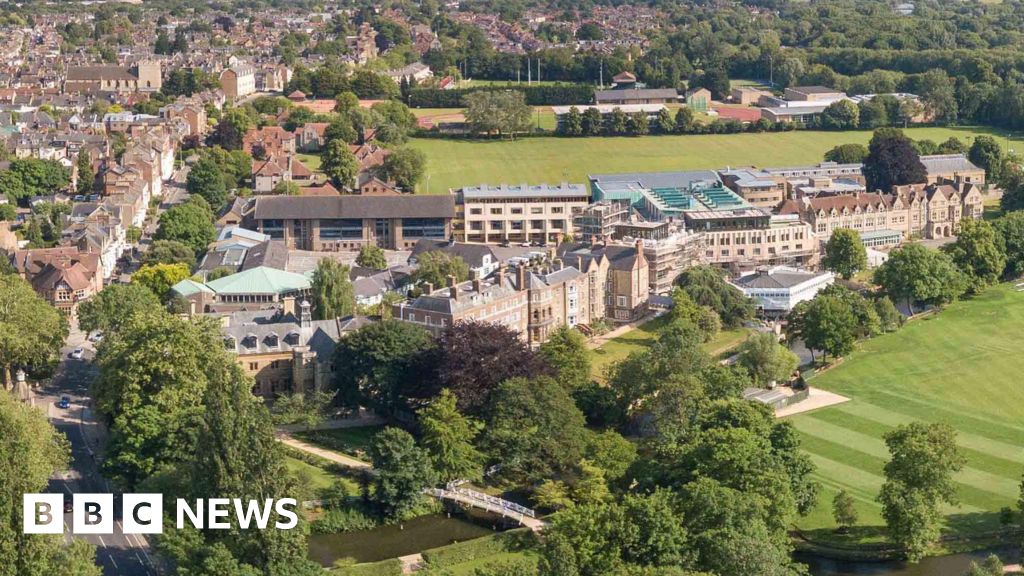
Recent statements from Magdalen College School highlight a growing trend within many elite educational institutions to position themselves as agents of societal enrichment. The school asserts that their initiatives will “enrich” their community “for generations to come,” a sentiment that underscores the evolving role of education as a catalyst for social cohesion and cultural preservation. While this rhetoric may sound benign, it raises profound questions about how contemporary schools influence families, social stratification, and community identity.

Historically, schools have operated as mirrors and molders of social values. Research by prominent sociologists such as Pierre Bourdieu demonstrates that educational settings often serve as gateways to social mobility or, conversely, reinforce existing class distinctions. In regions where educational policies increasingly focus on social enrichment and cultural identity, there is a discernible shift in the fabric of families and communities. These institutions often become focal points for cultural preservation, but they also risk diverting from the core goal of fostering universal access to quality education, potentially reinforcing divisions based on socio-economic backgrounds.

Societal Tensions and Cultural Shifts

The emphasis on “enriching” communities most often involves initiatives tailored toward *specific cultural narratives*. While such efforts aim to celebrate diversity and foster inclusiveness, critics argue they can inadvertently create social tensions and cultural enclaves that fragment homogeneous societal integration. In recent years, social commentators, including sociologist Charles Murray, have warned that a focus on cultural identity may deepen divides rather than bridge gaps, especially when education becomes a battleground for ideological influence.

This phenomenon impacts families profoundly, as parents navigate the complex terrain of cultural affirmations and their implications for their children’s futures. For some, these initiatives reinforce pride and belonging; for others, they evoke concern over the potential marginalization of traditional values or the marginalization of community voices that differ from the dominant cultural narrative. Such shifts influence educational priorities, societal cohesion, and the overall health of our civic fabric.

Addressing the Social Challenges and Building Resilient Communities

  • Inclusion and equity: Schools must strive to balance cultural specificity with universal values to ensure all families feel represented and empowered.
  • Community dialogue: Open, honest conversations between educators, families, and social leaders are essential to navigate cultural shifts and address misconceptions.
  • Educational reform: Policies that emphasize critical thinking, civic education, and character development can help young people appreciate diversity while fostering shared societal bonds.
  • Investment in local communities: Strengthening local institutions and supporting families creates resilient social networks that can withstand societal change.

Sociologists like Amartya Sen emphasize that true societal progress depends on *building social capital*, where families and communities work in harmony to sustain shared values amid diversity. As society grapples with rapid cultural transformations, public discourse must focus on creating inclusive, resilient communities where every child, regardless of background, can thrive within a common social fabric. Only by recognizing the importance of foundational social bonds—those that uphold personal dignity, shared history, and collective hope—can society navigate its present challenges and forge a future grounded in genuine unity and purpose.

In the end, society’s greatest challenge lies not just in reforming institutions but in nurturing a communal heart that values every individual’s journey. As society strides forward, perhaps the most profound promise remains: that through honest engagement and unwavering commitment, hope can blossom anew—transforming societal tensions into opportunities for enduring unity.


NHS facilities staff to strike over pay discrimination—stand up for fairness and equality

Social Justice or Systemic Disparity? The Struggle of NHS Facilities Workers and Society’s Broader Reflection

In the midst of Britain’s sprawling National Health Service (NHS), a quiet but potent crisis is unfolding among the least visible yet most vital members of healthcare institutions: facilities staff. Comprising mainly cleaners, porters, and catering workers, these individuals are predominantly from minoritised communities. Recent reports from United Voices of the World (UVW) reveal that over 330 of these low-paid workers, employed by the St George’s, Epsom, and St Helier hospital group, are on the brink of striking, citing decades of wage stagnation, pension shortfalls, and systemic exclusion.

At the core of this social upheaval lies a stark disparity: these essential workers have reportedly been denied the benefits afforded to their higher-paid NHS counterparts, with pension contributions as low as 3% compared to the 23.7% of other staff. Such differential treatment underscores a broader issue of institutional racism and economic injustice within one of the nation’s most revered societal institutions. The figures tell a compelling story: over four years, these workers have lost more than £36 million in wages and pension entitlements—an economic blow that affects their families’ stability and their community’s resilience. For many, this wage gap translates into everyday hardship, where workers, often working unsociable hours, grapple with late bills and mounting debt, and sometimes resort to coming to work ill because sick pay is inaccessible.

This scenario echoes socialist sociologist Stuart Hall’s reflections on the cultural and economic marginalization of minoritized groups, illustrating how structural inequalities perpetuate cycles of inequality. The return of outsourced jobs in earlier years, coupled with recent efforts to reclaim these positions in-house under more favorable contracts, demonstrates an ongoing battle for fair treatment. Yet, despite such strides, the gap persists, highlighting the systemic failure to integrate these workers into the NHS’s core pay and conditions framework. The tensions expose a social fabric strained by injustice—a fabric that, if left unaddressed, risks pulling apart entirely.

The ongoing negotiations have far-reaching effects. When workers are kept outside the Agenda for Change, the very foundation of equitable pay and working conditions crumbles, impacting families, education prospects, and community stability. A survey by UVW revealed that a majority of these workers face sick leave cuts, with nearly a quarter falling into debt to make ends meet—an indelible mark on their ability to provide a stable environment for their children, forge careers, and contribute meaningfully to society. The moral question remains: should a nation as affluent as Britain tolerate such disparities within its most sacred institutions?

As social commentators like Dr. Nigel Lake warn, these disparities are not merely about wages—they are about societal values and the moral fabric of a nation. Legitimate efforts are underway to rectify these imbalances, with hospital authorities acknowledging some fault and advocating for fairer treatment. Yet, the challenge remains: how to ensure that the pursuit of fairness is not just rhetoric but becomes an enduring reality for the most vulnerable?

In the end, society faces a choice: continue to overlook the social fractures caused by embedded inequality, or confront them head-on, pitting the moral obligation of justice against the complacency of systemic neglect. These workers, driven by necessity and dignity, stand as a testament to the resilience of those on society’s margins—reminding us that true societal progress isn’t measured solely by economic growth but by the capacity to uplift and include every member of the community. In their struggle, perhaps society can glimpse the potential for genuine transformation—a fragile yet unwavering hope that echoes in the corridors of every hospital where the true health of a nation is ultimately measured not by its wealth, but by its capacity for justice and compassion.

Social Media Auto Publish Powered By : XYZScripts.com


