Matox News

Truth Over Trends, always!

Germany moves toward conscription amid EU’s strongest army push in years

Germany’s Strategic Shift: Reintroducing Conscription in the Face of Rising Threats

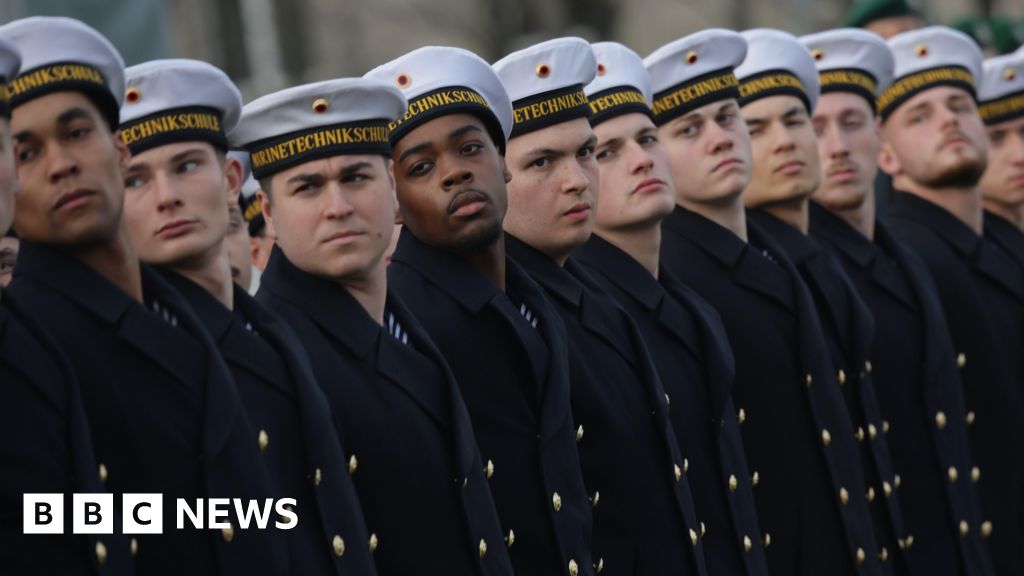
In a decisive move emblematic of its shifting geopolitical posture, Germany has announced a comprehensive overhaul of its military policy, aiming to bolster its defenses and position itself as Europe’s most potent conventional force. After months of political debate and strategic recalibration, Berlin committed to reintroduce voluntary military service, starting with a mandatory assessment phase for 18-year-olds. From 2027, all eligible men will also undergo medical screenings, signaling a clear intention to expand the Bundeswehr’s active troop strength to between 255,000 and 260,000 over the next decade. This development underscores a broader realization within the German establishment: the continent’s peace cannot be taken for granted, especially with the evolving specter of conflict in Eastern Europe.

Underlying Drivers: The Geopolitical Chessboard

  • Earlier this year, German Defense Minister Boris Pistorius emphasized that there was “no cause for concern” despite the escalation of military readiness, yet international experts remain skeptical. Analyses from NATO allies warn that Russia could launch an attack within the next four years, according to top military officials like Gen Carsten Breuer. This stark warning has prompted Berlin’s ambitious drive to deepen its military capabilities, aligned with President Friedrich Merz’s assertion that “whatever it takes” is now the rule for German defense—an unprecedented stance considering Germany’s Cold War-era reluctance to show military might.
  • In tandem, Rheinmetall, Germany’s flagship defense firm, forecasts that the country’s goal to establish Europe’s strongest army is achievable within five years, largely due to soaring demand for military technology, ammunition, and satellite capabilities—driven by the ongoing crisis in Ukraine. Its CEO, Armin Papperger, highlights a rapidly expanding market for military hardware, fueled by rearmament initiatives across NATO nations, many of which have faced increased pressure from the White House to raise defense spending. Such moves not only reshape Europe’s military balance but also position Germany as a critical player in the new era of hybrid warfare.

Societal Reactions and Consequences

However, strong societal currents oppose these reforms. Surveys suggest that while a slight majority of Germans support a reintroduction of military service, opposition among young adults is significant. A recent Forsa poll indicates that 63% of 18- to 29-year-olds oppose compulsory conscription, citing fears of war and a desire for peace. Students like Jimi voice profound reservations: “I don’t want to go to war because I don’t want to die or be shot at,” he explains, reflecting a deep-rooted aversion to violence. Conversely, young recruits like Jason see the military as a means to defend democracy and impose a deterrent effect on potential adversaries, illustrating a divided societal stance that could shape Germany’s future security policies.

Impacts Beyond Germany: A New Geopolitical Arena

The decision to ramp up military strength in Germany resonates far beyond its borders, significantly affecting the European security landscape and altering the fabric of international relations. With NATO’s adversarial dialogue sharpening and Russian territorial ambitions expanding, Germany’s military revival acts as a key strategic pivot—balancing the scales of power among Western alliances and potentially igniting a new arms race on the continent. Historically cautious and post-Cold War reluctant to display its military power, Berlin now faces a pivotal moment in history—one where the choices made today will echo through generations as the continent trembles on the edge of an uncertain future.

As historians and analysts observe, the unfolding trajectory of Germany’s rearmament reflects a broader truth: in a geopolitical chess game dominated by shifting alliances, emerging threats, and the enduring legacy of past conflicts, the decisions made now could determine the course of 21st-century history. Will Europe see peace restored, or will the shadows of conflict lengthen anew? Only time will tell, but the weight of history presses relentlessly forward as nations grapple with the dawn of a new dangerous era.
Instagram and Facebook flout EU’s illegal content laws—youth-led digital freedom on the line

EU Regulatory Crackdown Challenges Tech Giants’ Dominion

The European Union’s latest move signals a significant shift in how global regulatory frameworks are poised to reshape the technology landscape. Both unnamed leading platforms are facing stiff fines of up to six percent of their annual worldwide revenue, a stark wake-up call for industry giants accustomed to operating with minimal oversight. As these firms mull over the potential to challenge the EU’s findings or enact preemptive measures, the stakes could redefine how platforms innovate and compete on the global stage. This regulatory pressure underscores a broader trend: regulation as a disruptive force in establishing new norms for digital governance.

The core concern centers on the platforms’ potential abuse of market dominance and anti-competitive practices—allegations that, if proven, could fundamentally alter the digital ecosystem. Industry analysts from Gartner and MIT suggest that such enforcement actions serve as a crucial inflection point, compelling companies to accelerate compliance initiatives and rethink their strategic agility. For example, these companies might need to implement more transparent algorithms, enhance user data protections, or modify their business models to meet stringent EU standards. The possibility of hefty fines—calculated as a percentage of revenue—adds an economic deterrent, pushing firms toward a new era of regulatory-driven innovation.

This tightening regulatory landscape arrives amid a wave of global calls for increased platform accountability. However, critics warn that excessive regulation could stifle foundational innovation or trigger retaliatory measures that fragment markets. Yet, industry leaders like Elon Musk and Peter Thiel emphasize the importance of disruption as a catalyst for competitive evolution, arguing that regulations should foster innovation while safeguarding consumer rights. As a result, the verdict and subsequent actions will likely serve as a blueprint for future global regulatory standards, compelling platforms to develop smarter, more responsible technological solutions.

In considering the broader business implications, this scenario signals a definitive shift towards an industry where compliance and innovation are increasingly intertwined. Companies that adapt swiftly—embracing transparency, AI governance, and fair market practices—stand to strengthen their position amid adverse regulations. Conversely, firms unable or unwilling to adjust risk falling behind as regulators adopt a more assertive stance. Moving forward, the urgency is clear: the tech sector must innovate within the boundaries of emerging regulatory frameworks or face disruptive penalties that could reshape market dominance. As the EU’s final rulings loom, the question remains—how will these digital titans evolve in an era where regulation, innovation, and global competitiveness are inseparably linked?

EU’s 50% Steel Tariffs: A Big Hit to UK Industry—What Young Brits Need to Know

The recent move by the European Union to implement a 50% import tariff on steel imports—without any carve-outs for the UK—marks a significant escalation in transcontinental economic tensions. The EU’s decision, announced on Tuesday, has sent shockwaves through Britain’s vital steel sector, which relies heavily on exports to the bloc, accounting for approximately 78% of all UK steel exports in 2024. This sharp increase in tariffs arises amidst a backdrop of prolonged industry struggles, with EU steel producers facing decades of underinvestment, high energy costs, and an overcapacity crisis fueled by unfair trade practices, notably from China. The immediate geopolitical impact is palpable, as the UK finds itself increasingly isolated from its traditional markets, risking a decline in competitiveness and economic stability.

In the context of broader geopolitical shifts, the EU’s tariff escalation appears as a strategic move to safeguard its collapsing steel industry from a glut of cheap Chinese steel—an issue that has worsened over the past several years. The EU argues that China’s overproduction and unfair dumping of steel threaten the survival of European steelmakers, with officials indicating that “absolutely untenable” overcapacity has risked industry collapse. Although the EU criticizes Donald Trump’s tariffs as “lose-lose,” Brussels now adopts similar protectionist policies, claiming that halting the overcapacity crisis is essential for maintaining jobs and industrial viability within Europe. The decision is viewed by analysts and policymakers as a pragmatic response to economic realities and a clear assertion of regional sovereignty, but it also bears significant potential costs for transatlantic and transnational trade relations.

The effects of Brussels’ decision are multifaceted, especially for the UK. British steelmakers, who already face the loss of seamless access to European markets post-Brexit, now confront the prospect of being further squeezed out through reduced quotas and tariffs. Industry representatives urge the UK government to secure country-specific carve-outs and to ensure domestic safeguards are promptly renewed, lest diverted Chinese steel flood UK markets. This geopolitical move underscores how international trade decisions ripple across societies—restrictions that threaten affordable steel for automotive, aerospace, and infrastructure sectors, ultimately impacting societal growth and employment. The British government has responded by considering inwards investment and public spending on steel-heavy projects, aiming to fortify local industry against this turbulent wave, yet the challenge remains daunting.

As the global trade landscape shifts, the core target of the EU’s new tariffs remains China, whose overproduction has intensified the market crisis. Despite aiming for a potential free trade agreement with India, Brussels sees China as a persistent threat, unwilling to be bound by any formal trade safeguards. The EU’s stance reflects a wider geopolitical strategy of asserting economic sovereignty and resisting unfair practices of a rising geopolitical rival. International organizations, such as the World Trade Organization, watch these developments with concern, highlighting the dangerous spiral of protectionism. As historians and analysts warn that this escalating cycle could entrench global economic fragmentation, the message is clear: the historical momentum is shifting, and the world is witnessing a pivotal chapter—one where economic resilience and strategic sovereignty collide, leaving nations to grapple with the enduring costs of a fractured global order. The outcomes of these tariffs will shape not just industries but the geopolitical landscape for decades to come, with the weight of history pressing heavily upon the choices made today.

What the EU’s new EES border system means for young entrepreneurs and travelers

European Border Reforms Signal Economic Shift

The dawn of a new era in European security and mobility is upon us, as the European Commission prepares to implement the highly anticipated Entry/Exit System (EES) this autumn. Designed as a digital overhaul of border controls across 29 EU countries, EES aims to streamline movement within the Schengen Area, significantly impacting commerce, tourism, and cross-border investments. While these reforms are heralded as a step forward for security and efficiency, the incoming system also raises questions about initial logistical bottlenecks and the potential policy repercussions on the free movement of people and goods.

Market Impact and Policy Consequences

The rollout of EES is expected to have profound market implications across the trans-European economy. The system’s eventual full activation is projected to influence industry sectors relying heavily on border transit, notably transport, logistics, and hospitality. According to analysts at the Centre for European Policy Studies, industries linked to travel and tourism could encounter initial disruptions as travelers adjust, possibly causing short-term declines in passenger volumes which ripple through local economies. The haulage and freight sectors, meanwhile, are closely monitoring the phased implementation, aware that prolonged congestion at key ports such as Dover may inflate costs and impact supply chains.

From a policy perspective, the introduction of biometric registration and digital tracking signifies a tough stance on border security, echoing EU-wide ambitions to control migration flows more tightly. This effort aligns with policy shifts advocated by security-focused think tanks and conservative councils which emphasize sovereignty and border integrity. However, critics within European Parliament warn that such measures could inadvertently constrain business mobility, especially for young entrepreneurs and freelance professionals who frequently cross borders. These reforms could redefine the fundamental policy calculus on civil liberties versus security, setting precedent for future regulatory innovations.

Technical and Economic Opportunities

Despite the initial hurdles, the phased roll-out offers a window of opportunity for technological innovation within the EU. The development of kiosks and biometric systems, along with the digital application for ETIAS—the upcoming travel authorization—could position Europe as a hub for cutting-edge border tech. Markets are already betting on the module’s efficiency boosting future business growth, with Eurostar and Eurotunnel investing heavily in automated check-in systems that could be adapted for wider commercial applications.
Economists from the Oxford Economics group highlight that, while initial costs of system deployment and training will be high, long-term gains in border processing speed and security could lead to a more robust economic environment, inviting new investments in tourism, real estate, and retail sectors along popular transit routes.

Looking Forward: An Economy Driven by Future Power

As the EU advances toward an interconnected, digitally integrated border system, the epicenter of geopolitical and economic power shifts ever closer to technological sovereignty. The seamless flow of goods, services, and talent across borders will define the economic vitality of the next generation, positioning Europe to challenge global competitors like North America and Asia. The dynamic interplay of security, innovation, and policy reform indicates a future where Europe is not merely reacting to change but shaping it, asserting its influence on the stage of global economy.

For young entrepreneurs, investors, and policymakers, this transformation represents a pivotal moment—an epoch when technological mastery and strategic foresight will carve out Europe’s place as a new epicenter of economic resilience and innovation. The heartbeat of the continent’s economy shall be the drum of progress, echoing across borders as Europe reaffirms its role as the powerhouse of the future.

Social Media Auto Publish Powered By : XYZScripts.com