
Matox News

Truth Over Trends, always!

Pete Hegseth’s Pentagon AI crew: Ex-Uber exec and private equity titan join the squad

AI and Geopolitics: Pentagon’s Disruptive Move Toward Private Sector AI Dominance

In recent developments that signal a seismic shift in military-grade artificial intelligence, the Pentagon’s negotiations with leading AI developers underscore a new era of disruption and strategic vulnerability. The Department of Defense (DoD) has engaged in intense contract negotiations with Anthropic, whose advanced language model, Claude, is at the center of the controversy. This situation exemplifies how innovation-driven disruptions in AI are rapidly affecting national security frameworks—placing the traditional defense procurement model under unprecedented strain. With pent-up demands for secure, classified AI systems, the Pentagon’s push to secure multi-vendor contracts and mitigate single-supplier vulnerabilities reflect a clear adoption of best practices in tech risk management, yet reveal profound implications for the future of AI sovereignty.

The negotiations have drawn international attention, largely because of Pentagon’s urgency to establish at least two cleared AI vendors capable of handling classified data. Interestingly, despite current contracts with Google’s Gemini and xAI’s Grok, the security and capability differential among these models is stark. Google’s Gemini, considered a close competitor to Anthropic’s Claude, is on the verge of being cleared for classified deployments, while xAI’s Grok is viewed as less reliable. This “model shuffle” points to a broader industry consensus: the supply chain for classified AI models is fragile, and the risks of dependency on any single, possibly compromised, vendor could be catastrophic—especially as critics and analysts such as Gartner emphasize that “concentration risk remains the Achilles’ heel of AI deployment in high-stakes environments.”

The real business implications of this crisis are significant. Disruptive entries such as Anthropic have established themselves as indispensable—even as concerns about their morals and security practices persist. As Axios reports, Pentagon officials are explicitly aware that they are dependent on Anthropic’s AI precisely because “they are that good.” This paradox illustrates the core challenge for future defense procurement: balancing the need for cutting-edge innovation against security vulnerabilities. The negotiation process also demonstrates a broader shift where the private sector’s aggressive pursuit of AI dominance directly influences, and sometimes complicates, military strategy.

This evolving landscape foreshadows a future where the disruption of traditional defense models becomes inevitable. As the Biden administration emphasizes diversification of AI supply chains per new national security guidelines, the Pentagon’s procurement of multiple models—including discussions around the deployment of Gemini and potential exclusivity with Anthropic—emphasizes a move towards an AI-driven arms race. With tech giants and defense contractors like Emil Michael—whose controversial history at Uber signals the ruthless nature of business-driven tech innovation—now navigating a complex nexus of geopolitics and security, the industry is primed for a turbulent, hyper-competitive evolution.

Looking ahead, the implications for the broader tech ecosystem are clear: disruption is accelerating, and industry players with the most advanced models will wield outsized influence—not only in national security but also in the global power balance. The urgency surrounding diversifying AI vendors underscores the necessity of swift innovation, surgical risk management, and strategic alliances. Failure to adapt could result in catastrophic vulnerabilities, while those who lead the charge will dominate the emerging AI-augmented geopolitical landscape. As experts like Peter Thiel warn, “The future belongs to those who can manipulate the fabric of AI and national infrastructure faster than their rivals.” The question is no longer if disruption will come; it’s whether industry and government can harness it before they are overtaken by the relentless wave of technological revolution.
Apple shakes up leadership again with fresh exec departures

Apple’s Leadership Transition Signals Strategic Shift Towards Regulatory and Sustainability Innovation

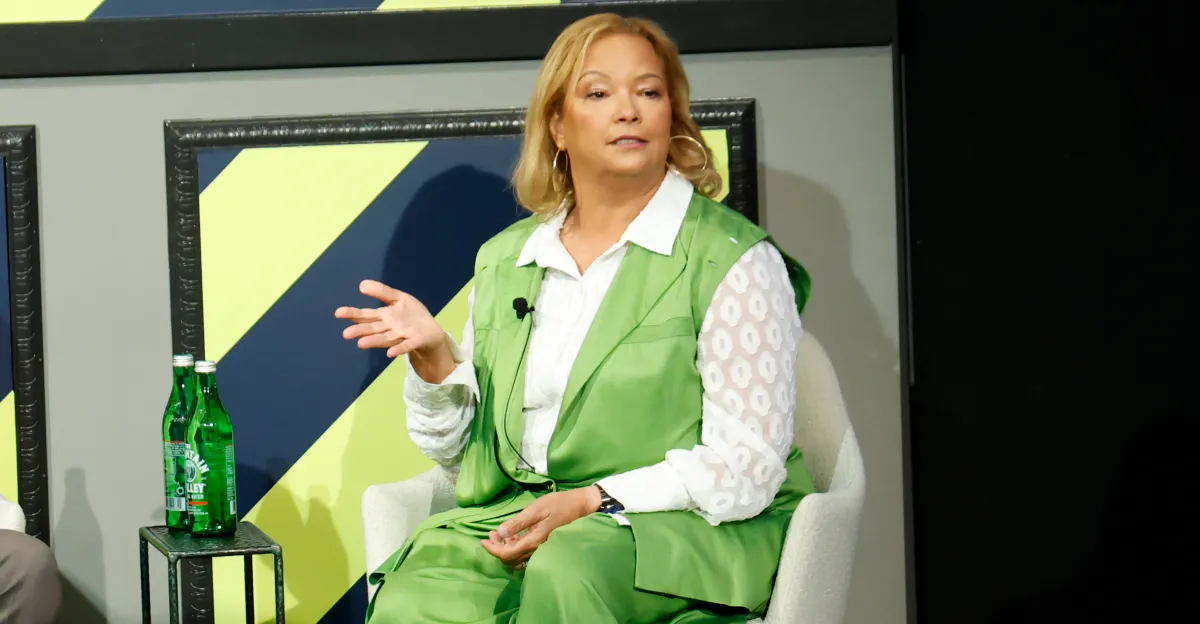
In a move that underscores the evolving landscape of corporate innovation and regulation, Apple Inc. has announced significant leadership changes set to unfold through early 2026. Jackson, currently serving as vice president for Environment, Policy, and Social Initiatives, is slated to retire in late January 2026, marking the end of an era for Apple’s environmental and social policy niche. His departure paves the way for Newstead, the current chief legal officer of Meta, to assume the role of general counsel starting March 1st, 2026. This transition highlights Apple’s ongoing focus on aligned, strategic leadership at the intersection of policy, legal compliance, and corporate responsibility.

The organizational reshuffle extends beyond individual appointments, reflecting Apple’s broader strategic emphasis on disrupting traditional corporate governance models—particularly in the realms of government relations and sustainability. As Apple articulates, the Government Affairs organization will transition under the oversight of Adams until her retirement, before shifting to Newstead, whose title will incorporate both general counsel and government affairs responsibilities. Meanwhile, Sabih Khan, acting as COO replacement for Williams, will oversee the environment and social initiatives teams. This consolidation indicates a deliberate move towards integrated governance, ensuring that Apple’s innovation trajectory aligns precisely with regulatory expectations and sustainability commitments.

Looking deeper into the backgrounds of these key figures reveals a strategic intention to bolster Apple’s disposal of innovative tools with formidable policy and legal acumen. Jackson’s experience leading the EPA under President Obama and subsequent role as policy lead at Apple exemplifies the company’s emphasis on environmental leadership, even as regulatory scrutiny on technology giants intensifies globally. His strategic focus on environmental initiatives has been part of a broader trend among tech companies positioning themselves as climate-conscious leaders—a narrative supported by institutions like MIT and Gartner, which emphasize the importance of integrating sustainability into core innovation strategies.

The leadership shift arrives at a time of intensified disruption in the tech landscape, where regulatory landscapes are shifting rapidly, especially on issues like data privacy, environmental impact, and social responsibility. Industry analysts warn that companies ignoring these trends risk being left behind in the wake of rising government intervention and public scrutiny. For instance, the integration of environmental initiatives into corporate governance could be a novel front for Apple to leverage its innovation prowess—a move that might set a standard for other tech giants to follow in a burgeoning era of responsible innovation and disruption.

  • Enhanced regulatory oversight
  • Increased integration of sustainability with business strategy
  • Leadership aligned with emerging societal expectations

These milestones are likely to redefine competitive dynamics, especially as younger consumers and investors prioritize climate-conscious corporate practices.

Looking to the future, Apple’s strategic leadership transition symbolizes more than just internal reshuffling; it embodies a larger industry-wide push toward innovative disruption of traditional corporate paradigms. With the increasing convergence of regulation, social responsibility, and technological innovation, companies must accelerate their efforts or risk obsolescence. As Peter Thiel and other tech visionaries highlight, adaptation to these forces is not optional—it’s essential for future growth and resilience. Tomorrow’s tech giants will be those that harness innovation as a tool to navigate both competitive markets and complex societal expectations. Given the speed at which policy and market shifts are happening, proactive leadership—like Apple’s strategic staffing—will be critical in maintaining technological dominance while advancing sustainable, socially responsible growth. The race for innovation leadership is intensifying, and those who act decisively now will shape the industry of tomorrow.

Apple’s AI setback: Top exec departs as rivals surge ahead

Apple’s Leadership Shake-up Signals New Chapter in AI Strategy Amid Global Tech Competition

In a move that underscores the intensifying global race for dominance in artificial intelligence (AI), Apple announced the departure of its head of AI, John Giannandrea. After a seven-year tenure marked by incremental advances, Giannandrea’s exit coincides with a broader challenge facing the Silicon Valley giant: its lag behind competitors like Google and Microsoft in delivering cutting-edge generative AI features. Although Apple debuted its AI product suite, Apple Intelligence, in June 2024, industry analysts note that the company’s AI development remains significantly behind industry leaders, raising questions about its future strategic direction amid a fiercely competitive ecosystem.

Despite its long-standing reputation for innovative hardware and user-centric design, Apple appears to be playing catch-up on AI, a sector now considered pivotal for technological supremacy. The company has implemented some AI-powered features, such as real-time language translation in AirPods and a fitness app with AI-driven voice chats, yet these innovations are largely incremental rather than transformative. Notably, efforts to revamp Siri with a more personalized and robust AI interface have been repeatedly delayed, a sign that the company’s **AI ambitions** are still in development, and its previous promises have yet to materialize. During its recent developer conference, Craig Federighi, Apple’s software engineering vice president, said that “the work [on Siri] needed more time to reach our high-quality bar,” hinting at internal struggles to match the AI capabilities of rivals like Google Assistant and Amazon Alexa.

The appointment of Amar Subramanya, a veteran AI researcher with extensive experience at Microsoft and Google, signals Apple’s recognition of the need to accelerate its AI strategy. Subramanya’s background as the former head of engineering for Google’s Gemini AI Assistant and Vice President of AI at Microsoft positions him as a key figure in Apple’s quest for AI leadership. Analysts, including those from the International Institute of Technology Policy, suggest that this leadership shift represents a deliberate effort by Apple to tighten its focus on building competitive AI systems capable of competing on the global stage.

Global Geopolitical Impact: AI as the Next Warfront

In the broader context, this AI race is now viewed as the next vital battleground for global influence. China, the United States, and the European Union are investing billions into AI research, recognizing its potential to shape economies, security, and military dominance. Decisions made by corporations such as Apple inevitably ripple out, influencing national policies and international power dynamics. The United States, long considered the leader in tech innovation—with institutions like the National Institute of Standards and Technology (NIST) and private companies fiercely competing—has seen a shift in momentum with China’s rapid advancements in AI capabilities. Some analysts warn that the current delays and internal struggles at Apple reflect a broader systemic challenge: legacy tech giants are feeling pressure to innovate or fall behind in this geopolitical contest.

Furthermore, the U.S. government and European Union are increasingly calling for regulation and safeguards around AI, emphasizing the importance of maintaining technological sovereignty and ethical standards. Historically, nations that lead AI development gain unrivaled leverage in international diplomacy, military strategy, and global markets. As Apple rethinks its AI roadmap, it acts as a microcosm of the larger battle shaping the future of global influence—where decisions made today could determine the rise or fall of world powers in the coming decades.

What Lies Ahead: The Weight of History in the Making

With Apple’s strategic shift and leadership change, the unfolding narrative reflects more than corporate ambitions—it symbolizes a larger epochal shift. The coming years will reveal whether Apple can surmount internal challenges to reassert itself as a leader in AI, or if it will become a secondary player in a high-stakes global rivalry. The decisions made now by industry giants and governments will echo through history, shaping economies, societies, and international power structures for generations to come. As the drama of technological evolution unfolds on the world stage, one truth remains clear: the very definition of influence in the 21st century is being written in code, and the outcome will determine who sets the rules of the game for the world’s future.”

Social Media Auto Publish Powered By : XYZScripts.com



