Matox News

Truth Over Trends, always!

Amsterdam Jewish School Explosion: Official Calls It a Deliberate Attack

In a clear reflection of the shifting geopolitical landscape, recent events have prompted heightened security measures at Jewish public institutions across Europe, following a disturbing incident in Rotterdam. This development underscores the ongoing challenges facing Western nations as they navigate the complex balance between safeguarding civil liberties and protecting their citizens from emerging threats. The incident signals a potential uptick in anti-Semitic violence, which European governments have long warned could destabilize social cohesion if left unchecked.

European security agencies and international organizations are now grappling with how to respond effectively. In Rotterdam, authorities responded swiftly, increasing patrols at synagogues, community centers, and Jewish schools. Yet, such measures are merely reactive, highlighting a deeper, systemic problem: rising intolerance and radicalization fueled by shifting political narratives and regional conflicts. Analysts from the European Agency for Fundamental Rights have noted a sharp increase in anti-Semitic incidents over the past year, correlating with broader tensions in the Middle East and increased migration from unstable regions.

Historically, Europe has been a continent scarred by oscillating waves of violence, which now appear to be re-emerging in new forms. The incident in Rotterdam is viewed by many experts as a warning sign, a potential turning point that underscores the fragile stability of European multicultural societies. International peace and security organizations have issued statements cautioning against complacency, emphasizing the importance of countering hate crimes and fostering community resilience. The United Nations has urged member states to reinforce their commitments to tolerance, yet critics argue that political inaction and the failure to confront radical ideologies continue to allow the threat to metastasize.

The geopolitical impact of these events extends beyond Europe. As the world watches, rising tensions between major powers—including the United States, Russia, and China—are causing ripples that influence regional stability. European nations, particularly those in NATO, perceive these incidents as indicative of broader shifts, where internal security is intertwined with global power struggles. Strategists warn that if these threats are not curtailed, there could be a resurgence of nationalist rhetoric and rhetoric-driven policies that threaten international cooperation and peace.

As history continues to unfold, the persistent question remains: how will nations respond to these mounting challenges? Will they fortify their commitments to unity and tolerance, or will they succumb to division and fear? The answer lies in their ability to confront the darker chapters of history with resolve and wisdom, lest the lessons of the past become nothing but echoes in an increasingly uncertain future. For now, the weight of history presses heavily upon the present, reminding all that the struggle for peace and security is ongoing, and the choices made today will shape the world of tomorrow.

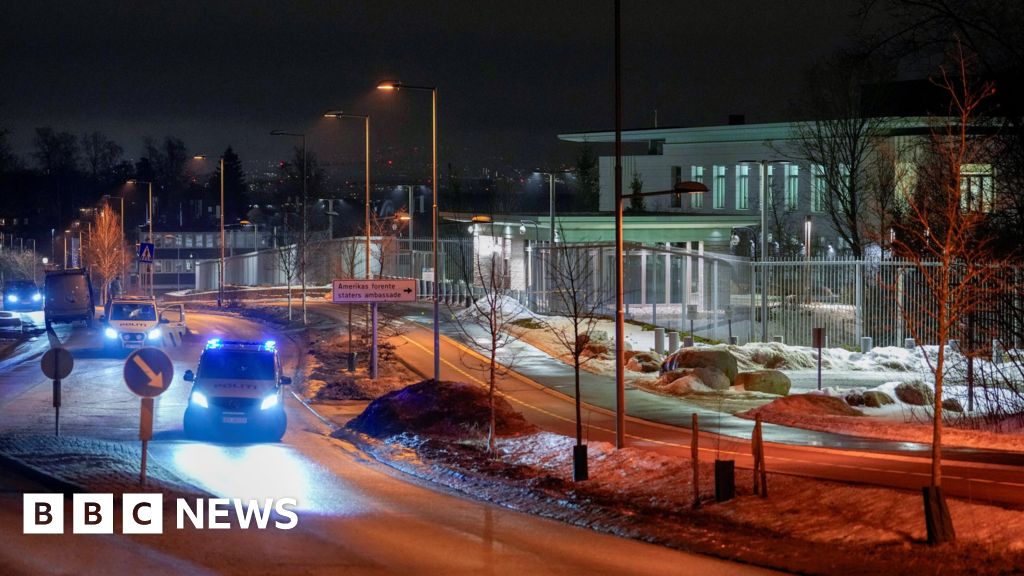
Explosion strikes outside US embassy in Oslo, police confirm—Stay alert, Norway.

In a startling development that underscores the fragility of international diplomacy, police authorities mobilized significant resources early this morning following reports of an explosion at an unspecified foreign embassy. The incident, which transpired at approximately 01:00 local time, has triggered immediate security alerts and raised concerns about the safety of diplomatic missions amid escalating global tensions. The response was swift, indicating the gravity with which authorities are treating what could be a targeted act of violence or sabotage against a foreign diplomatic site.

Historians and security analysts warn that acts of violence against embassies are often precursors or reflections of larger geopolitical shifts. Such incidents tend to expose underlying strains between nations, often linked to unresolved conflicts or diplomatic disputes. In this context, the event serves as a stark reminder of the potency of diplomatic vulnerabilities and the potential for isolated acts to spiral into broader crises. Global institutions such as the United Nations have long underscored the importance of protecting diplomatic missions as a cornerstone of international stability, yet recent incidents highlight that these protections are increasingly tested in an era defined by unpredictable conflicts and cyber warfare.

While official statements remain limited, sources close to the investigation suggest that the explosion could be linked to ongoing regional disputes or covert operations by non-state actors. This incident may not only jeopardize bilateral relations but could also affect wider international cooperation. Experts from the International Crisis Group and security think tanks emphasize that the decision of hostile entities to target diplomacies directly impacts international peace efforts, potentially fueling cycles of retaliation and distrust across borders. Already, some analysts fear this event could escalate tensions, prompting retaliatory actions or heightened security protocols that could hinder diplomatic engagement globally.

As the world watches this unfolding crisis, the question remains: what are the long-term geopolitical ramifications? Will this act serve as a catalyst for increased paranoia among nations, or will it foster renewed calls for multilateral security arrangements? The historical record shows that such incidents, especially against embassies, leave indelible marks on international relations, often prompting nations to re-evaluate their security doctrines or tighten embassies’ defenses under the guise of normal diplomacy.

In the shadows of these developments lies a sobering truth: the delicate fabric of international diplomacy is as fragile as it is vital. As investigators piece together the circumstances surrounding the explosion, the broader implications threaten to reshape alliances and ignite new conflicts. The coming days will be crucial in determining if this event remains a localized security concern or unfolds into a broader geopolitical crisis. History’s pen continues to write the narrative of our times, and the world must prepare for whatever chapters lie ahead—an epoch where diplomacy must stand resilient in the face of mounting chaos.

Big explosion at Tennessee military plant shakes nearby homes—a wake-up call for safety

Explosion at Tennessee Military Explosives Facility Sparks International Concerns

The recent blast at Accurate Energetic Systems in rural Tennessee marks a troubling escalation in domestic security threats and raises questions about the stability of critical infrastructure within the United States. The powerful explosion, which shook homes miles away and sent debris flying across the site, is a stark reminder of the ongoing vulnerabilities faced by nations dependent on complex military supply chains. While initial reports confirm that emergency responders are still assessing the situation, the incident’s ripple effects are already being felt beyond local borders, as international security analysts speculate on potential geopolitical ramifications.

The incident took place at a key site near Bucksnort, approximately 60 miles southwest of Nashville. Experts suggest that the blast’s magnitude signals not only potential safety lapses but also a concerning deterioration of domestic defense preparedness. Historically, such incidents—especially at military-grade manufacturing facilities—are rare but carry profound implications. They signal vulnerabilities that could be exploited by adversaries or malicious actors, especially amid rising global tensions. Prominent geopolitical analysts have pointed to this event as a warning shot, illustrating how fragile the perceived safety of critical production sites really is in an increasingly uncertain global landscape.

International Implications and Rising Tensions

While the United States deals with this localized industrial incident, the global geopolitical stage is simmering with conflicts, disputes, and strategic shifts. Organizations such as NATO and the United Nations continuously monitor how domestic vulnerabilities could impact international stability. Historically, events like these—when they occur within controlled military productions—offer insights into a nation’s ability to withstand internal threats. The timing of this explosion is particularly notable in an era where international powers are increasingly concerned about proliferation, sabotage, and cyber-attacks aimed at undermining national security.

Recently, Russia and China have stepped up efforts to leverage internal vulnerabilities within Western alliances, emphasizing the importance of resilient infrastructure. Such incidents in the United States could be exploited by hostile foreign powers or terrorist organizations seeking to erode confidence in American security measures. The international community is thus paying keen attention, with some analysts warning that this is *not* merely an industrial accident but potentially a sign of deeper, more insidious threats that are actively evolving in the shadows of global diplomacy.

Consequences for Society and Policy

  • The blast raises urgent questions about industrial safety regulations and the adequacy of security protocols protecting military manufacturing sites—crucial for national defense.
  • The incident underscores the importance of robust intelligence and surveillance to prevent sabotage or malicious infiltration of strategic facilities, especially amid a wave of cyber and physical threats.
  • It signals to allied nations that internal stability and security are essential pillars for maintaining global influence and protecting shared values against rising authoritarian challenges.

While authorities investigate the cause of the explosion, the world watches with a sense of foreboding. This event serves as a stark warning that, as the global order shifts and chaos looms in geopolitical arenas from the South China Sea to Eastern Europe, the foundations of national security are more vulnerable than ever. The echoes of this blast will resonate through diplomatic corridors and military strategy rooms for years to come, shaping policy and perception in a world where stability is fragile and history is still being written.

Social Media Auto Publish Powered By : XYZScripts.com