Matox News

Truth Over Trends, always!

Trump and Maryland Governor clash over Potomac sewage spill fallout

Controversy Erupts Over Potomac River Sewage Spill Amidst U.S. Political Clashes

In a dramatic episode underscoring the growing tensions within United States domestic politics, a massive sewage spill into the Potomac River has become a focal point of blame and division. The spill, which began after the collapse of a 1960s-era pipeline operated by DC Water, has released over 200 million gallons of untreated sewage into one of America’s most iconic waterways. With emergency repairs underway, the incident has exposed not only environmental vulnerabilities but also the deepening partisan rift, as high-profile figures like Donald Trump and Wes Moore spar over accountability.

  • The failure of the Potomac Interceptor pipeline on January 19 has caused ongoing ecological threats, prompting health warnings for the region and raising concerns about the resilience of U.S. infrastructure.
  • President Trump quickly seized the moment to assign blame to Maryland officials, accusing Moore of “gross mismanagement” via his social media platform, Truth Social, and claiming that local authorities were incapable of handling such a crisis.
  • Moore, for his part, countered sharply, asserting that federal authorities—specifically the Environmental Protection Agency (EPA)—are ultimately responsible for infrastructure oversight, emphasizing a division of jurisdiction that remains murky amid the ongoing crisis.

Geopolitical Impact: State-Federal Power Struggles and Infrastructure Governance

This dispute is emblematic of broader geopolitical and governance issues shaping America, revealing how infrastructural failures can serve as battlegrounds for competing visions of authority. Historians note that conflicts over jurisdiction, particularly during crises, often reflect underlying tensions between state sovereignty and federal oversight. International organizations, like the International Water Association, warn that aging infrastructure and inconsistent regulation exacerbate environmental dangers, inviting criticism of federal agencies that have been underfunded for years. As analysts from the Council on Foreign Relations observe, America’s ability to project stability internally directly influences its global standing, especially when left vulnerable to crises that threaten public health and ecological stability.

Global Context: Parallels in Infrastructure Failures and Political Strife

The Potomac incident echoes crises elsewhere—be it the titanic failure of Ukraine’s energy grid during conflict or climate-induced floods in Southeast Asia—highlighting how infrastructure and politics are intertwined on the world stage. International commentators warn that domestic mismanagement can undermine a nation’s international credibility, especially when environmental disasters spiral into political confrontations. The Biden administration’s decision to activate the Federal Emergency Management Agency (FEMA)—despite its recent funding deadlock—signals a recognition that crises cannot be contained by local governance alone. Yet, it underscores how internal partisan struggles hinder swift, decisive action, leaving nations vulnerable to escalating upheavals that will undoubtedly be recorded in history’s annals.

Looking Ahead: The Weight of Unfolding History

As the Potomac River continues to flow with the environmental scars of neglect and political discord, the world watches. The coming weeks will determine whether the region’s leadership can muster the cohesion and resolve needed to confront the crisis or whether internal divisions will deepen, allowing damage to compound. The story unfolding is more than a regional incident; it reflects the fragile fabric of a nation at a crossroads. Behind the headlines lies the stark truth—history is not standing still. It is being written through each policy decision, each political battle, and each environmental catastrophe, testing the resilience of a society that once prided itself on strength and unity, now facing the shadow of its own uncertainty.”
NASA and USPS ditch Canoo EVs amid CEO’s bold support fallout

NASA, USPS Cut Ties with Canoo Amid Bankruptcy and Market Disruption

The rapidly evolving electric vehicle (EV) sector continues to challenge conventional industry norms, with major government agencies re-evaluating their reliance on early-stage startups. NASA and the United States Postal Service (USPS), two key institutional players, have severed their ties with the once-promising EV startup Canoo. This move underscores a broader narrative of disruption and fragility in the emerging EV business landscape, where innovation is often hampered by financial instability and strategic misalignments.

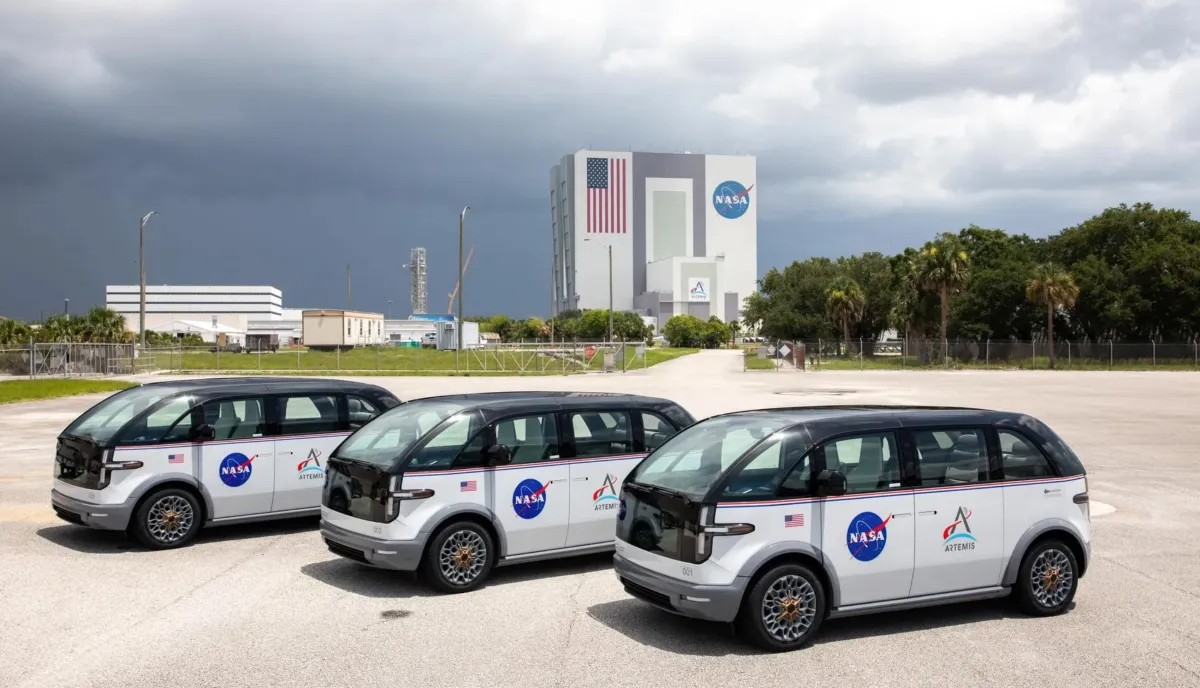
In 2023, NASA procured three Canoo EVs intended to support the Artemis lunar missions, specifically to shuttle astronauts to the launchpad. However, by October, NASA publicly stated that Canoo was unable to meet its mission requirements, leading to a swift transition to leasing the Astrovan, developed by Boeing and built by Airstream, for crew transportation. The decision highlights a industry-wide shift where the reliability and scalability of fledgling EV firms are increasingly questioned—particularly for missions demanding rigorous standards and guaranteed support. This incident exemplifies the risks associated with startups attempting to disrupt traditional aerospace support systems, revealing the critical importance of proven, dependable partners in government contracts.

Meanwhile, Canoo’s financial troubles culminated in a bankruptcy filing in January 2025, following long-standing struggles to carve out a sustainable market for its electric vans. The company’s assets were acquired by former CEO Tony Aquila for $4 million, despite intense competition from as many as eight interested parties. These included former employees’ startup Harbinger, which accused Canoo of asset hiding and alleged favoritism in the sale process, and a mysterious UK-based financier, Charles Garson, who offered up to $20 million. The court-appointed bankruptcy trustee and legal teams flagged concerns over foreign ownership, emphasizing national security considerations—a critical factor in government-related contracts involving NASA, USPS, and the DoD. Such developments illustrate that ongoing geopolitical risks and national security considerations are increasingly integral to EV industry investments, especially as startups seek entry into sensitive sectors.

The departure of Canoo from the government supply chain signifies a broader trend where disruption threatens to outpace the growth of sustainable, reliable automotive solutions. Traditionally, large defense and aerospace entities have prioritized stability; however, the influx of innovative startups driven by Elon Musk’s SpaceX and Peter Thiel’s Palantir continues to challenge this paradigm. Industry analysts from Gartner and MIT suggest that the future belongs to those who can transform disruption into scalable, secure, and mission-critical infrastructure. Companies that can innovate at the intersection of technology, security, and business agility will determine who leads the next frontier of transportation—whether on Earth or beyond—making it imperative to swiftly adapt to emerging risks and opportunities.

As the EV sector intensifies its race toward innovation, the case of Canoo illustrates a vital lesson: disruption alone is not enough. The path forward requires a strategic blend of technological excellence, operational resilience, and geopolitical awareness. With giants like NASA and USPS signaling caution, industry leaders must prioritize building trustworthy, scalable solutions that balance visionary innovation with reliability. The coming years promise a fierce contest for dominance in both commercial and government markets, and those who understand the importance of speed, security, and strategic foresight will shape the landscape of tomorrow’s transportation revolution.

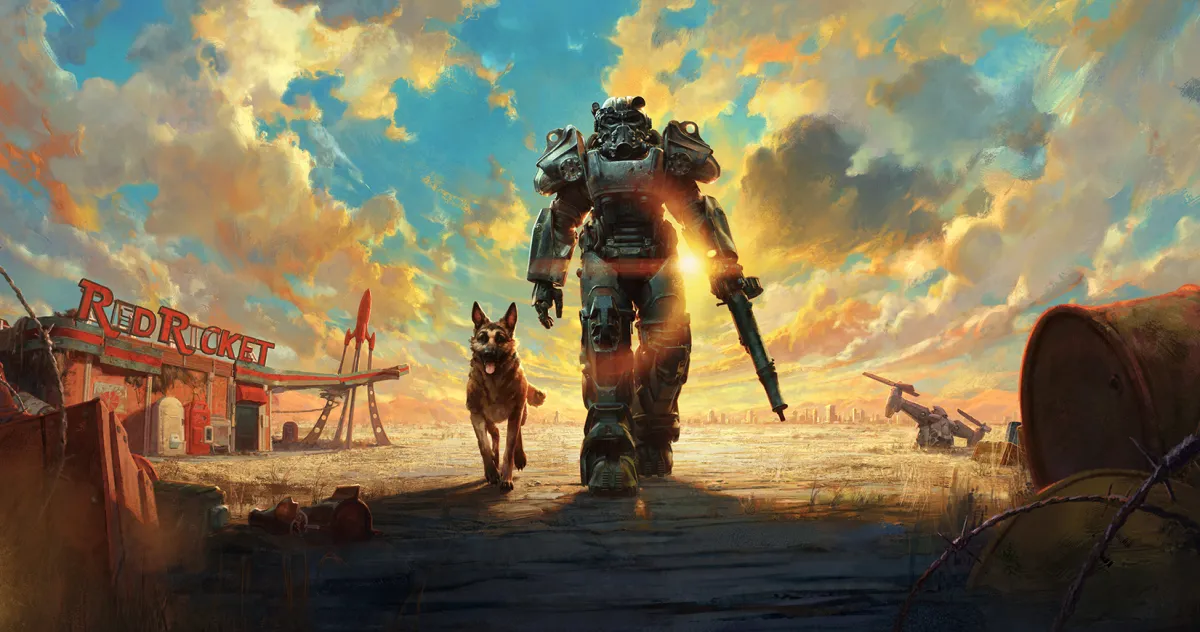
Fallout 4 Gets a Fresh Edition to Gear Up for the New TV Show

Gaming Milestone Meets Technological Disruption: Bethesda Celebrates Fallout 4’s Decade with Anniversary Edition

In a move that underscores the enduring impact of classic titles amid rapid technological shifts, Bethesda has announced the release of the Fallout 4 Anniversary Edition, coinciding with the game’s 10th anniversary. Scheduled for launch on November 10th across PC, PS4, PS5, Xbox One, and Xbox Series X/S, this edition exemplifies innovation in content delivery and reinforces the game’s relevance in an era dominated by continuous platform evolution and digital engagement. Offering the base game alongside six official expansions, over 150 creations from the Creation Club, and a dedicated hub for mods, Bethesda is reinforcing the game’s position as a business case study in longevity and community-driven content.

This strategic refresh arrives precisely one month before the debut of the second season of Prime Video’s Fallout series, creating an integrated entertainment ecosystem that blurs the lines between traditional gaming and streaming media. Such an approach exemplifies how legacy franchises can leverage technological disruption—through cross-media synergy—to amplify user engagement and extend brand dominance. The timing also hints at a broader industry trend: immersive content experiences are becoming pivotal to capturing consumer attention in a competitive multimedia landscape. Industry analysts point to this as a clear example of how existing properties can leverage technological advancements—such as enhanced mod ecosystems and multi-platform availability—to reinvigorate aging franchises and unlock new revenue streams.

In a notable move reflecting accelerated hardware innovation, Bethesda has announced that the Fallout 4 Anniversary Edition will arrive on the upcoming Nintendo Switch 2 next year. This aligns with a broader industry shift, where companies like Nintendo and Sony are pushing boundaries with next-generation consoles that promise more integrated, high-performance gaming. Industry insiders suggest that this generation will fundamentally disrupt how games are developed and consumed—with enhanced processing power facilitating richer graphics, more complex worlds, and innovative mod support.

  • Next-gen consoles will facilitate larger, more dynamic multiplayer experiences.
  • Game developers will have access to unprecedented hardware capabilities for innovation in game design.
  • Distribution models will increasingly emphasize digital content, making physical limitations less relevant.

Furthermore, the impending Switch 2’s third-party releases marks an industry-wide shift toward platform agnostic gaming, where high-quality titles are expected to run seamlessly across device ecosystems. Such disruptions hold profound implications for game publishers, hardware manufacturers, and content creators, requiring them to adopt more agile strategies to stay competitive.

Looking ahead, the intersection of legacy IP revitalization, technological innovation, and hardware advancements signals a transformative era for interactive entertainment. Disruption is no longer optional but essential, prompting industry leaders and startups alike to accelerate innovation pipelines. The opportunity for entrepreneurs and investors is clear: those willing to embrace emerging tech—such as cloud gaming, AR/VR, and AI-driven content creation—will shape the future landscape of entertainment. As Bethesda’s anniversary celebration exemplifies, combining nostalgia with cutting-edge technology isn’t just a marketing tactic; it’s a blueprint for future business model evolution—a call for the industry to respond swiftly and boldly to the relentless pace of change. The future belongs to those who innovate now, ensuring that gaming remains not just relevant but revolutionary.

Social Media Auto Publish Powered By : XYZScripts.com