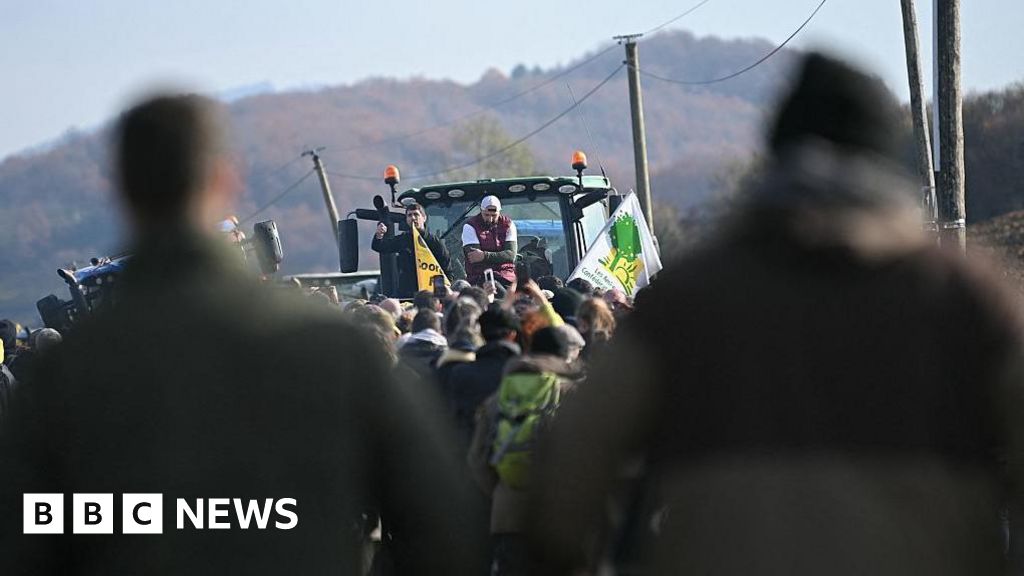

Amid mounting protests and widespread unrest, France finds itself at a crucial crossroads in an ongoing battle over agricultural sovereignty and economic stability. Angry farmers, disillusioned by government policies and EU directives, have staged intense demonstrations across rural regions, notably in the southern Ariège department, where clashes erupted between riot police and protestors over the controversial slaughter of cattle amid the outbreak of Lumpy Skin Disease (LSD). This highly contagious bovine affliction, transmitted predominantly through fly-bites, has ignited passions within France’s farming communities. Although the disease is rarely fatal, its economic toll—rendering cattle unsaleable and severely damaging milk production—has become a flashpoint in the broader struggle to preserve local agriculture and traditional ways of life.
The French government’s response, involving the mass slaughter of entire herds following isolated infections, has been met with fierce opposition from key farmers’ unions such as Conféderation Rurale and Conféderation Paysanne. These groups argue that the policy is an overreach, asserting that more nuanced methods like selective culling and vaccination could contain the disease without devastating farmers’ livelihoods. Nonetheless, most veterinary experts, including Stephanie Philizot, head of the SNGTV vets’ union, warn that the virus often appears in symptomless animals, making whole-herd slaughter a necessary, if harsh, precaution. With approximately 110 outbreaks since June, primarily in France’s east and increasingly spreading into the southwest, the situation underscores the challenge of balancing public health measures with economic survival in a climate of escalating farm crises.
Beyond the immediate health concerns, the crisis illustrates a broader geopolitical tension over EU policies, agrarian independence, and international trade. The French government fears that mounting protests and farmer unrest could escalate into a wider movement, fueling resistance against what many perceive as overreach by EU institutions. Upcoming protests scheduled in Brussels during an EU summit highlight the national frustration over policies perceived to threaten their economic sovereignty. These grievances extend beyond disease control; farmers vehemently oppose the impending EU free-trade agreement with South American nations. Many alarmed farmers see this treaty as a gateway for increased imports of cheaper food—often produced under looser environmental and sanitary regulations—posing a direct threat to France’s agricultural sector and its cultural identity.
International analysts and organizations continue to watch these developments closely, recognizing them as a microcosm of broader struggles faced by EU member states. Historian Dr. Marie Dubois notes that “the current unrest echoes the historical tension between national sovereignty and supranational mandates, reminiscent of past crises when local interests clashed with overarching EU directives.” The European Commission and national governments alike are under immense pressure to navigate these volatile waters—striving to enforce health policies without igniting societal backlash that could fracture the unity of the European project itself. The outcome of this confrontation—whether it leads to policy concessions, political upheaval, or a reevaluation of EU integration—remains uncertain, but the stakes could not be higher.
As France’s farmers brace for more protests and stand at the edge of an increasingly uncertain future, history’s pen continues to write its own story. The struggle for agricultural sovereignty, national identity, and economic survival is unfolding in real time, leaving the continent on the brink of a new chapter in its ongoing saga. The next few months may redefine not only French rural policy but also the very fabric of Europe’s unity—reminding the world that beneath every diplomatic handshake and treaty lies a fragile human pulse, beating with the hopes and fears of generations. History is watching, and what is written now will echo for decades to come.