Matox News

Truth Over Trends, always!

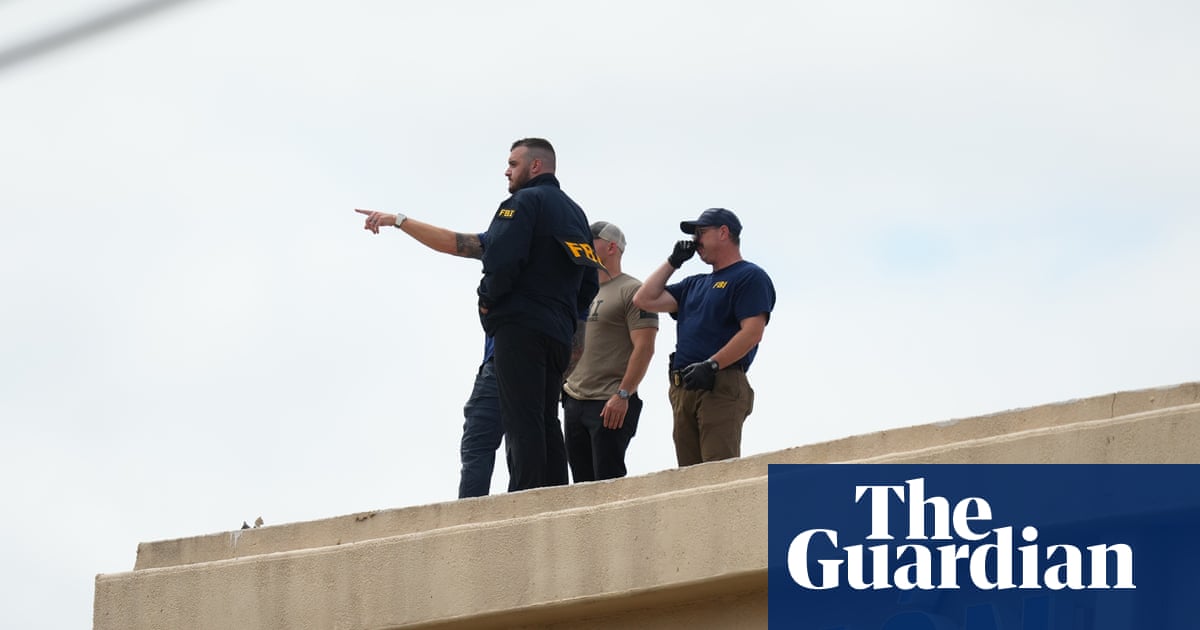
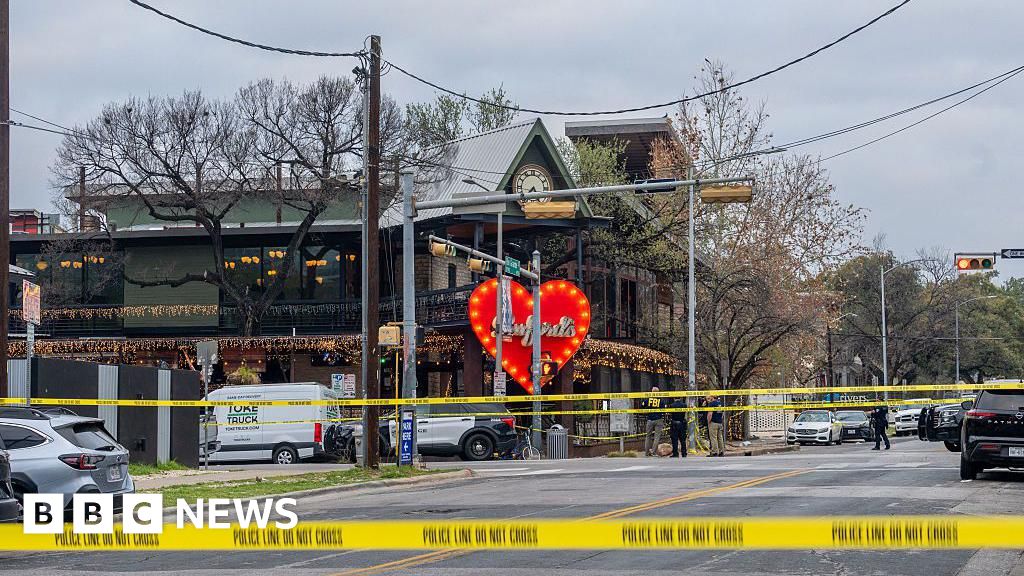
FBI: Texas Bar Shooting Could Be Terror Attack, Authorities Say

In a tragic incident that has captured international attention, a violent shooting event resulted in the deaths of **two individuals** and left **14 others injured**. Authorities confirmed that the suspected gunman was also shot dead at the scene, raising urgent questions about public safety, mental health, and the broader implications for security policies across nations.

Global leaders and security agencies have responded with immediate condemnation, emphasizing the critical need for coordinated efforts to prevent such tragedies. While the specifics of the attack remain under investigation, the incident underscores a common vulnerability: in a world grappling with escalating violence, individual acts of terror or impulse-driven violence can rapidly destabilize communities. Policymakers from **the United States**, **Europe**, and beyond are now scrutinizing existing laws and intervention strategies, with many calling for an urgent reevaluation of gun control measures, mental health support, and law enforcement preparedness.

The geopolitical impact of such events is profound. Countries with liberal attitudes toward firearms often face intensified domestic debates, but the ripple effects extend further. International organizations like **the United Nations** have long warned about the global escalation of violence and the importance of comprehensive security frameworks. As analysts note, moments like these are turning points that test the resilience of societal institutions and the ability of governments to uphold order amid chaos. The incident also intensifies the ongoing debate about **civil liberties versus public safety**, a tension that resonates across diverse political ideologies in multiple nations.

History and experts agree that such tragedies are not isolated incidents but part of a broader pattern that reflects social and psychological undercurrents in modern societies. According to security analysts and historians, these acts of violence often serve as stark reminders of the underlying fractures within communities—whether driven by economic disparity, ideological extremism, or mental health crises. The response to this shooting could either reinforce existing security policies or catalyze reforms aimed at more holistic societal resilience. As one renowned analyst remarked, “Today’s tragedy may ripple for decades, shaping policies and societal attitudes with consequences that will be debated by future generations.”

Amidst the fury of headlines and the grief of the victims’ families, history’s pen continues to write, capturing the unfolding narrative of a world where safety is increasingly fragile. As nations grapple with this latest tragedy, they are prompted to ask how humanity—young and old—can forge a collective path toward a future where such violence becomes a relic of the past. Yet, in the echoes of gunfire and tragedy, one truth remains clear: the weight of history presses heavily on the shoulders of all, a reminder that every decision, every policy, every society’s resolve, shapes the outcome of an uncertain tomorrow.


FBI and Minnesota cops probe ICE arrest that battered man’s skull

Investigation Unfolds Over Alleged ICE Assault in Minnesota

The recent incident involving Alberto Castañeda Mondragón, a Mexican national, has become a flashpoint in the ongoing debate over law enforcement conduct and immigration enforcement in the United States. Authorities in Minneapolis are investigating allegations that immigration officers from ICE brutally assaulted Castañeda Mondragón during a January arrest, resulting in severe skull fractures and life-threatening injuries. This case has ignited a global discussion about the abuses of power, racial profiling, and the lack of transparency surrounding immigration enforcement practices, raising critical questions about the consequences of aggressive policing tactics in a nation founded on the rule of law.

The facts surrounding the incident are under intense scrutiny. Witnesses and hospital reports indicate that Castañeda Mondragón sustained injuries incompatible with ICE’s narrative—claiming he attempted to escape handcuffs and hit his head on a concrete wall. Medical experts have dismissed this version, citing fractures across his skull that suggest levels of trauma inconsistent with a fall. Meanwhile, surveillance footage from nearby businesses, which could shed light on the events, appears to have been overwritten, hampering efforts by investigators. The FBI and St. Paul police are now probing the circumstances—yet a climate of suspicion persists, fueled in part by past abuses and controversies involving ICE officers.

This case is emblematic of broader geopolitical tensions that cross national borders. The United States has long been entangled in a complex and often controversial immigration policy, with critics accusing federal agencies of racial bias, misconduct, and systemic abuse. As analysts warn, these incidents can harden anti-American sentiment in Latin America and erode the legitimacy of U.S. justice, particularly when the global community increasingly views America’s immigration enforcement as a form of soft imperialism. The publicized misconduct not only jeopardizes U.S. diplomatic relations—especially with Mexico, whose citizens are disproportionately affected—but also fuels discontent and mistrust among immigrant communities within the country. The policies that govern immigration enforcement thus directly influence social cohesion, international perceptions, and geopolitical stability.

From the perspective of international institutions and historical critics, the controversy highlights a recurring pattern: yet another example where law enforcement agencies in the West are accused of crossing the boundaries of acceptable conduct, risking the erosion of civil liberties. The United Nations and human rights organizations have expressed concern over the increase in police brutality and controversial immigration raids, framing them as symptomatic of wider systemic failures. Some experts, including prominent historians, note that such incidents echo troubling chapters from the history of authoritarian state tactics—where perceived threats are harshly suppressed, often with minimal accountability. The relentless scrutiny sent through investigations and court proceedings becomes a challenge to the “culture of impunity” that persists in some law enforcement circles.

Crucially, this incident underscores the turning point in public awareness about civil rights versus national security priorities. As lawmakers and civic advocates demand increased transparency and accountability, the timing could not be more pivotal. The U.S. faces mounting pressure to reconcile its commitment to international human rights standards with its enforcement policies—an effort further complicated by internal political divisions and the influence of powerful security agencies. The case of Alberto Castañeda Mondragón might serve as a catalyst for reform or, conversely, deepen the cycle of secrecy and misuse of authority if unchecked. Ultimately, the unfolding drama encapsulates a core question: which principles will define the future of justice in a nation that claims to stand for liberty and equality but is haunted by its own shadows of violence and injustice? As history continues to be written, the world—and the victims of these encounters—wait for answers yet to come.

FBI Releases Images of Masked Suspect in Savannah Guthrie's Mother Case
FBI Releases Images of Masked Suspect in Savannah Guthrie’s Mother Case

In a development that resonates far beyond the borders of Arizona, the mysterious disappearance of Savannah’s mother from her Tucson residence has ignited a wave of concern among local and international observers alike. Last seen on the night of January 31, her sudden vanishing underscores persistent vulnerabilities in domestic security and raises questions about broader geopolitical implications rooted in regional stability and societal resilience.

This incident, while ostensibly a personal tragedy, echoes the larger patterns of insecurity that ripple through many nations grappling with increasing social unrest and unpredictable threats. Analysts highlight that such cases—though often dismissed as isolated—serve as stark reminders of an underlying global trend: a weakening fabric of personal safety amid a tumultuous geopolitical landscape. The United Nations and various regional security agencies warn that domestic vulnerabilities often intersect with larger political fault lines, destabilizing societies from the ground up. Decisions taken in the corridors of power—be they policies on immigration, law enforcement, or border security—inevitably shape the safety and stability of communities like Tucson, with ripple effects reaching well beyond American borders.

Historically, America has positioned itself as a beacon of personal freedom and security; however, recent incidents reveal cracks in this narrative. Experts caution that the ongoing internal struggles over resource allocation, migration, and civil liberties are fueling a rise in unpredictable events. According to respected analysts such as those at the Cato Institute, these incidents threaten to undermine the fabric of national cohesion and challenge the perception of America as a safe haven. Meanwhile, international bodies observe that such domestic unrest can influence bilateral relations, particularly with neighboring countries that share migration corridors or economic ties with the United States.

At a time when global tensions escalate—particularly with rising powers vying for dominance—the plight of individual citizens like Savannah’s mother masks the broader geopolitical stakes. Security, stability, and societal confidence are delicate threads pulled taut by international shifts and internal decision-making. International organizations, including INTERPOL and NATO, have repeatedly warned that neglecting these domestic issues can create openings for destabilizing elements, both from within and outside national borders. As world leaders debate alliances, trade, and military strategies, the security of ordinary citizens remains an essential yet often overlooked piece of the strategic puzzle.

The unfolding story of Savannah’s missing mother is thus more than a personal tragedy; it is a symbolic chapter in the ongoing narrative of a world teetering at a crossroads. History’s pen continues to write a complex and often tragic story—one that demands vigilance, decisive action, and a recognition that today’s decisions directly shape tomorrow’s societies. As communities worldwide grapple with chaos and change, the weight of history presses heavily on the present, reminding us that every disappearance, every crisis, is a piece in a much larger and more urgent puzzle—one that will ultimately define the future of nations and civilizations alike.

Atlanta FBI Boss Ousted After Raising Concerns Over DOJ’s 2020 Election Focus

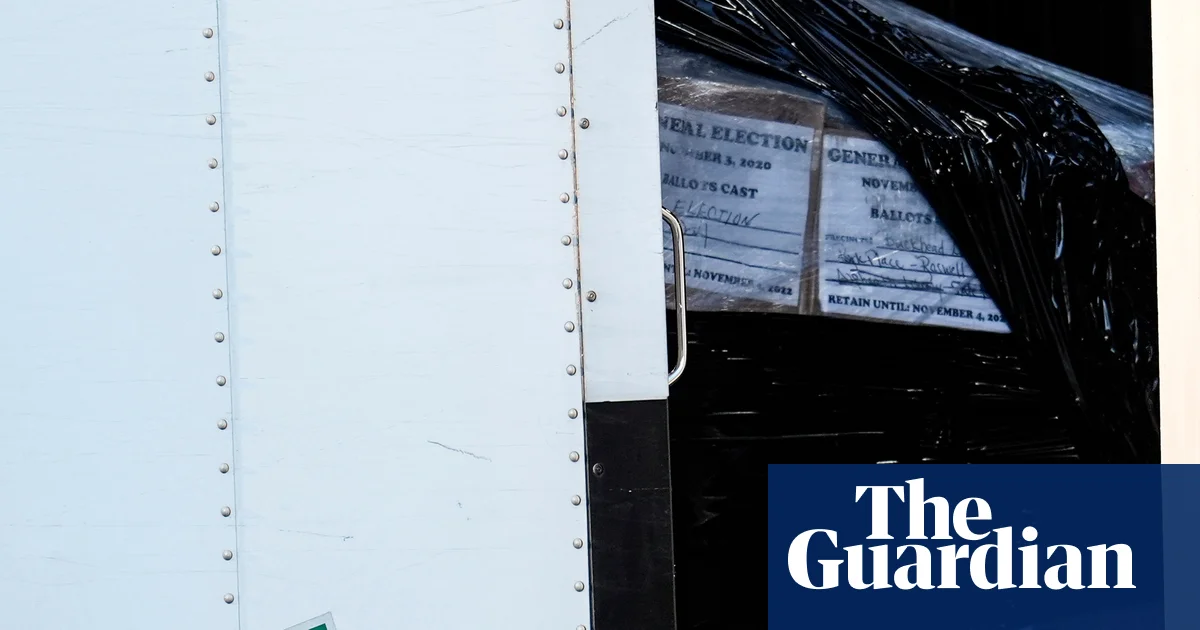
In a decisive move that underscores the ongoing turmoil over the legitimacy of the 2020 presidential election, recent events in Fulton County, Georgia have thrust the American political landscape into renewed chaos. The FBI’s Atlanta field office experienced a controversial personnel shake-up, with the special agent in charge, Paul W Brown, reportedly removed from his post after voicing concerns about the unsubstantiated allegations of voter fraud perpetuated by Donald Trump. This unexpected personnel change coincided with a major raid by the Department of Justice, which seized approximately 700 boxes of election-related records from the Fulton County elections office—an action many see as an escalation in partisan confrontations over the legitimacy of the 2020 election results.

Critics and analysts argue that these developments are reflective of a broader trend of political overreach and destabilization that threatens the integrity of American democracy. The removal of Brown came shortly before the FBI executed a search warrant, which, according to insiders, was aimed at uncovering evidence related to the 2020 election—a period marked by widespread claims of fraud that have been repeatedly debunked by election integrity experts. However, the presence of figures like Tulsi Gabbard, the nation’s intelligence director, at the scene has further intensified partisan tensions, prompting concerns among Democratic lawmakers about potential partisan overreach. As Robb Pitts, the Fulton County Board of Commissioners chair, publicly defended the county’s election process, asserting that “the outcome of the 2020 election will not change,” the underlying message remains clear: the controversy persists as a political tool to undermine trust in electoral systems.

Distinguished from these events is the broader geopolitical significance of America’s tumultuous domestic politics. Many international observers, including prominent historians and analysts from institutions like the European Union and United Nations, have warned that such internal strife weakens America’s global leadership. The repeated claims of election rigging, despite being thoroughly discredited, continue to erode the moral authority of American institutions. These narratives are exploited by adversaries seeking to diminish the influence of the United States on the world stage, undercutting long-standing alliances and destabilizing international order. As the United States grapples with its internal divisions, the fissures threaten to embolden autocratic regimes that see chaos at home as a strategic advantage.

Meanwhile, the debate over how elections are conducted and validated in America reflects a deeper ideological struggle that could reshape the very fabric of society. The omission of accountability and transparency could lead to a dangerous erosion of faith in democratic processes altogether—a scenario warned against by historians who emphasize the importance of electoral trust for democracy’s survival. With the 2024 presidential race now on the horizon, the question remains whether the United States can reconcile these divisions or if a turning point in its history—marked by increased polarization and international skepticism— is imminent. As the world watches, the shadows of the past threaten to haunt the present, leaving an uncertain and turbulent legacy that will define the next chapter of global geopolitics—its outcome still very much unwritten.

FBI Stops Los Angeles New Year’s Eve Terror Plot, Authorities Announce

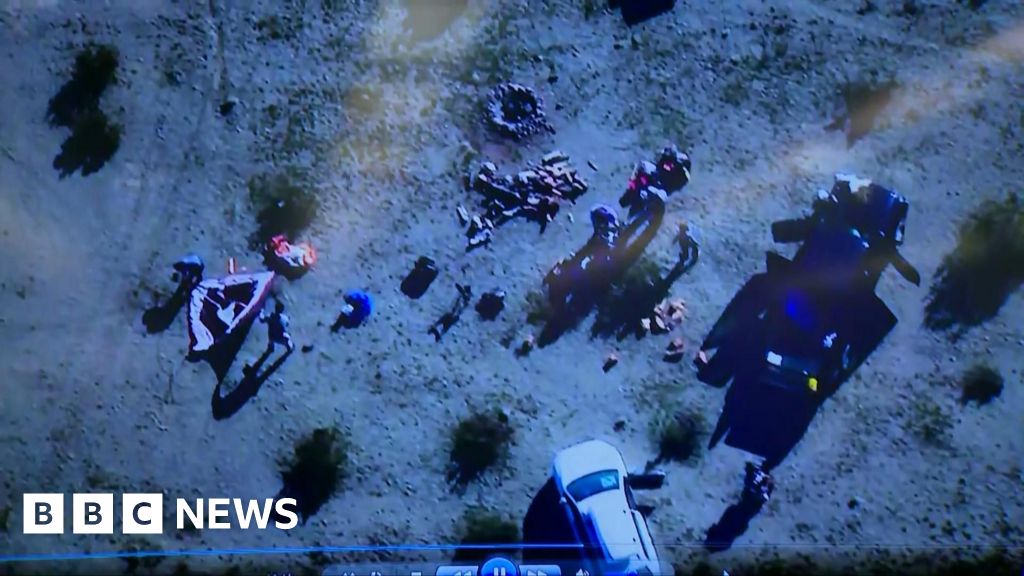
The recent disruption of a potential terror attack in Los Angeles by federal authorities underscores the fragile geopolitical landscape and the persistent threat of extremism within the United States. According to officials, four members of the Turtle Island Liberation Front, a radical offshoot of a pro-Palestinian, anti-government faction, were arrested on suspicion of plotting a coordinated bombing campaign aimed at multiple locations across southern California. The plot, believed to have been scheduled around the New Year’s Eve festivities, involved testing improvised explosive devices in the desert east of the city—a development that raises alarm on multiple levels.

This incident illustrates a broader challenge confronting America’s national security apparatus amidst an increasingly complex geopolitical matrix. The FBI’s swift intervention, which utilized surveillance assets and tactical forces, demonstrates the importance of vigilant law enforcement in countering domestic terror threats. US Attorney General Pam Bondi labeled the foiling of this plot as a preventative measure against “far-left” extremists, emphasizing that the threat comes from varied ideological spectrums. Analysts note that this event signals a shift in how domestic threats are perceived, especially as radical groups exploit social grievances and ideological fissures to mobilize and plan violence.

Significantly, researchers and international organizations have long warned of the rising proliferation of radical ideologies and their potential to destabilize societies. The United Nations and Department of Homeland Security have argued that such plots, if successful, could have devastating impacts — not only on local communities but also on international perceptions of America’s ability to maintain internal security. The suspects, whose ages range from 24 to 41, face serious charges including conspiracy and possession of unregistered destructive devices, highlighting the criminal underpinnings that threaten peace and stability. The incident also spotlights the ongoing challenge of radicalization and the necessity of resilient national security policies rooted in both intelligence and community engagement.

The broader geopolitical impact of this event extends beyond U.S. borders, fueling debates around extremism, migration policies, and the influence of global conflicts on domestic security. As China, Russia, and other geopolitical players continue to extend their influence through strategic maneuvers, the stability of the United States remains critical in maintaining global equilibrium. Analysts warn that permitting radical factions to operate unchecked threatens not only national but international stability, prompting a renewed focus on intelligence-sharing and preventative measures. The foiled plot in Los Angeles is a stark reminder that history continues to unfold on America’s streets—a saga where the lines between domestic and international threats blur beneath the weight of political and ideological turmoil.

As authorities continue to investigate potential ties and broader networks, the question remains: how prepared is the international community to confront these multifaceted threats? The incident has become a cautionary tale, illustrating how decisions made in the corridors of power and the actions of small extremist groups can leave a lasting mark on the modern geopolitical narrative. Today, history watches as an unpredictable future emerges—one where the resilience of societies, the vigilance of nations, and the resolve of global institutions will determine whether this chapter ends with tragedy or resilience. And as the world turns its gaze to the unfolding story, the true significance of this foiled attack may only be understood with hindsight, leaving society to ponder a simple but profound truth: the era of peace is never guaranteed—only defended.

FBI Under Kash Patel’s Watch: Rumors of Fear Stalling Progress, Report Claims

Internal Crisis at the FBI: A Glimpse into U.S. Federal Collapse and Its Global Ramifications

The recent revelations about the Federal Bureau of Investigation (FBI) portray an agency in disarray under the leadership of Kash Patel, painting a troubling picture of internal paralysis, morale plummeting, and a leadership seemingly overwhelmed by the complex demands of modern federal law enforcement. According to a leaked 115-page report compiled by a coalition of retired and active FBI agents, the agency is considered a “rudderless ship,” with staff plagued by fear and a crippling lack of initiative. Such internal strife raises fundamental questions about the state of American federal institutions and their capacity to uphold law & order, especially at a time when global stability hinges on reliable, strong alliances.

This crisis transcends domestic concerns, as international partners grow increasingly wary of U.S. credibility. The report indicates that allied law enforcement and intelligence agencies are worried that the perceived chaos could undermine decades of international cooperation. Analysts emphasize that trust among global allies, especially those involved in counterterrorism and intelligence sharing, is fragile and cannot withstand internal upheaval in American institutions. When a major domestic agency like the FBI falters, it sends ripples across the entire international security architecture—potentially creating a vacuum for adversaries and rogue states to exploit. The report further warns that “long-term damage” to international partnerships may have irreversible consequences, especially if internal divisions stymie Washington’s ability to project stability and leadership on the world stage.

Within the United States, the public trust in federal law enforcement is already strained. The report criticizes Patel’s leadership for lacking experience and for fostering a climate of fear, with managers hesitant to take initiative without explicit directives, effectively turning the bureau into a bureaucratic shell vulnerable to political manipulation. Numerous experts, including prominent historians and security analysts, warn that such internal vulnerabilities are symptomatic of broader erosion in U.S. institutions—a decay that “undermines the very foundations of American sovereignty”. The controversy around Patel’s tenure mirrors a larger trend of political weaponization of federal agencies, which many argue compromises their ability to serve as neutral arbiters of justice. This erosion of institutional integrity risks tarnishing America’s global image as a defender of rule of law and constitutional order.

Cases of misconduct and mismanagement—such as controversial decisions to withhold sensitive information and interpersonal conflicts, including Patel’s allegedly inflammatory outbursts—further fuel concerns about the quality of leadership. Critics point out that such internal discord feeds into the narrative of decline and chaos that adversaries and skeptics are eager to exploit. Yet, amidst these crises, some voices within the political establishment defend Patel, emphasizing efforts to rollback divisive social policies and strengthen immigration enforcement. Nevertheless, the underlying warning remains clear: unless the U.S. can restore confidence and restore order within its premier law enforcement agency, the nation risks becoming a fractured pillar in the global arena—a development that history will remember as a turning point in America’s internal and international decline. The weight of this unfolding story will ultimately depend on whether Washington can stem the tide of internal disorder before it becomes an irreversible chapter in history.

FBI dismisses agents seen kneeling at George Floyd protest, reports say

Recent developments within the Federal Bureau of Investigation (FBI) have ignited debates that resonate far beyond the confines of American justice agencies. Reports indicate that between 15 to 20 agents, who were photographed kneeling during a 2020 racial justice protest in Washington, D.C., have been dismissed. These agents participated in a symbolic gesture—kneeling at a demonstration sparked by the tragic death of George Floyd. Floyd, a Black man, was killed in a brutal incident where a police officer, Derek Chauvin, knelt on his neck for over nine minutes. The act became a global emblem of protest against police brutality and systemic racism. However, amidst a climate increasingly tense following the Trump administration’s push to purge what it perceives as “woke” ideology, these firings are portrayed by many as emblematic of the fight over the soul and role of law enforcement in America.

  • The firings have particular significance as they occur against the backdrop of an ongoing political campaign for Trump’s conservatives to reshape federal institutions. Critics argue this purge targets figures perceived as sympathetic to progressive violence and social justice protests, framing the move as part of a broader effort to “restore order” by removing perceived ideological contaminants.
  • International observers and analysts have noted this as a pivotal moment in the internal conflicts within U.S. institutions, where decisions made reflect a clash over how history should be remembered and what values law enforcement officials should embody.

The FBI’s choice to fire agents citing their participation in a gesture observed widely as a peaceful act of dissent raises concerns about the suppression of free expression within the ranks of American federal agencies. The agency has declined to comment on the matter, but the FBI Agents Association issued a blistering statement condemning the firings as violations of the agents’ rights and warning that the integrity and capability of the bureau are at risk. The controversy becomes even more profound considering recent legal actions by former agents suing FBI Director Kash Patel and the U.S. Attorney General, claiming their dismissals are politically motivated, aimed at placating the Trump legacy.

Internationally, this internal crisis feeds into the larger narrative of how Western democracies grapple with the legacies of social activism and identity politics. Historians and political analysts warn that the framing of these firings as ideological purges not only impacts public trust in law enforcement but also signals a shift in how the balance of order and dissent is navigated in the post-pandemic era. As countries across the world watch the unfolding drama, many are debating whether the American model is veering towards a new form of authoritarianism disguised as “restoring order,” or if this is merely a turbulent phase in the country’s ongoing evolution.

The decision to dismiss those who sought only to act as symbols of lawful dissent underscores a larger, more somber reality: history is watching, and the pages of the future are still being written. The unrest over police violence, social justice, and political partisanship has not yet reached its final chapter. As young Americans and global citizens await the next move, they are left to ponder: will history remember this as the moment when law and order surrendered to ideological extremism, or as the dawn of a new era where justice embraces dialogue over suppression? The answers depend on the choices made now, and on the resolve of societies to confront the true meaning of liberty and justice in a fractured world.

Dallas Ice shooting suspect planned attack, FBI warns—youth warned to stay alert

In recent days, the United States has faced a stark reminder of the rising tide of political violence and internal strife. The shocking attack on an Immigration and Customs Enforcement (ICE) detention facility in Dallas underscores the deepening divisions within American society—a nation torn between lawlessness and the rule of law. The FBI disclosed that the suspect, identified as 29-year-old Joshua Jahn, meticulously planned the assault, even deploying a ladder and a high-powered rifle with sniper capabilities. Such details reveal an alarming degree of premeditation, emphasizing that the incident was not an impulsive act but a calculated strike against the very institutions meant to uphold national sovereignty and law enforcement integrity. As analysts from think tanks warn, these acts threaten to destabilize America’s internal security and fuel further polarization, which, if left unaddressed, could usher in an era of increasing chaos and societal fracture.

The geopolitical impact of this domestic crisis extends far beyond U.S. borders. As the Biden administration struggles to manage a surge in political extremism, international observers from Russia to China, along with global organizations such as the United Nations, are watching with concern. The incident comes amid a backdrop of strained global relations, where weak governance in the USA fuels skepticism about American leadership and stability. The rhetoric surrounding the attack, with former President Donald Trump and right-wing commentators framing it as a consequence of what they label as “radical left” policies, exemplifies how domestic issues are increasingly intertwined with international perceptions of American strength. The potential for such violence to influence foreign policy and global stability remains a key concern, particularly as nations contend with their own internal conflicts and the erosion of traditional security paradigms.

Notably, this attack appears to be a manifestation of rising militant tensions fueled by intense partisan conflicts and an emboldening of radical elements. Historians caution that in times of social upheaval, acts of targeted violence against government institutions are often precursors to broader destabilization. Various analysts from NATO to the European Union have warned that the ongoing polarization within the USA may serve as a blueprint for others who seek to undermine Western cohesion. The suspect’s expressed hatred for the federal government, along with notes indicating an intent to instill terror among ICE agents, reveal troubling ideological undercurrents that could inspire copycat violence internationally. These dynamics threaten to ripple outward, challenging the stability of democracies around the world. As the global community observes the U.S. domestic crisis unfolding, the need for decisive leadership becomes undeniable.

Ultimately, the Dallas shooting encapsulates a pivotal moment—an ongoing chapter of history still being written. With each act of violence, the fragile fabric of societal trust is further frayed, pushing nations to confront uncomfortable truths about internal divisions and external instability. The world watches breathlessly, aware that such acts of terrorism, rooted in hatred and ideological extremism, have consequences far beyond national borders. As leaders debate solutions, the weight of history presses down: will the United States emerge resilient, or will this be a harbinger of a new era of chaos? The answer remains unwritten, but the shadows cast by this violence will surely shape the pages of history for generations to come.

Social Media Auto Publish Powered By : XYZScripts.com