Matox News

Truth Over Trends, always!

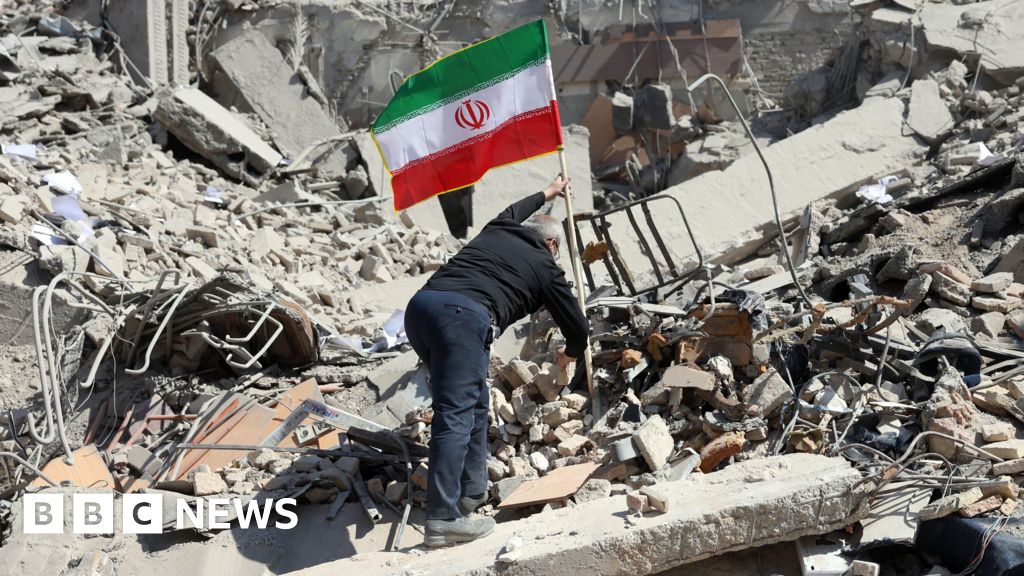
Iranians Say US-Israeli Strikes Make Every Day Feel Like a Month—A Bleak Reality for Youth

The ongoing crisis in Iran continues to roil the nation as widespread strikes, internet blackouts, and brutal security crackdowns redefine the country’s socio-political landscape. Citizens, seeking to voice their discontent against a backdrop of oppressive governance, are facing an escalating campaign of repression designed to stifle dissent and maintain the status quo. This internal chaos is not only damaging Iran’s social fabric but also has significant geopolitical implications for the wider Middle East and global stability.

Amidst the turmoil, ordinary Iranians are struggling to stay connected with loved ones. Daily protests and strikes have become a common feature across cities such as Tehran, Mashhad, and Isfahan, as citizens demand political reform, economic relief, and greater personal freedoms. Meanwhile, the government has responded with a calculated tightening of control, resorting to internet shutdowns and violent crackdowns to suppress the burgeoning movement. Human rights groups have reported that such measures are intensifying, with reports of security forces using live ammunition and mass arrests to quash protests. These actions have drawn widespread condemnation from international observers who see Tehran’s crackdown as a testament to the regime’s vulnerability and desperation to preserve its grip on power.

Notable analysts, including those from organizations like the United Nations and think tanks specializing in Middle Eastern affairs, warn that the escalation of internal strife could destabilize the region further. Historically, Iran’s internal stability has been paramount to the balance of power in the Gulf, influencing everything from oil markets to regional alliances. Any significant upheaval risks emboldening Iran’s regional adversaries, particularly in areas where Iran’s influence has historically been challenged. Some experts suggest that this internal crisis might force the regime to pivot toward more aggressive foreign policy postures or confrontational stances to divert attention from domestic issues.

Discontent within Iran is also fueling debates on the impact of international sanctions, economic hardship, and ideological repression. The country’s leadership continues to face accusations of using radical measures to suppress a populist uprising, even as the pressure from external actors intensifies. The situation echoes warnings from historians who track the rise and fall of authoritarian states: when legitimacy erodes and repression intensifies, the scale of potential upheaval can grow exponentially. As the world watches, the fate of Iran remains a pivotal chapter with the power to reshape regional alliances and redefine global energy security.

As the nation teeters on the brink, history lingers in the shadows of these burgeoning events. With every death, every arrest, and every blackout, a question persists: will this volatile chapter forge a new future, or will it plunge Iran into deeper chaos? The answer remains elusive, yet the unfolding story continues to bear witness to a critical moment — one that will undoubtedly leave an indelible mark on history’s collective memory. The global community must remain vigilant, for the repercussions of Iran’s internal struggle are far more than regional — they are a testament to the enduring struggle for freedom and sovereignty amid the shadows of authoritarian power.

UK Jobless Rate Hits Four-Year Peak of 5.1% Ahead of Budget—Youth Feel the Impact

Across the United Kingdom, recent labor market statistics reveal a troubling trend: unemployment has surged to a four-year high of 5.1% in the quarter ending October. This escalation signals a significant economic weakening, with the Office for National Statistics (ONS) reporting a decline of 38,000 payroll employees in November alone. Such figures echo a broader instability that threatens to destabilize the country’s fiscal and social stability. The rise in unemployment benefits and the reduction in hiring activity collectively underscore a labor market under duress, indicting ongoing economic vulnerabilities that have profound impacts on societal cohesion and national confidence.

Notably, the most affected demographic appears to be younger workers, a trend highlighted by analysts and supported by studies from organizations like the Resolution Foundation. These experts emphasize that, since 2020, an additional 415,000 individuals under 26 have joined unemployment rolls, posing serious questions about the future of youth employment and social mobility in the UK. The persistent rise in joblessness, despite the official unemployment rising from 3.9% in late 2023 to 5.1% by September 2025, signifies *a systemic crisis*. It reveals how the interconnectedness of global markets and domestic policy failures can magnify economic hardship for emerging generations, with potentially long-lasting geopolitical consequences.

Global analysts suggest that these economic difficulties are unlikely to be isolated incidents. The growing unemployment trend, combined with stagnant wage growth—currently hovering at 4.6%, only marginally above inflation—further compounds the challenge. Inflation has eased somewhat but remains elevated at approximately 3.6%, creating pressure on household budgets. The impending decision by the Bank of England to potentially cut interest rates from 4% to 3.75% indicates an attempt to mitigate economic strain. Yet, such measures could have broader ramifications for international financial markets and influence economic alliances, especially as the UK navigates an era of geopolitical uncertainty powered by shifting alliances and economic competition.

Historically, economic downturns of this magnitude not only weaken a nation’s internal stability but also recalibrate its global standing. As analysts warn of potential divisions within international powerhouse blocs, the UK’s economic trajectory may serve as a signal to other nations facing similar challenges in the wake of global upheaval. European and American allies watch closely—highlighting how economic resilience or fragility in one nation can alter the course of international relations. There is an increasing recognition—both among policymakers and global strategists—that economic stability is now intertwined with geopolitical influence, with the current UK crisis illustrating a broader pattern of *nation-states grappling with the consequences of global dislocation*.

As history continues to unfurl, the fragile fabric of a nation’s economy becomes a mirror of its geopolitical destiny. The decisions made today—whether to stimulate growth, reform labor markets, or fortify social safety nets—will resonate through the corridors of history. The shadow of unemployment and economic uncertainty looms large, a stark reminder that in an interconnected world, the fate of a nation is writ not solely in its borders but across the intricate web of global power dynamics. As leaders grapple with meeting the crisis, the weight of history presses ever harder, hinting that the coming months could redefine the course of the United Kingdom and, perhaps, the balance of global influence itself.

Big earthquake hits Japan’s northeast—youth feel the shake

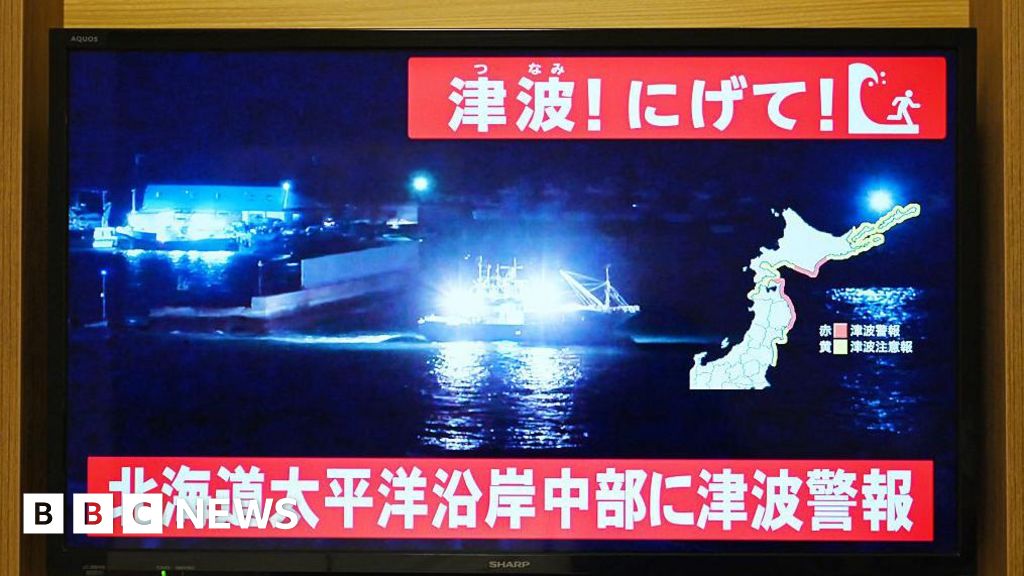
In a stark reminder of Japan’s geological volatility, a powerful magnitude 7.6 earthquake struck the country’s northeastern coast, igniting fears of a potential tsunami and reigniting debates over the nation’s resilience in the face of natural disasters. The quake, which occurred at a depth of 50km approximately 80km off the coast of Amori, happened at 23:15 local time, and was felt across the region, prompting widespread evacuations and a flurry of emergency measures. Despite the immediate downgrade of tsunami warnings to advisories, the impact on local communities has been profound, with reports of injuries and disruptions to transportation infrastructure, underscoring the enduring threat that Japan’s complex geology poses to its society and economy.

International and national authorities responded swiftly to the crisis. The Japanese government activated emergency response offices within the Prime Minister’s crisis management center, mobilizing rescue and relief operations amidst the chaos. Minoru Kihara, Japan’s chief cabinet secretary, emphasized the relentless efforts to contain the damage and safeguard citizens. Meanwhile, the **Japan Meteorological Agency** underscored that no irregularities were reported at critical nuclear facilities like the Higashidori and Onagawa plants, nor at the **Fukushima** site, where the 2011 catastrophe remains a haunting precedent. Yet, the possibility of secondary disasters, including aftershocks or nuclear complications, continues to loom, echoing the historical trauma of the 2011 catastrophe that claimed over 18,000 lives, a devastating legacy that still influences Japan’s disaster preparedness strategy.

The geopolitical impact of such seismic events cannot be understated. As Japan navigates its path through an increasingly volatile Pacific Ring of Fire, skeptics argue that technological safeguards and disaster readiness must be constantly reevaluated. Analysts from global institutions, including the International Atomic Energy Agency, assess that such earthquakes have broader implications for regional stability, especially as tensions escalate in the Asia-Pacific region on multiple fronts. How Japan responds to these natural crises shapes not only national resilience but also influences regional security architectures, especially in an era where climate change may intensify geological activity. Moreover, the event underscores the importance of global cooperation, disaster response networks, and the need for international organizations to prepare for potential worst-case scenarios that could ripple beyond Japan’s shores, destabilizing neighboring countries and altering geopolitical balances.

As the echoes of the earthquake continue to reverberate across Japan and beyond, history remains a watchful sentinel. The lessons learned from 2011 still resonate—lessons of humility before nature’s immense forces, and the vital importance of preparedness in shielding societies from the fury of earth’s restless crust. With each tremor, the story of Japan’s endurance — and the world’s collective responsibility — is written anew, hanging in the balance of factors beyond human control, yet within the realm of human resolve. The unfolding chapters of this seismic saga serve as a stark reminder: in the theater of global geopolitics, natural catastrophes are both a test and a prophecy—an enduring testament to how fragile yet resilient our shared world truly is.

Air Safety Workers Feel the Heat as Shutdown Drags On

Cracks in the Sky: FAA Staffing Shortfalls and System Disruptions Signal Urgent Need for Technological Disruption

The recent turmoil within the United States’ aviation infrastructure has underscored a stark reality: our current air traffic management systems are ill-equipped to handle modern challenges. From the catastrophic January commercial airline incident, which marked the worst in decades, to widespread staffing shortfalls and technological glitches at key airports, industry analysts are sounding alarms. As agencies face cumulative cuts and operational setbacks, the imperative for disruptive innovation becomes undeniable. Leaders like Elon Musk and MIT researchers have long championed the transition from legacy systems to AI-driven automation, recognizing that technological stagnation risks jeopardizing safety and business efficiency.

The crisis extends beyond mere staffing issues; it exposes systemic vulnerabilities that threaten the future of aviation safety.

  • Short-term furloughs impacting 11,300 employees contribute to delays in system repairs and response times.
  • Recent technology failures at major hubs like Newark Airport highlight outdated infrastructure unable to cope with escalating demands.
  • Government shutdowns add political gridlock to operational chaos, creating a perfect storm for disruption.

Experts warn that without rapid adoption of next-gen solutions, the industry could face catastrophic failures reminiscent of early aviation tragedies but on a digital scale—a clear call for innovation-driven disruption. The business implications are profound: reduced efficiency, mounting costs, and increased safety risks could erode public trust, providing fertile ground for insurgent startups and tech giants aiming to redefine airspace management.

Forward-thinking companies, especially those pioneering artificial intelligence, automation, and decentralized control systems, stand at the forefront of this transformation. Industry analysts such as Gartner emphasize the potential of integrating AI and machine learning into ATC systems, promising safer and more efficient operations. Disruptors like Lilium and Volocopter push urban air mobility solutions that could redefine short-haul travel. Meanwhile, mainstream tech giants with aviation ambitions—think Google’s Wing and Tesla’s advances in battery tech—are positioning themselves as critical players in this new era. The opportunity to overhaul a decades-old infrastructure presents a window for entrepreneurs and investors to accelerate rapid development, but the clock is ticking. Without urgent intervention, the risk of falling further behind international competitors—and even risking safety—grows exponentially.

In conclusion, the ongoing difficulties within the U.S. air traffic control ecosystem serve as a resounding wake-up call. The convergence of technological obsolescence, resource scarcity, and political inertia demands a bold strategy rooted in innovation and disruption. Industry leaders, policymakers, and tech innovators must recognize that the future of safe, reliable air travel hinges on revolutionary change—before the skies become too congested or unsafe to manage conventionally. As Peter Thiel once warned, “The capture of key industries by bureaucracies breeds stagnation.” It is now imperative that industry actors seize this moment to forge a new frontier in aviation technology—one that guarantees safety, efficiency, and industry leadership in the decades to come. The urgency is clear: the sky is not the limit; it is the battleground for the next wave of technological supremacy.

Tourists in D.C. Feel the Pinch as Shutdown Closes Big Attractions

The United States has entered its second day of a government shutdown, a critical event that signals deeper fractures within the nation’s political landscape. As federal agencies grind to a halt, the immediate domestic effects are profound—numerous national monuments and public institutions have closed their doors, denying millions access to their cultural and historical landmarks. While many in the American public initially perceive this as an internal political impasse, analysts warn that the ripple effects go far beyond borders, threatening both economic stability and geopolitical credibility.

This shutdown underscores a broader trend of political polarization in Washington, with lawmakers locked in intractable disputes over funding and policy priorities. The BBC’s coverage highlights global concern as tourists from around the world experience firsthand the consequences of elected officials’ failure to compromise. In particular, the closure of sites like the Capitol, the Smithsonian museums, and national parks serves as a stark reminder of how internal political discord can tarnish a nation’s image and undermine the strength of its institutions. Past historian analyses emphasize that prolonged governmental paralysis not only diminishes public trust but also erodes the United States’ standing as a reliable partner on the international stage.

From a geopolitical impact perspective, the shutdown hampers America’s ability to project influence, especially amid ongoing global conflicts and shifting alliances. International organizations such as the United Nations and G7 are closely observing the internal chaos, recognizing that internal political stability is fundamental to maintaining dominance in world affairs. Economic consequences are particularly alarming: with government programs and contracts frozen, markets are reacting with volatility, potentially impacting global supply chains and investor confidence. Experts warn that unless resolved quickly, the inability of the US government to function effectively could embolden adversaries, who will interpret the chaos as signs of weakness and disarray.

Furthermore, the shutdown exemplifies a broader struggle in democratic governance—a cautionary tale about the fragile balance of power and the cost of partisan brinkmanship. Many international observers are drawing parallels with other recent crises in democracies worldwide, noting that such internal conflicts threaten not only national stability but also the international order as a whole. As nations watch with concern, policymakers and analysts alike stress the importance of swiftly reaching a resolution. Conversely, some warn that persistent divisions and political stagnation threaten to set a dangerous precedent — one where governance itself becomes hostage to ideological extremes, leaving nations vulnerable to external challenges.

As the crisis unfolds and history continues to write itself, the image of shuttered monuments and furloughed workers serves as a stark reminder: the decisions made in the halls of power today will echo through generations. With each passing day of the shutdown, the weight of history hangs heavier. Nations worldwide watch intently, pondering whether this wasn’t just a fleeting political crisis but a reflection of deeper and more perilous fissures in the foundations of Western democracy, which may ultimately reshape the landscape of international geopolitics for years to come.

Social Media Auto Publish Powered By : XYZScripts.com