Matox News

Truth Over Trends, always!

Trump chaos pushing more youth to seek help — society’s in flux

Across families, schools, and communities, the pervasive impact of burgeoning social and political crises cannot be overstated. As sociologists like Ann Cvetkovich and mental health professionals observe, a palpable wave of political depression is emerging, where individuals grapple not only with external chaos but also with internal despair. For many, this despair manifests as a feeling of helplessness, compounded by the notion that traditional avenues of resistance or engagement are effectively collapsing. The result is a societal disconnect that threatens to weaken the very fabric that holds communities together, undermining the hope and resilience needed to face ongoing economic disparities, cultural tensions, and government overreach.

For families and youth, these social fissures translate into a disorienting landscape where uncertainty reigns. With education systems often caught between progressive agendas and conservative backlash, young minds are left navigating a complex, often divisive moral terrain. Historians like Howard Zinn warned that societal malaise grows when civic engagement declines, and today, that warning resonates more acutely. Families report rising anxiety and frustration, with children witnessing unrest at home and in their neighborhoods. Additional stressors, such as rising crime, politicized schooling, and pervasive misinformation, threaten long-term societal stability. Amidst this chaos, the moral challenge looms: how can communities support a generation at risk of growing disillusioned and disengaged? The answer appears to lie in reclaiming community bonds and fostering a renewed sense of agency among young people.

Educational and community leaders emphasize the importance of building resilience through collective action. Initiatives like community support groups, youth activism, and artistic collaborations offer pathways for young individuals to channel their emotions into constructive endeavors. As social commentators argue, these efforts are more than just symbolic—they can forge meaningful change and rekindle faith in democratic participation. Furthermore, mental health professionals advocate for strategies that promote *engagement without burnout*, emphasizing the necessity to mobilize consciousness with care. According to Brett Ford, an associate professor of psychology, social resilience depends on maintaining a balance where individuals are informed and active, yet protected from the debilitating effects of chronic stress. The challenge lies in creating environments where young voices are not only heard but empowered to shape their societies rather than retreat from them.

Ultimately, the social issues facing our communities, families, and institutions are intertwined with broader cultural shifts and demographic transformations. Yet, amidst the turbulence, there remains a flicker of hope—through community, art, and active engagement. The stories of individuals like Rebecca McFaul and advocates like Shahem Maclaurin remind us that resistance does not always look like protests or headlines; it begins with the small acts of hope we nurture within our circles. As society stands at a crossroads, the challenge is to hold onto the belief that society’s collapse is not inevitable—that through conscious connection, education, and mutual support, a renaissance of resilience is possible. It is in our collective response to these societal wounds that we find the potential to heal, rebuild, and redefine the future—one where hope becomes the foundation for lasting change, echoing the timeless truth that even in darkness, the human spirit can ignite a brighter dawn.
Letitia James Claims Trump’s Using Justice System for Personal Gain—US Politics in Flux

Global Geopolitical Tensions Escalate Amid U.S. Political Turmoil

In an era marked by deepening international instability, recent developments in the United States underscore how internal political strife can reverberate globally, challenging the delicate balance of power and alliance. As the nation grapples with a series of political indictments and legislative deadlocks, the flames of foreign policy crises threaten to ignite broader conflicts, strategically shifting the world’s geopolitical landscape.

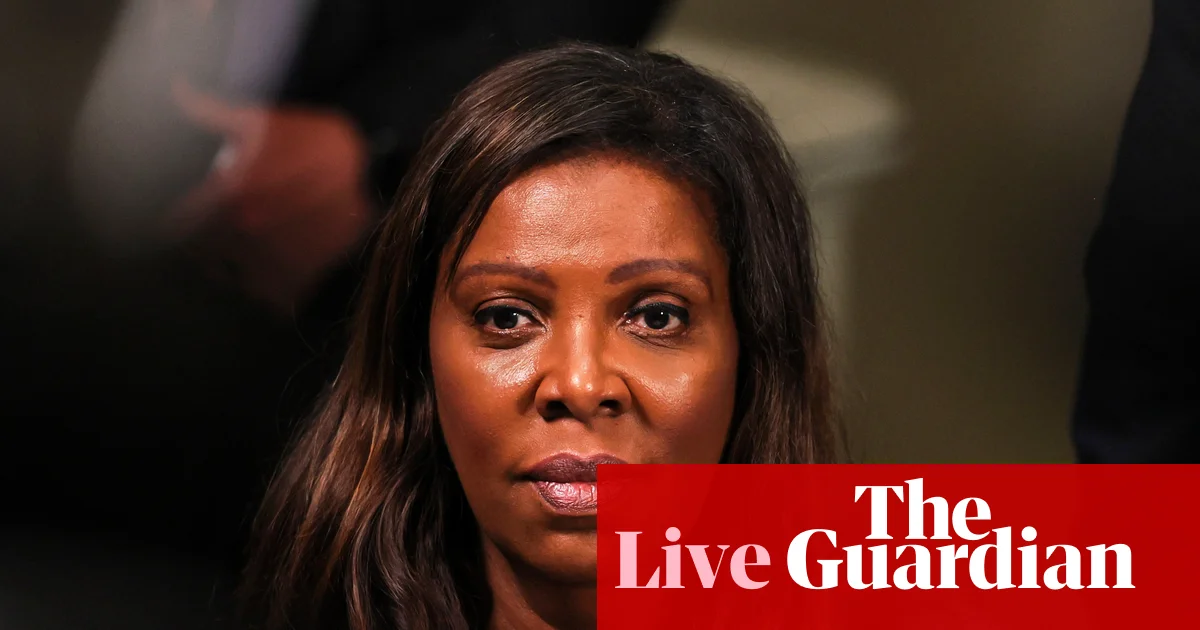
The indictment of Letitia James, the New York attorney general, exemplifies the ongoing strategy by President Donald Trump to weaponize the justice system against political rivals. Critics argue that this is a clear demonstration of how internal upheaval in the United States can be exploited to weaken its standing on the global stage. International analysts highlight that such internal conflicts diminish the U.S.’s moral authority, especially as it seeks to navigate crises like the Middle East turmoil or challenges from rival superpowers. Moreover, President Trump’s efforts to rival his previous diplomatic achievements, such as the contentious support for Israel with troop deployments and the failure to secure a Nobel Peace Prize, reflect a nation that is increasingly unpredictable and divided—a reality that complicates U.S. international commitments at a time of rising global tensions.

Meanwhile, the U.S.-Israel alliance faces new tests as American troops, initially deployed to support a ceasefire monitoring mission, have become a focal point of international concern. The decision to send 200 troops to Israel underlines the U.S.’s urgent pursuit to project power in the region after years of instability, but it also raises questions about escalation. Meanwhile, federal courts across the nation have issued rulings that hamper the deployment of National Guard troops, highlighting how domestic unrest can threaten international peace initiatives. These legal battles exemplify the ongoing struggle between legal authority and executive powers, revealing a nation where internal legal conflicts threaten to spill over into global diplomatic spheres.

The geopolitical impact becomes even more apparent as the world witnesses the U.S. remain deadlocked on domestic legislative issues: a government shutdown that not only compromises its internal stability but also dilutes its influence abroad. The Senate’s inability to pass crucial defense and budget bills signals to allies and adversaries alike that America’s commitments are shaky at best. Additionally, the warning from the head of America’s largest bank about the >possibility of a market crashem> underscores the rising economic instability that inevitably impacts nations worldwide. As international organizations observe these developments, the consensus among global taxonomies and think tanks is that the USA’s internal chaos emboldens competitors like China and Russia, who view the disarray as a strategic advantage.

As history continues to unfold, the lingering shadow of internal U.S. conflict raises a sobering question: How much longer can the world’s most powerful democracy maintain its gravitational pull without risking a broader collapse? The stages are set—alliances are tested, and the nation’s internal fissures threaten to become cracks that could fracture the global order. In this moment, the weight of history presses heavy on the collective conscience of nations across the globe, awaiting the next chapter in an unfolding saga of power, betrayal, and the relentless pursuit of control.

Social Media Auto Publish Powered By : XYZScripts.com



