
Matox News

Truth Over Trends, always!

Honor rolls out the latest: Magic V6 foldable phone, sleek MagicPad 4, and powerful MagicBook Pro 14—gear up for the future of youth-focused tech!

As the tech world converges on Barcelona for this year’s Mobile World Congress, one theme resonates louder than ever: slimness as the new frontier of innovation. Leading brands like Honor are unveiling devices that push the boundaries of thinness while packing cutting-edge features. Their latest creations, the Honor Magic V6 foldable phone and the MagicPad 4 tablet, exemplify a cultural trend where design minimalism merges with technological prowess. The Magic V6, for example, is only 8.75mm thick—so slim it challenges traditional notions of what a smartphone can be—while the MagicPad 4 flaunts a mere 4.8mm profile. These devices signify not just an evolution in hardware but also an emerging societal desire for unobtrusive, sleek technology that seamlessly fits into a fast-paced lifestyle.

The Cultural Impact of Slim Tech

This focus on ultra-thin gadgets reflects a broader social relevance in a society obsessed with minimalism and convenience. In a world where attention spans are dwindling, and multitasking is king, these sleek devices serve as both functional tools and status symbols—accessories that communicate success and modernity. Influencers and trendsetters, from tech bloggers to social media personalities like Marques Brownlee and Unbox Therapy, are elevating these gadgets to cultural icons, showcasing how a phone or tablet can be both powerful and fashionable. Scholars like Dr. Joseph Pine argue that this shift indicates a move towards experience-driven consumption, where consumers are less interested in owning bulky objects and more eager for intangible value, style, and user experience.

Meanwhile, AI integration remains a key component of this trend. Honor’s deployment of Google Gemini symbolizes how software—especially AI-powered features—is transforming these devices into intelligent companions. These advances mean our gadgets are becoming more than just tools; they’re evolving into social extensions, capable of understanding and adapting to individual behaviors, further reinforcing the social relevance of tech innovation. From syncing effortlessly with Apple devices to offering dynamic eye comfort features, these devices are designed to be unobtrusive yet intimately integrated into everyday life.

The Next Big Question: Are We Entering an Era of Invisible Tech?

With these ultra-slim smartphones, tablets, and even laptops, a provocative question arises: Are we approaching a future where technology becomes so seamlessly integrated into our lives that it becomes essentially invisible? The ongoing miniaturization signals a shift toward disappearing devices: gadgets so refined they practically vanish, leaving us with a pure, distraction-free experience. The social implications of this are profound. If our next devices are less about conspicuous presence and more about subtle integration, what does that say about our relationship with technology? Will this trend lead to a society where our devices are no longer objects of display but silent enablers of connectivity? And how will this influence future societal norms concerning privacy, dependency, or even our concept of identity?

As the tech industry channels its efforts into making hardware thinner and smarter, the ultimate challenge remains: how will societal expectations and behaviors adapt in this new era of invisible, AI-enhanced devices? The answers may redefine lifestyle trends for generations to come, challenging us to consider whether true innovation resides not only in what our gadgets can do but also in how seamlessly they blend into our lives, perhaps even before we notice they’re there.
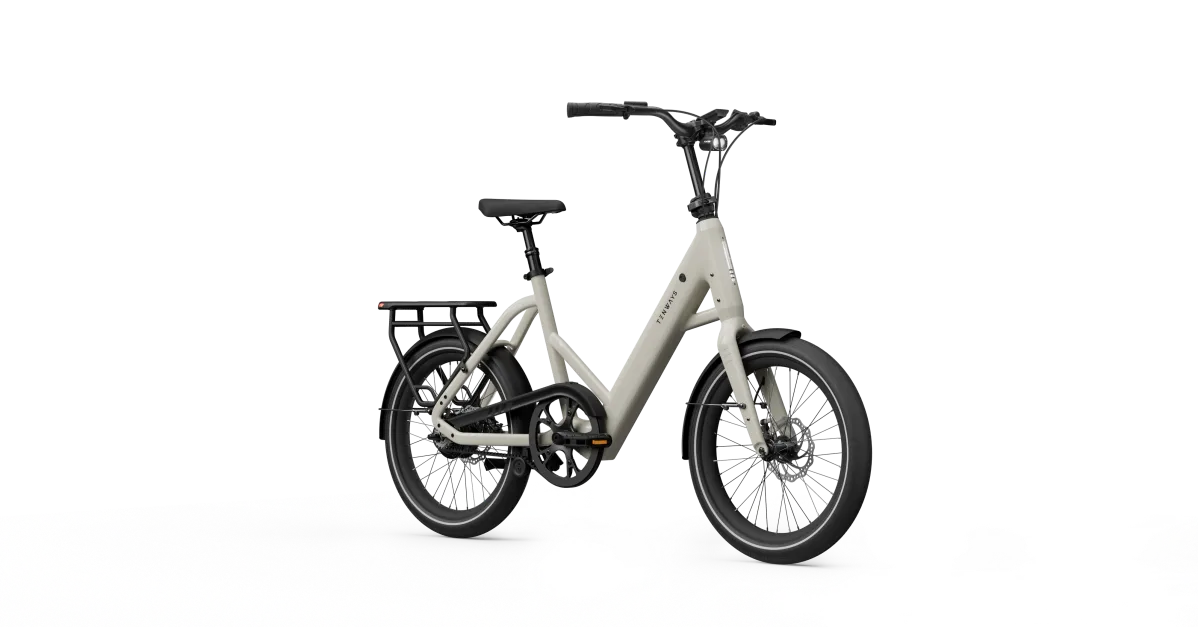
Tenways’ sleek foldable e-bike: urban mobility just got smarter

Emergence of Chinese E-Bike Innovator Tenways in European Markets

In a compelling move that underscores the acceleration of disruptive innovation in mobility technology, Tenways, a Chinese e-bike manufacturer with its headquarters in the Netherlands, is rapidly gaining traction across Europe. Leveraging aggressive pricing strategies, sleek design language, and an expansive network of over 1,500 shops and service centers, the company exemplifies how emerging players are redefining the traditional e-bike landscape. While less recognized globally, Tenways’ strategic focus on cost-effective, high-performance offerings could challenge established European and American incumbents, opening a new frontier for technological innovation and market disruption.

Central to Tenways’ European success is their CGO Compact, an e-bike priced at €1,999—significantly below the average €2,681 typical for European electric bikes. This pricing edge is vital in an industry increasingly driven by affordability paired with technology. Featuring a 250W rear-hub motor mated with a maintenance-free Gates Carbon belt drive, the CGO Compact epitomizes simplified yet powerful design choices aligned with urban commuting demands. Its 500Wh removable battery delivers a range of up to 100 km—an attractive proposition for city dwellers seeking reliable, eco-friendly transport options. Notably, the bike incorporates advanced features such as an integrated torque sensor for smooth pedal assistance and Tektro hydraulic disc brakes, all embedded within a compact profile.

  • Affordability without sacrificing core performance
  • Integration of sophisticated sensor technology
  • Extensive service network supports consumer confidence

Despite its impressive tech stack, the bike’s single-speed drivetrain and moderate torque output make it optimized primarily for flat urban terrain.

However, the CGO Compact’s design demonstrates how disruption often involves trade-offs. At nearly 20 kg, it is heavier than many competitors, including foldable models like Brompton G, which is designed for versatility and portability but costs more. This weight could impact user adoption among those valuing portability and ease of transport—an issue that highlights the ongoing challenge of balancing innovation with practicality. Yet, this drawback hasn’t hindered Tenways’ market penetration: experts from Gartner suggest that cost-efficient, durable, tech-enabled bikes can significantly reshape urban mobility. Such shifts could impact traditional European brands that rely on premium pricing, forcing them to re-evaluate product strategies in a rapidly evolving market.

Looking ahead, the implications for the overall e-bike industry are profound. As businesses race to capture market share, disruptive innovation fueled by companies like Tenways signals a clear trend: affordability, robust technology, and extensive service networks are becoming the new competitive metrics. Industry stakeholders—including tech giants and automotive OEMs—are eyeing this segment closely, recognizing the potential for electric bikes to replace short car commutes and reshape urban planning. Importantly, analysts warn that if incumbent manufacturers do not innovate swiftly, they risk losing customers to these agile, price-conscious entrants.

In conclusion, the rise of Tenways underscores the necessity for established players to accelerate their innovation cycles, integrate smarter value propositions, and prioritize user-centric design. Given the sophistication of their features—alongside their aggressive pricing strategy—these Chinese firms are setting a new benchmark that could accelerate the transformation of urban mobility. The industry must adapt or risk obsolescence; the future belongs to those who can leverage cutting-edge technology, redefine cost paradigms, and disrupt entrenched markets with speed and precision. The coming years promise a fierce contest—those who act now will shape the future of transportation, as urban landscapes evolve into hubs of smart, sustainable mobility.

Social Media Auto Publish Powered By : XYZScripts.com



