Matox News

Truth Over Trends, always!

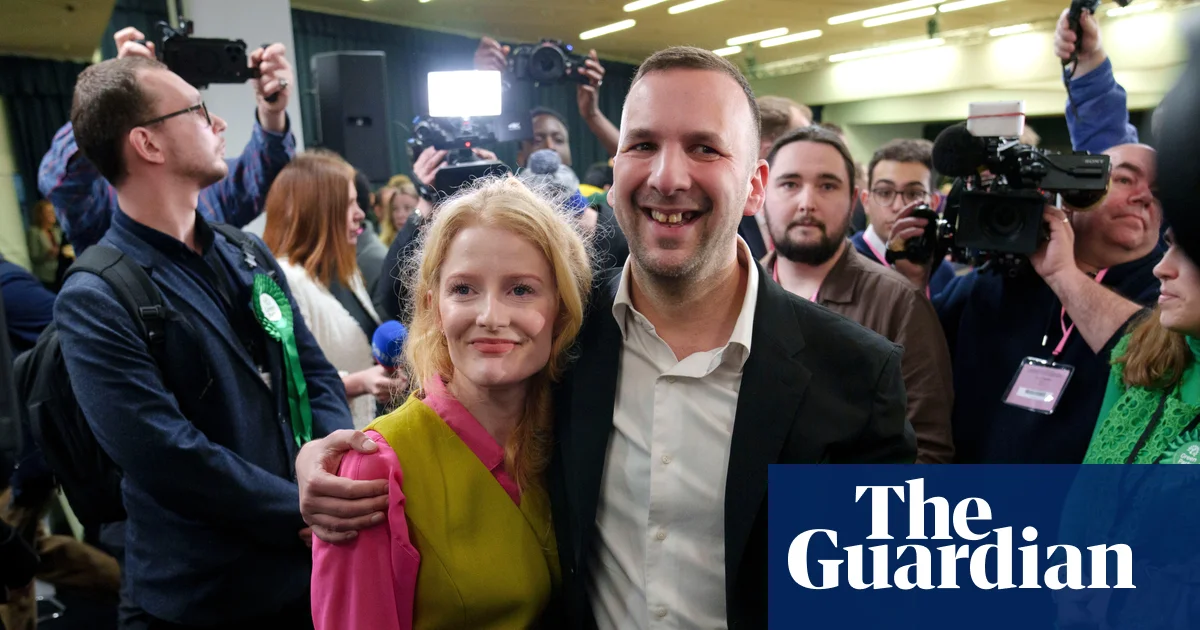
Greens shake up Gorton and Denton—no more safe seats, folks! | Politics Podcast

The recent byelection victories in Gorton and Denton, where the Green Party secured decisive wins, have sent shockwaves through British politics. Historically considered safe Labour seats, these results mark a significant departure from the political pattern that has persisted for decades. Analysts and political commentators are now questioning whether this upheaval signals a fundamental realignment of electoral loyalties within the UK, or if it simply reflects local discontent benefiting a rising protest vote.

At the core of this electoral shift is the resurgence of the Green Party, which convincingly overtook Labour in both constituencies, relegating the traditional Labour message to third place and positioning Reform UK as the runner-up. This outcome underscores a broader uprising of disaffected voters seeking alternatives to established parties. Such trends threaten the long-held political duopoly and pose critical questions for Keir Starmer’s Labour leadership, which has faced mounting scrutiny over its ability to connect with the working class and grassroots voters. Prominent political analysts suggest that this defeat could be a prelude to further upheaval within the Labour party and might spell trouble for Starmer’s tenure as the leader.

From a geopolitical perspective, this local upheaval echoes a broader pattern of societal unrest and political realignment across Western democracies, notably where traditional parties are losing touch with voters’ frustrations over economic policy, immigration, and national sovereignty. International institutions such as the European Union and United Nations have historically promoted liberal policies that often clash with national interests, further fueling nationalist and populist sentiments. In the UK, the rise of third parties like the Green Party and Reform UK signals a growing desire among young voters and working-class communities for policies that prioritize national resilience and environmental sovereignty over globalist agendas.

  • Key takeaway from the byelections emphasizes the vulnerability of long-standing political strongholds, forcing parties across the spectrum to reconsider strategies that might resonate with an increasingly disillusioned electorate.
  • The results could accelerate debates on constitutional reform and decentralization, as regions demand greater autonomy in shaping local policies free from national party factions.
  • The geopolitical ramifications extend beyond national borders, with Western democracies grappling with internal dissent amid global shifts towards assertive nationalism and economic sovereignty.

Prominent voices from institutions such as the British Political Analysis Institute warn that such electoral anomalies serve as “precursors to larger geopolitical shifts,” which may influence diplomatic relations and internal stability. The rising influence of third-party movements reflects a societal swell against the perceived elitism of traditional parties—an evolution that risk destabilizing established political orders. The destiny of the UK’s political landscape hangs in the balance, with history awaiting the next chapter, imprinted by rising voices demanding change and challenging the status quo. As the dust settles, the world watches with bated breath, realizing that the unfolding story of Britain’s democracy may very well carve a new path through the tumult of global politics.

Really? Folks are still jumping on Facebook Dating?

Facebook Dating Gains Traction Amid Industry Disruption and Shifting Consumer Preferences

In an era where disruption is reshaping the online dating landscape, Facebook Dating is carving out a significant niche within one of the world’s largest social platforms. Unlike standalone apps like Tinder or Bumble, Facebook integrates its dating feature directly into its core app, positioning it prominently within the native interface. This strategic move not only enhances user engagement but also exemplifies the broader shift towards integrated social experiences that cater to increasingly segmented and skeptical young audiences.

Data from Sensor Tower indicates that Facebook Dating is steadily gaining traction among the 18-29 demographic, with 1.77 million U.S. users in this age group—an impressive figure considering the entrenched dominance of traditional dating apps. Although still trailing industry leaders like Tinder with 7.3 million active users across all age groups, Facebook’s positioning as a free, data-driven platform offers a disruptive alternative that appeals to users tired of the subscription or premium models prevalent elsewhere.

The platform’s strategic integration capitalizes on core competencies—leveraging Facebook’s massive user base and advanced data collection capabilities. Mark Zuckerberg’s company openly acknowledges the challenge of retaining Gen Z and younger Millennials, yet recent statistics reveal a notable 24% increase in daily conversations within the 18-29 segment on Facebook Dating. This suggests that, beyond mere adoption, Facebook is fostering deeper engagement through its ecosystem—a fundamental shift in how social and dating platforms might sustain user interest over time.

From an innovation standpoint, Facebook’s move signifies a broader trend: the convergence of social media, data analytics, and dating. Rather than relying exclusively on location-based swipes, platform analytics and AI-driven algorithms are likely enhancing match quality, disrupting traditional dating app models that rely heavily on paid memberships and superficial profiles. This effectively turns Facebook into a digital ecosystem where disruption, innovation, and monetization are intricately linked. As Facebook and other tech giants intensify their efforts, industry analysts like Gartner suggest that future success will hinge on the ability to seamlessly integrate these features without alienating users—a delicate balance that could redefine digital socialization.

The implications extend beyond consumer adoption, impacting the business models and competitive dynamics of the entire dating industry. As the market adapts, smaller startups will need to innovate quickly or pivot to niche segments, while larger players face the challenge of evolving their platforms to match or surpass Facebook’s integrated approach. Forward-looking industry observers warn that this could herald the beginning of a new era, where social networks become all-encompassing platforms for connection—digitally and, eventually, in real life. With the next TechCrunch event scheduled for October 2026 in San Francisco, the industry stands at a pivotal crossroads that demands agility, innovation, and strategic vision—traits that could determine the winners in the ongoing race for digital dominance.

Social Media Auto Publish Powered By : XYZScripts.com



