Matox News

Truth Over Trends, always!

OpenClaw Founder Urges AI Innovators to Embrace Playfulness and Take Their Time to Improve

AI Innovation Disrupts Tech Landscape: Insights from Industry Pioneer

In an era marked by rapid technological evolution, personal AI agents are redefining the boundaries of digital interaction and productivity. Peter Steinberger, renowned as the creator of the viral AI project OpenClaw, and now associated with OpenAI, emphasizes the importance of experimentation and playful exploration in advancing AI capabilities. His insights underscore a trending shift within the industry — innovation is no longer a linear process but a dynamic journey fueled by curiosity and iterative learning.

Steinberger’s experience illustrates the disruptive potential of personalized AI solutions, especially when harnessed for real-world applications. During a recent trip to Marrakesh, he highlighted how AI-powered tools enhanced his convenience, bypassing traditional limitations, such as unreliable internet connectivity, through platforms like WhatsApp. The ease of finding restaurants, managing communications, and accessing information exemplifies how AI integration can create seamless user experiences. Market analysts, including Gartner, forecast that such context-aware AI agents are poised to become essential for redefining user engagement and establishing new revenue streams for tech giants and startups alike.

Critically, Steinberger advocates for an approach to AI development rooted in innovation through playful experimentation. He compares mastering AI prompt engineering to learning to play guitar — skill-based, requiring patience and practice. His warning against superficial “vibe-coding” reflects a broader industry concern: meaningful disruption demands genuine skill, not shortcuts. As companies like Microsoft and Google race to integrate these AI breakthroughs into cloud computing, productivity tools, and enterprise solutions, the foundational skillset becomes a competitive advantage. Industry veterans and emerging developers must embrace this shift, investing in learning curves that, while steep, promise immense strategic value.

Looking forward, the trajectory points to a fundamental transformation of the tech industry. As Steinberger advises, innovation flourishes when fueled by playful experimentation and relentless curiosity. For the youth of tomorrow, those willing to take risks and build boldly are positioned to lead the disruption. With market leaders pushing substantial investments into AI research and startups racing to commercialize new features, the tempo of technological advancement accelerates — and those who adapt quickest will shape the digital future. The cost of inaction could be losing ground in a landscape where disruption is the new normal. The imperative for today’s developers, entrepreneurs, and industry giants: harness this momentum now, or be left behind in the wake of relentless innovation.


4chan’s Founder Denies Epstein Linked to Launch of Alt-Right Hub /pol/

Tech Industry Faces Disruption and Challenges in the Digital Age

Recent developments highlight the ever-evolving landscape of technology, where innovation often walks a tightrope between progress and controversy. The emergence of new platforms and shifts in online community dynamics are shaping how businesses adapt to an increasingly complex digital ecosystem. Notably, reports of decision-making processes surrounding controversial online spaces, such as **4chan**, illustrate the delicate balance companies must strike between innovation and societal impact.

Efforts to reintroduce a politics board to 4chan sparked debate about accountability and influence in digital communities. Although Epstein’s simplistic association with the decision was dismissed as inaccurate, the incident underscores the rapid dissemination of information and misinformation that can amplify or distort industry narratives. Such episodes are a stark reminder that digital platforms are not just tech products but catalysts for societal change. As industry leaders like **Meta** and **Twitter** grapple with moderation and user engagement, the potential for **disruptive innovations** to either stabilize or destabilize societal norms remains significant.

The tech sector’s key focus continues to pivot around leading-edge technologies, including artificial intelligence, blockchain, and the next generation of social media platforms. Innovators like **Tesla**’s Elon Musk and **Palantir**’s data algorithms are pushing boundaries that could revolutionize everything from autonomous vehicles to secure communications. According to analysts from Gartner and MIT, these shifts represent not just technological milestones but profound upheavals that threaten established models of business operation and user engagement. The acceleration of such technologies hints at a future where disruption is the new normal.

With every breakthrough, there are questions about regulation, market saturation, and ethical boundaries. Companies that lead in innovation and disruption will have to navigate a maze of legal, social, and economic challenges. As Peter Thiel and other forward-thinking investors emphasize, adaptability and vision will be crucial. The urgency to innovate outweighs the caution of yesterday’s standards, creating a landscape where only the most agile will thrive. Looking ahead, the industry must prepare for a future where technological advancements will not just transform industries but your daily life—demanding a strategic approach rooted in foresight and resilience.

AI founder envisions ‘March for Billionaires’ in showdown over California’s wealth tax

Disruption on the Horizon: California’s Billionaire Tax Sparks Tech Exodus and Unprecedented Mobilization

The debate over California’s Proposed Billionaire Tax is escalating into a disruptive force with profound implications for the tech sector and the state’s economic landscape. Originally introduced to address widening revenue gaps, the legislation would impose a one-time 5% tax on billionaires’ total wealth—an initiative backed by powerful institutions like the SEIU and anticipated to generate significant public funds. However, within the industry, it is perceived as a misguided overreach that could stifle innovation and drive wealth and talent out of California, one of America’s most vital technology hubs. The controversy has culminated in an unlikely protest—the “March for Billionaires”, which is scheduled for this coming Saturday.

This surprising mobilization has caught the attention of tech leaders and analysts alike, illustrating how regulatory measures can disrupt not only tax strategies but the very fabric of Silicon Valley’s entrepreneurial ecosystem. The event’s founder, Derik Kaufmann, an ex-accelerator participant and AI startup innovator, emphasizes that the march isn’t driven by outside interests but by his deep concern over the bill’s potential to damage California’s business climate. Kaufmann has explicitly linked the proposed law to a broader trend of increasing government overreach that threatens to unsettle the delicate balance between regulation and innovation—an issue that experts from MIT to industry analysts warn could set a dangerous precedent.

The business implications are stark. As noted by Gartner analysts and industry veterans like Elon Musk and Peter Thiel, the threat of punitive taxation prompts many talented entrepreneurs to reconsider their domiciles and investments. Instances of talent flight are already underway, with some of California’s most coveted tech billionaires contemplating or executing relocation to more welcoming jurisdictions. Such a trend would not only diminish California’s economic advantage but potentially accelerate its decline as a global tech hub—disrupting the innovation engine that has driven the US economy for decades.

Innovation and Disruption in the Face of Political Headwinds

The legislation, which draws criticism for its potential to impose disproportionate tax burdens on founders—many of whom would face complex, unprecedented tax obligations—has faced significant opposition. Critics argue that a disruptive exodus of wealth and innovation could weaken the state’s ability to sustain its technological dominance. Still, some advocates view the measure as a necessary step toward leveraging private wealth for public good, drawing comparisons to successful European models. However, as Kaufmann points out, “Sweden eliminated their wealth tax 20 years ago to foster entrepreneurship, resulting in more billionaires per capita than the US.” This serves as a warning that heavy-handed policies might undermine long-term economic resilience.

The real concern for futurists and policymakers is the industry’s mounting uncertainty—where radical shifts in tax policy threaten to upend established growth trajectories. The event signifies a growing awareness among young entrepreneurs and tech elites that the industry faces a decisive juncture: whether to accept regulatory overreach or innovate around it. With the future of Silicon Valley’s innovation ecosystem hanging in the balance, stakeholders are increasingly recognizing that technological disruption isn’t just about new gadgets—it’s about reshaping the entire landscape of economic power and influence .

As the tech world watches these unfolding events, one thing is clear: the coming months will be pivotal. Breakthroughs in artificial intelligence, blockchain, and other revolutionary sectors threaten to redefine industries, but only if a conducive environment persists. The urgency stems from the growing realization that policy decisions today will decide whether the US maintains its competitive edge or becomes a cautionary tale of overregulation and fiscal flight. The ongoing controversy in California underscores the broader imperative for policymakers, entrepreneurs, and investors to act swiftly and decisively—else the rapid pace of technological progress risks becoming a casualty of political fiasco.

Founder revolutionizes firefighting, now mining AI gold for the next-gen tech wave

HEN Technologies Unveils Next-Gen Fire Suppression System with Smart Data Capabilities

Emerging as a formidable contender in the realm of industrial innovation, HEN Technologies is revolutionizing fire suppression and water management through groundbreaking sensor-driven, predictive systems. Founded in June 2020, the company has levered a diverse technological background—including nanotech, solar, semiconductors, and automotive—to develop a portfolio of intelligent water control devices. These tools are not just hardware; they are catalysts for disrupting the entrenched firefighting and municipal water systems, with far-reaching business implications for military, emergency, and industrial sectors globally.

Innovation at the Core: From Nozzles to Data Ecosystems

  • Utilizes custom-designed circuit boards embedded with sensors and powerful computing units—including Nvidia Orion Nano processors—transforming basic hardware into connected, smart systems.
  • Develops precise, adaptive water nozzles capable of controlling droplet size, managing velocity, and resisting wind, enhancing firefighting efficiency in high-stakes scenarios.
  • Expands into a portfolio of flow control and monitoring devices—such as Stream IQ and discharge systems—integrating real-time data streams for operational insights.

The innovation is embodied in HEN’s system architecture, which employs sensors at the pump level to act as virtual sensors in the nozzle, capturing detailed data about water flow, pressure, and environmental conditions. This data not only optimizes firefighting efforts but also creates a valuable multi-modal data pipeline that has attracted significant investor interest, including a recent $20 million Series A round led by O’Neil Strategic Capital. According to industry experts, this level of integrated data infrastructure positions HEN as a potential pioneer for predictive analytics—crucial for advanced AI systems that construct dynamic models of physical environments.

Disruption and Business Implications: Beyond Firefighting

HEN’s platform is poised to disrupt traditional emergency response and municipal water management by enabling predictive analytics and resource optimization. Its devices gather critical data on water usage, environmental conditions, and system performance—information that has historically been difficult to access in real time. This data ecosystem could revolutionize how agencies like the DHS NERIS program and international defense organizations approach emergency readiness, disaster mitigation, and resource allocation.

The company’s strategic move into qualified federal procurement channels, such as GSA approval, signals a deliberate push toward scale within government contracting, turning this technological disruption into a sustainable business model. Fire departments routinely replace thousands of aging engines annually; HEN’s intelligent hardware offers recurring revenue opportunities from hardware sales complemented by ongoing data contracts—an attractive prospect for investors driven to capitalize on the growing need for smart city infrastructure.

The Road Ahead: Data as the Future Currency

While hardware sales currently fuel revenue growth—$200,000 in Q2 2023 skyrocketed to over $20 million forecasted for this year—the real value lies in the data generated. As analysts at Gartner and MIT emphasize, the future belongs to companies that can harness real-world data for AI-driven predictive systems. Companies building sophisticated world models, especially in emergency management and robotics, will pay a premium for the high-fidelity, multimodal physics data generated by HEN’s deployments.

With a talented team drawn from Tesla, Apple, NASA, and Microsoft, HEN is positioning itself as a critical enabler of these emerging AI applications, which require granular, real-time data to operate effectively in unpredictable, high-stakes environments. As government agencies and private industries increasingly adopt such systems, HEN’s strategic focus on robust hardware, data pipelines, and institutional penetration signals a fast-approaching industry inflection point. Companies ignoring the looming disruption risk falling behind in the race for the next-generation of intelligent, connected infrastructure—making early adoption not just advantageous but essential.

In this rapidly evolving landscape, the message is clear: the convergence of sensor technology, AI, and real-time data is giving rise to a new wave of disruptive innovation. HEN’s success, fueled by visionary engineering and strategic investor backing, exemplifies how the future of infrastructure resilience and emergency response will be driven by those who master the art of data collection and intelligent control. The race to dominate this space is just heating up, and forward-looking companies must move swiftly to capture the immense opportunities ahead.

Dignitas Founder, Pioneering Assisted Suicide Advocate, Passes at 92

The Death of Ludwig Minelli Marks a Pivotal Moment in the Global Debate Over Assisted Dying

In a significant development that underscores the evolving landscape of human rights and individual sovereignty, Ludwig Minelli, the founder of the Swiss right-to-die organization Dignitas, passed away by assisted suicide at the age of 92, just days before his 93rd birthday. His death signifies more than the end of a controversial figure’s life; it highlights a burgeoning global debate over the morality, legality, and societal implications of assisted dying. As Europe’s long-standing neutrality in social issues begins to be tested, Minelli’s legacy continues to influence the international discourse surrounding self-determination at life’s end, a fundamental human right that many advocates argue should extend beyond Swiss borders.

Global Shifts in the Right-to-Die Movement and Their Geopolitical Impact

Since Minelli’s pioneering efforts in 1998, several countries, including Australia, Canada, and New Zealand, have embarked on legislative journeys to legalize assisted dying, recognizing an emerging consensus that personal choice should be respected in the face of suffering. However, this movement remains divisive, with critics warning of potential abuses and coercion against vulnerable populations, including the disabled and the elderly. The UK House of Lords is currently deliberating on similar bills, with international organizations like the European Court of Human Rights reaffirming in 2011 the sanctity of individual judgment regarding end-of-life decisions. This political shift not only signifies a changing moral landscape but also demonstrates the strategic geopolitical implications of regulatory sovereignty—each nation balancing traditional values against demands for personal freedom.

How Decisions on Assisted Dying Reshape Societies and International Relations

The decisions of these nations carry profound consequences for societal norms and international influence. Countries embracing assisted dying often position themselves as champions of human rights, influencing others to reconsider outdated ethical standards. Yet, critics argue that such policies could lead to a slippery slope where vulnerable populations are coerced into compliance, raising ethical concerns that transcend borders. Historians and analysts cite these legal battles as a reflection of deeper societal tensions, often echoing debates from history’s darkest corners. The prospect of legalizing assisted dying could also impact international relations—both as a point of moral contention and as an indicator of a nation’s stance on personal sovereignty amidst a global push for rights-based policies.

Looking into the Future of Human Rights and Self-Determination

The death of Minelli and the ongoing legislative debates serve as a stark reminder that the battle over human rights at life’s end is far from over. As international institutions and nations continue to navigate these contentious waters, the legacy of figures like Minelli remains a catalyst for those advocating for dignity and personal choice. Historians warn that these turning points could reshape the very fabric of societal values, potentially redefining the boundaries of lawful individual decision-making. The future of assisted dying is poised on the precipice of a new era—one where the weight of history is yet to be written, and where the right to make choices about one’s final moments could become a defining axis in the global struggle for human freedom and sovereignty.

Dignitas Founder Chooses Assisted Death, Making Bold Statement on End-of-Life Choices

The recent passing of Ludwig Minelli, founder of the Swiss right-to-die organization Dignitas, marks a significant milestone in a rapidly evolving global debate over assisted dying. Minelli’s choice to end his own life at nearly 93, through an assisted death he championed for decades, encapsulates the profound ideological shift occurring across the world — from legal battles to cultural acceptance. He dedicated his life to the principle of self-determination in end-of-life choices, and his impact on Swiss law and the broader international legal landscape underscores the importance of these evolving norms. As the world witnesses this transformation, analysts emphasize that Minelli’s legacy continues to shape societies’ perceptions of dignity, autonomy, and the moral questions surrounding assisted death.

The case of Switzerland stands as a testament to the country’s progressive stance. While euthanasia—where a third party directly administers lethal assistance—is illegal, assisted dying remains legal and culturally accepted. This legal framework was notably influenced by Minelli’s persistent activism, which culminated in landmark rulings such as a 2011 European Court of Human Rights decision affirming the right to self-determination in end-of-life decisions. These legal precedents have inspired debate and legal reform across Europe and beyond, prompting countries like France, Spain, and Austria to enact laws permitting assisted dying under specific circumstances. The global geopolitical impact of this expansion is profound, as it challenges traditional values rooted in sanctity of life, compelling nations to reconsider their legal and ethical boundaries amidst shifting societal norms.

This wave of change is not confined to continental Europe. In North America, more than ten U.S. states have legalized assisted death, reflecting mounting support for personal autonomy in the face of terminal illness. Meanwhile, Canada and Australia have likewise embraced legislative reform in recent years, signaling a broader geopolitical realignment. However, within the UK, the debate remains fiercely contested. Despite a parliamentary vote in June backing the legal framework for terminally ill patients to seek assisted death, the legislation faces relentless scrutiny in the House of Lords. Critics argue the bill requires rigorous safeguards to protect vulnerable populations, and opponents have successfully delayed passage, emphasizing ongoing societal divisions over moral and legal dimensions. This illustrates how, even in democracies with long-standing traditions of debate, the transformation toward acceptance of assisted dying is not guaranteed but hinges on complex, high-stakes decision-making.

The influence of Minelli and Dignitas, and their advocacy, extend well beyond Swiss borders, shaping international discussions about personal sovereignty and the ethics of assisted death. As historian and legal analyst Dr. Amelia Carter notes, Minelli’s persistent legal challenges—culminating in appeals to the European Court of Human Rights—have helped reframe assisted dying as a matter of human rights rather than mere moral controversy. Yet, this evolving landscape comes at a cost, as societies grapple with the moral implications and societal risks of legislating individual choice over life and death. As Minelli’s legacy persists, the global community finds itself at a crossroads: do we uphold rigid sanctity of life, or embrace a future where autonomy, dignity, and personal choice dictate the terms of our final moments? As history continues to unfold, the answer will shape the moral fabric of nations and forge a new chapter in the ongoing debate over the right to die with dignity.

JPMorgan dumps Frank founder Javice’s legal costs, pushing back on accountability

JPMorgan Legal Fight Illuminates Risks, Innovation, and Future Business Disruptions in Financial Tech

In a dramatic turn within the high-stakes world of fintech, JPMorgan Chase is entangled in a legal controversy involving the failed acquisition of Frank, a prominent startup specializing in financial aid services. The bank reports having incurred a staggering $142 million in legal fees defending Charlie Javice, founder of Frank, and her former Chief Marketing Officer, Olivier Amar. This case not only underscores the material risks associated with startup acquisitions but also shines a spotlight on the disruptive potential of rapid innovation within financial services as traditional banking giants rush to integrate cutting-edge technologies.

The bank’s $175 million acquisition of Frank in 2021 was supposed to be a strategic move to leverage tech-driven solutions and appeal to younger demographics. However, early this year, Javice and Amar were convicted of inflating user numbers, marking a rare and significant example of how unregulated innovation can lead to catastrophic business failures. While JPMorgan attempts to overturn a judge’s order to cover the legal fees, the controversy exposes the underlying vulnerabilities of reliance on startup metrics and highlights the importance for traditional finance institutions to exercise rigorous due diligence in tech acquisitions—essentially, a warning from the forefront of disruptive fintech activity.

Industry Implications: Innovation, Risk, and Ethical Pitfalls

Right now, the fintech revolution is evolving rapidly, driven by companies seeking to overthrow legacy financial systems via innovative models that leverage data, AI, and user-centric solutions. Institutions like JPMorgan are racing to keep pace, often acquiring promising startups to shortcut innovation cycles—an approach that presents both opportunities and significant risks. The case of Frank exemplifies the darker side of disruption: unscrupulous founders exploiting market weaknesses and increasing regulatory scrutiny.

Gartner and MIT analytics warn that the wave of tech-driven disruption will inevitably encounter these kinds of scandals unless firms implement stronger controls and due diligence. From a business perspective, this highlights a crucial lesson: innovation must be coupled with unwavering integrity and transparency. The implications extend beyond legal costs—large banks could face reputational damage and regulatory penalties that threaten their market dominance in a digital economy that continues to favor agility, compliance, and ethical leadership.

Forward-Looking Perspective: Innovation as a Double-Edged Sword

As Elon Musk and Peter Thiel position themselves at the forefront of technological disruption—pioneering neural interfaces, AI, and blockchain—financial institutions must prepare for an era where breakthroughs are accompanied by unprecedented risks. The JPMorgan case serves as a stark reminder that disruption often accelerates faster than regulation and governance, demanding rapid adaptation by established players. The industry must bolster internal oversight, integrate advanced compliance solutions, and cultivate a culture of accountability to harness innovation responsibly.

Moving forward, the real challenge lies in navigating this complex landscape where cutting-edge technologies can revolutionize finance but also provoke ethical dilemmas and legal upheavals. The coming years will define whether legacy institutions can evolve into truly resilient innovators—those capable of disrupting markets themselves rather than merely reacting to new entrants. For investors, regulators, and industry leaders, this is a call to act swiftly: the future belongs to those who understand that innovation must be matched with integrity and strategic foresight.

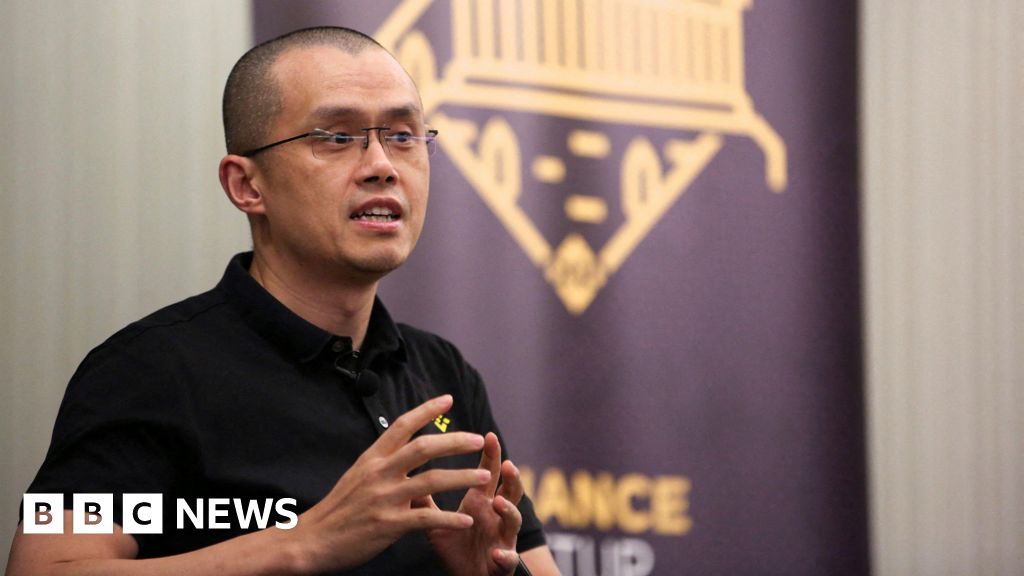
Trump’s pardon boosts Binance founder Zhao’s future prospects

Crypto Pardon by President Trump: A Turning Point in Global Finance and Geopolitics

The recent pardon of Changpeng Zhao (“CZ”), founder of Binance, by President Donald Trump, has sent shockwaves through the international financial community, highlighting a deliberate pivot in the US’s stance towards cryptocurrency regulation and geopolitics. This move, following Zhao’s four-month prison sentence for violating US money laundering laws, signals a departure from previous strict enforcement under the Biden administration. The pardon, which effectively lifts restrictions on Zhao’s capacity to run financial ventures, appears to be intertwined with broader political and economic strategies, especially considering Beijing’s rising influence in the digital currency sphere.

Since the indictment, Binance had been under intense scrutiny by US authorities, accused of enabling users to bypass sanctions and facilitate illicit activities — accusations that they ultimately admitted to, paying a hefty $4.3 billion settlement. The legal actions were portrayed by critics as part of a wider effort to tighten regulation over the crypto industry, which many analysts argue is a key instrument of geopolitical power. Historically, US officials like former Treasury Secretary Janet Yellen have warned of the dangers posed by cryptocurrencies—highlighting concerns over terrorism, child exploitation, and cybercrime. However, the Trump-era pardon, and subsequent political narratives, suggest a shift toward fostering innovation and integrating crypto into the mainstream economy, possibly as a way to counter China’s rapid technological advancements in digital currencies.

International Responses and Strategic Implications

The controversy surrounding Zhao’s pardon underscores a growing battle for control over the future of global monetary systems. White House officials have framed the pardon as an exercise of constitutional authority, dismissing critics who allege personal financial motives. Meanwhile, analysts note that the Trump administration’s previous steps—such as loosening regulations and considering a national crypto reserve—indicate an intent to leverage digital assets as a tool for economic sovereignty, countering what they perceive as the disruptive influence of China’s central-bank digital currency ambitions.

In this shifting geopolitical landscape, international organizations and foreign governments are watching closely. For instance, European and Asian regulators are increasingly cautious, balancing innovation with fears of financial crime and systemic risk. Historians and geopolitical strategists warn that such pardons may be the early signs of a new era where digital currencies are weaponized—either as tools of economic innovation or as instruments of political influence. How nations respond in this digital battleground will determine the shaping of the international monetary order for decades to come.

Conclusion: The Unfolding History of Power and Technology

As Binance reaffirms its position as the world’s leading crypto platform, and Zhao’s personal story becomes a symbol of the new strategic terrain, the weight of history remains heavy. The decisions made today—whether by Western democracies to regulate or to embrace crypto, or by authoritarian regimes to co-opt digital currency—will carve the future. This is not merely about currencies but about who holds the power in the new digital age. The next chapter of this unfolding saga promises to be a defining moment—a testament to how intertwined modern geopolitics has become with the relentless march of technological innovation. The choices made now will resonate through history, shaping societies and sovereignties for generations to come, long after the headlines fade and currencies shift into the depths of the digital wild west.

Social Media Auto Publish Powered By : XYZScripts.com