Matox News

Truth Over Trends, always!

12 Game-Changing Laundry Hacks Every Young Rebel Needs to Tackle Chores with Ease | Life & Style

In the pursuit of embracing a more sustainable, intentional lifestyle, many young people are rethinking traditional laundry routines—opting for smarter, eco-friendlier choices that make a personal impact on health, leisure, and even home aesthetics. The modern laundry enthusiast is increasingly prioritizing quality over quantity, seeking products and habits that align with a wellness-focused worldview while still maintaining efficiency and style. From investing in durable clothespins to modernizing washing machines with internet connectivity, these small yet significant shifts are transforming everyday chores into moments of mindful living.

Take, for example, the rise of ash hardwood clothespins—a simple upgrade with notable benefits. Unlike standard plastic or wooden variants that discolor, stain, or rust over time, these high-quality clothespins made from ash hardwood with stainless steel springs are built to last. They grip clothes more firmly, resist weathering, and infuse the drying process with a touch of rustic charm. Julia Skinner, a celebrated lifestyle writer, extols their virtues, emphasizing that such accessories do more than just hold laundry—they embody a commitment to sustainable living. Likewise, homes are increasingly equipped with multi-section hampers—designed to revolutionize the chores of sorting laundry. By separating whites, darks, and delicate fabrics at the point of deposit, busy lives are simplified, reducing the stress of post-wash sorting and fostering better garment care.

Technology also plays a pivotal role in this lifestyle shift. The integration of Wi-Fi connected washing machines—like LG’s flagship models—exemplifies how innovation can elevate routine chores into the realm of convenience and personalization. These devices allow users to control cycles remotely via smartphone apps or voice assistants such as Alexa and Google, transforming laundry into a seamless, smarter experience. This not only reduces waste and energy usage but also encourages a more deliberate approach to home management—one that aligns with the modern appreciation for tech-driven efficiency. Similar enhancements include dedicated cleaning tablets, like Affresh, that target bacteria buildup in washing machines—preserving appliance health while safeguarding personal hygiene. This automates maintenance, ensuring every load is not just clean but hygienic, reinforcing the importance of self-care and wellness in daily routines.

Further emphasizing wellness shifts, the market now embraces environmentally conscious detergents branded as vegan, biodegradable, and highly efficient. Products like Dirty Labs Bio Enzyme Laundry Booster and Detergent exemplify this trend, combining sustainability with power. For sensitive skin, they are a kinder alternative, while their concentrated formulas highlight a philosophy of waste reduction—necessitating less product per load and minimizing packaging. Similarly, aromatic products such as Trudon wax melts offer an aromatic layer to home wellness, transforming mundane spaces into fragrant sanctuaries. Fragrance experts, including those highlighted by cultural figures like Oset Babür-Winter, confirm that such sensory experiences can uplift mood and hospitality, making daily routines more about self-encouragement than chores.

To optimize the entire laundry experience, smart accessories are increasingly popular. Items like the Singer fabric shaver and lint remover help maintain garments’ longevity, preventing pilling and textile defects while reinforcing a zero-waste ethos. When paired with containers such as reusable lavender dryer bags—a charming, aromatic alternative found at places like Trader Joe’s—the routine becomes an act of love for both fabric and planet. These small innovations contribute to a lifestyle of refinement, where sustainability is not a compromise but a personal statement crafted into daily decisions, and where modern technology gently nudges individuals toward their best selves.

As the journey of home and self-care unfolds, it leaves a lasting impression: that lifestyle is an ongoing pursuit—an act of embracing purposeful change. Every upgrade, from the simple durability of a clothespin to the intelligent control of a Wi-Fi washer, speaks of an individual eager to enhance their environment and personal wellness. In choosing products that blend efficiency with eco-consciousness and comfort, the modern youth is rewriting the narrative of chores into one of resilience, beauty, and mindful consumption. This dance with daily routines transforms them into reflective rituals, reminding us that in every act of care, there lies a subtle yet potent step towards a life truly well-lived—one where even laundry becomes an understated expression of self-respect and liberation.

Inside Bad Bunny’s Game-Changing Super Bowl Halftime Show

Innovation Disrupts Super Bowl Halftime Productions: A New Era of Event Engineering

As the Super Bowl approaches its nearly 60-year milestone, the complexity of delivering awe-inspiring halftime shows continues to escalate, driven by groundbreaking innovations and logistical challenges that are redefining the sports & entertainment landscape. Leading production firms like Tribe Inc. exemplify how the convergence of creative vision and technological disruption is setting the stage for a new era of large-scale event management. These enterprises leverage advanced engineering, design innovation, and strategic planning to overcome industry-specific hurdles—whether they’re environmental, safety-related, or logistical—highlighting how the future of entertainment delivery is being reshaped by technological ingenuity.

This year, the challenge was rooted not in the usual concerns over security or leaks but in environmental constraints. The star of the show, Bad Bunny, aimed to recreate the Puerto Rican landscape on Levi’s Stadium’s natural grass—a feat that would have demanded significant innovation beyond traditional stage design. The limitations imposed by NFL regulations meant that conventional methods—like rolling carts loaded with plants—were rendered impossible due to the risk of damaging the pristine grass. Instead, production teams had to explore alternative, disruptive solutions centered on modular, eco-friendly stage designs and advanced digital and ecological engineering. This shift underscores the broader industry trend toward integrating sustainability with spectacular design, aligning with the sustainability ambitions of major corporations such as Apple and Google while transforming their event experiences.

Driving Innovation and Industry Disruption

The collaborative efforts between production companies and cutting-edge technology providers exemplify the sector’s trajectory towards innovative disruption. In the case of the Super Bowl, this translates to the use of augmented reality (AR), virtual set design, and advanced stage machinery to create immersive experiences without damaging stadium infrastructure. Experts like Peter Thiel and institutions such as MIT emphasize that such technological ecosystem integration isn’t just about spectacle—it’s about redefining the fundamental business models of live entertainment. Companies able to leverage these innovations achieve a competitive edge, offering more elaborate shows with reduced logistical footprints, ultimately cutting costs while amplifying audience engagement.

Furthermore, this year’s event showcases a broader industry shift toward sustainable design practices, echoing trends identified by Gartner’s research in enterprise innovation. These include:

  • Use of modular, reusable set components that can be rapidly deployed and disassembled.
  • Implementation of digital twin simulations to anticipate and optimize logistical planning.
  • Eco-conscious materials replacing traditional, environmentally detrimental options.

Such innovations are not merely about aesthetics; they symbolize a disruptive influence on how major events are orchestrated at scale. As the industry embraces strategic integration of digital and ecological technologies, the potential for disruption extends far beyond the Super Bowl, influencing conferences, concerts, and even space-based staged events in the near future.

Looking Ahead: A Future of Rapid Transformation

The trajectory of event production signals enormous opportunities for business disruption and technological innovation. Companies that innovate rapidly will define the future of entertainment—blurring lines between physical and digital realms, and setting new standards for spectacle and sustainability. Industry leaders, investors, and entrepreneurs who recognize these shifts now will secure significant competitive advantages in what is rapidly becoming a playfield dominated by cutting-edge, disruptive technologies. As Elon Musk and other visionaries predict, the next decade promises a wave of technological amalgamation—transforming once-impossible visions into reality, with the potential to revolutionize how audiences globally consume entertainment and live experiences.

In this fast-evolving landscape, the urgency remains clear: the ability to innovate quickly and disrupt traditional paradigms is vital for businesses aiming to capitalize on emerging market opportunities. The Super Bowl’s evolving spectacle provides just a glimpse of what’s possible when creative ingenuity meets technological disruption—an era where the only limit is—and perhaps, should be—our own imagination.

Top 50 Game-Changing Cyber Monday Deals Under $100 for Young Tech Fans

Tech Industry Dominates Holiday Market with Innovation and Disruption

As the final days of the holiday shopping season approach, the technology sector demonstrates a remarkable capacity for disruption and market innovation. Consumers are witnessing unprecedented deals on state-of-the-art gadgets—ranging from OLED TVs to laptops—highlighting an industry that continues to evolve at an aggressive pace. Industry analysts from Gartner and MIT point out that aggressive pricing strategies and rapid product iteration are fueling a consumer-driven tech revolution, which could have ripple effects across global markets.

Emerging technologies such as advanced gaming peripherals, like the DualSense controller for PlayStation 5, reflect a broader trend of integrating premium experiences at accessible prices. Companies like Sony and Microsoft, leveraging their dominant market positions, are pushing new hardware with features designed to enhance immersive gaming—a vertical that continues to disrupt traditional entertainment models. Meanwhile, tech brands like Nothing are offering the Nothing Ear series at record lows, signaling a shift towards affordable, high-quality audio products—a move that’s reshaping consumer expectations and how brands position themselves in premium versus entry-level segments.

Innovation Driving Business Transformation

The proliferation of budget-friendly yet advanced gadgets signals more than just consumer savings; it signifies a paradigm shift in market dynamics. The integration of AI-powered features and smart technologies into everyday devices is opening new revenue streams for established players and creating opportunities for disruptive startups. *In particular, the development of low-cost wearable tech* with capabilities like health monitoring, voice recognition, and seamless connectivity demonstrates the industry’s focus on mass adoption of intelligent devices. Industry experts, including Elon Musk and Peter Thiel, emphasize that the next wave of innovation will hinge on hardware-software convergence—enabling a surge in AI-enabled gadgets that can fundamentally alter consumer lifestyles.

Market Implications and Future Outlook

The ongoing expansion of affordable, high-performance tech challenges long-standing industry assumptions about profit margins and product differentiation. It urges incumbents to accelerate their innovation cycles lest they fall behind nimble startups that are capitalizing on rapid advancements. Disruptive technologies such as foldable screens, augmented reality, and AI chips are poised to redefine competitive advantages in this space. Companies that innovate proactively—while maintaining aggressive pricing—are likely to dominate future markets characterized by relentless innovation and consumer demand for smarter, more accessible technology.

With the industry on the brink of a new era driven by disruption and technological convergence, the urgency to adapt has never been greater. Stakeholders must recognize that the future belongs to those who can seamlessly blend **innovation, cost-effective solutions, and market agility**. The next decades promise a *tectonic shift* in how technology interfaces with daily life—equivalent to the advent of the smartphone era but exponentially more transformative. As market leaders innovate fiercely, they not only shape the future of tech but also determine the economic landscape for years to come, making it essential for investors and entrepreneurs alike to stay ahead of the curve and capitalize on this technological renaissance.

Raycast for Windows: The game-changing productivity boost your PC needs

Tech Industry Disruption and the Future of Innovation: A Deep Dive

As the technology sector accelerates its pace toward revolutionary changes, companies like Google, Samsung, and decentralized gaming platforms are leading a wave of disruption that promises to redefine business paradigms and consumer experiences. Recent developments indicate an industry at inflection point, where breakthrough innovations challenge traditional models and create new ecosystems of value.

Google’s Gemini 3, the latest iteration of its powerful Large Language Model (LLM), exemplifies the competitive edge AI is gaining globally. This model not only dominates in natural language understanding but also integrates seamlessly across multiple platforms—from apps to search engines—thus fostering a more intuitive user interface that could overhaul how we interact with information. Experts at MIT suggest that the expansion of such multilingual, multimodal models symbolizes a shift toward ubiquitous, AI-driven decision-making, with potential ramifications for entire industries, including advertising, education, and enterprise. Meanwhile, Raycast for Windows introduces an innovative productivity suite, bringing a Mac staple—a launcher and shortcut system—into the PC realm, promising to disrupt workflows and streamline computer management, especially for a generation raised on speed and simplicity.

In the consumer space, gaming startups and console creators are pushing boundaries—most notably with the Analogue 3D retro console built on Nintendo 64 hardware, which has garnered critical acclaim for blending nostalgia with cutting-edge hardware. Additionally, the emergence of Steam Machines and chaos-filled titles like Kirby Air Riders represent a revitalization of physical gaming experiences in an increasingly virtualized environment. Industry analysts, including Gartner, warn that disruption in gaming hardware and services signals a broader trend where convergence and nostalgia drive new revenue streams, reshaping the landscape for hardware makers and developers alike.

Furthermore, the ongoing proliferation of AI in everyday devices signifies a tectonic shift in digital interaction. Gemini’s widespread integration, along with innovative apps like Comet for Android, demonstrates that AI’s reach is expanding beyond traditional ecosystems, promising to enable smarter mobile browsing, remote work, and personal productivity tools. Industry leaders, including Elon Musk and Peter Thiel, recognize that accelerating AI capabilities bring both opportunities and warnings, emphasizing the need for responsible innovation amidst fierce competitive pressures. As startups and tech giants race to embed AI deeper into our lives, the actual business implications are profound—pioneering companies could dominate the emerging AI-enabled economies while laggards risk obsolescence.

Looking ahead, the pace of technological innovation mandates swift adaptation, as industry giants and startups alike race to establish dominance in these disruptive spaces. From AI advancements like Google’s Gemini to gaming hardware based on legacy systems, the industry’s trajectory is clear: those who leverage disruption and innovation effectively will shape the next era of digital commerce and culture. As industry experts underscore, the urgency to innovate—before the next wave of competitors —has never been greater. The future belongs to the agile and the bold, as the stakes climb higher on the chessboard of technological supremacy.

Creator Tayla Cannon raises $1.1M from Slow Ventures to develop game-changing PT software

Revolutionizing Rehabilitation: Rebuildr and the Future of Proactive Healthcare

In a clear demonstration of how disruption and innovation are reshaping traditional industries, Tayla Cannon, a former physiotherapy practitioner turned prolific content creator, exemplifies the emerging power of technology to redefine healthcare delivery. Moving from Australia to the U.S. in 2023, Cannon’s journey underscores a pivotal shift in how care providers approach patient health — transitioning from reactive, localized treatment models to holistic, proactive solutions enabled by software-enabled platforms. Her latest venture, Rebuildr, a HIPAA-compliant business management platform, promises to challenge industry norms by democratizing access to high-quality rehab regardless of geographic or insurance limitations.

Industry analysts from Gartner and MIT’s Media Lab have long warned of stagnation within traditional healthcare models, emphasizing the need for scalable, patient-centered innovations. Cannon’s success manifests as a tangible response to these challenges — integrating content, coaching, and cutting-edge tech into her burgeoning enterprise.

Business Implications and Industry Disruption

  • Rebuildr aims to radically alter the rehabilitation industry
  • It combines consumer solutions, clinicians, and education
  • Designed to deliver holistic care at scale, overcoming geographical and insurance barriers

This platform signals a significant shift from the volume-based and reactive care model to one emphasizing a proactive, preventative approach. Cannon’s vision aligns with broader industry trends that favor digital transformation — a movement supported by heavyweights like Elon Musk’s Neuralink and Peter Thiel’s venture philosophy, which stress disruption and technological leverage. The move toward software-driven, scalable health solutions not only offers increased accessibility but also a way to outperform legacy systems in efficiency and patient engagement.

Market Dynamics and Business Opportunities

Fast-growing platforms like TrainHeroic, Trainerize, and Everfit have already demonstrated fertile ground for innovative health tech. Cannon’s Rebuildr, however, steps beyond mere fitness management by integrating professional mentorship and business management features. This offers a unique opportunity to create an entire ecosystem that empowers rehab professionals, upcoming entrepreneurs, and health-conscious consumers. Such a multi-layered approach could catalyze an industry-wide transformation, akin to how Tesla redefined electric vehicles or Apple pushed smartphones into every pocket.

The infusion of venture capital, exemplified by Slow Ventures’ $1.1 million seed investment — making Cannon one of the first to benefit from their Creator Fund — highlights the increasing investor appetite for transformative digital health platforms. As these innovations gain momentum, traditional clinics and rehab providers risk obsolescence unless they adapt or integrate emerging technologies into their service offerings.

Forward-Looking Perspectives and Industry Urgency

The message for stakeholders in the healthcare sector is clear: innovation catalyzed by software and digital entrepreneurship is rewriting the rules of health management. As Cannon’s story illustrates, *authenticity and a focus on user-centric solutions are paramount* in gaining traction among the digital-native youth demographic.* It is critical now more than ever for established players to embrace these disruptive trends or face being left behind in a rapidly evolving landscape. The potential for coordinated, proactive care reaching global markets paves the way for a future where high-quality rehab services are accessible at any time, anywhere.

With industry giants and tech entrepreneurs racing to capture the next big wave in health tech, the coming years promise a dynamic battleground of innovation. For those who leverage these advancements effectively, the rewards could be substantial — not just financially, but in shaping a healthier, more resilient society.

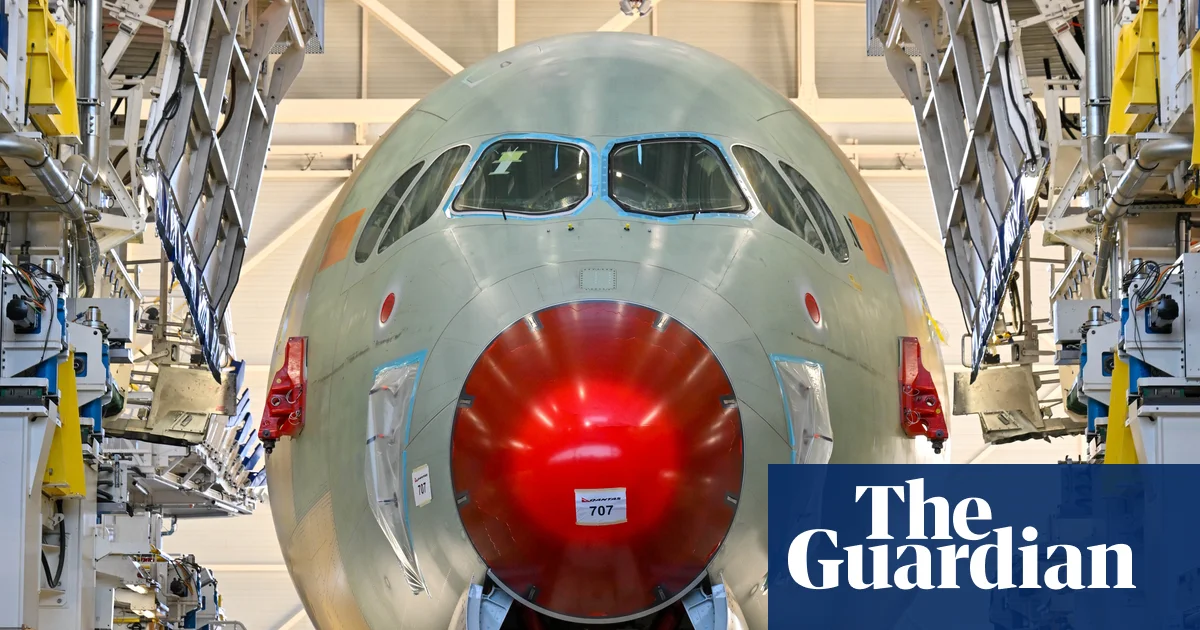
Qantas Unveils Game-Changing Ultra-Long-Range Airbus for Non-Stop Sydney to London & New York Flights

The global landscape of aviation and international connectivity is on the brink of a transformative shift, driven by the ambitious plans of Qantas and the ongoing evolution of aerospace technology. The Australian airline recently unveiled the first images of its next-generation aircraft, an Airbus A350-1000ULR, which is set to revolutionize long-haul travel by enabling non-stop flights from Sydney to London and New York starting in 2027. This development signifies more than just a new type of aircraft; it symbolizes a strategic move by Qantas to establish dominant global routes, reduce travel times, and secure competitive advantages in the fierce international aviation market. Such advancements, while promising for travelers, have wide-ranging implications for geopolitics, economic influence, and societal change.

In crafting this ultra-long-haul flight network, Qantas is positioning itself to challenge existing transcontinental aviation standards, with the aircraft scheduled for test flights in 2026 at Airbus’s Toulouse assembly line. The airline has ordered a dozen of these aircraft as part of its Project Sunrise, a strategic initiative aimed at connecting Australia directly to global hubs, bypassing traditional stopover points.

  • These non-stop flights will cut travel times up to four hours, significantly altering international mobility and opening new avenues for global commerce, tourism, and cultural exchange.

While some analysts, such as those at the International Air Transport Association, highlight the benefits of reduced travel time, critics warn that this acceleration of global connectivity could deepen geopolitical tensions and economic disparities. The dominance of Australia in long-haul aviation might diminish reliance on transcontinental hubs in Asia or the Middle East, impacting regional influence and shifting international power balances.

Beyond the technological and economic implications, these developments further underscore how decisions made by multinational corporations like Qantas impact societies worldwide. The push for faster, more direct routes exemplifies a growing trend towards minimizing geographical barriers, which, according to historians specializing in globalization, could lead to a new era of interconnectedness—yet also exacerbate existing inequalities. The emphasis on efficient global travel aligns with broader geopolitical strategies that favor the free flow of capital and people, often at the expense of local industries and national sovereignty. International organizations such as the World Trade Organization have noted that such advancements may foster economic growth but also pose challenges for labor markets, especially in regions less equipped to adapt to rapid technological shifts.

As the world hurtles toward an era where the boundaries of distance are continually compressed, the weight of history presses ever more heavily. The unfolding story of Qantas’s bold leap into ultra-long-haul aviation is not just about advancements in flight; it is a reflection of an era where technological progress and geopolitical ambitions intertwine, shaping the future of global society. Whether these developments herald a new age of prosperity or deepen divisions remains to be seen. What is certain, however, is that the decisions now being made will echo through history, for better or worse, as the world watches with bated breath—an unfolding saga where every mile traveled is a step further into a future yet unknown.

OpenAI gears up to launch game-changing generative music tool for young creators

OpenAI’s Latest Innovation: AI-Generated Music Signals a New Era of Creative Disruption

Leading AI pioneer OpenAI is reportedly developing a groundbreaking tool capable of generating music from text and audio prompts, a move that could redefine the boundaries of creative content production. According to a report by The Information, this technology aims to facilitate seamless integration of AI-driven music into videos, personalized entertainment, and even interactive applications. Such innovation exemplifies the escalating trend of disruption within the digital content industry, threatening traditional pathways of music composition and licensing.

The proposed tool could radically enhance how content creators, from amateur vloggers to major streaming platforms, source and produce music. By enabling generation of original soundtracks tailored to specific scenes or emotional tones, OpenAI is shaping a future where AI becomes an integral partner in creative workflows. Moreover, the collaboration with students from the Juilliard School to annotate musical scores indicates a strategic investment in high-quality training data, underscoring the company’s commitment to elevating the sophistication of AI-generated compositions. These advancements signal a shift toward democratizing music production, potentially lowering barriers for aspiring artists and redefining the economic landscape for musicians and record labels alike.

Business Implications and Competitive Landscape

This development positions OpenAI as a formidable disruptor in the burgeoning field of generative music, a market already populated by players like Google and Suno. While OpenAI’s prior models concentrated on text and speech synthesis, the new focus on music marks a strategic expansion into a lucrative segment worth billions globally. Industry analysts from firms like Gartner emphasize that advancements in AI-powered audio are poised to revolutionize personalized entertainment, advertising, and even live performances, where AI can generate real-time accompaniments or remix tracks on the fly.

However, the market also faces significant challenges. Intellectual property rights, ethical considerations, and the potential for market saturation pose hurdles that could impact the adoption and commercialization of these tools. Still, the innovation underscores a broader industry trend: as AI technology matures, companies capable of combining creativity with computational power will dominate future markets. The capability to instantly craft custom compositions gives businesses a strategic edge, accelerating their ability to adapt to shifting consumer preferences and content consumption habits.

The Future of AI-Generated Music and Industry Outlook

Looking ahead, industry insiders and technologists warn that the pace of AI innovation is only accelerating. As Elon Musk and Peter Thiel have repeatedly emphasized, *”disruption is inevitable”*, urging stakeholders to prepare for a near future where AI-generated content becomes ubiquitous. OpenAI’s push into music signifies more than just a new feature; it heralds a paradigm shift in what is possible within entertainment, advertising, and gaming sectors. The race to dominate this next frontier is already underway, with societal, legal, and technological implications that demand urgent attention.

The momentum behind generative AI indicates that we are on the cusp of a transformation that will challenge existing structures and unlock unprecedented creative possibilities. Businesses, creators, and investors who recognize these trends early will be best positioned to leverage the full potential of AI-driven innovation. As AI continues to evolve, staying ahead of the curve will be vital—those who act now may shape the very fabric of tomorrow’s digital economy.

Social Media Auto Publish Powered By : XYZScripts.com