Matox News

Truth Over Trends, always!

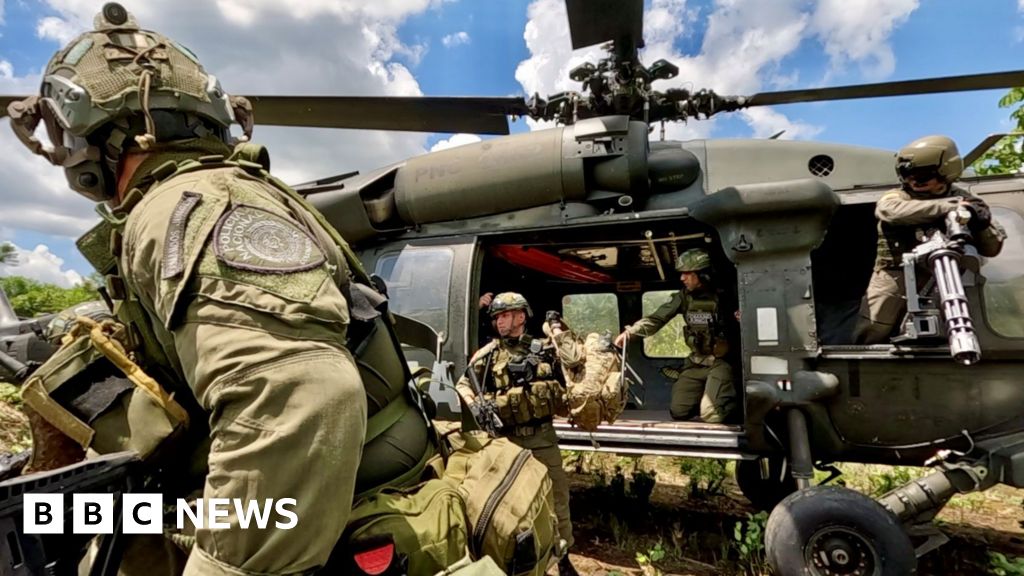
Watch: BBC Reports on Colombian Commandos Staying Strong Against Persistent Drug Gangs

US-Colombia Summit Highlights Strategic Shifts in Latin America

In a significant display of diplomacy and alliance-building, President Joe Biden of the United States and President Gustavo Petro of Colombia recently convened to address shared challenges in the region, with a particular focus on regional security and drug trafficking. These high-level talks mark a renewed commitment from two nations deeply intertwined through history, now confronting contemporary issues with strategic resolve.

The summit occurred amidst an evolving geopolitical landscape, where the U.S. aims to assert its influence in Latin America against a backdrop of rising regional powers and shifting alliances. Critics argue that the meeting underscored the importance of maintaining American dominance through strategic partnerships, especially at a time when drug trafficking remains a persistent threat to stability and public health. The leaders discussed plans to bolster cooperation, including enhanced intelligence sharing, military aid, and joint operations targeting narcotrafficking networks.

In tandem with diplomatic engagements, on-the-ground intelligence operations continue to play a critical role. Recently, journalist Orla Guerin reported from within a Colombian police unit tasked with locating and destroying clandestine jungle cocaine labs—these remote operations are emblematic of the ongoing efforts to dismantle drug trafficking infrastructure. Such units face harsh terrain and sophisticated enemy defenses, illustrating the intensity of the clandestine battle that threatens to spill over international borders. Analysts suggest that these actions are crucial, not only for regional stability but also in curbing the flow of illegal substances into the United States and beyond.

Implications for Regional Security and International Relations

  • Enhanced cooperation between the U.S. and Colombia signals a strategic pivot toward more active counter-narcotics campaigns that incorporate both military and socio-economic measures.
  • The ongoing fight against drug cartels underscores the need for a comprehensive approach—military strikes, community engagement, and international legal cooperation—to effectively weaken these criminal networks.
  • Global institutions, such as the United Nations Office on Drugs and Crime, warn that failure to address these issues could lead to increased violence, migration crises, and regional destabilization, threatening broader international stability.

Internationally, the geopolitical impact of these developments extends beyond Latin America. As the U.S. seeks to maintain influence, some observers highlight the risk of militarization fueling local unrest or empowering authoritarian tendencies, especially in countries like Colombia where government legitimacy remains fragile. Historians and regional analysts caution that the decisions made today could shape the geopolitical fabric for decades to come. Should these collaborative efforts succeed, they could serve as a model for international cooperation against transnational crime. However, failure to adapt strategies or address socio-economic root causes risks entrenching instability and chaos.

As history continues to unfold in the dense jungles and political chambers of Latin America, the weight of choice hangs heavily. The battle against narco-trafficking is more than a fight over illegal substances; it is a defining moment to demonstrate resolve, sovereignty, and the capacity to shape the future. The world watches as these nations forge a fragile path toward stability—an uncertain journey marked by perseverance, diplomacy, and the relentless pursuit of order amid chaos. The next chapter remains unwritten, but its implications will resonate across generations to come.


Australian teens targeted online by gangs to carry out violent acts

In a striking display of the evolving geopolitical landscape of digital security, Australia has unveiled alarming revelations regarding a new, twisted form of online crime that transcends national borders. Australian authorities, led by AFP Commissioner Krissy Barrett, have identified an insidious trend where networks of violent extremists are coercing vulnerable girls into acts of violence—against themselves, their families, or even pets—within a disturbing “gamification” framework. This emerging threat underscores a broader issue: the rapid proliferation of how digital platforms are weaponized in modern ideological conflicts. With already three arrests within Australia and nine more internationally, this phenomenon highlights the urgent need for global coordination. The international community must grapple with the implications, as these online networks exploit digital spaces the same way that traditional armies once fought on physical battlefields.

The accused, largely aged in their late teens or early twenties from Western backgrounds, have been recruiting young girls through gaming platforms like Roblox and messaging apps such as Discord and Telegram. This recruitment tactic, reminiscent of a well-orchestrated underground movement, reveals how the boundaries between online gaming and violent extremism are blurring. Analysts warn that these groups—whom Commissioner Barrett calls “crimefluencers”—subscribe to a nihilistic and sadistic ideology rooted in Nazism, satanism, and other extremist doctrines. Their purpose, however, exceeds mere ideological posturing; it is driven by a desire for amusement, social dominance, and the thrill of inflicting harm without accountability. This new frontier in gender-based violence complicates the traditional paradigms of international security, demanding an urgent, multi-national response.

This troubling development occurs against the backdrop of Australia’s proactive efforts to curb online harm, exemplified by the impending introduction of a pioneering social media ban targeting users under 16. Yet, the exemption of gaming and messaging platforms from these restrictions signals a deeper geopolitical challenge: regulating digital environments that have become breeding grounds for extremism. The Five Eyes alliance—comprising the US, UK, New Zealand, and Canada—is actively collaborating with Australia to dismantle these transnational networks. Such cooperation highlights a crucial recognition: that the digital space is now a contested arena where national security and societal stability are at stake. As international organizations such as INTERPOL advocate for increased cyber law enforcement, it becomes clear that the fight against these malicious online communities will define the next chapter in global security policy. The rise of these “gamified” violence networks raises profound questions about the efficacy of existing laws and the future of international cooperation in combating digital extremism.

Ultimately, this disturbing trend is not merely an isolated issue but an unfolding chapter in the ongoing contest for influence over our digital future. As historians and analysts warn of the dangerous convergence of technology and ideology, the world stands at a pivotal crossroads. The weight of history suggests that the choices made today—how nations respond, cooperate, and regulate—will shape the boundaries of acceptable conduct in the digital age. With the eyes of the world fixed on Australia’s bold stance, the message is clear: the battle for the soul of the internet has begun, and its outcome will determine the course of societal stability for generations to come. The unfolding story underscores one timeless truth—when the digital frontier is exploited for violence and ideological conquest, the entire spectrum of humanity risks paying a heavy toll. Only time will reveal whether global resolve can stem this tide of chaos, or whether we are destined to watch as history is rewritten in the shadows of cyberspace.

Social Media Auto Publish Powered By : XYZScripts.com


