
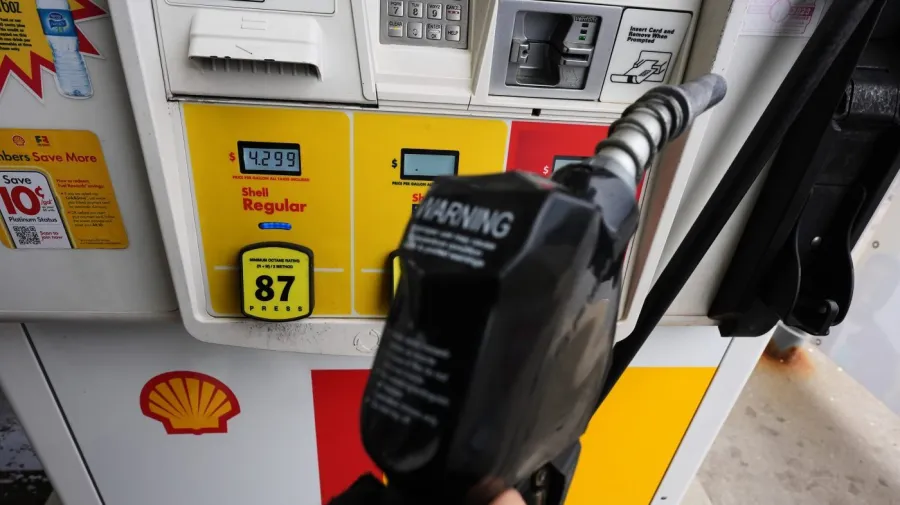

The recent spike in gasoline prices, soaring to an average of $4.53 a gallon, marks a critical juncture in American economic and geopolitical stability. According to AAA, this increase of 31 cents in just one week and an overall rise of 50 percent since the inception of the Iran conflict underscores the fragility of the global energy market. As tensions escalate with Iran’s response—namely, the *closure of the Strait of Hormuz*—the stakes for U.S. energy security become vividly apparent, revealing the underlying _power struggle_ that exists not merely in international waters, but within the corridors of political power in Washington.
For years, energy policy and national security have been intertwined, with conservative voices warning that dependence on unstable Middle Eastern regimes threatens American sovereignty. The recent surge in fuel costs demonstrates how geopolitical conflicts—particularly the *Iranian response*—can have immediate, tangible impacts on everyday Americans. The _closure of the Strait_, considered a strategic waterway for nearly 20% of the world’s oil trade, effectively threatens to choke a vital artery of the global economy. This move underscores how Iran’s _defiance_ acts as a catalyst for a broader conflict in energy dominance, challenging U.S. diplomatic resilience and strategic foresight. As political theorists like Hans Morgenthau have warned, *power is the ultimate currency*—and in this arena, the outcomes directly influence the livelihood of millions.
Within the U.S., the _decision-making process_ mirrors an ongoing _power struggle_ between different factions of authority. On one hand, pragmatic centrists and constitutional experts caution against impulsive military responses or reckless energy policy shifts; on the other, hawkish policymakers advocate for a _more aggressive stance_ both economically and militarily. The Biden administration’s handling of the situation reveals _how decisions are often a balancing act_—aimed at safeguarding national interests while preventing a full-scale conflict. This delicate dance echoes historic parallels, such as the Cuban Missile Crisis, where strategic restraint and brinkmanship determined not just the course of history, but the very fabric of world peace.
Ultimately, the current geopolitical crisis illuminates how _power remains the ultimate arbiter in international relations_ and how domestic policies are invariably shaped by these _global power struggles_. The increase in gasoline prices is not merely an economic indicator but a reflection of the broader _contest for control over global energy resources_. As history has repeatedly demonstrated, the stage of politics is where destiny is written—where decisions wielded by a few can ripple through the fabric of society, shaping the future of generations. In this unfolding drama, the question remains: will the United States rise to the challenge or succumb to the winds of geopolitical chaos? The answer lies in the enduring _battle over power_, echoing through the corridors of history and into the fuel pumps across America.






