Matox News

Truth Over Trends, always!

Brazil’s Pinheiro Braathen grabs historic gold, South America’s first Winter Olympics medal—Winter 2026 heats up!

The 2026 Winter Olympics witnessed not only a display of remarkable athleticism but also significant geopolitical symbolism. Among the most striking narratives was the historic gold medal victory of Lucas Pinheiro Braathen, a young athlete representing Brazil. His achievement was historic: the first-ever Olympic medal for a South American athlete in Winter Games history. That moment transcended sports, carrying the weight of societal change and international perception. It showcased how individual determination can challenge prevailing narratives about nations, race, and identity on the global stage.

Pinheiro Braathen’s story is emblematic of broader shifts, especially in a world where international sporting events are increasingly intertwined with issues of sovereignty and cultural representation. Born in Oslo to a Brazilian mother and Norwegian father, the athlete’s personal journey of claiming his legacy in Brazil defies traditional stereotypes. His victory sends a strong message, emphasizing that how nations present themselves on the world stage can be reshaped by the resilience of individuals willing to defy conventions. Analysts suggest that such moments bolster soft power for emerging nations, which now see sports as a domain to redefine their global stature. Historically, the significance of representation in global events has been understood by international scholars as a catalyst for changing national identities and societal cohesion.

Meanwhile, the race itself was fraught with geopolitical undertones. Marco Odermatt, the reigning Olympic champion from Switzerland, secured silver—yet the story was about Braathen’s stunning underdog victory. The event echoed the persistent rivalry between traditional winter sports powerhouses and nations like Brazil trying to leave their mark. As noted by international commentators and historians, the move by Braathen aligns with a broader trend of non-traditional nations investing in winter sports—a strategy to assert emerging influence and stimulate national pride. These shifting dynamics signify a transformation in the geopolitical landscape, where soft power assets, such as Olympic medals, now serve as symbolic battlegrounds for international prestige.

Looking ahead, the implications for international institutions and world governance are profound. The IOC, forges alliances and promotes narratives of unity and progress, yet it is also a stage for geopolitical signaling. The inclusion of athletes like Braathen, who connect diverse cultural identities, reinforces an evolving global order emphasizing individual agency over old hierarchies. As global analysts track these developments, the broader question remains: how will nations leverage such stories to redefine their roles in a fractured world? The unfolding narrative of Braathen’s victory leaves us contemplating not just the glitter of medals but a deeper, more enduring story—one where the personal is intertwined with the political, and history is written not in grand treaties, but in the individual triumphs that challenge the status quo. As the world’s gaze turns from these fleeting moments at the Winter Olympics, the real story persists: in the shadows of icy slopes and soaring flagpoles, the future of international power dynamics continues to be shaped.


Lindsey Vonn's Olympic bid ends in crash as Breezy Johnson takes gold for Team USA
Lindsey Vonn’s Olympic bid ends in crash as Breezy Johnson takes gold for Team USA

The recent alpine skiing race, marked by the dramatic crash of American skier Lindsey Vonn, underscores not only the peril inherent in high-stakes sports but also reflects broader themes of resilience, international competition, and the shifting landscape of global leadership. Vonn’s bold decision to compete despite a torn ACL—claiming her injury was “100% torn” and her determination to replicate her 2010 Olympic gold—embodies the fiercely competitive spirit that dominates international sports today. Her defiance, showcased through social media and gym training videos, inspired fans worldwide and highlighted the intense personal sacrifices athletes make on the global stage.

Yet, the crash exposed more than just individual resolve; it revealed the inherent risks that accompany the pursuit of national pride and international dominance in sports. Commentary from British Olympian Chemmy Alcott and experts on the BBC highlighted the brutal conditions of the piste and the perilous nature of alpine downhill racing, especially amid unpredictable weather changes. The fact that the snow was melting due to midday sun and long delays added an unpredictable element that could tilt the outcome against even the most skilled competitors. Such risks—metaphorically echoing geopolitical tensions—underscore how nations push their limits in pursuit of supremacy, often at the expense of safety and stability.

Analysts and international organizations have long warned of the *”costs of relentless competition,”* both in sports and geopolitics. The incident at the race becomes a pressing reminder of *how decisions and risks taken on the international stage* directly influence societal perceptions and policy directions. The crash of Vonn, with another skier, Cande Moreno, similarly injured and airlifted, symbolizes the volatile nature of modern competitive environments—where prestige is often achieved at extreme costs. As one historian, Dr. Laura Mitchell, notes, “Such moments are turning points—reminding us that even in the pursuit of glory, human vulnerability remains paramount, and the price of ambition can be high.”

In a broader geopolitical context, this event mirrors the dynamics of *renewed global rivalry and uncertain stability*. Countries are investing heavily in their athletes and national image, paralleling strategic investments in military and diplomatic spheres. The *“risks,”* both physical and political, are interconnected—what happens in the icy slopes of a ski course today echoes in the corridors of power tomorrow. As international analysts pace the shifting chessboard of power, the question remains: how much longer can nations continue to push boundaries before the inevitable reckoning?* The story of Vonn’s crash is not merely about sports; it is a poignant chapter in the ongoing saga of a world balancing on the edge of progress and peril, where every fall echoes across the geopolitical landscape—reminding us that history is still unfolding in the most unexpected of arenas, often with devastating consequences.

Founder revolutionizes firefighting, now mining AI gold for the next-gen tech wave

HEN Technologies Unveils Next-Gen Fire Suppression System with Smart Data Capabilities

Emerging as a formidable contender in the realm of industrial innovation, HEN Technologies is revolutionizing fire suppression and water management through groundbreaking sensor-driven, predictive systems. Founded in June 2020, the company has levered a diverse technological background—including nanotech, solar, semiconductors, and automotive—to develop a portfolio of intelligent water control devices. These tools are not just hardware; they are catalysts for disrupting the entrenched firefighting and municipal water systems, with far-reaching business implications for military, emergency, and industrial sectors globally.

Innovation at the Core: From Nozzles to Data Ecosystems

  • Utilizes custom-designed circuit boards embedded with sensors and powerful computing units—including Nvidia Orion Nano processors—transforming basic hardware into connected, smart systems.
  • Develops precise, adaptive water nozzles capable of controlling droplet size, managing velocity, and resisting wind, enhancing firefighting efficiency in high-stakes scenarios.
  • Expands into a portfolio of flow control and monitoring devices—such as Stream IQ and discharge systems—integrating real-time data streams for operational insights.

The innovation is embodied in HEN’s system architecture, which employs sensors at the pump level to act as virtual sensors in the nozzle, capturing detailed data about water flow, pressure, and environmental conditions. This data not only optimizes firefighting efforts but also creates a valuable multi-modal data pipeline that has attracted significant investor interest, including a recent $20 million Series A round led by O’Neil Strategic Capital. According to industry experts, this level of integrated data infrastructure positions HEN as a potential pioneer for predictive analytics—crucial for advanced AI systems that construct dynamic models of physical environments.

Disruption and Business Implications: Beyond Firefighting

HEN’s platform is poised to disrupt traditional emergency response and municipal water management by enabling predictive analytics and resource optimization. Its devices gather critical data on water usage, environmental conditions, and system performance—information that has historically been difficult to access in real time. This data ecosystem could revolutionize how agencies like the DHS NERIS program and international defense organizations approach emergency readiness, disaster mitigation, and resource allocation.

The company’s strategic move into qualified federal procurement channels, such as GSA approval, signals a deliberate push toward scale within government contracting, turning this technological disruption into a sustainable business model. Fire departments routinely replace thousands of aging engines annually; HEN’s intelligent hardware offers recurring revenue opportunities from hardware sales complemented by ongoing data contracts—an attractive prospect for investors driven to capitalize on the growing need for smart city infrastructure.

The Road Ahead: Data as the Future Currency

While hardware sales currently fuel revenue growth—$200,000 in Q2 2023 skyrocketed to over $20 million forecasted for this year—the real value lies in the data generated. As analysts at Gartner and MIT emphasize, the future belongs to companies that can harness real-world data for AI-driven predictive systems. Companies building sophisticated world models, especially in emergency management and robotics, will pay a premium for the high-fidelity, multimodal physics data generated by HEN’s deployments.

With a talented team drawn from Tesla, Apple, NASA, and Microsoft, HEN is positioning itself as a critical enabler of these emerging AI applications, which require granular, real-time data to operate effectively in unpredictable, high-stakes environments. As government agencies and private industries increasingly adopt such systems, HEN’s strategic focus on robust hardware, data pipelines, and institutional penetration signals a fast-approaching industry inflection point. Companies ignoring the looming disruption risk falling behind in the race for the next-generation of intelligent, connected infrastructure—making early adoption not just advantageous but essential.

In this rapidly evolving landscape, the message is clear: the convergence of sensor technology, AI, and real-time data is giving rise to a new wave of disruptive innovation. HEN’s success, fueled by visionary engineering and strategic investor backing, exemplifies how the future of infrastructure resilience and emergency response will be driven by those who master the art of data collection and intelligent control. The race to dominate this space is just heating up, and forward-looking companies must move swiftly to capture the immense opportunities ahead.

Robot Takes the Mic: Melbourne Innovator Turns AI into Comedy Gold for the Next Gen

In an era where **technology** continues to reshape every facet of **lifestyle** and **entertainment**, a groundbreaking initiative from the University of Melbourne is probing the very limits of **artificial intelligence** (AI) in the realm of **comedy**. Led by Dr. Robert Walton, a dean’s research fellow in the **Faculty of Fine Arts and Music**, this project seeks to determine whether **robots** can go beyond mere **physical mishaps** and develop a genuine sense of **humor**. Unlike the stereotypical clumsiness that often elicits laughter at robots’ expense—think of those viral clips of Boston Dynamics’ malfunctioning machines—Walton’s goal is to explore the potential for **AI** to *intentionally* make us laugh, tapping into the core skills of **timing**, **reading the room**, and **visual humor**. Thanks to a substantial Australian Research Council grant of roughly $500,000, Walton will train a team of ground-based **robots**, ranging from 40 centimeters to two meters tall, to hone their *visual* comedic skills alongside human collaborators.

This initiative marks a conscious departure from memetic AI humor derived from language models like **ChatGPT**, which often mirror *underwhelming* jokes, reminiscent of those found in **Christmas crackers**. Instead, Walton emphasizes that humor rooted in **non-verbal communication**—such as **physical comedy** and **timing**—may be the key to unlocking believable **machine humor**. By observing how **robots** sense movement, establish **connection**, and respond to gestures like **head tilts** or **laughter**, Walton aims to understand how machines might eventually *adapt* to mimic human **behavioral cues**. The project’s ultimate aim isn’t merely to entertain but to garner insights on how **human-robot interactions** can evolve, with all their **risks and benefits**.

Indeed, this investigation touches on profound questions about **authenticity**, **creativity**, and the very essence of **humanity**. Notable **cultural figures** like comedian and musician **Tim Minchin** have pointed out that what makes **comedy** truly compelling is the **flaws**—the imperfections and **agency** of **the artist** behind the act. Human **comedians** bring their **personal experiences**, **struggles**, and **mistakes** into their routines, crafting a moment of **authentic connection** that technology has yet to replicate convincingly. The **Melbourne comedy festival** director, Susan Provan, echoes this sentiment, emphasizing that **originality** arises from **lived experiences** and **spontaneous interactions**—elements that many believe define the **soul** of **comedy**. Walton’s project recognizes these facets, exploring whether **robots** can simulate this **authenticity** or if they will simply be **clumsy imitators**, providing humor through their **failures** rather than their **intentions**.

  • Reflect on the blend of **technology** and **lifestyle** as an avenue for **self-improvement** and **well-being**;
  • Consider how **training** in **humor** could be applied in fields like **caregiving** or **public interaction** to foster **empathy** and **connection**;
  • Embrace the idea that **innovation** must be paired with **ethical caution**—exploring both empowering potential and **threats** associated with **AI** transforming **entertainment** and **personal interaction**.

As Walton’s work unfolds, it invites us to reflect not just on what **technology** can do but what it **should** do. The journey from **robots fall** to the potential of a **believable** comedian embodies a broader societal quest: fostering a **lifestyle** that balances **innovative progress** with **authentic human essence**. This pursuit underscores an enduring truth—**the human spirit** thrives in spontaneity, mistakes, and the genuine **connection** with others. While AI may someday learn the **timing** and **gestures**, it remains to be seen whether it can truly emulate those **imperfections** that make us *laugh*, *cry*, and *feel alive*. Perhaps, in the end, the most profound comedy—like life’s richness—resides in embracing our **flaws** and the **journey** of perpetual discovery.

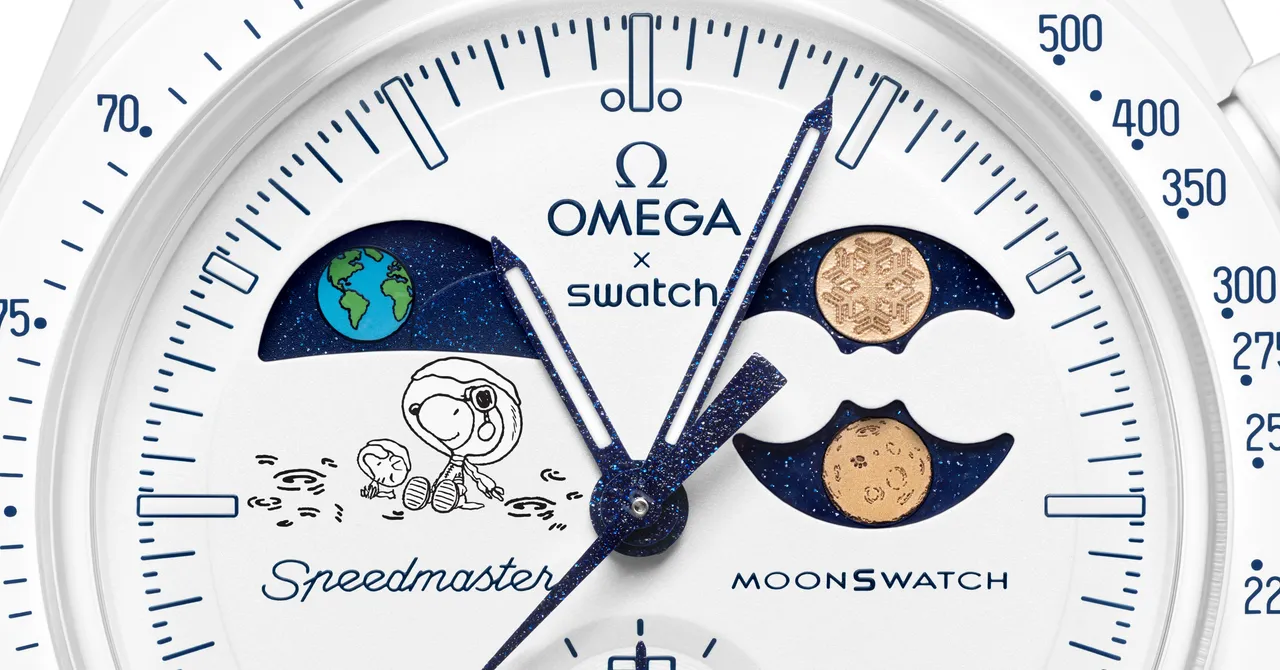
Swatch MoonSwatch Earthphase Moonshine Gold: Price, Specs & How to Get It

Swatch’s MoonSwatch Continues to Disrupt Traditional Watch Industry, Signals a Tech-Driven Future

The watch industry is experiencing a seismic shift driven by innovation and disruption, with Swiss giant Swatch once again leading the charge. The company’s MoonSwatch collection, a remarkable fusion of horological craftsmanship and mass-market savvy, has revolutionized how consumers perceive and purchase high-end timepieces. Despite its playful, affordable appeal—priced at just $285—MoonSwatch is netting hundreds of millions of dollars in sales, threatening traditional luxury brands’ dominance. This strategic move exemplifies how industry giants are leveraging unique collaborations and branding to harness a new era of consumer engagement.

The product itself is a testament to innovative market disruption. The collection melds Swatch’s bioceramic materials—a sustainable, lightweight composite—with design elements inspired by Omega’s iconic Moonwatch, creating a hybrid product that appeals to both nostalgia and modern sensibilities. Features such as

  • Playful hidden messages revealed under UV light
  • Customizable straps and aesthetic variants
  • Limited editions with unique moon phase displays

highlight Swatch’s strategic use of innovation not just in product design but in consumer experience.

Current industry leaders, like Gartner analyst Dr. Lisa Lopez, underscore the impact on the traditional luxury watch sector. She notes that this disruption is driving a wave of business model innovation, where quick-to-market collaborations and digital appeal threaten the long-standing exclusivity of haute horology. Additionally, Elon Musk’s ventures into mass-market wearables and MIT’s research into smart accessories further illustrate the trend toward integrating technology seamlessly into daily fashion. These developments push the market towards a landscape where disruption and innovation are no longer optional but essential for survival.

Despite the playful aesthetic, the MoonSwatch’s success with younger demographics signals a broader market shift. Industry shifts towards accessible luxury, combined with emphasis on sustainability and technological integration, are redefining the horizon. Swatch’s recent release of the Moonshine Gold Cold Moon model, featuring intricate moon phase mechanics with golden snowflake accents, exemplifies this trend. The release not only demonstrates technological innovation but also highlights the importance of timely, culturally resonant products that generate buzz and brand loyalty. As Peter Thiel often emphasizes, the pace of innovation is accelerating, and companies that fail to adapt risk being left behind in the dust of incumbents driven by tradition.

The future of the watch industry rests on how well brands can blend disruption, innovation, and consumer-centric strategies. Market watchers and tech innovators alike agree that the upcoming decade will be pivotal, with rapid advancements in materials science, smart tech, and augmented reality poised to redefine what a watch can be. The critical takeaway? In an era marked by unprecedented technological disruption, remaining passive is a path to obsolescence. Forward-looking companies must harness the full potential of technological innovation, disrupt traditional paradigms, and stay ahead of the consumer curve—because the next wave of market leadership hinges on their ability to do so.

Museum Heist: 2,000 Gold and Silver Coins Vanish in Bold Robbery

France, long revered as a custodian of world cultural treasures, has recently found itself embroiled in a series of audacious heists that threaten not just its museum collections but also its national reputation. The seizures—ranging from the theft of millions in gold coins at a regional museum to the brazen daylight theft of priceless jewelry at the Louvre—underscore a dangerous erosion of security protocols and raise questions about societal stability and state sovereignty in a country whose history is intertwined with art and enlightenment.

In the latest incident, approximately 2,000 gold and silver coins valued at around €90,000 (£78,000; $104,000) were stolen from the Musees de Langres, just hours after the shocking €88 million jewelry theft from the Louvre gallery. As experts and authorities struggle to respond, international analysts warn that such events could serve as a disturbing template for other criminal networks across Europe. The theft involved highly skilled perpetrators, who chose their targets with precision, indicating a level of expertise and planning that is increasingly characteristic of organized crime groups seeking to undermine the cultural foundations of sovereign nations.

Adding to the gravity, a preliminary report revealed that the Louvre itself failed to secure its most treasured artifacts. CCTV footage was found to be inadequate, with monitoring systems either outdated or pointing away from critical access points. French authorities, including Justice Minister Gérald Darmanin, have lamented that the security protocols had “failed,” painting a dire picture of how fragile even the most iconic symbols of national pride can be in the face of modern threats. This lapse not only tarnishes France’s image but also serves as a stark warning to other countries about the urgent need for robust security measures against the rising tide of cultural vandalism and theft.

Recognized experts such as art detective Arthur Brand suggest that the pattern of attacks could escalate, with “copycat” gangs potentially executing multiple “hits” across the continent, exploiting perceived weaknesses in national defenses. The international community is watching with concern as France grapples with these incidents, which highlight how strategic decisions—whether in homeland security, cyber defense, or intelligence sharing—directly affect society’s ability to preserve its cultural sovereignty. Such events have the power to fuel nationalist sentiments and reinforce the importance of safeguarding heritage as a core element of national identity and sovereignty.

As the world watches history in the making, the question remains: how will nations respond to this new era of cultural confrontation? Will they fortify their defenses or fall further into vulnerability? The weight of this unfolding story reminds us that in this ongoing battle for sovereignty, history’s pen continues to write with a fierce, indelible hand—one that may define the future of nations and societies for generations to come.

Social Media Auto Publish Powered By : XYZScripts.com