
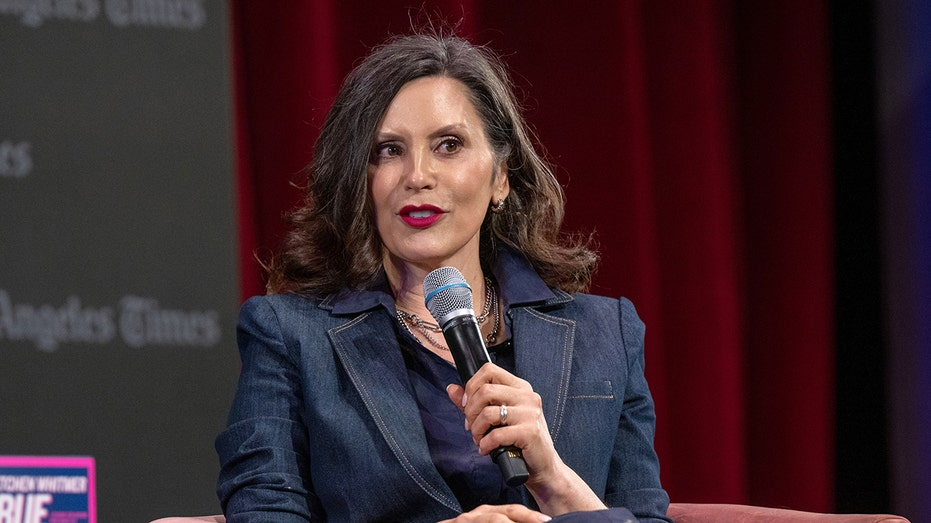

Michigan’s two-term Governor Gretchen Whitmer has decisively ended months of widespread speculation, clarifying her intentions regarding a potential 2028 presidential campaign.
LANSING, MI – Governor Gretchen Whitmer, a prominent Democratic figure often cited as a prospective candidate for the nation’s highest office, has firmly declared she will not pursue the presidency in the 2028 election cycle. Her announcement puts to rest considerable conjecture among political observers and within her own party regarding her national ambitions.
Putting Speculation to Rest
In a direct statement to a reporter in Michigan on Thursday, Governor Whitmer left no room for ambiguity. “There will be a robust group of people running for president,” she stated, adding unequivocally, “I will not be one of them in 2028. I can tell you that.” This definitive declaration from the term-limited governor of a key Great Lakes battleground state reshapes the early landscape for the next presidential contest.
For years, political pundits and strategists have included Governor Whitmer on a short list of nationally recognized Democrats who might contend for the presidential nomination. Her profile grew significantly during her tenure, particularly through her high-visibility role as a state leader and national voice for her party.
A Prominent Figure’s Journey
Governor Whitmer gained considerable national attention during the first term of Republican President Donald Trump, often emerging as an outspoken critic of his administration’s policies. Her prominence was further cemented when she delivered the Democratic response to the President’s 2020 State of the Union address, solidifying her image as a formidable voice within her party.
However, as President Trump entered his second term, Governor Whitmer notably shifted her approach, seeking areas of policy agreement rather than constant confrontation. This evolution was highlighted by an incident in April of last year when she appeared at the White House for a private meeting on Michigan-specific issues. Unexpectedly led into a televised news conference with the then-president, photos of her attempting to shield her face from cameras quickly went viral. The governor later clarified that she had not wished for her pictures to be taken, an event that momentarily caused consternation among some Democratic factions, as reported by outlets like News Desk.
“There will be a robust group of people running for president. I will not be one of them in 2028.”
Implications for the Democratic Field
Governor Whitmer’s decision means that one of the Democratic Party’s most recognizable faces will not be part of the anticipated “crowded and competitive field” vying for the nomination. Her absence will undoubtedly encourage other potential candidates who might have viewed her as a formidable opponent.
The Democratic Party faces the challenge of identifying a strong nominee to succeed a term-limited Republican President Donald Trump. With Governor Whitmer’s withdrawal, the focus will intensify on other high-profile figures who have either hinted at or are widely expected to consider a White House bid. The field is expected to include a diverse array of governors, senators, and other national leaders.
The clarity provided by Governor Whitmer’s statement allows the political ecosystem to begin calibrating expectations for 2028. Her choice underscores the demanding nature of a presidential campaign and the personal considerations involved in such a monumental undertaking. As the next election cycle approaches, the political landscape will continue to evolve, with new contenders emerging and strategies taking shape.






