

Global Power Dynamics in Chaos: Russia’s Assault on Ukraine and Europe’s Political Turmoil
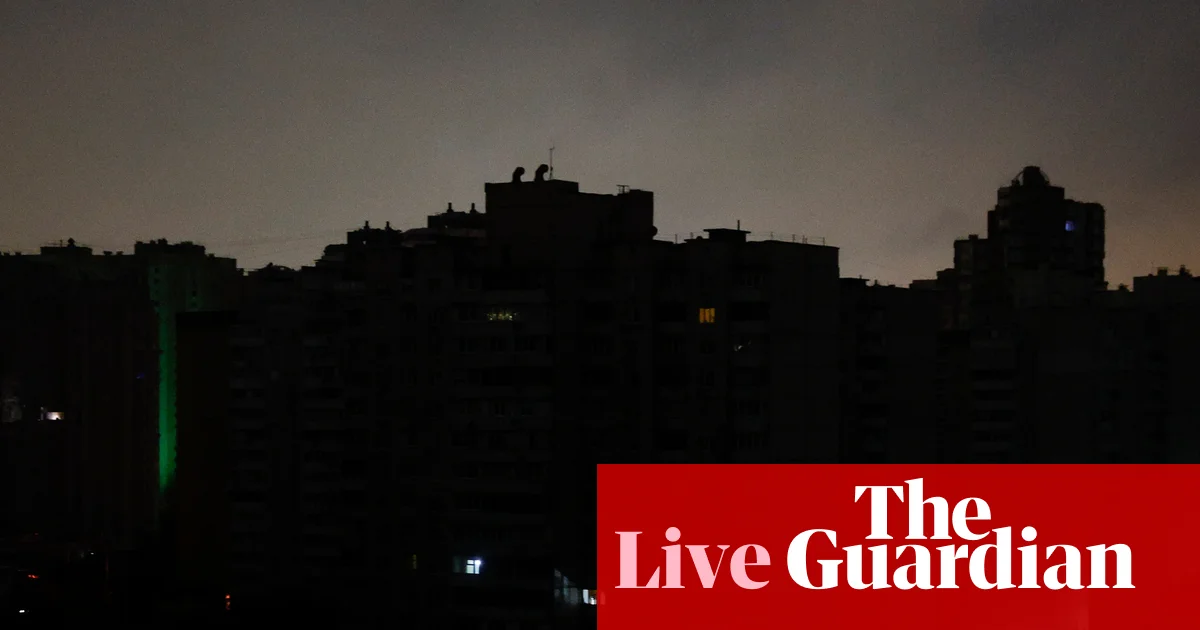
In a stark demonstration of geopolitical instability, the recent escalation of attacks against Ukraine by Russia has plunged Kyiv into darkness and chaos, compelling the international community to reassess the delicate balance of power. Early Friday morning, Kyiv was hit by what the Ukrainian Air Force called a “massive attack,” involving over 450 drones and 30 missiles, targeting critical infrastructure and energy supplies across the country. These relentless assaults resulted in power outages in nine regions and ignited fires in residential buildings, including a high-rise in Kyiv, exemplifying Russia’s strategic effort to weaken Ukraine’s resilience amidst ongoing conflict.
The Ukrainian President Volodymyr Zelenskyy condemned the attack as a blatant act of aggression aimed at undermining Ukraine’s sovereignty and destabilizing its fragile infrastructure. The attack’s scale, which included ballistic missiles and strike drones, marks a significant escalation in Moscow’s campaign to cripple Ukraine’s energy grid, which the energy minister Svitlana Grynchuk described as “a massive strike.” This attack not only disrupts daily life but also signals Russia’s intent on prolonging the conflict, further testing Kyiv’s capacity for resilience and its allies’ support. Analysts from the International Atomic Energy Agency (IAEA) have indicated efforts are underway to restore power to the Zaporizhzhia nuclear plant, which has been isolated from external power sources for over two weeks—highlighting the dangerous brinkmanship and the persisting threat of nuclear instability in the region.
How These Decisions Shaped a War’s Turning Point
- Russia’s deployment of hundreds of strike drones and missiles explicitly aims at crippling Ukraine’s infrastructure, forcing widespread blackouts and mounting civilian casualties.
- Kyiv desperately seeks international support, especially advanced air defense systems, to counter such relentless aerial assaults, emphasizing the international stakes of Ukraine’s sovereignty.
- Within Russia, Kremlin strategists, historians, and military analysts debate the limits of this new escalation, as Moscow’s rhetoric remains unwaveringly aggressive, signaling the possible extension of hostilities into broader European territory.
- The international community, led by voices such as NATO officials and United Nations representatives, warn that these acts could push the region toward a new Cold War era, with global repercussions and strained alliances.
Amid the chaos, Europe faces internal contractions among its political fabric. French President Emmanuel Macron convened an emergency meeting of mainstream political parties to navigate a crisis rooted in fragile governance, as the country grapples with persistently low growth and a fractured parliament. Meanwhile, in Belgium, authorities uncovered a plot to ignite drone-mounted explosives targeting politicians, including the Prime Minister, reflecting the growing shadow of radical extremism in the continent’s security landscape. These security risks, coupled with Europe’s increased defense investments—most notably Sweden’s billion-crown plan to expand anti-drone systems—highlight a continent awakening to new aerial threats with Eurasian powers as central players.
New Alliances and Shifting Borders: A Clash of Empires
Meanwhile, on the international stage, US President Donald Trump has reignited long-standing tensions by suggesting that NATO should consider expelling Spain over its lagging military expenditures in the face of the European security crisis. Trump’s demands underscore an ongoing push for European nations to shoulder more responsibility, aligning with a broader, more confrontational American stance on European defense matters. Conversely, NATO nations are contemplating the rising threat of aerial violations; Sweden’s €367 million investment in anti-drone technology exemplifies a continent-wide recognition of hybrid warfare’s evolving landscape, with accusations of Russian involvement in drone sightings rattling European skies.
As the whirlwind of violence in Ukraine and the shifting sands of European political stability threaten to ignite a broader conflagration, the weight of history hangs heavy. The decisions made in the coming weeks—whether Ukraine’s allies strengthen their resolve or Russia escalates further—will determine whether this is merely a preamble to a larger war or the dawn of a new era shaped irreversibly by the choices of powerful nations. The pages of history are turning swiftly, and amid the shadows of conflict, the world holds its breath, gazing toward an uncertain horizon where the currents of geopolitics continue to carve their indelible marks into the fabric of history.





