
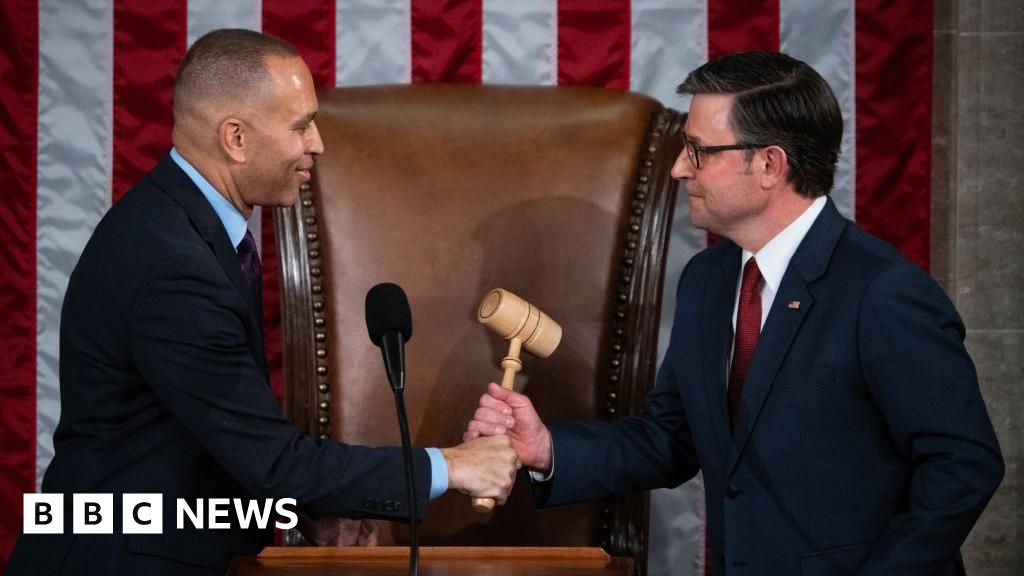

As the United States teeters on the brink of a prolonged partial government shutdown, the global community watches with cautious concern. The growing political impasse between Democratic and Republican leaders underscores the fragility of American domestic stability, which inherently influences regional and international geopolitical dynamics. With the next voting day looming, negotiations remain deadlocked over key issues, primarily healthcare funding and budget allocations—a struggle that has escalated into a nationwide crisis—highlighting the extent to which internal discord can destabilize the world’s largest economy and military superpower.
In the current standoff, House Speaker Mike Johnson and Democrat Hakeem Jeffries have publicly exchanged accusations, each blaming the other for the deadlock. The crux of the dispute revolves around the healthcare sector, with Democrats insisting on extending Affordable Care Act subsidies and reversing Medicaid cuts, viewing this as vital to protecting millions of Americans. Conversely, Republicans criticize the Democratic proposal, claiming that it includes excessive spending and addresses unfounded concerns, such as the perceived misuse of Medicaid by undocumented immigrants—an assertion vehemently denied by Democratic leaders. These partisan exchanges exemplify how internal American politics have become a battleground capable of disrupting global markets, especially as the Senate, wielding its slender majority, struggles to pass crucial funding bills requiring a supermajority of 60 votes.
The geopolitical impact of this domestic turmoil extends beyond America’s borders. The polling data from CBS reveals that 80% of Americans fear the economic repercussions of the shutdown, and international markets are closely monitoring the situation as a harbinger of potential volatility. Historian and global analyst commentary warns that sustained austerity measures or government closures could erode America’s credibility on the world stage, affecting everything from diplomatic negotiations to military commitments. Meanwhile, President Donald Trump’s threats of mass layoffs and service cuts, justified as measures to root out waste and fraud, risk precipitating a humanitarian and economic crisis, which could further erode America’s global image. As Johnson and other Republican leaders call for a return to negotiations, the world watches as the United States grapples with its internal demons, risking a slide into chaos that could redefine international alliances and economic relations for years to come.
In this unfolding scenario, the very fabric of American societal stability hangs in the balance, echoing the caution that history’s most tumultuous moments have imparted. If the shutdown persists, it could serve as a stark reminder that no nation—no matter how powerful—stands immune to internal strife or the fallout from political misjudgments. As the world looks on, the question remains: will this crisis forge a path toward renewed unity or deepen the fissures that threaten to unravel the American experiment itself? With each passing day, the weight of history becomes heavier, for the decisions made now will echo in the annals of the future—emphasizing that in the arena of geopolitics, internal discord is often the precursor to historic transformations, with consequences that stretch across continents and generations.





