Matox News

Truth Over Trends, always!

Concerns grow as Chinese CCTV cameras surveil Magna Carta—symbol of democracy

Recent revelations about the use of Chinese CCTV technology in sites of historical and symbolic significance across the globe have reignited concerns over the geopolitical influence of China’s technological advancements. Surveillance systems developed by firms such as Dahua Technology and Hikvision, both headquartered in Hangzhou, are now at the center of a growing international controversy. These companies’ hardware is being scrutinized for its alleged associations with China’s brutal repression of Uyghurs in Xinjiang, and its role in aiding Russia’s invasion of Ukraine. The implications are profound: as these firms’ systems are integrated into sites like Salisbury Cathedral and the Parthenon, questions arise about the symbolic sanctity and security of such historic institutions.

The security risks attributed to Dahua and Hikvision extend beyond ethics into strategic vulnerabilities. Campaigners and international watchdogs, including the World Uyghur Congress and the Ukrainian organization Don’t Fund Russian Army, have urged authorities to dismantle or replace these cameras, citing systemic vulnerabilities that have reportedly been exploited by state actors. The UK government responded to these concerns by removing Chinese-made systems from sensitive sites—highlighting a shift towards protecting national security from covert espionage and cyber threats. However, the ongoing presence of these companies’ technology in sites like the Greek Parthenon, and Salisbury Cathedral—home to a historic copy of the Magna Carta—symbolizes a troubling confluence of global history, human rights, and geopolitics.

In the context of growing international tensions, the use of these surveillance tools by China is viewed by analysts as a strategic avenue to extend influence and control well beyond its borders. Historians warn that technology, when used as a tool of surveillance and repression, can serve as a new form of imperialism—a way for China to project power through digital infrastructure. The revelation that Dahua’s cameras helped identify Uyghurs—a minority persecuted under Chinese authorities—and were involved in automated police reports, illustrates a disturbing legacy of repression masked by technological advancement. Moreover, the vulnerability of these systems to hacking—something confirmed by Ukrainian military sources—exposes a dangerous susceptibility that could be exploited in times of conflict, potentially turning symbols of democracy into battlegrounds of espionage.

International organizations and military analysts warn that the decision to allow Chinese surveillance systems in key historical and cultural sites not only compromises security but also symbolizes a shift in the global order. It underscores a broader struggle: the West’s challenge to China’s rise, intertwined with the fight to preserve democratic ideals and historical integrity. As China’s influence expands, especially through shared technology, the future of sovereignty and freedom hinges on whether nations recognize and respond to these insidious threats. Ultimately, the story of these cameras—arrayed around monuments of liberty and justice—is a cautionary tale of how technology, if unchecked, risks transforming the very symbols of human progress into instruments of control. History’s relentless march continues, and the choices made today will resonate in the narrative of freedom or tyranny for generations to come.


Europe & US watch Russia’s reply to Ukraine peace plan—hope and tension grow

In a striking move that underscores the shifting tides of international power, top European officials convened this Tuesday in The Hague to establish an unprecedented international reparations body aimed at compensating Ukraine over Russia’s ongoing invasion. This initiative, authorized at a high-level summit, marks a significant escalation in Western strategy by formalizing how reparations claims will be assessed and potentially paid out. The International Claims Commission for Ukraine will serve as the tribunal to evaluate tens of thousands of claims from individuals and organizations, with a goal of quantifying the economic and social damage inflicted by Moscow’s military aggression. Its inception is being coordinated through the Council of Europe, reflecting an intent to mobilize European institutions to enforce accountability on an unprecedented scale.

This development arrives amidst a series of high-stakes diplomatic maneuvers, with Ukrainian President Volodymyr Zelensky actively touring Europe to rally support for the utilization of frozen Russian assets—an effort that has garnered widespread support among European nations. As Zelensky addresses parliaments and meets with government leaders, the European political landscape is shifting toward a stance of collective accountability, signaling a decisive move away from previous cautious diplomacy. These efforts are compounded by summits such as the Eastern Flank Summit in Helsinki, bringing together Nordics, Baltics, Balkan, and Eastern European leaders to strategize a united front. International analysts suggest that this coordinated approach could redefine the geopolitical impact of Europe’s response, further entrenching divisions and alliances that will shape the continent’s future stability.

Meanwhile, Moscow’s reaction remains coldly dismissive. Deputy foreign minister Sergei Ryabkov stated that Russia has yet to comprehend the details of these Western initiatives, emphasizing Moscow’s firm stance against any territorial concessions. His comments reflect an entrenched position that rejects compliance with Western demands; rather, Russia appears poised to hold its line, banking on the possibility of diplomatic stalemate and Western fatigue. The notably positive tone among US and European officials—highlighted by comments about “tremendous support”—places additional pressure on Moscow, which faces the dilemma of either engaging with these demands or risking further diplomatic alienation. The delicate dance of diplomacy now hinges on Moscow’s first official response, which many international observers believe could either soften or harden the ongoing conflict, with the potential to send shockwaves through global geopolitics.

The classic narrative of a conflict in flux reaches a tense crescendo as history continues to be written. How Russia responds to these Western moves will determine whether this ongoing crisis spirals further into a broader confrontation or begins to find an elusive path towards peace—yet, the very fabric of international diplomacy feels strained beneath the heavy weight of unresolved tensions. As the echoes of diplomatic dialogue reverberate across Europe, one thing remains clear: the decisions made in the coming days will carve the future of an entire continent, and perhaps, the course of global history itself, for generations to come.

US alerts thousands as their data is exposed—security risks grow

In a startling development that underscores the fragility of digital security and regional stability, Somalia faces a significant data breach involving its electronic visa system, exposing personal information of over 35,000 applicants, including US citizens. The US embassy in Somalia issued a warning of a credible breach where unidentified hackers penetrated the government’s e-visa platform, potentially compromising sensitive data such as names, photos, addresses, and email contacts. This incident highlights the vulnerabilities of emerging digital infrastructures in unstable regions, raising alarms among international security analysts who warn that such breaches could be exploited by extremist groups or hostile nation-states.

Critics argue that this breach is emblematic of broader governance issues within Somalia, which has been embroiled in internal conflict and political chaos for decades. The recent move to shift visa services from evisa.gov.so to etas.gov.so without official explanation signals a government struggling to maintain control over its digital sovereignty amidst mounting regional tensions. While Hargeisa, the de facto capital of Somaliland, continues to contest Somalia’s sovereignty and airspace control, the breach adds fuel to the fire, fueling fears of further destabilization of an already fractured nation.

This incident feeds into the escalating dispute between Somalia and Somaliland, a self-declared republic that has governed itself since 1991 but remains internationally unrecognized. Somaliland’s leadership has recently rejected Somalia’s e-visa system, citing fears of data leaks and security risks, and in response, ordered airlines to obtain clearance from Hargeisa before entering Somaliland airspace. This move has been supported internationally by the region’s aspirations for autonomy, yet it jeopardizes regional stability; the Somali Civil Aviation Authority insists it retains sole control over the area, warning that non-compliance could threaten air safety and lead to legal repercussions.

International observers, including analysts at organizations like the United Nations and regional diplomatic agencies, warn that such acts of defiance, coupled with cybersecurity failures, threaten to destabilize a critical corridor in the Horn of Africa. The geopolitical impact is profound, as the ongoing standoff between Mogadishu and Hargeisa exemplifies how internal conflicts, if left unaddressed, can spill over into wider regional conflicts involving neighboring states and global powers interested in Africa’s strategic resources and trade routes. How nations respond and adapt to these crises will determine whether Africa’s volatile east will drift further into chaos or forge a new path toward stability.

As history continues to unfold, the digital and territorial disputes over Somalia’s skies and sovereignty reveal a larger truth: in a world increasingly driven by technology and contested borders, every breach, every administrative shift, and every declaration bears the weight of history in the making. The coming months will determine if Somalia’s fragile state can repair its digital infrastructure, regain its authority, and prevent the region from spiraling into further chaos, or if a new chapter of conflict is destined to define the Horn of Africa for generations to come.

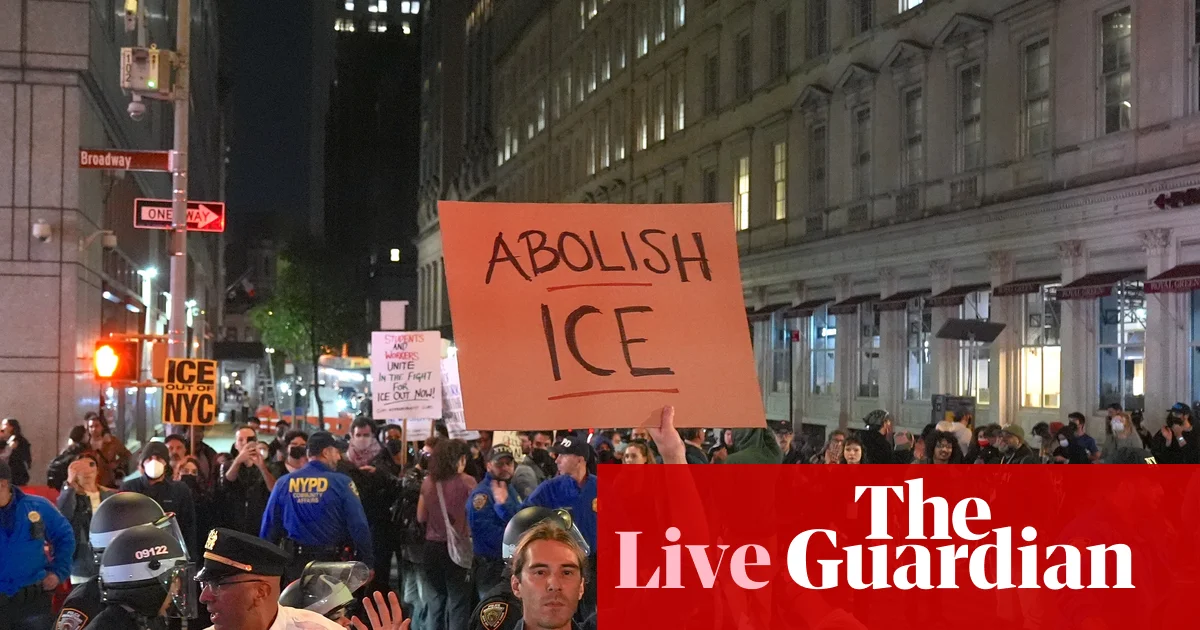
NY Mayor and Police Step Back from ICE Raids as Chinatown Protests Grow — US Politics Update

Global Shifts and Domestic Battles: The Impact of U.S. Immigration Policies and International Alliances

In a dramatic turn that underscores the volatile crossroads of domestic policy and international geopolitics, recent events in New York City and beyond reveal a landscape on edge. The city’s mayor, Eric Adams, has publicly distanced the local government from the controversial ICE raids targeting Chinatown under the pretext of counterfeit goods. Adams’s declaration that New York City has ‘no involvement’ in the federal operation reaffirms the city’s stance of non-cooperation with federal immigration enforcement, emphasizing that undocumented residents pursuing their American dream should not be targeted. This echoes a broader pattern in which local jurisdictions, especially in a nation divided over immigration, are pushing back against federal overreach—yet, the ripple effects threaten to destabilize national unity at a time of intense geopolitical friction.

The scenes in Lower Manhattan were a stark reminder of the simmering conflict between federal authorities and local communities. Protests erupted as hundreds gathered, loudly condemning ICE’s tactics. Video footage captures masked agents detaining individuals in the crowded streets, with onlookers vocally denouncing the operation amid powered-up tensions. The spectacle of armed federal agents and armored vehicles rolling silently through city streets symbolizes a shifting landscape where domestic law enforcement actions are increasingly intertwined with international narratives of migration, sovereignty, and social order. Such incidents influence how societies perceive their governments’ use of power and their obligations to vulnerable populations.

Meanwhile, on the diplomatic front, world leaders gather in diplomatic limbo, with President Donald Trump conducting an array of high-stakes meetings, notably with NATO Secretary-General Mark Rutte. Discussions are centered on military aid and the ongoing conflict in Ukraine, with Western nations coordinating the transfer of weapons often purchased from the United States. These diplomatic maneuvers, viewed through the lens of experts like analysts from the Atlantic Council, demonstrate that global alliances remain in flux—tied closely to the strategic interests of powerful nations shaping the future of Europe and beyond. The promise and perils of such alliances are evident, as NATO’s support for Ukraine intensifies the confrontation with Russia, with broader implications for European security and energy politics.

Domestically, the political landscape remains volatile, with key figures like JD Vance avoiding explicit deadlines for Hamas compliance in Gaza, highlighting the fragile balance in Middle Eastern diplomacy. On the home front, former Marine and political hopeful Graham Platner vehemently denies accusations linking him to extremist symbolism, illustrating the ongoing battleground of ideological identity in American politics. Meanwhile, the withdrawal of figures like Paul Ingrassia from critical government nominations demonstrates the increasing difficulty of confirming officials amidst a polarized political climate. These events, analyzed by political strategists, reveal a nation caught in the tension of internal dissent and international obligations, where each decision has deep and lasting consequences.

As President Trump prepares for a pivotal day at the White House, the weight of history presses upon him. His scheduled meeting with NATO’s Rutte at a time of mounting global instability exemplifies how the boundaries of diplomacy and domestic policy are dissolving into a complex tapestry of power plays and ideological warfare. Whether through false claims about fires in Portland or negotiations with European allies, the decisions made today could chart the course of history—drawing lines in the sand that will define generations. As nations grapple with upheaval and societies face internal divisions, the unfolding story remains a potent reminder: in the theater of world affairs, every move reverberates, and the true impact of these decisions will be felt long after today’s headlines fade into history.”

US officials confirm Titan sub’s tragic implosion due to faulty engineering—youth concerns grow

OceanGate’s Titan submersible disaster has ignited a fierce debate across international corridors about the responsibilities of private firms venturing into deep-sea exploration. The implosion of Titan in June 2023, which resulted in the tragic loss of all five onboard—including OceanGate’s chief executive—has cast a stark spotlight on **faulty engineering practices** and **lukewarm regulatory oversight**. According to a recent report by the US National Transportation Safety Board (NTSB), the tragedy was not an unforeseen act of nature but a consequence of **”inadequate” engineering processes that failed to meet established safety standards**. Such findings underscore how, in the pursuit of adventure and profit, safety deficiencies are often brushed aside, with deadly consequences.“

At the core of this catastrophe lies a **daring yet dangerously flawed vision**—one where a private firm sought to capitalize on ultra-wealthy thrill-seekers paying up to $250,000 for a seat in an experimental deep-sea vessel. It was the company’s reckless disregard for adequate testing that set the stage for disaster. The NTSB’s report elucidates how OceanGate’s testing protocols were superficial at best, leaving critical structural weaknesses unaddressed and the vessel unfit to withstand the immense pressures of the North Atlantic’s depths. This failure to ensure safety not only endangered lives but highlighted a broader systemic issue—how the lack of stringent regulation allows profit-driven entities to gamble with human lives under the guise of exploration.

The **geopolitical impact** of this incident extends beyond the oceanic depths. It raises urgent questions about the regulation of commercial deep-sea operations—a sector increasingly driven by private enterprise and ambitious billionaires’ projects. Analysts warn that such failures threaten to erode public trust and could result in international calls for tighter oversight. International organizations and regional governments are watching closely—fearful of a domino effect that might embolden similar risky endeavors across other frontier zones such as space or uncharted territories. Furthermore, the incident underscores how the decision to prioritize profits over safety can undermine the diplomatic stature of nations hosting or regulating such activities. Several experts, including maritime safety authorities and historians of exploration, emphasize that this tragedy is a stark reminder of the perils of deregulating high-stakes ventures.

In the wake of the investigation, revelations of **internal culture and alleged corruption** at OceanGate have raised alarms about the nature of private sector involvement in hazardous exploration. The NTSB’s findings reveal that some internal employees voiced concerns over **”safety being ignored”** and even criticized the *business model*, which involved **accepting paying clients as “mission specialists,”** contrary to US safety regulations that prohibit transporting passengers in experimental vessels. Disturbingly, accounts describe how OceanGate’s leadership, including Stockton Rush, allegedly dismissed these warnings, with reports suggesting attempts to manipulate oversight through corrupt political influence—an issue that many analysts argue highlights the risks of privatized exploration operating outside the bounds of strict governance.

As history unfolds, it becomes clear that the maritime tragedy involving Titan is emblematic of a broader shift in how nations and societies negotiate the boundaries of exploration and commerce. While mankind’s quest for discovery is integral to progress, it must not be unchecked. The sinking of Titan, and the subsequent revelations, serve as a grim warning **that unchecked greed and lax regulation** can turn daring ambitions into existential dangers. In the face of this deadly lesson, international institutions and governments are increasingly called upon to assert control—integrating strict safety standards with accountability—to ensure that the wave of exploration does not drown mankind in its wake. As the oceans remain veiled in mystery, the danger now is that history’s ongoing struggle with tragic hubris may repeat itself, leaving future generations to ponder whether we learned enough from the depths’ darkest secrets.

Concerns Grow Over Equity Policies Could Trigger Massive Protests Over Use of Actors’ Images in AI Content

In an era marked by rapid technological advances, the film industry and trade unions worldwide find themselves at the forefront of a growing battle over AI-generated content and the infringement of intellectual property rights. The UK-based union Equity, representing 50,000 performers, has announced plans to coordinate mass data requests to tech giants and production companies, aiming to uncover whether personal data—especially images and voices of actors—are being used without their informed consent. This move signals a significant shift in how creators and performers are asserting their rights in the digital age, amid widespread concerns about unauthorized use of personal likenesses and the moral implications of AI’s increasing dominance.

Recent cases, such as that of Briony Monroe, a Scottish actress, have underscored the tangible risks faced by performers. Monroe claims that her image and mannerisms were scraped from her body of work and incorporated into a digital character named Tilly Norwood—a fully synthetic AI actor created by Xicoia. Despite denials from the company, Monroe’s accusations reflect an unsettling trend where AI firms utilize personal data to craft digital replicas, often without explicit permission. Historians and analysts warn that this development could undermine the very essence of human creativity, as the line between authentic performance and algorithm-driven mimicry becomes increasingly blurred. The industry’s failure to establish clear protocols or transparency about data sourcing raises grave concerns about moral compromise and the erosion of performers’ rights.

The geopolitical impact of this confrontation extends beyond the UK. Major international organizations, including the World Intellectual Property Organization and the European Data Protection Board, are monitoring these disputes, which threaten to redefine frameworks of copyright law and personal privacy. Critics argue that AI companies have trained their models on content obtained from existing films and television without proper permissions, thereby disrupting global copyright norms. The tensions resonate with broader debates about sovereignty and digital control, especially as nations like the United States and China accelerate their AI development efforts. Major tech firms are accused of reckless data scraping, potentially setting a dangerous precedent where intellectual property can be exploited on a massive scale, without immediate repercussions.

Amidst this upheaval, industry leaders and international lawmakers are under pressure to create enforceable regulations that balance innovation with moral responsibility. The Deputy Chief Executive of the Pact trade body, Max Rumney, emphasizes the importance for production companies to embrace AI responsibly to avoid disadvantaging those who adhere to fair practices. However, the lack of transparency from AI tech companies regarding their data sources remains a core issue. As Geneva-based experts warn, unless regulatory frameworks adapt swiftly, the industry risks devolving into an unchecked digital wild west where creators are exploited and society’s cultural fabric is irrevocably altered. The battle over AI’s place in creative realms is, at its core, a fight for humanity’s moral and legal sovereignty—one that will shape the future of global entertainment, societal values, and the very fabric of what it means to create.

In the unfolding narrative of this digital age, history is watching as the actors, creators, and nations stake their claim. Perhaps the most profound question remains: will the emerging AI-driven content forge a new era of innovation rooted in human expression, or will it become a tool of exploitation—an echo of a once-clear boundary, now blurred into obscurity? The answer lies at the intersection of law, morality, and technological mastery, where the weight of history is silently poised to record the choices we make today—choices that will echo through generations to come.

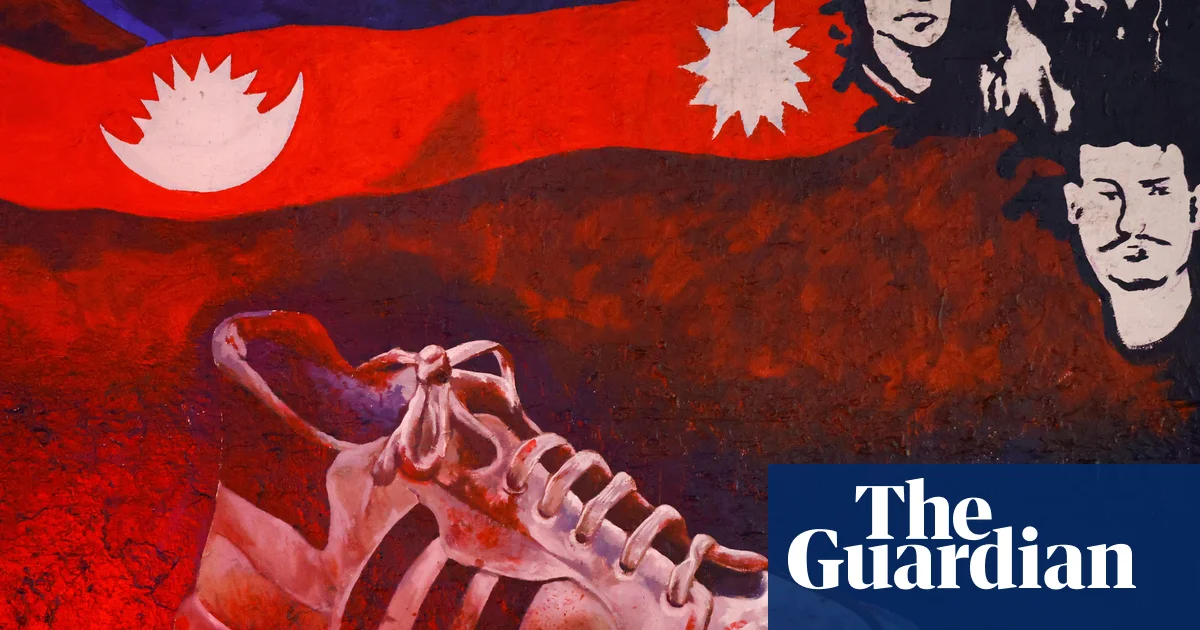
Nepal’s Youth Grow Frustrated as Change Stalls One Month After Gen Z Protests

In what was once considered a quiet and traditional Himalayan nation, Nepal has undergone a seismic shift driven by a surge of youth activism and anti-corruption sentiments. An incident that began with a spontaneous protest against corruption, a social media ban, and government suppression has morphed into what many are now calling Nepal’s gen Z revolution. This upheaval has resulted in the unpredictable toppling of the government, dissolution of parliament, and the swift appointment of Sushila Karki, a former chief justice, as the interim prime minister. Analysts warn this rapid political shake-up carries profound geopolitical impact, not just internally but across the entire South Asian region, as old political order faces a challenge from the new, impatient generation demanding transparency.

The incident that sparked widespread unrest was marked by a tragic day on 8 September, when police opened fire on protesters outside parliament, killing 19 young demonstrators—an event that has become a defining moment in Nepal’s modern history. Among the injured was Prakash Bohora, a symbol of Nepal’s youth driven by disillusionment with corruption, unemployment, and exploitation. His story encapsulates the broader discontent; he fought in Russia’s army in Ukraine, saw his friends killed or maimed, and returned home to find a political system increasingly detached from the needs of its citizens. Many young Nepalis, like Bohora, joined the protests not for regime change but because of frustration with a system that seems to favor elite corruption while everyday citizens suffer. Historians and analysts argue that this civic awakening signifies a potential turning point in South Asian politics—an era where youthful protest could reshape the geopolitical landscape.

Despite the youthful energy fueling the protests, Sushila Karki’s appointment as a temporary leader has faced skepticism, particularly from Nepal’s major political parties—the Nepali Congress, the Communists, and the Maoists. These parties have openly questioned her legitimacy, accusing the new government of bypassing constitutional norms. The government’s focus has shifted heavily toward investigating allegations of corruption, especially regarding the toppled figures of former Prime Minister KP Sharma Oli and ex-House Minister Ramesh Lekhak. Pressure from youth groups demands that the government deliver tangible progress, including arrests of high-profile politicians accused of enriching themselves at public expense. From an international perspective, this internal turmoil underscores the growing fragility of Nepal’s democracy—where success hinges on the delicate balance of reform and political stability.

Regional and international stakeholders are watching keenly. India and China, as neighboring giants with vested interests, fear that Nepal’s instability could spill over, impacting trade routes, bordering security, and regional influence. Meanwhile, the United Nations and other international organizations have called for calm and dialogue, warning that any escalation of violence would threaten Nepal’s fragile new government and regional stability. As the political crisis deepens, analysts emphasize that Nepal’s crisis is but a chapter in a larger story—one where generations are demanding their voice, and the old guard must decide whether to adapt or face being swept away by an age of youthful activism. History’s pen lingers over this moment like a shadow, reminding the world that the long arc of justice sometimes bends fierce and swift, leaving behind a nation forever changed—an uncharted chapter in the unfolding saga of South Asia’s future.

Social Media Auto Publish Powered By : XYZScripts.com