Matox News

Truth Over Trends, always!

Emerging Stars Shine as Finals Heat Up: Young Athletes Make Their Mark!

Basketball Coaches Stand United Against Political Interference

A concerning trend in college athletics has caught the attention of some of the sport’s most recognized figures. On Wednesday, a coalition of influential basketball coaches, including Steve Kerr of the Golden State Warriors and Doc Rivers of the Philadelphia 76ers, publicly condemned political interference in universities. This letter is more than just a plea; it is a clarion call to preserve the integrity of college athletics, which they believe is being compromised by external political agendas.

The letter underscores that the essence of college sports is at risk. “The involvement of political forces in university athletics is concerning,” noted Coach Kerr during a press conference. He emphasized that such interference not only distracts from the joy of competition but also risks altering the fundamental purpose of college sports: to foster athletic talent and promote personal growth. Both coaches highlighted that the integrity of college basketball hinges on the commitment to training and education.

Key Takeaways from the Coaches’ Letter

  • Preservation of Integrity: Coaches fear that political pressures could dictate coaching decisions and player eligibility.
  • Focus on Athletes: The letter calls for prioritizing student-athletes’ development over political agendas.
  • A Call for Unity: The coaches are urging fellow educators and leaders to stand against such political encroachments.

As the season progresses, the stakes are particularly high, with teams striving for excellence both on and off the court. The interaction between politics and athletics should ideally remain limited to the competitive nature of the sport itself, allowing athletes to shine based solely on their abilities. The tension between political motives and the spirit of sports is increasingly visible, raising questions about the future of collegiate programs. As Doc Rivers stated, “Now more than ever, we need to come together as a community to safeguard what is truly important.”

Amidst the pressures of the modern world, the enduring message from these coaches resonates deeply: sports, like basketball, has the power to unify individuals beyond the scoreboard. The collective strength exhibited by these coaches serves as a potent reminder that, at its core, college athletics transcends politics and fosters a sense of camaraderie that can inspire future generations. Ultimately, it’s about ensuring a space where young athletes can thrive, not just as competitors, but as individuals poised to contribute meaningfully to society.

Source link

Chrome ramps up with new features as browser battles heat up

tech giants and startups drive disruptive innovation in web browsers, signaling a new era of digital competition

In a landscape traditionally dominated by Google Chrome, 2025 is shaping up as a pivotal year for innovation and disruption in the browser market. As emerging AI-powered startups and tech companies leverage artificial intelligence to redefine user experience, Google is rallying to retain its dominance by rolling out a series of advanced features aimed at deep integration, enhanced productivity, and user convenience. This strategic move underlines an industry transition: the race for browser supremacy is intensifying, with innovation becoming the central battleground.

Google’s recent updates include features such as Split View, PDF annotations, and a new “Save to Google Drive” function, designed to boost productivity and keep users within the Google ecosystem. These enhancements reflect an acknowledgment that user engagement hinges on seamless integration and smarter workflows. Experts from MIT and industry analysts from Gartner argue that such features may serve as a defensive shield against innovative challengers that have brought AI-driven browsing experiences to the forefront.

  • Split View for multitasking across tabs
  • PDF annotations for in-browser editing
  • Direct save to cloud to prevent data loss

This upgrade exemplifies how legacy browsers are trying to adapt, but critics warn that unless these features are coupled with massive user experience overhauls, they risk becoming mere band-aids.

Meanwhile, startups like ChatGPT Atlas and others are unleashing AI-centric browsers that promise to revolutionize how we interact online. These new entrants focus on disruption through automation, personalized content, and autonomous browsing capabilities, forcing giants to reconsider their strategies. The industry observes that if these startups gain mass adoption, we could witness a seismic shift in how digital markets operate. Historically, Peter Thiel has emphasized the importance of monopoly via innovation, a lesson now resonant in the race for browsing dominance. The question remains whether legacy players can evolve swiftly enough to fend off these challengers or risk obsolescence.

The business implications of this shift are profound. As Google deepens its AI integrations and other companies introduce revolutionary functionalities, the boundaries between browsers and AI assistants are blurring. This suggests a future where the browser becomes an intelligent gateway to a personalized, autonomous digital ecosystem. Such a transition not only threatens traditional browser revenue streams but also opens new avenues for cloud services, AI subscriptions, and SaaS models. Companies that master these innovations will secure a competitive edge, while those slow to adopt risk losing relevance in this fast-changing industry.

As we move into this new epoch, the urgency for establishing innovation-driven monopolies has never been greater. The convergence of AI, cloud integration, and user-centric features points to a future where dominance will depend on technological agility and strategic disruption. Industry observers and investors must stay alert, as the next wave of breakthroughs could redefine the digital landscape altogether. With giants and startups alike accelerating their R&D efforts, the battle to shape the browser of tomorrow is not just about software—it’s about wielding the power to influence global information flows.

Rising Stars Shine as High School Basketball Championships Heat Up!

Texas Triumphs Over LSU: A Game-Changer in the Race for the 1-Seed

In a thrilling matchup on Thursday, the Texas Longhorns delivered a significant blow to the aspirations of the LSU Tigers as they claimed victory in a closely contested game. The outcome not only secures Texas a stronger position in upcoming rankings but also complicates the path for teams like LSU and Vanderbilt in their quest for a coveted 1-seed. With the stakes high, both teams showcased their prowess on the court, but it was the Longhorns who emerged victorious, leaving observers buzzing.

Strong performances characterized the game, particularly from Texas guard, who demonstrated exceptional skill under pressure. Commentator and former player, Mike Anderson, stated, “This win is a statement for Texas; they’ve shown they can compete with the best.” The Longhorns’ victory was fueled by critical moments that defined the game:

  • Strong defensive plays that caused turnovers and disrupted LSU’s rhythm.
  • A late-game surge that saw Texas outscore LSU by 12 points in the final quarter.
  • A key three-pointer in the closing minutes that extended their lead.

The impact of this game reverberates beyond just team standings. Head Coach Chris Beard has consistently emphasized the importance of teamwork and perseverance in building a championship-caliber squad. His strategies seem to have paid off, as evidenced in this intense battle. Meanwhile, LSU’s head coach, Will Wade, expressed disappointment but remained optimistic, saying, “We will learn from this and come back stronger.”

As the season progresses, the potential for surprises becomes endless. Sports fans know that beyond the stats and accolades, moments like these unite communities and build rivalries that transcend the final score. On the hardwood, college basketball remains a vibrant tapestry, interweaving stories of struggle, triumph, and resilience. As teams prepare for the challenges ahead, they are not just playing for victory; they are playing for their legacies, their schools, and their fans. In this spirit, the realm of sports stands as a testament to what can be achieved when passion meets determination.

Source link

Japan hands pandas back to China as U.S.-China tensions heat up

In a poignant sign of shifting geopolitical tides, Japan finds itself at a crossroads of tradition and rising international tensions. Thousands of spectators flocked to Tokyo’s Ueno Zoo to bid a heartfelt farewell to the country’s last two giant pandas, Xiao Xiao and Lei Lei. Their departure, scheduled for Tuesday back to China, marks the end of an era that began in 1972 when Japan and China normalized diplomatic relations. Over 108,000 people vied for one of the 4,400 slots to catch a final glimpse of the beloved bears, underscoring the pandas’ symbolic significance to Japanese society. For decades, pandas have served as a gentle diplomatic bridge, embodying China’s soft-power influence and fostering goodwill amidst geopolitical currents.

However, the moment is marred by increasingly hostile exchanges between Tokyo and Beijing. Recently, statements from Japanese Prime Minister Sanae Takaichi—warning that Tokyo might intervene militarily if China attacks Taiwan—have only exacerbated the already fragile diplomatic climate. This rhetoric signals a broader shift in Japan’s stance toward regional security and underscores the impact of recent political realignments. Since her comments, China has responded with heightened assertiveness, including restrictions on exports of critical rare earth elements that are vital to Japan’s tech sector. Analysts from institutions such as the International Institute for Strategic Studies (IISS) warn that these actions could escalate into broader conflicts, with East Asia edging closer to instability.

China’s strategy of loaning pandas abroad has long been a subtle but potent form of diplomacy. As China views these creatures as ambassadors of goodwill, it retains ownership of all pandas, demanding hefty annual fees—about $1 million per pair—and leveraging the creatures’ symbolic power to influence international ties. Historically, pandas have been exchanged during major diplomatic or trade negotiations, such as the 2011 loan to Edinburgh Zoo during a trade deal involving salmon, Land Rovers, and energy technology. Yet, with the recent deterioration of bilateral relations—fueled by China’s crackdown on exports and Tokyo’s hawkish rhetoric—the future of panda loans remains uncertain. Many experts suggest that the return of Xiao Xiao and Lei Lei signifies more than just a cultural departure; it highlights the fragility of international diplomacy and the mounting risks of conflict.

This unfolding saga underscores the deepening rift that threatens to redefine regional alliances and global stability. As nations grapple with their aspirations and fears, the farewell at Ueno Zoo embodies a broader warning: in an era where soft diplomacy is waning and hard power reasserts itself, the symbols of friendship and tradition risk being overshadowed by the darker shadows of geopolitical discord. History continues to be written with every decision—each move, a chapter in a story that may either forge peace or plunge the region into lasting turmoil. As the world watches, the cries of farewell echo in the halls of diplomacy, leaving behind a question of what future lies ahead—an era of unity or one of inevitable confrontation—and whether the lessons of history will be heeded before it’s too late.

High School Hoops Heat Up: Local Stars Shine in Championship Showdown

Kyle Singler Charged with Misdemeanor Assault

In a disheartening turn of events, former Duke and Oklahoma City Thunder forward Kyle Singler, age 37, finds himself at the center of a legal controversy. On Tuesday, Singler was charged with misdemeanor assault in Haskell County, Oklahoma, following an incident where his girlfriend reported that he grabbed her head and shoved her to the ground. The news has left fans and former teammates questioning not just the player’s conduct, but the impact of off-court issues on sports personalities.

The allegations against Singler add to a growing list of athletes who have found themselves embroiled in legal troubles. After a standout college career at Duke, where he helped the team secure a national championship in 2010, and a promising stint in the NBA, this latest incident casts a shadow over his past achievements. Coaches and commentators alike are echoing the sentiment that the responsibilities of being a professional athlete extend beyond the court, emphasizing the importance of integrity and respect in all areas of life.

The details surrounding the incident remain under investigation, and it is essential to approach this matter with caution. As it stands, the repercussions following this incident could affect Singler’s reputation and legacy as a player. Social media reactions have been swift, with fans expressing disappointment and calling for accountability. Many hold the view that an athlete’s performance is intrinsically linked to their character, making this situation all the more pressing for the sports community.

  • Incident Date: Tuesday
  • Player Age: 37
  • University: Duke, National Champion 2010
  • Reported Behavior: Shoved girlfriend to the ground
  • Current Status: Under investigation for misdemeanor assault

The world of sports often serves as a microcosm of society, where the challenges faced off the field are just as significant as those encountered during competition. In today’s culture, where social issues frequently collide with athleticism, the importance of personal conduct has never been more apparent. It is a reminder that at its best, sports unite us—not just through victories on the scoreboard, but through the shared values of respect, integrity, and accountability. As this story unfolds, fans and athletes alike have an opportunity to reflect on the responsibilities that come with being in the public eye. Regardless of the outcome, the lesson remains: sports can and should be a unifying force, transcending individual fails and celebrating collective growth.

Source link

Rising Stars Shine as Youth League Finals Heat Up This Weekend

NBA Finals Logo Returns to the Court After 14 Years

In a thrilling announcement that has ignited excitement across the basketball community, NBA officials confirmed that the iconic Larry O’Brien Trophy logo and the NBA Finals script logo will be painted on the court for the upcoming playoff series. This marks the first time since 2009 that these symbols of championship glory will grace the hardwood, a move that many fans and commentators see as a revitalization of the tradition that celebrates the league’s premier event.

The addition of these logos, especially after a lengthy absence, is set to heighten the anticipation surrounding the Finals. According to ESPN sources, this change represents not just a visual transformation, but a symbolic nod to the storied history of the NBA. Coach Steve Kerr of the Golden State Warriors weighed in on the significance of these logos during a recent press conference, stating, “Every time you step onto that court, you’re reminded of what’s at stake. These images represent the pinnacle of achievement and the relentless pursuit of greatness.”

Key Highlights from the Announcement

  • Historical Significance: The logos last appeared on the court in 2009, making this a pivotal return.
  • Fan Reception: Fans have expressed overwhelming enthusiasm on social media, noting the emotional impact of the logos.
  • Coaching Impact: Coaches are emphasizing the importance of tradition during player preparations for the Finals.

The excitement surrounding this development is palpable. Renowned sports commentator Doris Burke stated in a recent interview, “These logos aren’t just designs—they are reminders of the legendary players who have fought for this title, embodying the spirit of competition.” The renewed presence of the logos promises to spark pride among players and fans alike, reminding everyone of the sheer thrill that comes with competing for glory.

As the NBA Finals approach, the reintroduction of the Larry O’Brien Trophy logo and script serves not only as a nostalgic reminder of past triumphs but also as a unifying force for fans worldwide. Beyond the final scores and statistics, it encapsulates the passion, dedication, and communal spirit that basketball embodies. In a time often fragmented by division, the game brings us together, proving once again that every season culminates in a celebration of not just sport, but of unity, hope, and the relentless pursuit of dreams.

Source link

Mosquitoes Strike Iceland for the First Time After Record Heat Wave

Record-Breaking Heatwave in Iceland Sparks Unforeseen Ecological Shift

In a startling development that underscores the profound effects of climate change on fragile ecosystems, Iceland has recorded the first-ever discovery of mosquitoes within its borders. Historically a haven of icy detachment, the once-impregnable barrier against these pests has been broken by this year’s unprecedented heatwave. Local insect enthusiast Bjorn Hjaltason identified and captured two female mosquitoes and one male, later confirmed by the Icelandic Institute of Natural History as Culiseta annulata, a resilient species capable of surviving frigid winters. This event has sent ripples through environmental circles and geopolitical analysts alike, spotlighting the tangible consequences of a scorching climate that now approaches Iceland’s northern shores.

Prior to this year, Iceland remained one of only two mosquito-free zones globally, with the only other being Antarctica. The cold climate and distinct ecological conditions historically prevented mosquitoes from establishing a foothold. However, the recent series of heatwaves—an anomaly according to the Met Office—have shattered previous temperature records, with May highs exceeding 20°C (68°F) and peaking at an all-time high of 26.6°C (79.8°F) at Eglisstaðir Airport. Such dramatic shifts are emblematic of the larger, more ominous trend of global warming, which the UN’s climate body affirms as driven by human activity. As global temperatures climb, scientists warn of destabilized ecosystems and unforeseen biological invasions, challenges that nations are increasingly ill-prepared to handle.

  • The key event: The first confirmed mosquito presence in Iceland amid record-breaking heat, signaling a disturbing ecological breach.
  • Potential consequences: Expansion of insect-borne diseases, disruption of local fauna, and strain on natural resources.
  • Broader implications: The event is a stark illustration of how climate change accelerates the erosion of natural barriers that historically protected regions like Iceland and Antarctica.

International organizations and experts are taking notice. Critics argue that these developments underscore the urgent need for a coordinated global response to climate change, focusing on both mitigation and adaptation. Historians and environmental analysts warn that this incident foreshadows a new era—one in which the impacts of human pollution and carbon emissions reach into the most remote corners of the world, rewriting the script of nature’s historical boundaries. The question now is whether nations will recognize the gravity of these signs or dismiss them as isolated anomalies. With each passing year marked by record heat and ecological upheaval, the line between natural resilience and human-inflicted vulnerability continues to blur.

As the story unfolds, Iceland stands as a stark symbol—a fragile outpost on the frontlines of a warming planet. The insect’s invasion, while seemingly minor, may herald a larger, more dangerous trend of ecological unravelling that knows no borders. The discovery leaves us with a haunting image: a once-untouched icy haven gradually succumbing to the relentless march of warming tides. Humanity, standing at a crossroads, must confront whether this is the prelude to a new world order—one shaped by climate-driven upheaval or the dawn of decisive action to halt the chaos. The weight of history is still being written, and the next chapter could determine whether the icy wilderness remains a sanctuary or succumbs to the scars of human neglect.

Sydney braces for fierce heat as record temperatures shift east and powerful winds threaten southern Australia

The Rising Temperatures and Political Stakes in the Age of Climate Crisis

As the weather patterns across Australia reach unprecedented heights, the underlying message for the international community becomes clear: climate change is accelerating, and its geopolitical impact is profound and far-reaching. Recent reports from the Bureau of Meteorology reveal that both New South Wales and Queensland set records for their hottest October temperatures, with Birdsville in outback Queensland reaching 46.1°C and Bourke in NSW hitting 44.8°C. These extreme heatwaves reflect a disturbing trend that, according to climate analysts, is largely driven by human activity and the ongoing climate crisis.

The impact is not contained to environmental implications alone; it also bears heavily on political stability, resource management, and global reputation. Australia’s climate crisis has ignited intense debates among policymakers and environmental groups alike. As prime minister of Australia, Anthony Albanese, faces mounting pressure to implement more aggressive climate policies, international observers watch with concern that insufficient action could undermine the nation’s global standing and economic resilience. Historians warn that this era could be remembered as a pivotal point where inaction may have cost entire communities their livelihoods, especially vulnerable rural towns like Birdsville where heatwaves are becoming the new normal.

Disaster on the Horizon: Extreme Weather Spurs International Response

Simultaneously, severe weather warnings across Victoria, South Australia, and along the Australian coast underscore the growing risk of natural disasters. Widespread strong winds—up to 130 km/h— and raging bushfires reported by the NSW Rural Fire Service highlight the dangerous cascading effects of climate change—drought, heatwaves, and destructive winds—often intersecting into a perfect storm of environmental and societal crises. These developments heighten the warning issued by climate experts that borderless phenomena require the global community to intensify cooperation, sharing resources and technology to adapt and mitigate.

This global challenge transcends Australia. Regions from the United States to India are witnessing record-breaking heat and supercharged storm systems. International organizations, such as the United Nations and Intergovernmental Panel on Climate Change (IPCC), emphasize that these patterns are no longer isolated incidents but part of a grim trend that demands urgent policy shifts. Some analysts warn that failure to address these problems could destabilize regional economies, trigger displacement, and spur international conflict over scarce resources, namely water and arable land.

Decisions That Define the Future

The recent climate events serve as a stark reminder that international cooperation and national leadership must evolve in tandem if humanity is to navigate this crisis. Countries must confront their responsibilities; for Australia, this means not only reducing emissions but also preparing societies for the unavoidable consequences of climate extremes. Likewise, global leaders face a choice: continue on a path of short-term economic gains at the expense of environmental stability or embrace bold reforms that will safeguard future generations.

As climate scientists warn that the current trajectory could lead to irreversible damage, the decisions made in the coming years will be etched into history. The world stands at a turning point—one where climate resilience, geopolitical stability, and social cohesion hang in the balance. The ongoing narrative is still being written, yet the warning signs are unmistakable: history’s true test lies ahead, demanding leadership and willpower amid an unfolding era of climate upheaval.

East Coast heads for heat surge following Western Australia’s record October temperatures

The recent surge of unprecedented October heat across Australia highlights the growing severity of climate change and its disruptive impact on global weather patterns. Meteorologists report that record-breaking temperatures are sweeping through states like South Australia, Queensland, and New South Wales, with Sydney and Brisbane facing high 30s—signaling a dangerous escalation in extreme weather events. According to Dean Narramore, senior meteorologist at the Bureau of Meteorology, the conditions represent “a very big day of weather,” with the potential for widespread record-breaking heat and destructive thunderstorms. These developments are not isolated anomalies but are consistent with a disturbing trend of rising temperatures—Australia’s land surface having warmed by 1.5°C since 1910, a trajectory that international climate experts warn could lead to even more catastrophic events in the future.

Over the weekend, the thermometer soared to alarming levels in Western Australia and South Australia, with locations like Telfer reaching a scorching 44.3°C. These temperatures are not only startling in isolation but serve as grim indicators of how climate crises exacerbate the severity and frequency of forest fires, heatwaves, and severe thunderstorms. As analysts from various international organizations emphasize, such extreme weather events threaten not only the environment but also the safety and socio-economic stability of nations. Experts warn that many regions could see temperatures between 10 to 16°C above normal, with some areas potentially exceeding 18°C—an indication that the resilience of societies will be tested as never before. The increasing frequency of these events underscores a stark reality: decisive global action on climate change is no longer optional but an urgent necessity.

The geopolitical impact of these climate-induced shocks is profound. Australian authorities are signaling a worsening fire danger, with models forecasting “extreme fire dangers” across multiple states, including parts of metropolitan Sydney and regional Queensland. Historically, such conditions have led to devastating wildfires, which displace communities, destroy ecosystems, and strain emergency services. This pattern is a stark reminder to international observers that climate change is no longer an abstract threat—it’s an immediate crisis capable of destabilizing entire regions. The significance extends beyond Australia; as global climate systems become increasingly volatile, nations must confront the reality that unchecked emissions contribute to a world where extreme weather is the new normal. International commentary concurs that geopolitics will increasingly revolve around climate resilience, resource management, and adaptation strategies.

As the weather worsens, the bleak horizon of climate diplomacy looms large. Critics argue that successive United Nations climate accords have failed to deliver meaningful reductions in greenhouse gases, thus amplifying the frequency of such catastrophic events. Some analysts suggest that the world is entering a new era—“where weather becomes the battleground for global power and stability.” This phrase encapsulates the notion that nations with the capacity for resilience and adaptation may gain an advantage, while others buckle under the weight of climate-induced turmoil. Historian and climate analyst Dr. Helen Roberts warns that the current trajectory risks a future where society’s most vulnerable face the brunt of environmental chaos—adversely impacting social cohesion and economic security. As the nations of the world continue to grapple with these unfolding realities, one thing remains clear: the clock is ticking, and the pages of history await the decisive chapters that will determine humanity’s fate amid the dawn of a new climate epoch.

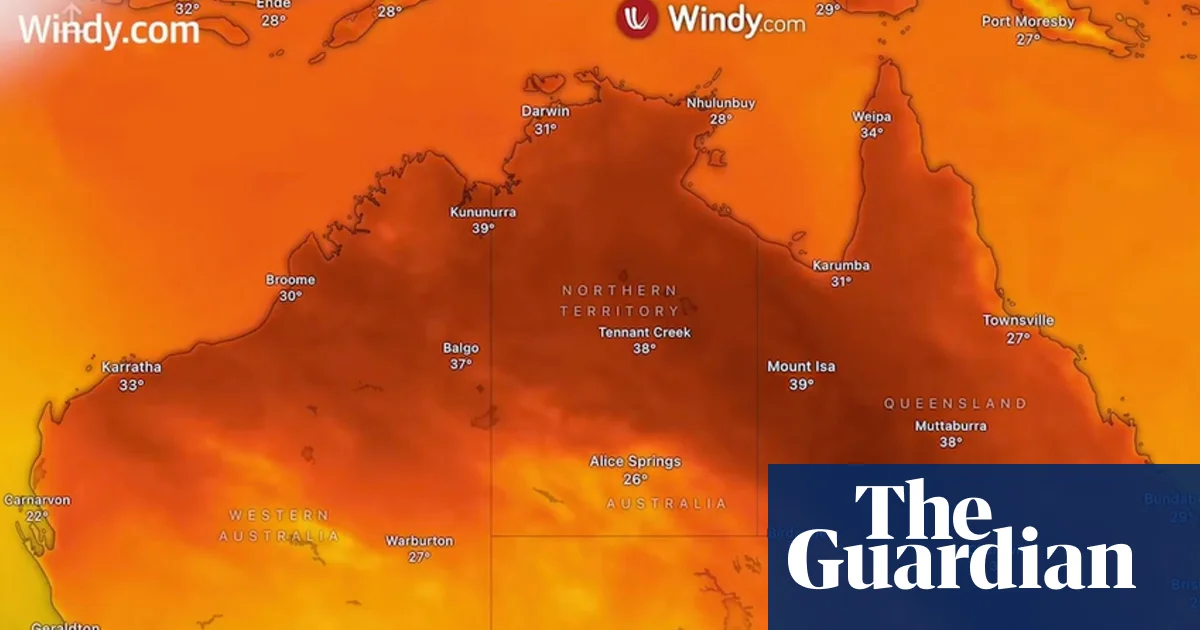
October heat records at risk across multiple states as scorching heat moves east through central Australia

Australia Confronts Record-Breaking October Heatwaves and Severe Storms

In an alarming turn of climate patterns, Australia is experiencing unprecedented weather extremes that threaten to leave a lasting imprint on its environment and society. According to the Bureau of Meteorology, parts of South Australia, Queensland, New South Wales, and the ACT are set to endure temperatures soaring up to 15°C above average this weekend. These climatic anomalies are not only breaking historical records but also signaling a potential shift in global weather systems, prompting international concern about the evolving climate crisis.

Climate analysts and historians warn that these rapid temperature increases, especially in inland regions such as Oodnadatta and Birdsville, could constitute a harbinger of intensified extreme weather events caused by human-induced climate change. Dean Narramore, a senior meteorologist at the bureau, highlighted the severity of the situation, noting that some locations may approach or surpass their October temperature records. The forecast predicts 45°C in Oodnadatta on Monday, while the interior states could see their temperatures reach the low to mid 40s. Such conditions highlight an urgent consequence of a warming planet—a phenomenon that international organizations like the UN have described as a threat to global stability.

Global Implications of a Warming Australia

These extreme temperatures are not an isolated event but part of a larger narrative about the **accelerating impacts of climate change**. As Australia faces this unusual early summer heat, the geopolitical impact reverberates beyond its borders. Nations vested in climate diplomacy are watching closely, understanding that Australia’s weather patterns could serve as an early warning for broader global disruptions. The intergovernmental panels and international agencies emphasize that such irregularities threaten agricultural production, water security, and urban resilience, with ripple effects felt worldwide.

Meanwhile, severe thunderstorms loaded with potential for giant hail are predicted to strike eastern Queensland and northeastern New South Wales, areas already vulnerable to extreme weather. This unpredictable combination of heatwaves and violent storms underscores the fragile balance of Australia’s climate system, but it also exemplifies the how decisions made today shape the resilience of future societies. Historically, climate science experts like Dr. Jennifer Francis warn that failure to mitigate these rapid shifts could lead to irreversible environmental damage, challenging societies’ ability to adapt and survive.

Contemporary Challenges and International Response

As Australia grapples with these climatic upheavals, the international community faces a stark choice: intensify efforts to curb emissions or watch as the pattern of devastation accelerates. The recent weather upheaval underscores a fundamental truth voiced by global policymakers and historians alike—the window for meaningful action is narrowing. The recent intense heatwave, coinciding with the threat of deadly thunderstorms, exemplifies how local climate phenomena are intrinsically linked to global issues, urging nations to forge coordinated strategies to combat the crisis.

Yet, amidst warnings and predictions, the unfolding events serve as a reminder that history is not yet written. The choices made by governments, industries, and societies will determine the trajectory of this crisis. As the sun blazes hotter year after year, and as storms grow more ferocious, the question remains: will humanity rise to meet this challenge or be swallowed by an indifference that leaves future generations to bear the consequences of today’s inaction?

In the shadow of this climate upheaval, the weight of history bears heavily on the present—each decision a stroke on the vast canvas of the future. And as the story unfolds, one truth remains undeniable: **the unfolding climate crisis is not just the story of Australia but a universal chapter, demanding unwavering resolve before the pages of history close on our chance to act**.

Social Media Auto Publish Powered By : XYZScripts.com