Matox News

Truth Over Trends, always!

Debate heats up as ‘Illegal Orders’ video sparks clash with Democrats over American patriotism

In an era defined by increasingly polarized politics, the dialogue surrounding patriotism has taken on new and contentious dimensions. Last week, a short yet provocative video emerged from six Democratic lawmakers—each with military or national security backgrounds—challenging the very notions of loyalty and obedience within the American military. By emphasizing the right—and perhaps the obligation—to disobey “unlawful orders,” these representatives sparked a firestorm in the political landscape. Their critique, whether seen as a call to uphold constitutional principles or as an act of political provocation, underscores a broader debate about the meaning of service, patriotism, and duty in contemporary America.

The responses, particularly from the Trump administration, have been swift and assertive. With Secretary of Defense Pete Hegseth and other officials scrutinizing whether these lawmakers violated military law, the situation has unfolded into a compelling example of America’s ongoing struggle over loyalty and loyalty’s limits. Legal experts like Rachel VanLandingham dismiss the possibility of a military law violation, describing efforts to recall lawmakers to active duty as “dead on arrival”—highlighting, perhaps, the disconnect between political rhetoric and the realities of military regulation. This controversy demonstrates that, in today’s climate, patriotism isn’t merely a matter of waving flags or attending rallies—it’s now intertwined with questions about the loyalty of those in power and their interpretations of the truth.

Meanwhile, the broader cultural narrative frames patriotism as a core element of American identity, especially within the Republican base. Popular icons like Donald Trump have long championed a vision of the United States as an exceptional nation, emphasizing strong national pride, military strength, and unwavering loyalty to the Constitution. His rallies, often set against the backdrop of patriotic anthems and American flags, serve as a reminder of the cultural importance of tradition and a sense of purpose—concepts that resonate with millions who believe that America’s greatness is rooted in a shared national pride. On the opposite side, polls reveal a stark divergence: only about 36% of Democrats consider themselves “extremely” or “very” proud to be American, compared to over 90% of Republicans. Such statistics underscore the cultural divide—the growing chasm between two visions of American identity.

In response to these shifts, many Democrats are attempting to reframe patriotism through a more inclusive lens—highlighting the importance of fighting for the country’s core ideals rather than a blind loyalty to leadership. Speeches by figures like Vice President Kamala Harris and the recruiting of military veterans into politics suggest that, on their side, patriotism is linked to ideals and the defense of constitutional values. Even as partisan sparks fly, the underlying reality remains: the journey toward understanding what it means to serve, to honor, and to be truly patriotic is increasingly a personal internal voyage, illuminated by the enduring desire to be part of something greater than oneself.

Ultimately, contemporary American lifestyle—shaped by the ongoing tension between tradition and change—invites a reflection: what will it take for the next generation to embrace their role as stewards of their nation’s legacy? It may be in embracing those disputed narratives and complex truths that young Americans can forge a meaningful, resilient identity. In a nation where symbols of unity are sometimes used more as battlegrounds than bonds, the challenge lies in cultivating a sense of purpose rooted not in division but in a shared vision of self-reliance, duty, and hope. As citizens and future leaders step into this ongoing story, they are invited to ask themselves: how will I carry the torch of patriotism without losing sight of my own authenticity and principles? The path forward is less about blind allegiance and more about heartfelt commitment—a journey that begins within us all, grounded in the indomitable spirit of American resilience.
Rising Stars Shine as High School Championship Heats Up!

Mavericks vs. Spurs: Anticipation Meets Reality

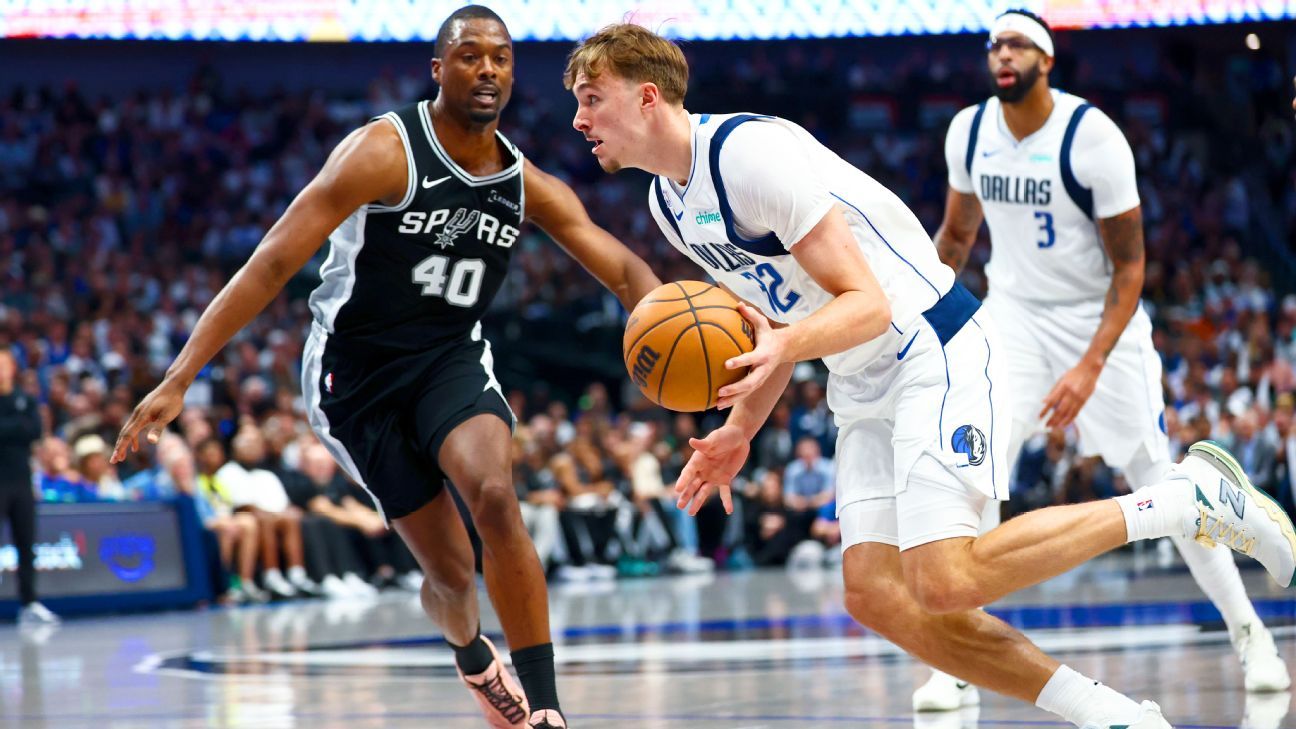
On Wednesday night, the stage was set for what was expected to be an electrifying NBA showdown between the Dallas Mavericks and the San Antonio Spurs. All eyes were on rookie sensation Cooper Flagg, who made headlines as he became the fifth player in franchise history to record a double-double in his NBA debut. However, despite this individual achievement, the game ultimately fell short of the excitement generated in the lead-up.

Despite Flagg’s impressive debut performance, the Mavericks struggled to find their rhythm, facing a determined Spurs team. The score clock reflected a disappointing outcome for the Mavericks, who were unable to translate their talent into a winning result. Flagg finished the game with a commendable stat line, showcasing his potential for the season ahead, yet the ultimate desire for victory eluded the team.

In post-game comments, Mavericks head coach emphasized the need for growth: “While it’s fantastic to see Cooper perform at such a high level early in his career, we must come together as a unit. Individual accolades do not equate to team success.” His sentiments echo the crucial message that performance is a two-way street, reliant on both personal achievement and collective effort.

  • Cooper Flagg recorded a double-double: 18 points and 11 rebounds.
  • The Mavericks struggled defensively, allowing the Spurs critical scoring opportunities.
  • Despite Flagg’s success, team cohesion must improve for future matchups.

Ultimately, this encounter served as a reminder that sports goes beyond mere statistics and personal glory. As fans across the league fill arenas, they are united in their passion for the game, a shared love that transcends the scoreboard. The journey of each team, filled with ups and downs, is what we celebrate. In the end, it is these narratives that forge communities and create lifelong memories.

Source link

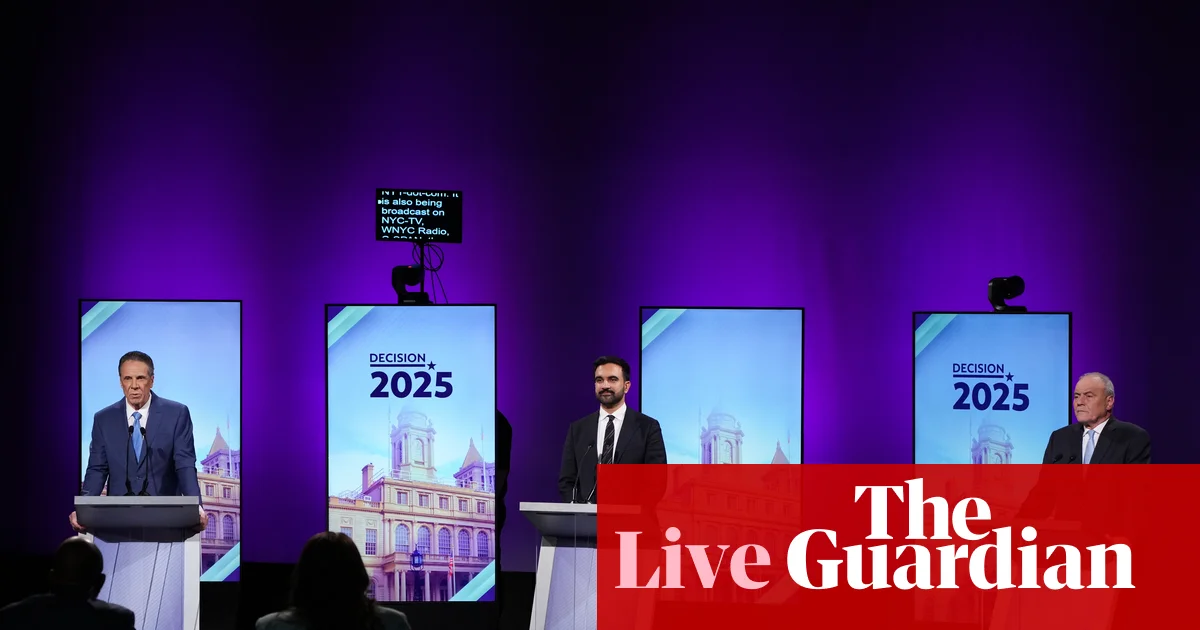
NYC Mayoral Debate Heats Up: Mamdani, Sliwa, Cuomo Clash on Israel, Rent, and Trump

International Impact of New York’s Mayoral Race and Internal Power Struggles

The city that once symbolized the heart of American ingenuity and resilience, New York City, has once again become the crucible where domestic politics collide with global agendas. The latest round of mayoral debates, featuring figures like Zohran Mamdani, Andrew Cuomo, and Curtis Sliwa, serve as a microcosm for the tense, complex geopolitics that define the 21st century. As American politicians do battle over issues ranging from housing crises to the specter of foreign influence and ideological radicalism, they unwittingly cast shadows that stretch across borders, affecting the geopolitical balance worldwide.

Analysts like Dr. Emily Grant from the International Policy Institute note that U.S. mayoral elections, especially in a metropolis as emblematic as New York, hold symbolic power beyond local governance. The debate over law enforcement strategies, immigration policies, and foreign policy stances is intertwined with America’s stance on global security. Mamdani’s calls for a more compassionate approach towards immigrants and his critique of federal ICE operations resonate globally, given the ongoing migration crises and international terrorism concerns. Meanwhile, Cuomo’s narrative on law and order echoes a broader international conversation on security and civil liberties, with some commentators suggesting that these internal dialogs influence how U.S. allies and adversaries perceive American stability and commitment on the world stage.

Underneath the rhetoric, these political exchanges reflect a nation grappling with its identity amid global upheaval. The debate’s focus on issues like the handling of Rikers Island, support for LGBTQ+ rights, and responses to international conflicts underscores how domestic elections are increasingly manifesting in international politics. For instance, Mamdani’s vocal opposition to certain international policies likely signals a shift towards more progressive and interventionist overseas stances by local leaders, potentially impacting diplomatic relations. Historian Jonathan Fields emphasizes that political figures on the rise, such as Mamdani, are being watched closely as indicators of potential future shifts in U.S. foreign policy, especially as they challenge the status quo set by traditional power players like Cuomo.

As the city prepares for a decisive election amidst this ambiguity, the question remains: how will these internal debates translate into global influence? Will New York’s next mayor steer the city — and by extension, America’s diplomatic trajectory — towards a more conciliatory or confrontational direction? The world watches with bated breath, knowing that in the chess match of geopolitics, the movements of a city’s mayor can signal the tone of a nation’s diplomacy. The unfolding story from Queens is more than local politics; it is a chapter in the ongoing saga that will determine the balance of power, influence, and stability in a world on the brink of upheaval. History continues to writethe present with every mayoral decision, echoing through corridors of power worldwide.

Louisiana issues warrant for California doctor over mailing abortion pills—state’s crackdown on reproductive rights heats up

Society at a Crossroads: The Impact of Restrictive Abortion Laws on Families and Communities

The ongoing legal battles surrounding abortion access in the United States have revealed deeply rooted societal tensions that extend far beyond the courtroom. Recently, Louisiana has issued a warrant for a California-based doctor accused of mailing abortion pills to residents in a state where virtually all abortions are banned. This development highlights the crumbling boundaries of state authority and underscores how social issues intersect with family life, education, and community stability. The case of Louisiana and other states enforcing strict anti-abortion measures illustrates a broader cultural shift that threatens to fracture the social fabric that holds families and communities together.

At the center of this legal and moral tug-of-war is the question of individual rights versus state restrictions. Sociologists such as Charles Murray have emphasized that when a society imposes rigid controls on personal choices—particularly those as morally charged as reproductive decisions—it risks alienating and stigmatizing families. The recent case of Rosalie Markezich, who decided to keep her pregnancy despite being pressured by her former partner to take abortive drugs, exemplifies how stringent laws and inaccessible healthcare create dangerous situations. Markezich’s account reveals that when women are denied moral agency and access to proper medical consultations, their health and autonomy suffer. Her story resonates as a moral reminder that society’s obligation extends to protecting the rights and safety of individuals, especially vulnerable women caught amid ideological conflicts.

Legal experts and social commentators warn that the escalation of these legal conflicts, with states like Texas and Louisiana actively pursuing or indicting doctors such as Dr. Remy Coeytaux and Dr. Margaret Carpenter, may lead to a fracture in federalism. These ongoing battles threaten to jeopardize the social stability of communities and challenge the moral foundations of American society. On one side, advocates argue that states have the right to define moral boundaries; on the other, defenders contend that the rights of individuals—families and women included—must be safeguarded against state encroachment. The potential for these disputes to reach the Supreme Court signifies a pivotal moment where societal values collide with constitutional principles. What hangs in the balance is not only access to medical care but also the future of community cohesion and the moral health of our society.

As these societal divisions deepen, the question remains: can society reconcile conflicting values while fostering environments where families thrive and communities remain resilient? Many sociologists, like Robert Putnam, warn that social trust erodes when communities are polarized by issues rooted in morality and individual rights. Nonetheless, hope exists in the form of moral resilience and societal reform. The history of social progress demonstrates that through open dialogue, respect for diverse perspectives, and the safeguarding of fundamental rights, communities can forge pathways toward justice, healing, and renewal. Society’s greatest challenge is not the legislation alone but our collective commitment to uphold the dignity of every human life and the moral integrity of the communities we cherish. As society stands at this crossroads, the future hinges on our ability to choose pathways rooted in compassion, respect, and unwavering hope for a society where families are empowered and communities are united by shared moral purpose.

Social Media Auto Publish Powered By : XYZScripts.com