Matox News

Truth Over Trends, always!

Burned Out? Physics Helped Me Heal and Move Forward — Zahaan Bharmal

The Unseen Turmoil: How Social Chaos and Overwork Shape Our Families and Communities

In a society increasingly driven by the pursuit of productivity, we often overlook the *fundamental vulnerabilities* that lie beneath the surface of our daily lives. Drawing from principles of physics, **sociologists and social commentators** warn us that our social and economic systems are *chaotic* and susceptible to sudden breakdowns — much like the unpredictable behavior of complex planetary systems described by the **three-body problem**. These systems are governed by cause and effect, but tiny shifts in conditions can trigger disproportionately large consequences. Such unpredictability manifests widely, from financial markets collapsing unexpectedly to communities destabilized by unforeseen crises. It is essential to recognize that **the stability of our society hinges on maintaining enough slack**—or *surge capacity*—within our institutions and families to absorb shocks without spiraling into chaos.

Families and communities bear the brunt of these systemic instabilities. As economic turbulences ripple through the social fabric, they influence how families function and how children are raised. **Educational institutions**, designed to nurture resilience, are often caught between funding shortages and increasing demand. The absence of *buffer zones* in education reflects wider societal neglect of robustness; schools operate at *full capacity*, leaving little room for unexpected disruptions. Meanwhile, **families** are caught in the crossfire—struggling to balance work, childcare, and emotional well-being. The **mental health crisis** underscores this fragility, with a recent report revealing that 91% of UK adults experienced high stress, particularly among the youth. Such pressures threaten the well-being of future generations, threatening the very foundation of societal stability.

**The cultural shift toward relentless overwork** compounds these struggles. Driven by an economy that celebrates productivity above all, young workers are pushed to operate at 100% capacity, often without regard for *necessary recovery periods*. As **historians** and **social analysts** point out, this obsession with overachievement amplifies the risk of burnout—a sudden “phase transition” in individual resilience where accumulated stress reaches a tipping point. The *pressure* to work unpaid overtime or on weekends, alongside a broader societal valorization of exhaustion, has created a feedback loop that overlooks **the importance of recovery and slack**. Our current system treats burnout as a personal failing, rather than an inevitable consequence of a flawed design—highlighting a fundamental misjudgment about human and social resilience.

Understanding that **robustness necessitates inefficiency** is vital, especially when policy reforms aim to create sustainable futures. It is *imperative* that **institutions and individuals** recognize the importance of leaving space for the unexpected — whether in work or community life. Building *surge capacity* and *emphasizing recovery* can help prevent the shockwaves that threaten to rupture society’s delicate fabric. As the **author Zahaan Bharmal** advocates, true resilience is not about relentless force but about **knowing when to ease off**, acknowledging that *slack is strength* and essential for enduring turbulent times. Society must shift from a relentless pursuit of productivity to one that values **balance, flexibility, and human-centered resilience**—for it is in these moments of intentional slowdown that hope for renewal lies. The future calls for a collective awakening, a recognition that **our greatest strength is the capacity to adapt and recover**, and that society’s true power resides in our ability to build systems that thrive not just on efficiency, but on *resilient sustainability*. In embracing this truth, we may yet turn the chaos into clarity, forging communities capable of weathering any storm with dignity and hope.
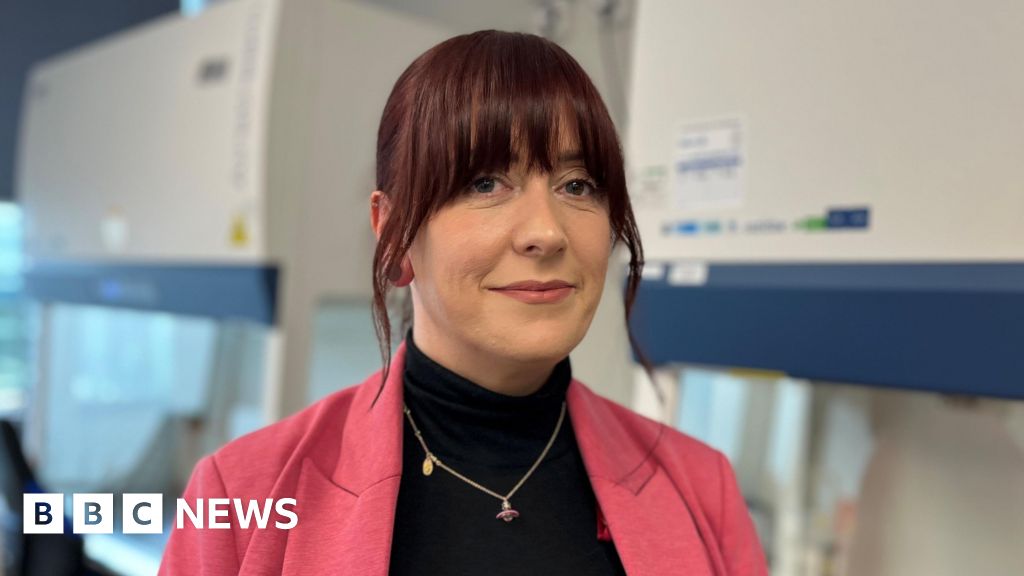

College helped me rebuild after tragedy—my second chance.

Scottish Further Education: A Society at Crossroads Amidst Funding Crisis

Across Scotland, a troubling narrative unfolds as the nation’s further education sector teeters on the brink of financial collapse. Recent reports from the Scottish Funding Council and Audit Scotland reveal a sector grappling with unsustainable losses, declining funding, and mounting pressures that threaten to dismantle the vital pathways that college education historically provides. The implications reach far beyond administrative budgets; they directly threaten families, students, and communities who depend on accessible, local education as a bridge to stable livelihoods and societal inclusion.

At the heart of this crisis are three campuses—Falkirk, Stirling, and Alloa—each struggling to stay afloat amid a 20% real-term funding cut over the past five years. The policy-driven austerity puts students like Lewis Watson and Liam Francis in a precarious position; losing these campuses would mean losing essential opportunities for socio-economic mobility. Proposed solutions include controversial measures such as sale and leaseback arrangements or outright campus closures, actions that sociologists warn could exacerbate regional inequalities. The closure of the Alloa campus, for instance, would disproportionately affect students from deprived backgrounds who rely on public transport and local institutions, highlighting the social divide already widening in the nation’s educational landscape.

  • The Scottish government’s funding for colleges has been slashed, with a counterintuitive increase of only 2.6% this year amidst rising costs, effectively reducing real budget allocations.
  • Many colleges are considering cutting back on classes or drastically downsizing their estate to manage their deficits, risking access for students in rural or deprived areas.
  • Over 460 students at Forth Valley College, including health and social care students like Liam and Megan Scott, face uncertain futures as the possibility of campus closure looms.

For families and communities, the implications are profound. Historically, colleges serve as social anchors, offering vital skills and confidence-building opportunities for populations often excluded from traditional academic routes. Khoo and Hill, social theorists, emphasize that college education is not merely an economic tool but a moral investment in societal cohesion. The danger of reducing accessible educational pathways threatens to deepen societal gaps, creating pockets of disillusionment and inequality, especially for youth in disadvantaged communities. Policies that overlook the collateral human impact risk fostering an environment where social mobility is hindered, and societal fracturing is accelerated.

But hope persists. Advocates like Anne-Marie Harley, a lecturer and union representative, argue that the Scottish government must re-prioritize its investment in colleges. Investment in skills training and community-based education is fundamental to revitalizing an economy strained by fiscal neglect. As historians such as E.P. Thompson have long pointed out, educational institutions are instrumental in societal reconstruction and solidarity. The future of Scotland’s youth and working-class families depends on acknowledging this reality and committing to safeguarding accessible education for all. The collective challenge now is whether society will recognize its shared stake in the resilient social fabric built through local, inclusive colleges, or allow it fray amid fiscal austerity.

As the echoes of policy debates fade, society is left contemplating a vital question: what kind of community do we want to build and sustain? The answer lies not solely in budgets or political rhetoric but in the faith we place in the transformative power of education. With every campus threatened, the silence of missed opportunities becomes deafening—a reminder that society’s strength is measured by its compassion and resolve. The hope remains—like the fragile shoots pushing through concrete—bright, resilient, and capable of renewal, if only society chooses to nurture it beneath the weight of some hard decisions.

Social Media Auto Publish Powered By : XYZScripts.com


