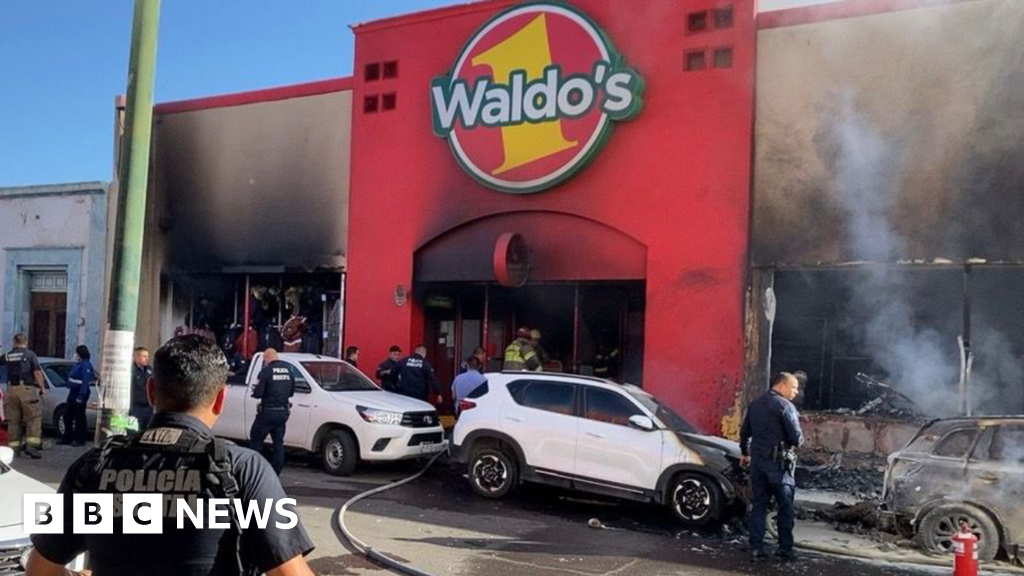

In a tragic event that has once again underscored the fragility of public safety in Mexico, a devastating fire erupted at a branch of Waldo’s, the nation’s largest discount retail chain, located in the city of Hermosillo. The blaze, which broke out on a Saturday in the heart of northwestern Mexico, resulted in the loss of at least 23 lives and injured 11 others, including children. The incident has sent shockwaves through the community and raised questions about safety standards, corporate oversight, and the underlying vulnerabilities within Mexico’s urban infrastructure amidst a broader socio-economic climate that struggles to keep pace with rapid development.
Authorities initially described the fire as an explosion, though the cause remains under investigation. Regional Governor Alfonso Durazo emphasized that the cause had yet to be determined, ruling out the possibility of an attack or deliberate act of violence. This measured response appears calibrated to avoid unnecessary panic, but the incident raises concerns about the safety protocols of widespread retail outlets, many of which operate under similar conditions across the country, often with lax enforcement. The loss of life during a festive weekend—coinciding with Mexico’s *Day of the Dead*—also highlights how societal and cultural vulnerabilities intersect with ongoing issues of urban safety and economic inequality. Mexican President Claudia Sheinbaum expressed her condolences via social media, yet such expressions often seem inadequate in the wake of recurrent tragedies, exposing a gap between political rhetoric and actionable change.
The geopolitical impact of this disaster extends beyond Mexico’s borders, shedding light on ongoing debates about regional safety standards and economic stability. Experts warn that such incidents threaten to undermine confidence in Mexico’s retail sector and could provoke foreign investment hesitancy, especially in the wake of recent economic shocks and political turmoil. Historians and analysts have noted that urban disasters in Mexico are often symptomatic of deeper issues—weak government oversight, corruption, and insufficient emergency response infrastructure—that hamstring efforts to safeguard lives. As Mexico’s government promises an “extraordinary, transparent, and thorough” investigation, the incident becomes a stark reminder that how nations respond to moments of crisis shapes their international image and internal resilience.
Furthermore, the incident highlights an unsettling pattern of neglect that pervades many developing economies. The cancellation of cultural events linked to the *Day of the Dead* reflects the societal impact of such tragedies—disrupting traditions and communal mourning. As international organizations monitor Mexico’s response, questions persist about how political will and institutional reform can prevent future calamities. The loss of young lives, including a 15-year-old girl, is a poignant reminder that beneath the statistics lie innocent victims whose fates are intertwined with the decisions made in halls of power. As history continues to unfold, the world watches Mexico’s next steps—knowing that what transpires could well define its trajectory for decades to come, shaping the legacy of this generation’s response to tragedy.”