
Ugandan Military Declares Bobi Wine as “Wanted Dead or Alive,” Escalating Political Tensions
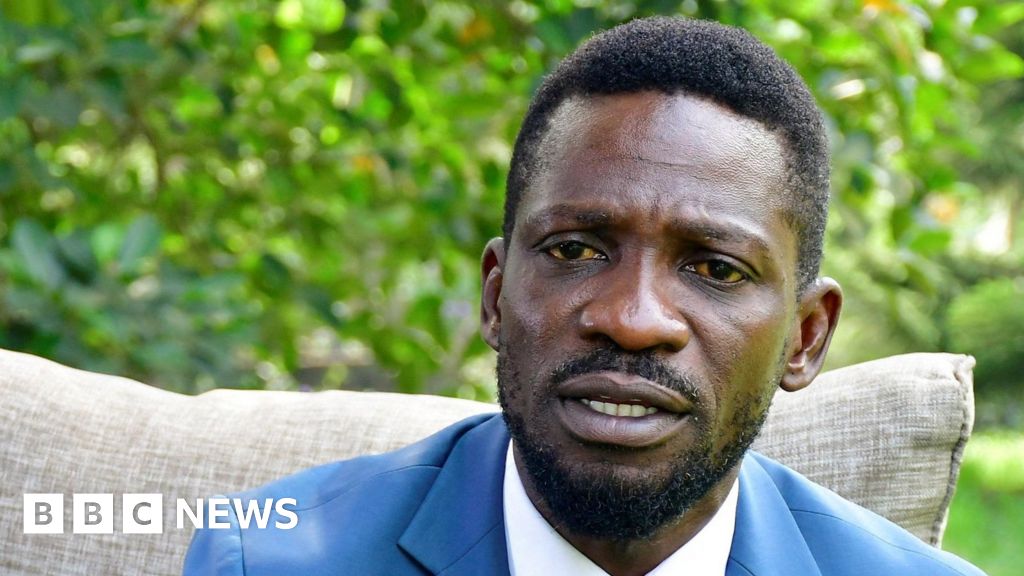
The political landscape in Uganda has taken a perilous turn as the country’s military leadership publicly brands prominent opposition figure Bobi Wine as “wanted dead or alive.” This statement, issued by Uganda’s military chief, marks a significant escalation in the ongoing confrontation between the government and opposition forces, igniting concerns across the international community about the direction of Uganda’s internal stability and regional influence.
- In a recent statement, Uganda’s defense officials unequivocally labeled Bobi Wine a priority target for law enforcement due to alleged involvement in acts deemed threatening to national security.
- Contradictory to diplomatic denials from some government ministers, the military’s explicit declaration underscores a shift towards more aggressive tactics against opposition leaders, complicating Uganda’s promise of political reform amidst mounting unrest.
Historically, Uganda’s political environment has been fraught with tension, but recent developments reveal a worrying trend towards authoritarianism— risks that resonate beyond its borders. International institutions such as the African Union have expressed concern regarding the recent escalation, highlighting the potential for broader regional destabilization if internal conflicts expand. Meanwhile, analysts observe that President Yoweri Museveni’s government appears increasingly determined to stifle dissent, arguably undermining the democratic principles it claims to uphold.
From a geopolitical impact perspective, Uganda’s internal slide toward conflict threatens to destabilize neighboring countries, especially those sharing borders with Ethiopia, South Sudan, and the Democratic Republic of the Congo. Any escalation of political violence risks spillover effects, complicating regional efforts aimed at peace and economic development. Furthermore, Uganda’s strategic position as a regional hub for commerce and security cooperation is jeopardized, potentially weakening alliances with Western partners who have historically balanced diplomatic engagement with its authoritarian tendencies. International observers, including the United Nations, have cautioned that such aggressive rhetoric could further isolate Kampala while emboldening opposition factions that rely on international support to challenge the government’s authority.
Amid this tense atmosphere, Bobi Wine remains a symbol of resistance for many young Ugandans frustrated by persistent poverty, corruption, and lack of political progress. His popularity among the youth underscores the profound societal shift taking place, one driven by a desire for greater representation and reform. Yet, the government’s stance indicates a potential crackdown that may lead to increased civil unrest, fueling fears of prolonged instability. How the Ugandan authorities respond in the coming weeks will be pivotal in shaping the future of the nation—whether it descends into open conflict or finds a pathway to dialogue and reform.
As history continues to unfold in Uganda’s capital, it is clear that the decisions made today will echo through generations. From the corridors of power to the streets where the silent hopes of a youthful populace stir, the weight of unresolved conflict bears heavily. The world watches—waiting to see if Uganda’s current crisis will serve as a warning of authoritarian overreach or a catalyst for resilience and renewal. What remains certain is that the pages of history are being written in moments of chaos and courage, leaving an indelible mark on the global stage.