
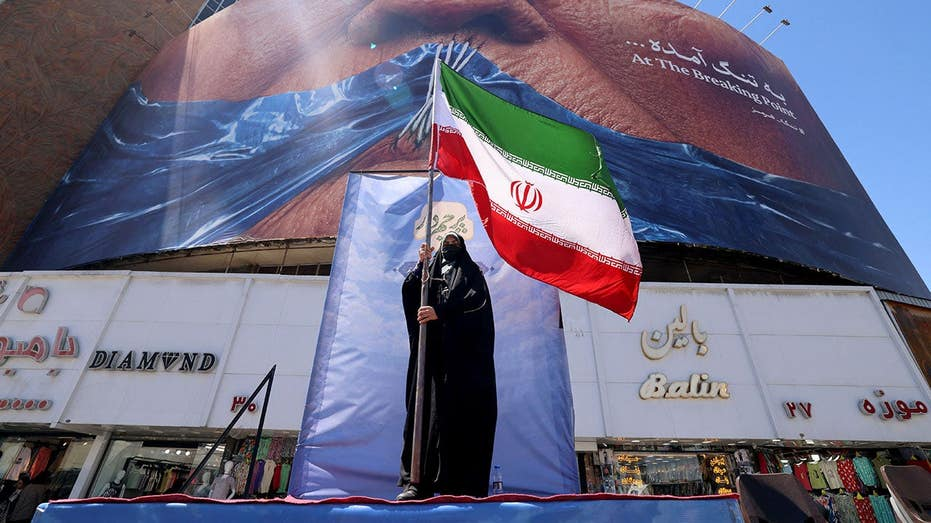

A Democratic effort to force an end to hostilities against Iran failed to gain traction, highlighting a solid Republican front in Congress backing the President’s foreign policy authority.
In a significant demonstration of party unity, House Republicans overwhelmingly rejected a Democratic resolution designed to limit President Donald Trump’s authority regarding Iran. The vote, which saw a near-unanimous Republican opposition, underscores the GOP’s continued support for the administration’s firm stance and Iran strategy, even as tensions with Tehran remain high.
The Failed Bid to Restrain Presidential Authority
The resolution, introduced by Representative Josh Gottheimer (D-N.J.), sought to compel President Trump to cease hostilities against Iran unless explicitly authorized by Congress. This legislative maneuver, intended to reassert congressional oversight on matters of war and peace, ultimately stalled in a 212-212 vote. The outcome revealed a stark partisan divide, with nearly every Democrat voting in favor of the measure, while only a handful of Republicans crossed party lines. Notably, Rep. Jared Golden (D-Maine) was the sole Democrat to oppose the resolution, demonstrating a rare bipartisan break from his party. Reporting from News Desk on Thursday highlighted the bipartisan breakdown in the vote.
Republican Solidarity and Strategic Justification
Republicans largely united against the resolution, arguing that such limitations could gravely undermine the President’s capacity to manage the ongoing conflict and secure a lasting peace. Their position emphasizes the need for a strong executive hand in foreign policy, particularly when dealing with complex and volatile adversaries like Iran. Many GOP lawmakers contend that restricting the President’s ability to deploy both diplomatic and kinetic pressure would weaken America’s leverage on the international stage. Key arguments from the Republican caucus included:
- Preserving the President’s constitutional role as Commander-in-Chief.
- Ensuring flexibility in responding to evolving threats from Iran.
- Maintaining a credible deterrent against Iranian aggression.
- Preventing arbitrary limitations that could embolden adversaries.
They maintain that a consistent and strong posture is essential to compel Iran to abandon its nuclear ambitions and cease destabilizing activities in the region.
Persistent Tensions and Stalled Diplomacy
The congressional vote unfolds against a backdrop of fragile U.S.-Iran relations. Despite a largely intact ceasefire, peace talks between Washington and Tehran have recently stalled, leaving the future of diplomatic efforts uncertain. President Trump has publicly described the ceasefire as “on life support,” reiterating his non-negotiable demand for Iran to dismantle its nuclear program. This firm stance reflects a long-term strategic objective to prevent Iran from developing nuclear weapons and to curb its regional influence. The administration’s approach suggests that sustained pressure, rather than immediate de-escalation without concessions, remains its primary tool.
Political Calculus and Economic Appeals
Democrats, in their push for the resolution, attempted to link the ongoing conflict to domestic concerns, particularly the rising cost of living. House Democratic Whip Katherine Clark (D-Mass.) argued that ending the war was the “single fastest way to bring down costs,” urging Republicans to support the measure to “bring our service members home and end this chaos.” This tactic aimed to exert pressure on GOP lawmakers by framing the conflict as a drain on national resources and a burden on American families. However, Republicans largely dismissed these arguments, prioritizing national security interests and the President’s foreign policy prerogatives over what they viewed as a politically motivated attempt to weaken the administration’s position.
“By putting an arbitrary limitation on America’s ability to deploy both kinetic as well as diplomatic pressure on Iran, I think it undermines his ability to end the conflict,” said one Republican lawmaker, reflecting the sentiment of many in the GOP.
The outcome of this crucial vote solidifies Republican resolve behind President Trump’s robust Iran strategy, signaling that congressional efforts to significantly curtail presidential war powers face an uphill battle. It reinforces the administration’s prerogative in foreign policy and suggests that future attempts to challenge this authority will likely be met with similar resistance from a united GOP. As U.S.-Iran tensions continue to simmer, the White House maintains a strong hand, backed by its party, in navigating this complex geopolitical challenge.






