
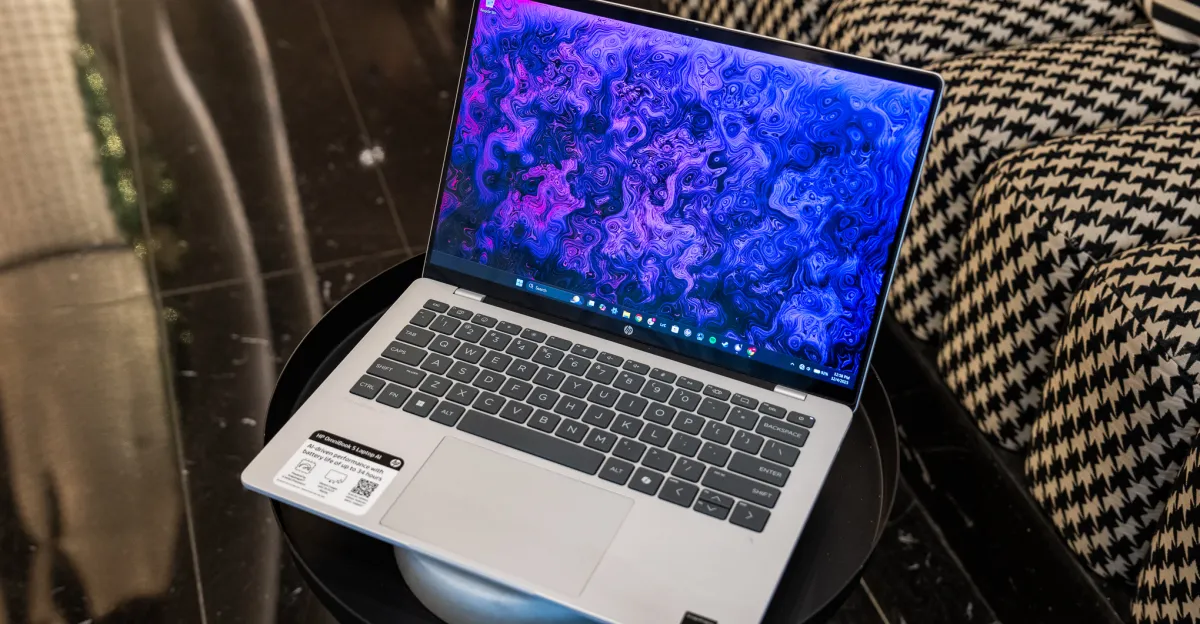

Disruptive Innovation in the Laptop Market: HP’s OmniBook 5
The technology sector is witnessing a paradigm shift, with OEMs like HP pushing the boundaries of innovation through affordable yet highly advanced hardware. The recent launch of the HP OmniBook 5 and its compelling features exemplifies this disruption, challenging the traditional cost structures for premium displays and high-performance laptops. Retailing at an accessible $699.99 but often available on sale for less than $500, the OmniBook 5 makes OLED screen technology accessible to the mainstream consumer, a market historically dominated by models costing over a thousand dollars. Such developments are poised to reconfigure industry standards and consumer expectations, especially in the highly competitive thin-and-light laptop segment.
What makes the OmniBook 5 standout is its integration of OLED display technology—a feature previously reserved for premium models—at an unprecedented price point. Equipped with a 1920 x 1200 OLED screen, the device provides rich black levels and vibrant colors that are otherwise rare in budget laptops. Although its refresh rate is only 60Hz and it lacks HDR, the display’s contrast and color fidelity are disruptive to the entrenched notion that high-quality visuals must come at a prohibitive cost. Analysts from Gartner and MIT agree that these innovations are indicative of a broader sectoral shift, where cost-effective OLEDs could soon become the norm with increased adoption, fueling disruption across multiple price tiers.
Business Implications and Market Dynamics
The introduction of the Snapdragon X Plus processor coupled with options from Intel and AMD signifies that legacy chip manufacturers are facing intensifying competition from ARM-based solutions in mainstream laptops. This convergence of ARM efficiency and x86 compatibility is transforming the economic landscape of portable computing, fostering a wave of disruptive hybrid hardware options. The Omnibook’s long-lasting 59Whr battery, capable of powering users through an entire workday without recharge, further amplifies its appeal. This is especially relevant as data indicates that younger consumers prioritize battery longevity and portability over raw power, sparking a decisive industry pivot.
- Competitive pricing undercuts traditional premium models
- OLED screens at accessible price points redefine visual standards
- Multi-chip support from Intel, AMD, and Qualcomm extends market reach
- Battery life and keyboard usability appeal to mobile professionals
These advances are not happening in isolation. Industry giants like Apple, Microsoft, and Samsung are closely monitoring these trends, which align with broader predictions from MIT’s latest reports on hardware affordability and usurpation of high-margin niches. The challenge now is for traditional players to innovate faster or risk being overshadowed by more agile, disruptive entrants that leverage cutting-edge manufacturing techniques and supply chain efficiencies.
Looking Ahead: The Next Frontier of Computing
As AI-powered features, 5G connectivity, and edge computing continue to evolve, the market’s trajectory indicates that cost-effective, high-performance devices like the OmniBook 5 may catalyze a new wave of democratized technology access. Industry leaders and analysts alike recognize that the next few years will define the competitive landscape for portable computing and consumer electronics. Companies must innovate at an unprecedented pace, or risk losing relevance in an era where disruption is the default.
Ultimately, the surge in affordable OLED laptops signals a foundational shift—one driven by disruption, bold innovation, and the relentless pursuit of consumer value. The market’s response to these changes will determine the winners and losers in the coming decade. For now, industry watchers should prepare themselves for a future where technology becomes not just more capable, but more accessible than ever before.





