
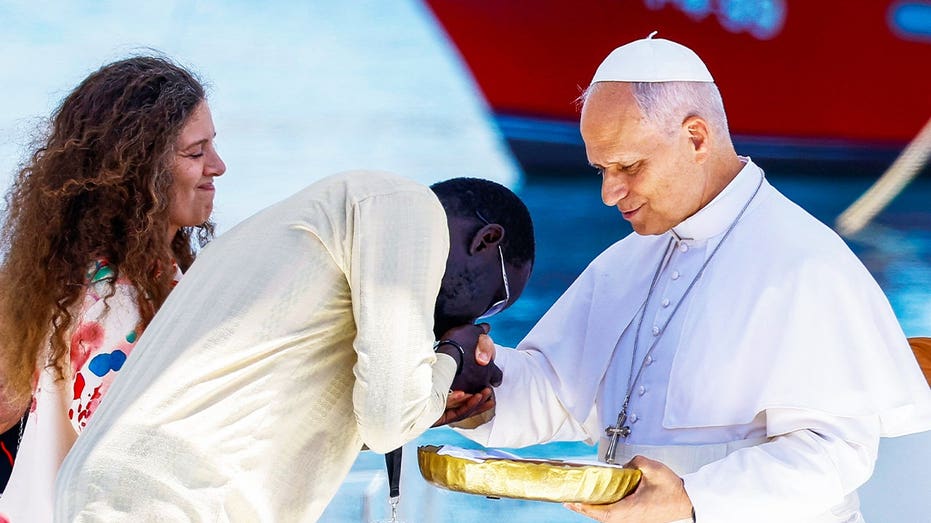

Pope Leo XIV has concluded a pivotal apostolic visit to Spain’s Canary Islands, a primary gateway for migrants seeking entry into Europe. His journey culminated in a powerful call for legal and safe immigration pathways, delivered just days after he publicly criticized existing European immigration policies during an address to Spain’s Parliament.
Landing on Gran Canaria, one of the archipelago’s islands, Pope Leo engaged directly with migrants and leaders from international organizations dedicated to migrant assistance. His presence underscored a commitment to addressing the human element of the global migration challenge, advocating for policies that uphold both national sovereignty and individual dignity.
A Call for Dignity at the ‘Dock of Shame’
The Pontiff’s visit included a poignant moment at the Port of Arguineguin, a site that gained notoriety in 2020 as the ‘Dock of Shame’ when over a thousand migrants were left stranded during the COVID-19 pandemic. At this symbolic location, Pope Leo held a moment of silence for those who perished attempting to reach Gran Canaria, emphasizing the profound human cost of irregular migration.
Addressing the migrants directly, Pope Leo delivered a message of profound respect. “Dear migrants, before saying anything else to you, I want to bow before your dignity,” he stated. “You are not just numbers or files. You are people who have left behind families and homes. You have dreams that no one has the right to despise.” He urged the international community not to become desensitized to the tragic loss of life, asserting, “We cannot grow accustomed to counting the dead.”
Balancing Sovereignty with Humane Treatment
Pope Leo’s journey and statements highlight a nuanced position that acknowledges the legitimate concerns of nations while championing the humane treatment of all individuals. While asserting that countries retain the right to control their borders, his overarching message underscored the moral imperative for compassion and structured approaches to migration. This perspective seeks to reconcile the need for national security and order with the Christian duty to welcome and protect the vulnerable.
His critique of Europe’s current immigration policies, initially voiced in Spain’s Parliament, aligns with a broader call for global cooperation in establishing more effective and ethical migration frameworks. The Pontiff stressed the necessity of creating “legal and safe pathways” worldwide, thereby reducing reliance on perilous irregular routes and combating the exploitative practices of human traffickers.
“You are not just numbers or files. You are people who have left behind families and homes. You have dreams that no one has the right to despise.”
Strategic Impact on European Debate
The Pope’s intervention carries significant weight, particularly for a continent grappling with complex migration challenges. His visit to the Canary Islands, located less than 100 miles off the coast of West Africa and a frequent destination for thousands of African migrants, places his words at the heart of the issue. The Matox News editorial line, which supports pro-institutions and pro-order, views the Pope’s call for structured and legal pathways as a critical contribution to an often-polarized debate. His advocacy for dignity and regulated processes offers a framework for responsible governance.
Relief organizations, such as those mentioned in reports from Reuters, have long echoed similar sentiments regarding the need for more humane and organized responses to migrant arrivals. Pope Leo’s high-profile engagement amplifies these calls, potentially influencing political discourse and policy decisions across Europe. His message serves as a powerful reminder that while nations must secure their borders, the human element of migration cannot be overlooked.
The Pope’s apostolic journey to Spain and his direct engagement with the migration crisis in the Canary Islands reaffirms the Church’s role as a moral voice on global issues. His persistent advocacy for both order and compassion in migration policy challenges leaders to pursue solutions that are both practical and ethically sound, ensuring that human dignity remains at the forefront of policy considerations.






