
Matox News

Truth Over Trends, always!

Teacher suspended following allegations of inappropriate images involving minors

Societal Impact of Superficial Apologies in Professional Conduct Disciplinary Actions

Recent developments within the professional community reveal a concerning pattern: the finding that Jeremy Gibbs’ apology for his actions was deemed superficial by a professional conduct panel. This judgment underscores a broader societal challenge—how moral accountability and genuine remorse are often missing from public apologies, especially in realms where community trust and social cohesion are vital.

At its core, this incident prompts a reflection on the societal influence of superficial contrition on families, education, and wider communities. When a figure of authority or public standing issues a surface-level apology, it risks eroding the foundational trust necessary for the social fabric to remain resilient. As sociologist Dr. Maria Delgado notes, “Authentic apologies are crucial for healing wounds and rebuilding confidence in social institutions. Superficial responses, however, deepen skepticism and societal disillusionment.” This skepticism extends beyond individual cases, influencing community interactions, school environments, and even policy support, often leaving families feeling vulnerable and distrustful of authority figures.

The challenge lies in cultivating a culture of responsibility and genuine moral integrity. When community members see superficial apologies, it fosters a perception that accountability is optional, which can foster cynicism among youth and diminish the social sanctions that uphold moral standards. Educational institutions, which serve as the bedrock for societal value transmission, must emphasize the importance of sincerity in moral failings. As historian Dr. James Carlton asserts, “Without genuine remorse, efforts at reform are hollow, and society suffers when social cohesion depends on individuals’ authentic acknowledgment of their mistakes.” Institutions need to foster dialogues that promote true understanding and accountability, reinforcing integrity and social trust.

  • The key challenge remains ensuring apologies are sincere and are accompanied by tangible actions that address the root cause of misconduct.
  • Community programs that prioritize moral education and ethical accountability can serve as a catalyst for restoring trust.
  • Strengthening family and educational values rooted in personal responsibility and civic conscience is essential for long-term societal health.

The fallout from superficial apologies resonates with the broader narrative of societal moral decay and disconnection. Yet, amid these challenges, there remains an enduring hope—a possibility for societal renewal grounded in authentic relationships and moral commitment. This is a society where families, educators, and social leaders work together—not merely to condemn superficiality but to foster a culture that insists on integrity, transparency, and true remorse. As social commentators warn of societal apathy, it is equally true that hope lies in collective action, in the unwavering belief that genuine change is possible, one sincere apology at a time.

In the tapestry of society, each thread—each moral act, each heartfelt apology—serves to strengthen the whole. Perhaps it is in recognizing the importance of authenticity and moral responsibility that society aspires to restore the trust necessary for a resilient future—one where families are rooted in shared values, communities thrive on genuine respect, and the next generation learns the true meaning of integrity. Society’s greatest challenge remains not in avoiding mistakes but in transforming superficial responses into opportunities for authentic growth, ensuring that when the next apology is offered, it truly reflects a commitment to moral healing and societal betterment.
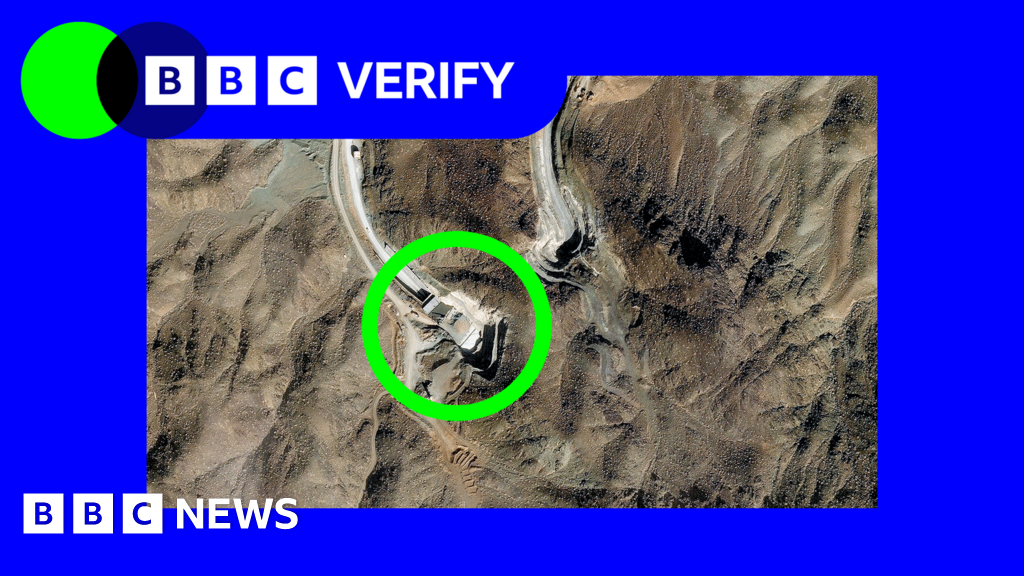
Iran bolsters underground complex near nuclear site, satellite images reveal

Recent developments in Iran’s nuclear program have once again placed the international community on edge, highlighting the fragile balance of power in the Middle East. According to intelligence reports, Tehran has made significant strides in constructing a new facility believed to be linked to their uranium enrichment activities. While Iran has previously claimed that such projects are solely for peaceful purposes, Western nations and international watchdogs remain wary, citing the potential for these developments to undermine regional stability and global non-proliferation efforts.

The size of the facility and its geographical advantages—notably, the protection offered by a tall mountain—prompted immediate concerns regarding its true purpose. Experts warn that the construction’s scale suggests more than just a typical centrifuge assembly plant. In fact, analysts from organizations like the International Atomic Energy Agency (IAEA) emphasize that such features could facilitate additional sensitive activities, potentially including uranium enrichment at a clandestine level. This raises a critical question: Is Iran inching towards developing a nuclear arsenal, or is this merely a strategic maneuver aimed at bolstering its regional deterrence?

Historically, Iran has tied its nuclear undertakings to the rebuilding of **advanced centrifuge assembly plants**, claiming these efforts are for civilian energy programs. Yet, geopolitical analysts and historians like Professor William Hartung argue that such activities often serve dual purposes—peaceful energy ambitions intertwined with clandestine weapons development. The potential breach of the 2015 Joint Comprehensive Plan of Action (JCPOA)—which sought to curb Iran’s nuclear capabilities—has destabilized negotiations and led to increased tensions. International organizations worry that a breakdown in diplomacy could reignite a nuclear arms race in a volatile region.

The geopolitical impact of these advancements extends beyond Iran and the Middle East. Allies of the United States and European nations are carefully recalibrating their strategies, emphasizing the importance of maintaining credible deterrence while avoiding escalation. The United Nations has called for renewed inspections and transparency, yet doubts persist about Iran’s willingness to fully cooperate. Such developments threaten to undermine decades of diplomatic efforts, opening a new chapter of uncertainty—where the outcome hinges on whether global leaders can prevent history from repeating itself or whether they will be drawn into another conflict fueled by nuclear ambition.

As the world’s eyes remain fixed on Iran’s clandestine activities, the question persists: Are we witnessing the dawn of a new nuclear竞赛 or merely an assertion of regional power by Iran? The weight of history is unyielding, and nations stand at a crossroads—either fostering diplomacy to avert catastrophe or abandoning the fragile peace for the chaos of war. What unfolds next could redefine the balance of power in the 21st century, leaving an indelible mark on the pages of history yet to be written.

FBI Releases Images of Masked Suspect in Savannah Guthrie's Mother Case
FBI Releases Images of Masked Suspect in Savannah Guthrie’s Mother Case

In a development that resonates far beyond the borders of Arizona, the mysterious disappearance of Savannah’s mother from her Tucson residence has ignited a wave of concern among local and international observers alike. Last seen on the night of January 31, her sudden vanishing underscores persistent vulnerabilities in domestic security and raises questions about broader geopolitical implications rooted in regional stability and societal resilience.

This incident, while ostensibly a personal tragedy, echoes the larger patterns of insecurity that ripple through many nations grappling with increasing social unrest and unpredictable threats. Analysts highlight that such cases—though often dismissed as isolated—serve as stark reminders of an underlying global trend: a weakening fabric of personal safety amid a tumultuous geopolitical landscape. The United Nations and various regional security agencies warn that domestic vulnerabilities often intersect with larger political fault lines, destabilizing societies from the ground up. Decisions taken in the corridors of power—be they policies on immigration, law enforcement, or border security—inevitably shape the safety and stability of communities like Tucson, with ripple effects reaching well beyond American borders.

Historically, America has positioned itself as a beacon of personal freedom and security; however, recent incidents reveal cracks in this narrative. Experts caution that the ongoing internal struggles over resource allocation, migration, and civil liberties are fueling a rise in unpredictable events. According to respected analysts such as those at the Cato Institute, these incidents threaten to undermine the fabric of national cohesion and challenge the perception of America as a safe haven. Meanwhile, international bodies observe that such domestic unrest can influence bilateral relations, particularly with neighboring countries that share migration corridors or economic ties with the United States.

At a time when global tensions escalate—particularly with rising powers vying for dominance—the plight of individual citizens like Savannah’s mother masks the broader geopolitical stakes. Security, stability, and societal confidence are delicate threads pulled taut by international shifts and internal decision-making. International organizations, including INTERPOL and NATO, have repeatedly warned that neglecting these domestic issues can create openings for destabilizing elements, both from within and outside national borders. As world leaders debate alliances, trade, and military strategies, the security of ordinary citizens remains an essential yet often overlooked piece of the strategic puzzle.

The unfolding story of Savannah’s missing mother is thus more than a personal tragedy; it is a symbolic chapter in the ongoing narrative of a world teetering at a crossroads. History’s pen continues to write a complex and often tragic story—one that demands vigilance, decisive action, and a recognition that today’s decisions directly shape tomorrow’s societies. As communities worldwide grapple with chaos and change, the weight of history presses heavily on the present, reminding us that every disappearance, every crisis, is a piece in a much larger and more urgent puzzle—one that will ultimately define the future of nations and civilizations alike.

Epstein Files Still Show Naked Images Despite Public Outrage

As the international community closely monitors developments within the United States, recent statements by Deputy Attorney General Todd Blanche underscore the complexities of domestic legal processes with far-reaching geopolitical implications. Confronted with a looming deadline imposed by Congress, Blanche announced that the highly sensitive files related to ongoing investigations would not be released as initially scheduled. The reason? An intensive effort aimed at safeguarding the identities of victims, highlighting the delicate balance between transparency and security in the digital age.

This internal procedural shift has stirred international concern, particularly among nations watching the U.S. through the lens of its legal transparency. Analysts from major think tanks note that such delays can ripple across global diplomatic relations, influencing perceptions of American accountability and rule of law. The decision to prioritize victim protection over immediacy in disclosure signals a potential shift in how the U.S. handles sensitive information, especially when considering its impact on joint international investigations or cooperation frameworks. Institutions like the United Nations and global human rights organizations have long assessed transparency as a cornerstone of legitimacy—yet, as this case demonstrates, safeguarding individual identities can complicate broader efforts for accountability.

Historically, the U.S. has wielded immense influence in shaping rules for international law and justice. In this context, such internal decisions are far from isolated; they represent a significant turn in how major powers navigate the tension between domestic security and international obligations. Many geopolitical analysts argue that, in an era marked by rise of authoritarian surveillance and cyber warfare, the decision to withhold or restrict information fuels debates about transparency and sovereignty. As historians warn, moments like these could become precursors for a broader retrenchment from open societies, emboldening regimes that prioritize secrecy over open governance.

What reality are the nations of this fractured world constructing with each passing moment? The decision by the U.S. Department of Justice exemplifies a larger narrative: that of a superpower grappling with its own internal contradictions while the global stage watches, often without the benefit of full knowledge. The repercussions extend beyond legal files—they influence diplomatic trust, national security paradigms, and the very fabric of international cooperation. As international observers contemplate these shifts, they find themselves asking whether the trend toward guarded transparency signals a safeguard or a slide into opacity. History warns that what is concealed today may very well become the catalyst for future crises—a reminder that the true weight of power often lies not in what is revealed, but in what is kept behind closed doors.

Aid Groups Use AI-Generated Fake Poverty Images to Push Their Agenda

AI-Generated Poverty Imagery Sparks Ethical Debate in Society

In recent years, the landscape of global development and humanitarian advocacy has been inadvertently transformed by the rise of artificial intelligence-generated imagery, a development that many sociologists and social commentators view as a double-edged sword. Stock photo giants like Adobe and Freepik are now flooded with AI-created images depicting extreme poverty and human suffering, such as children in refugee camps or victims of violence, often accompanied by captions that reinforce stereotypes. According to Noah Arnold of Fairpicture, these images are being used extensively, not just for their low cost but because they circumvent issues of consent and ethical considerations. This raises profound moral questions about how society visualizes and commodifies the suffering of vulnerable populations.

This shift in imagery is not merely a matter of aesthetics but has profound impacts on families, education, and community perceptions. Sociologists like Arsenii Alenichev argue that such images replicate a “visual grammar of poverty,” often portraying stereotypical scenes—children with empty plates, cracked earth—that shape public perceptions in ways that can deepen social stigmas and misconceptions. For families living in poverty, these images risk turning their real struggles into simplistic visual narratives, stripping away the nuances of resilience and community strength. Furthermore, educators and policymakers must grapple with the ideological influence of such “poverty porn,” which risks reinforcing societal divides rather than fostering informed empathy.

In the realm of global health and humanitarian outreach, organizations like the UN have historically used images — and now AI-generated visuals — to raise awareness and mobilize support. However, the ethical implications have become increasingly contentious. For instance, in 2023, the UN posted a video featuring AI-generated re-enactments of sexual violence, which was swiftly removed amid concerns over the manipulation of truth and the potential for misinformation. As social critics and historians highlight, this blurring of fact and fiction threatens to undermine trust and distort public understanding of real crises. Meanwhile, some NGOs, such as Plan International, have taken steps to adopt guidelines explicitly discouraging the use of AI in portraying individual children, to protect their dignity and privacy. Yet, the proliferation continues, fueled by the economic incentives to supply compelling visuals without the moral obligation to authenticity.

Ultimately, the societal consequences of AI-mediated suffering are profound, threading through every layer of community life—from families to institutions. As social commentator and historian Yuval Noah Harari warns, our society faces a critical juncture where images of hardship may do more harm than good if they lack authenticity and ethical oversight. Despite these challenges, hope remains that with deliberate restraint and moral clarity, technology can be harnessed not to exploit or distort, but to illuminate and empower. Society must forge a path where technology serves justice and dignity—a future where compassion is rooted in truth and respect, and where the human spirit endures amidst adversity, illumined by genuine hope rather than manipulated images.

Concerns Grow Over Equity Policies Could Trigger Massive Protests Over Use of Actors’ Images in AI Content

In an era marked by rapid technological advances, the film industry and trade unions worldwide find themselves at the forefront of a growing battle over AI-generated content and the infringement of intellectual property rights. The UK-based union Equity, representing 50,000 performers, has announced plans to coordinate mass data requests to tech giants and production companies, aiming to uncover whether personal data—especially images and voices of actors—are being used without their informed consent. This move signals a significant shift in how creators and performers are asserting their rights in the digital age, amid widespread concerns about unauthorized use of personal likenesses and the moral implications of AI’s increasing dominance.

Recent cases, such as that of Briony Monroe, a Scottish actress, have underscored the tangible risks faced by performers. Monroe claims that her image and mannerisms were scraped from her body of work and incorporated into a digital character named Tilly Norwood—a fully synthetic AI actor created by Xicoia. Despite denials from the company, Monroe’s accusations reflect an unsettling trend where AI firms utilize personal data to craft digital replicas, often without explicit permission. Historians and analysts warn that this development could undermine the very essence of human creativity, as the line between authentic performance and algorithm-driven mimicry becomes increasingly blurred. The industry’s failure to establish clear protocols or transparency about data sourcing raises grave concerns about moral compromise and the erosion of performers’ rights.

The geopolitical impact of this confrontation extends beyond the UK. Major international organizations, including the World Intellectual Property Organization and the European Data Protection Board, are monitoring these disputes, which threaten to redefine frameworks of copyright law and personal privacy. Critics argue that AI companies have trained their models on content obtained from existing films and television without proper permissions, thereby disrupting global copyright norms. The tensions resonate with broader debates about sovereignty and digital control, especially as nations like the United States and China accelerate their AI development efforts. Major tech firms are accused of reckless data scraping, potentially setting a dangerous precedent where intellectual property can be exploited on a massive scale, without immediate repercussions.

Amidst this upheaval, industry leaders and international lawmakers are under pressure to create enforceable regulations that balance innovation with moral responsibility. The Deputy Chief Executive of the Pact trade body, Max Rumney, emphasizes the importance for production companies to embrace AI responsibly to avoid disadvantaging those who adhere to fair practices. However, the lack of transparency from AI tech companies regarding their data sources remains a core issue. As Geneva-based experts warn, unless regulatory frameworks adapt swiftly, the industry risks devolving into an unchecked digital wild west where creators are exploited and society’s cultural fabric is irrevocably altered. The battle over AI’s place in creative realms is, at its core, a fight for humanity’s moral and legal sovereignty—one that will shape the future of global entertainment, societal values, and the very fabric of what it means to create.

In the unfolding narrative of this digital age, history is watching as the actors, creators, and nations stake their claim. Perhaps the most profound question remains: will the emerging AI-driven content forge a new era of innovation rooted in human expression, or will it become a tool of exploitation—an echo of a once-clear boundary, now blurred into obscurity? The answer lies at the intersection of law, morality, and technological mastery, where the weight of history is silently poised to record the choices we make today—choices that will echo through generations to come.

Amazon pantses Bond fans by zapping guns from iconic art DOI: amazon removes guns from James Bond images

Amazon’s Latest Move in Branding Sparks Industry-Wide Disruption and Industry Shifts

In a striking demonstration of technological innovation and cultural influence, Amazon recently unveiled updated poster art for the classic James Bond franchise in celebration of James Bond Day. However, what was intended as a nostalgic homage quickly ignited controversy within the fanbase and industry circles alike. The most notable change was the conspicuous removal of Bond’s signature Walther PPK pistol from the posters, showcasing a deliberate shift towards more sanitized, gun-free branding. This move exemplifies an emerging trend within the tech and entertainment sectors where content personalization and cultural sensitivities are increasingly prioritized—often at the expense of tradition and risk-taking.

Critics and fans immediately scrutinized the alterations, highlighting the sleight of hand as both amateurish and emblematic of broader industry dynamics. Some questions whether such superficial adjustments reflect an industry-wide push for “woke” branding, or if it signals a fundamental disruption in how media conglomerates approach intellectual property. Analysts from MIT and other research institutions suggest that disruption in content presentation is accelerating as companies leverage advanced image editing technologies and AI to manipulate historical media assets, often with little regard for authenticity. The controversy underscores an emerging debate: are corporations sacrificing storytelling integrity to appease a new generation of viewers, or are they preparing for a future where digital content shapes cultural norms more aggressively than ever?

This incident serves as a case study in business implications and strategic repositioning. Amazon appears to be shifting toward a more sanitized and non-violent content strategy, aligning with broader efforts to foster a more inclusive brand image. While this is presented as an attempt to avoid alienating segments of its global audience, critics argue that it risks diluting iconic franchises and alienating legacy fanbases. Additionally, the quick reactions from fans and the subsequent mutual updates to the posters—though still feature gunless imagery—highlight how consumer response and social feedback loops are now more influential than ever in guiding corporate branding decisions.

Industry leaders such as Elon Musk and Peter Thiel have long warned of technology’s dual-edged sword—its potential to **disrupt** traditional media and reshape societal norms. As media companies harness AI to craft content that is both reflective of corporate values and responsive to social pressures, the pace of innovation accelerates. For stakeholders, this presents a pivotal challenge: how to innovate without sacrificing authenticity or risking the erosion of established brand power. According to Gartner and other market analysts, this trend signals an epoch where disruption in content curation, branding, and cultural storytelling will determine which companies thrive in the coming decades.

Looking ahead, the implications extend beyond mere poster edits. What happens when AI-driven content modifications become ubiquitous, customizing media for ideological and cultural agendas? Industry experts warn that the rapid pace of digital transformation may usher in an era where authenticity is sacrificed at the altar of cultural conformity. As the tech industry forges ahead with groundbreaking innovations such as deepfake technology and AI-driven content generation, companies must navigate a delicate balance: leveraging innovation to stay ahead, while safeguarding their legacy and consumer trust. The clock is ticking for stakeholders across sectors—those who adapt quickly to these seismic shifts will set the standard for what media and branding will look like in the 21st century. The future demands agility, foresight, and an uncompromising focus on embracing disruptive innovations—before they redefine the very fabric of entertainment and culture itself.

Social Media Auto Publish Powered By : XYZScripts.com