Matox News

Truth Over Trends, always!

Why is India's WhatsApp privacy policy facing legal backlash?
Why is India’s WhatsApp privacy policy facing legal backlash?

In 2021, Meta, the social media giant formerly known as Facebook, introduced a significant policy update that mandates users to share data specifically for advertising purposes to continue using its platform. This seemingly internal business decision carries far-reaching geopolitical implications, revealing the increasingly intertwined relationship between global corporations and national policies. As governments worldwide scrutinize digital privacy and data sovereignty, Meta’s move underscores a pivotal shift in how firms operate across borders, with their policies echoing through the fabric of international relations.

Major geopolitical actors have responded differently to this shift, highlighting the contest over digital sovereignty. European Union regulators, sensitive to privacy rights and data security, have historically pushed back against such corporate demands, emphasizing strict compliance with the General Data Protection Regulation (GDPR). Governments in North America and parts of Asia, however, have been more permissive, viewing such policies as a reflection of the rapidly evolving digital economy. The policy update, in effect, is a barometer for the broader contest over data control—a resource deemed as vital as traditional commodities in modern geopolitics. Analysts from institutions like the World Economic Forum warn that this could deepen the digital divide, where nations that accommodate corporate data demands may bolster economic growth while others risk being left behind in digital fragmentation.

Furthermore, this policy change has catalyzed intense debates among nations over privacy rights, security, and sovereignty. Historically, data has become the new frontier of power, as seen in recent years’ geopolitical conflicts involving cyber espionage and digital influence campaigns. In a landscape where information control fuels influence and stability, policies like Meta’s serve as flashpoints for international diplomatic discussions. Countries such as Russia and China continue to develop national internet policies that emphasize sovereignty over digital infrastructure, contrasting with Western frameworks that push for open data exchanges. The ramifications extend further, illustrating how decisions by tech giants are now bedrock issues in diplomatic negotiations. The United States and the European Union, guided by institutions like the European Commission, have urged for balanced policies that protect users’ rights without ceding too much control to mega-corporations—a delicate dance that shapes the future of global digital governance.

Historians and analysts emphasize that these developments mark a **turning point** in **digital geopolitics**. As some nations forge ahead with policies emphasizing data independence, others risk becoming dependent on corporate-controlled ecosystems. The informal yet powerful alliances formed around data policies could fundamentally alter alliances, economic power, and societal structures. The concerns articulated by international organizations echo the warning that **how nations regulate and assert sovereignty on these issues will define the global order for decades** to come. The ongoing tug-of-war reflects a broader struggle—one where the lines between corporate interests, state sovereignty, and individual rights are increasingly blurred, forever shaping the course of history.

As the world watches, history continues to unfold in real-time, inscribed in the policies that govern digital space. The decision by Meta in 2021 was more than just a corporate policy—it was a declaration of digital dominance, with consequences rippling far beyond the screen. The outcome of this new digital frontier remains uncertain, yet the message is clear: **the fight for control over information and influence is rewriting the global narrative in ways that no nation can afford to ignore**. Humanity now stands at a crossroads, where every click and data point echo in the halls of power—foretelling a future where the fabric of society itself is woven in the bytes and codes that global giants like Meta now command.

India’s Sarvam Boosts the Game with Indus AI Chat App Amid Growing Rivals

India’s Sarvam Launches Indus: Disrupting the AI Landscape with Localized Innovation

In a strategic move emblematic of regional innovation disrupting global dominance, Indian AI startup Sarvam has announced the launch of its Indus chat app for both web and mobile platforms. This development arrives amidst a fiercely competitive landscape, where international giants like OpenAI, Anthropic, and Google continue to lead the generative AI revolution. Sarvam’s entry signals a pivotal shift, emphasizing localization, digital sovereignty, and tailored solutions for India’s unique linguistic and cultural landscape.

Innovation in Context: Building AI for India’s Market

The app is powered by Sarvam’s 105-billion-parameter large language model (LLM), labeled Sarvam 105B, an ambitious undertaking that reflects advanced innovation and a disruptive approach to AI development. Alongside its 30B model, Sarvam’s models aim to democratize AI, making sophisticated language processing accessible to India’s diverse linguistic demographics. Launched just days after unveiling its models at the India AI Impact Summit, Sarvam’s initiative exemplifies how disruption is no longer confined to Silicon Valley but now thrives in emerging markets.

  • Focus on local languages and dialects for better user engagement
  • Strategic partnerships, including collaborations with HMD for AI-enabled Nokia feature phones and Bosch for automotive AI applications
  • Expanding hardware capabilities and enterprise solutions tailored for India’s burgeoning digital economy

As analysts from Gartner and academic institutions like MIT emphasize, AI models trained on localized data are key to disrupting the global AI paradigm, shifting power towards regions like India capable of fostering innovation on their own terms. This signals not just technical progress but a strategic realignment that challenges the hegemony of Western AI giants.

Business Implications and Industry Impact

The launch of Indus is more than just a new app; it signifies a strategic attempt by Sarvam to carve out a dominant foothold in a market accustomed to global giants. With initial restrictions, such as limited compute capacity and the absence of certain user controls—features expected to evolve—Sarvam aims to attract feedback while gradually expanding access. The company’s recent $41 million funding round, led by prominent investors such as Lightspeed Venture Partners and Khosla Ventures, underscores confidence in its disruptive potential. This infusion of capital positions Sarvam to scale rapidly, pushing the boundaries of what AI can achieve within India’s unique language, cultural, and regulatory context.

Industry leaders and investors are watching closely, especially as India’s AI adoption accelerates, with OpenAI’s Sam Altman reporting over 100 million weekly active ChatGPT users in India—a clear indicator of the market’s vast potential. The question now is: which regional players will leverage local innovation to disrupt this crowded space?

The Road Ahead: Urgency in a Rapidly Evolving Landscape

The emergence of Sarvam’s Indus app and its formidable models marks a turning point, highlighting both the opportunity and the necessity for regional actors to innovate rapidly. The AI industry’s trajectory is increasingly characterized by disruption fueled by localized solutions, high investment, and strategic partnerships. With India positioned as a vital AI market for the future, global competitors must adapt quickly or risk losing influence. As industry analysts warn, continued innovation and control over AI infrastructure will determine economic and strategic dominance in the coming decade.

In this rapidly evolving landscape, Sarvam’s push into the AI arena exemplifies the urgency for emerging markets to develop homegrown tech solutions that not only challenge global incumbents but also redefine industry norms. Stakeholders worldwide must prepare for a future where localized, innovative AI is at the forefront of technological progress, shaping the global digital economy for decades to come.

India’s Spinny raises $160M to boost, acquire GoMechanic—sources

In a bold move reflecting the rapid evolution of India’s automotive landscape, Spinny, a rising titan in the online used-car marketplace, is set to raise approximately $160 million in its latest Series G funding round. Valued at around $1.8 billion post-money, Spinny’s strategic move to acquire GoMechanic underscores its aggressive pursuit of dominance in the disruptive automotive tech space. The infusion of capital—with notable contributions from existing investors like Accel, WestBridge Capital, and venture firms such as Fundamentum and Blume Ventures—sets the stage for an industry-shaking expansion.

This funding signifies more than just a financial boost; it emphasizes a move into a broader, more integrated automotive ecosystem. Spinny’s acquisition of GoMechanic, a distressed startup which faced financial irregularities and was acquired by Lifelong Group in 2023 after high-profile backing from Sequoia Capital, Tiger Global, and SoftBank, highlights a strategic pivot towards consolidating control over India’s burgeoning used-car market. With the country’s market projected to grow at a compound annual growth rate of about 10%, reaching an estimated 9.5 million units by 2030, the implications for disruptors and traditional players are profound.

  • Integration of services: Spinny aims to leverage GoMechanic’s extensive servicing platform to bring after-sales and vehicle refurbishing in-house, positioning itself as a full-spectrum automotive player.
  • Market expansion: The acquisition introduces a dual funnel—servicing vehicles bought and sold—intensifying customer acquisition strategies while lowering costs.
  • Innovation at core: Spinny’s recent diversification into auto publications and vehicle financing via Spinny Capital points to a broader vision—disrupting not just sales, but the entire automotive value chain.

Industry analysts, including Gartner and MIT’s automotive innovation labs, recognize this trend as part of a larger pattern—digital-first platforms are redefining industry paradigms. This shift is driven by disruptive technologies such as AI, IoT, and advanced analytics, which are enabling companies like Spinny to streamline operations and expand margins. The strategic acquisition could give Spinny a critical competitive edge, rivaling traditional dealerships and other online marketplaces by controlling more of the lifecycle—from initial sale to after-sales service. However, with market shifts comes increased pressure for transparency and financial accuracy, especially after GoMechanic’s recent financial irregularities, which serve as a cautionary tale for emerging tech disruptors.

Looking ahead, Spinny’s aggressive expansion signifies more than just a regional play; it signals the global automotive industry’s transformation towards integrated, tech-driven ecosystems that prioritize consumer experience and operational efficiency. The confluence of innovative funding, disruptive technology, and strategic consolidation is setting the stage for a new era—one where traditional industry boundaries are rapidly dissolving. Industry leaders and investors must act decisively, recognizing that the window for disruptive entry is closing, and the future belongs to those who innovate, adapt, and lead in the digital age. The clock is ticking for incumbents to rethink their strategies—failure to do so could mark the end of legacy dominance in favor of tomorrow’s tech-powered automotive giants.

Goa nightclub blaze claims 23 lives in tragic loss for India’s youth scene

Goad, India—In a devastating incident that underscores the ongoing challenges of public safety and regulatory oversight in popular tourist destinations, at least 23 individuals lost their lives in a nightclub blaze on India’s western coast. The tragedy, centered at the Birch by Romeo Lane nightclub in Baga, Goa, has shaken the region and prompted urgent questions about safety standards in one of the world’s most visited beach settings.

Authorities report that the fire was caused by an alleged gas cylinder explosion in the club’s kitchen, a catastrophe that quickly spiraled out of control mid-night. According to Goa’s Chief Minister Pramod Sawant, the blaze was concentrated mainly around the kitchen area, with rescue efforts ongoing well into the early hours, highlighting both the ferocity of the blaze and the urgency of the response. Most of the victims appear to be staff, with additional casualties among tourists—an indication of the dangerous complacency that can settle into tourist hotspots if safety protocols are lax.

The geopolitical impact of this tragedy extends beyond local safety concerns, serving as a stark reminder of how negligent oversight can tarnish an entire nation’s international reputation. Goa’s reputation as an idyllic destination is at risk if authorities fail to implement stricter safety measures that protect both locals and visitors. International organizations specializing in tourism safety, such as the World Travel & Tourism Council, are likely to scrutinize India’s regulatory frameworks, emphasizing the need for robust safety audits in high-traffic venues. Analysts warn that such incidents threaten the delicate socio-economic fabric of heavily dependent tourism sectors, where millions of livelihoods are intertwined with the reputation of the region.

Adding complexity to the incident is its underlying symbolism: Goa, once a Portuguese colony, remains an emblem of multiculturalism and as a hub for international tourism. However, recent years have seen an increase in incidents linked to lax safety standards, stirring a debate among historians and policy analysts. Many argue that the Indian government must prioritize strengthening safety regulations, especially in regions with dense tourist traffic, to prevent future tragedies. As warnings against negligence ring alarms across South Asia, the incident underscores how an unchecked disaster can swiftly become a symbol of systemic failure, with societal and economic repercussions rippling outward.

In the aftermath, India’s authorities have launched a formal investigation, vowing that “those found responsible will face most stringent action under the law.” Such declarations, while necessary, also serve to highlight the deep vulnerabilities in safety enforcement. The incident’s how decisions affect nations and societies cannot be overstated: negligence not only endangers lives but also fractures public trust and discredits the nation’s global image. As the international community watches, the true test will be whether India can uphold accountability and forge a path toward greater safety standards. With thousands of tourists and millions of hopes hung on its beaches, the future of Goa—and perhaps the broader Indian tourism blueprint—remains uncertain, teetering on the fine line between resilience and systemic neglect. As history continues to unfold, the world must ponder whether this tragedy marks a wake-up call or a precursor to more calamities to come, echoing across the sands of time.

Why India's poorest state is still battling illegal alcohol sales—youth at risk
Why India’s poorest state is still battling illegal alcohol sales—youth at risk

India’s Bihar Upholds Alcohol Ban as Smuggling and Black Markets Persist

In India’s poorest state, Bihar, a decade-long effort to curb alcohol consumption through a statewide prohibition law remains a contentious yet firmly upheld policy, despite rampant illegal trade and enforcement difficulties. Initiated in 2016 by then-Chief Minister Nitish Kumar following persistent demands from women’s groups, the law aimed to address pressing issues such as addiction, domestic violence, and economic instability. However, the real-world efficacy of this measure has come under intense scrutiny from both local officials and global analysts, highlighting a complex interplay of social progress and underground markets.

The geopolitical impact of Bihar’s prohibition extends beyond its borders, capturing the attention of international organizations and researchers who examine policy success and failure in resource-deprived settings. Recent raids by excise officers across the Ganges reveal the persistent resilience of illicit liquor trade, with makeshift distilleries operating in clandestine setups—metal drums fermenting jaggery, the cheapest form of sugar, into dangerous homemade alcohol. Despite multiple crackdowns, including property seizures and arrests, the black market flourishes, fueled by sophisticated smuggling operations, staff shortages, and alleged collusion with local authorities—factors that critics argue render the ban ineffective.

Enforcement Dilemmas and Social Consequences

  • While state officials claim that over 1.1 million cases have been registered and 650,000 convictions reflect a crackdown effort, experts warn that the majority of convictions are for consumption rather than production or sale, illustrating the deep-rooted prevalence of illicit alcohol in Bihar’s fabric.
  • During the six weeks leading to recent elections, law enforcement seized more than 522 million rupees (~$6.26 million) worth of illegal alcohol—a stark indicator that economic incentives continue to outpace legal restrictions.
  • As historians and analysts like Rajeev Kamal Kumar point out, prohibition has often led to unintended consequences in India, from thriving black markets and deaths caused by toxic brews to draining valuable state resources in enforcement efforts. States like Gujarat and Nagaland, which also enacted bans decades ago, still grapple with bootlegging, illustrating the persistent challenge of implementing prohibition policies in diverse social settings.

Despite these ongoing challenges, the social impact of Bihar’s alcohol ban remains a mixed picture. Many women, such as Lalmunni Devi, who lost her husband to toxic liquor, support the prohibition as a necessary social reform. “I just hope no one else has to suffer the same fate,” she laments. Conversely, others argue that the ban has merely shifted consumption underground, fueling a dangerous underworld of illicit liquor. Neetu Devi, a widow whose husband succumbed to poisoned alcohol, reflects this bitter truth, emphasizing that without a complete shutdown of illegal liquor factories, the problem persists.

Complexities and Future Outlook

As international organizations and policy analysts observe, the enforcement dilemma in Bihar is emblematic of a broader challenge: how to balance social reforms with economic realities and administrative capacities. The lure of illicit profits and the widespread availability of illegal alcohol underscore the difficulty of eradicating underground markets solely through legislation. Jayalalithaa and other former politicians have faced similar headwinds, with prohibition policies often failing to achieve their intended social objectives, fueling instead a cycle of ongoing illicit trade.

As the state government, led by the outgoing political coalition, signals that the ban remains—despite mounting evidence of its limitations—the weight of history presses heavily on policymakers. Will Bihar’s prohibition finally succeed in stamping out the black market? Or will the persistent underground trade, coupled with societal scars and economic desperation, continue to shape the narrative of a state caught in a long, ongoing struggle? As the river Ganges flows quietly past makeshift distilleries, the story of Bihar’s prohibition policy unfolds—a chapter in a larger saga of law, order, and society’s resilience that remains unwritten, leaving behind a question for the ages: Can true reform emerge from this tangled web of legality and chaos?

India’s Pollution Cap at 500: Ignoring the Real Toxicity Issue for Youth’s Health

In recent years, India has attracted international scrutiny over its air quality data, revealing a troubling disconnect between official figures and independent monitoring. While private platforms like IQAir and open-source projects frequently report air quality indices surpassing 600 and even 1,000, the official National Air Quality Index (NAQI) remains capped at 500. This artificial ceiling masks the severity of pollution, raising critical questions about government transparency and public health priorities. Such a discrepancy not only undermines public trust but also influences how nations perceive India’s environmental commitments, impacting its geopolitical standing.

  • Official thresholds have been deliberately set to suppress alarming data, with the cap introduced over a decade ago when health risks were assumed to plateau beyond a certain point.
  • Emerging scientific insights and international standards, notably from the World Health Organization, challenge this approach, emphasizing that health impacts worsen with higher pollution levels.
  • Global organizations and technological innovators advocate for revision of India’s AQI framework, arguing that the current model inhibits effective policy responses.

Analysts like Gufran Beig, founder of the System of Air Quality and Weather Forecasting and Research (SAFAR), openly admit that the 500 cap was originally designed to prevent panic rather than reflect reality. “It was assumed that health impacts would be the same above 500, but evidence now shows symptoms intensify with increasing pollution,” he states. This deliberate obfuscation could be a strategic choice to avoid economic disruptions or diplomatic fallout amidst an escalating geopolitical climate. India‘s refusal to update its AQI standards is increasingly viewed as a form of environmental diplomacy—an effort to project control and stability in a situation that, scientifically, demands urgent acknowledgment.

The disparity in international standards complicates this picture further. While WHO guidelines classify PM2.5 levels above 15 micrograms per cubic meter as hazardous, India’s threshold is set at 60 micrograms—a stark contrast that underscores how different nations calibrate their environmental assessments based on local weather, industrial activity, and economic priorities. This disparity impacts not just data interpretation but also diplomatic negotiations—particularly in the context of climate change commitments and cross-border pollution agreements. Critics warn that such data manipulation fosters a dangerous narrative of ‘environmental denial‘, undermining global efforts to combat pollution.

Beyond the data thresholds, the technological debate highlights a broader crisis: India’s aging air monitoring infrastructure. The Indian pollution control board relies on Beta Attenuation Monitors (BAMs), which offer accurate measurements but are costly and less flexible than newer sensor-based technologies capable of providing granular, real-time data. However, these sensor systems face regulatory hurdles, with the government yet to fully endorse their widespread use. As a result, India’s air quality framework remains outdated, stagnant since 2009, and in dire need of a comprehensive overhaul. “Without modernized calibration and broader transparency,” warns environmental scientist Mr. Pathak, “the real picture of India’s pollution crisis will continue to be hidden.”

In the grand arc of history, the question remains: how long can a nation sustain this dichotomy—between public perception and ecological reality? As India’s pollution levels continue to soar and global scrutiny intensifies, the implications extend far beyond its borders. Governments across the world watch closely, recognizing that environmental health is no longer a local issue but a potent instrument of geopolitical influence. The global community must reckon with a stark choice: confront the truth and adapt, or continue to construct a facade amid the gathering storm of environmental catastrophe. The narrative of India’s air quality policy, ultimately, may be a mirror for the future of global environmental governance—where truth, transparency, and accountability determine the legacy of this unfolding epoch.

Modi's Party Battles Key Election Fight in India’s Youth Heartland
Modi’s Party Battles Key Election Fight in India’s Youth Heartland

India’s Bihar Election: A Landmark Moment in the Geopolitical Arena

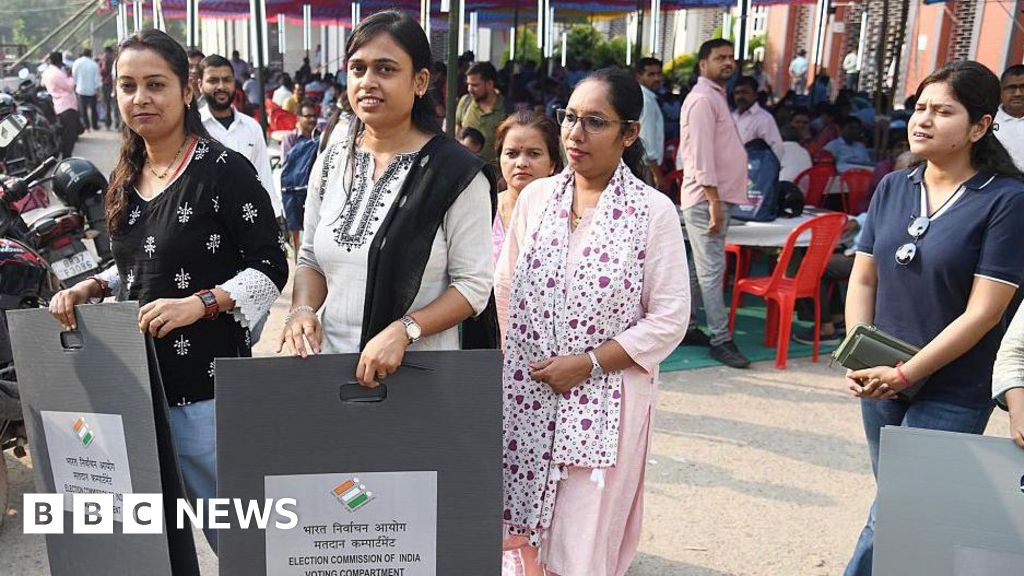
As the eastern state of Bihar prepares for its critical electoral showdown, the nation watches with bated breath, recognizing that the outcome is more than a regional contest—it is a barometer for broader geopolitical trends. With over 74 million eligible voters, the election sets the stage for a pivotal shift that could influence India’s national direction, especially in how it consolidates power amidst internal divisions and external pressures. The recent voting process, marked by the first phase in Bihar, exemplifies the intense political jockeying that continues to define India’s democracy, where every vote carries implications not just for local governance but for the global standing of a nation aspiring to regional dominance.

Amid accusations of electoral roll revisions skewed to favor the ruling Bharatiya Janata Party (BJP), the election exposes underlying tensions that extend well beyond Bihar’s borders. Critics, including opposition parties, accuse India’s Election Commission of disenfranchising genuine voters—particularly among marginalized groups—and thus skewing the democratic process. In contrast, the BJP and the Election Commission maintain that the exercise ensures electoral integrity. This controversy underscores a broader question about how internal decisions within India influence the nation’s image on the international stage, especially as global institutions scrutinize its commitment to fair democratic practices. Analysts have noted that the legitimacy of these elections will have lasting effects on India’s internal coherence, affecting its economic stability and diplomatic credibility among allies and rivals alike.

Historical Leaders and Future Uncertainty

The political landscape in Bihar remains intertwined with historic figures whose influence has shaped the state’s ongoing saga of political rivalry and social change. Names such as Nitish Kumar and Lalu Prasad Yadav echo through decades of Bihar’s turbulent politics. Kumar, a veteran leader, has been a guiding force, often aligning with national narratives to bolster Bihar’s development agenda, notably aiding the BJP’s push into federal power following the 2024 general elections. Conversely, Yadav, once a charismatic champion of marginalized castes, now faces legal challenges, yet his political progeny continue to vie for dominance—most notably his son Tejashwi Yadav, who is being projected as the opposition’s key candidate. This generational shift marks a potential turning point; leaders in declining health hint that Bihar’s current political order could soon give way to new faces, thus altering the socio-political fabric of the region.

International observers and historians warn that the possible end of these political dynasties does not only signify a local change but may herald a redefinition of Bihar’s role in India’s larger geopolitical calculus. As analysts from institutions such as the United Nations Development Programme and *noted* Indian political historians suggest, the consolidation or fragmentation of Bihar’s political landscape could influence India’s national unity, economic policy, and its capacity to project power in South Asia. The delicate balance maintained by these aging political titans is now under threat, raising questions about how India will manage internal stability as it seeks a more assertive role on the global stage.

Choices that Reshape the Future

The unfolding election has also become a battleground of ideas, with a fresh entry—the Jan Suraaj Party led by Prashant Kishor—signaling a new wave of political engagement driven by young voters. His campaign represents a broader shift, emphasizing the importance of youth participation and fresh perspectives. Meanwhile, the controversy over voter list revisions, which saw millions of names removed—including many Muslim voters—raises serious questions about India’s democratic trajectory. Critics argue this dilutes the voice of the marginalized, while supporters contend it refines electoral fairness. Regardless, the outcome depends heavily on the urban and female voters, whose rising participation could tip the scales in favor of change or re-stabilization.

As the counting approaches on November 14th, the world must recognize that Bihar’s election is more than a regional event; it is a crucial chapter in the wider story of India’s evolution as a global power. The choices made within those voting booths resonate far beyond India’s borders, influencing regional alliances, economic partnerships, and the broader struggle for influence in a multipolar world where every political shift can alter the balance of power. *The unfolding drama of Bihar’s future, written in the quiet act of casting a ballot, echoes through history’s corridors—reminding us that the destiny of nations is shaped by moments of decisive change, often buried within millions of individual voices.*

NVIDIA, Qualcomm Team Up with US & Indian VCs to Power India’s Next Deep Tech Wave

India’s Deep Tech Ecosystem Gets a Major Boost with US-India Coalition

In a significant move toward disruption of traditional markets and the acceleration of technological sovereignty, major players like NVIDIA and Qualcomm Ventures have joined forces with leading Indian venture firms to bolster India’s deep tech startup scene. Launching in September with over $1 billion in commitments, this coalition signifies a strategic pivot aimed at fostering innovation in areas such as satellite technology, semiconductor design, and quantum computing. Known for transforming industries through breakthroughs like AI accelerators and advanced chipsets, NVIDIA’s involvement as a strategic advisor—without direct funding—underscore the increasing importance of technical mentorship and ecosystem validation.

Indian startups have already demonstrated remarkable growth, boasting over 180,000 enterprises and more than 120 unicorns, yet a gap persists in capital dedicated to *fundamental infrastructure-scale innovations*. These ventures require long-term investments, often facing reluctance from risk-averse venture capitalists favoring proven, lower-risk models. This market gap is crucial for future global leadership and technological sovereignty, especially as major economies race to dominate core sectors such as biotech, space tech, and AI. The latest alliance, led by the India Deep Tech Alliance (IDTA), aims to fill this void by integrating capital, mentorship, and access to networks for startups involved in these high-impact domains.

Strategic Partnerships and Policy Acceleration

  • Participation from top U.S. and Indian investors, including Accel, Blume Ventures, and YourNest Venture Capital.
  • NVIDIA’s contribution as a technical guide will facilitate best practices in AI and accelerated computing deployment.
  • Qualcomm Ventures extends beyond funding to help startups leverage their internal expertise and network, emphasizing business disruption at the infrastructure level.
  • The Indian government’s recent ₹1 trillion (approximately $12 billion) Research, Development, and Innovation (RDI) scheme aims to empower long-term projects in key sectors like space, quantum, and biotechnology, positioning India as a burgeoning epicenter of deep tech innovation.

Experts such as Elon Musk and Peter Thiel have long emphasized the importance of building an ecosystem capable of sustaining disruptive innovation. The coalition’s strategy aligns with this vision, recognizing that *role models and substantial investment* are necessary to propel India into a new era of high-tech manufacturing and innovation. The alliance’s collaborative policy efforts could catalyze India’s emergence as a global hub for frontier technology, challenging incumbents in Silicon Valley and Shenzhen.

Implications for the Global Tech Landscape

While India’s deep-tech funding rose 78% year-over-year to $1.6 billion in 2024, disparities with mature markets remain stark. The new coalition and India’s proactive government initiatives could serve as catalysts to bridge that gap, drawing increased global capital and corporate interest. As MIT researchers note, ecosystems built on a foundation of strategic mentorship and long-term vision tend to produce market-changing companies within a decade. The current momentum indicates a potential surge in Indian-based, science- and tech-heavy firms that will become mainstays on global exchanges.

This shift signals a time-sensitive race for technological leadership; companies and nations that act decisively now will shape the future of innovation and economic power. With the participation of industry giants like NVIDIA and Qualcomm, combined with supportive government policies, India is poised to become a dominant player in the emerging frontier sectors. Tech entrepreneurs and investors alike must recognize that **the next wave of industry disruption is already under way**, and strategic engagement today will determine who leads tomorrow.

India’s Snabbit doubles to $180M in 5 months on bold house-help play

Snabbit’s Rapid Expansion Signals Disruption in India’s On-Demand Home Services Market

In a clear indication of how consumer demand for instant convenience continues to reshape industries, Snabbit, an innovative home-help startup based in Bengaluru, has secured a fresh infusion of $30 million in Series C funding, propelling its valuation to $180 million. This accomplishment underscores a broader trend of disruption within the traditionally offline domestic services sector, driven by scalable on-demand digital platforms promising quick, reliable service with minimal friction. With the backing of prominent investors like Bertelsmann India Investments, alongside existing supporters Lightspeed, Elevation Capital, and Nexus Venture Partners, Snabbit’s momentum emphasizes a shift in how urban Indians access household help, aligning with the global trend of disruptive innovation in gig and platform economies.

Founded merely in 2024, Snabbit has transitioned swiftly from concept to market leader within its micro markets, delivering over 300,000 orders and increasing daily bookings from just 1,000 to more than 10,000 in a matter of months. Such rapid growth emphasizes the scalability of hyperlocal, tech-enabled service delivery—a model gaining traction worldwide, including giants like Urban Company. Spearheading this wave are features including

  • 100% women-led workforce of 5,000 specialists
  • Service options ranging from cleaning to kitchen prep, laundry, and dishwashing
  • Delivery within 10 minutes, leveraging dense urban networks

The startup’s strategic focus on deep, micro-market penetration over broad geographic expansion exemplifies a significant industry displacement: the era of “scale first” is giving way to “depth first” approaches that emphasize customer loyalty and local dominance. In the words of analyst firms like Gartner, this indicates a fundamental industry shift whereby hyperlocal, on-demand platforms will define urban consumer experiences. Furthermore, Snabbit’s targeted expansion into categories like cooking and elderly care signals an understanding that integrated, high-frequency services will be the next frontier for maximum disruption and revenue growth, potentially transforming household economics in India’s dense urban centers.

Indeed, the implications for traditional offline domestic help models are profound. With cost-efficient, on-demand solutions costing around ₹150 ($2) per hour and workers earning competitive salaries ($284–$340/month), startups like Snabbit are setting new standards for worker engagement, service quality, and consumer choice. As Peter Thiel and other Silicon Valley visionaries have long argued, disruption is about transforming fundamental market dynamics rather than merely digitizing existing models. In this context, the rising tide of innovation in Indian on-demand home services foreshadows the emergence of a globally competitive, tech-driven household services industry that could outpace more traditional sectors.

Looking ahead, the key question revolves around how incumbents and new entrants will adapt to this wave of disruption. With the continuous flow of venture capital, ongoing technological advancements, and increased consumer acceptance, the race for micro-market dominance is intensifying. Initiatives integrating AI, advanced logistics, and localized data analytics will be critical to sustain momentum and secure a competitive edge. As India’s digital economy accelerates, it is imperative for investors, entrepreneurs, and established players alike to recognize that this is not merely a regional trend but a harbinger of a fundamental shift in global domestic help markets. The future belongs to those who innovate at the micro-level, creating urban ecosystems where instant, reliable services become not just a convenience, but an unavoidable norm.

India’s Airbound scores $8.65M to launch rocket-inspired drones for ultra-cheap deliveries

Airbound’s Disruptive Drone Innovation Promises to Revolutionize Last-Mile Delivery

In a move that could redefine last-mile logistics, Indian startup Airbound has secured $8.65 million in seed funding, led by Lachy Groom, co-founder of Physical Intelligence. The fresh capital infusion signals a growing industry interest in groundbreaking drone technologies capable of achieving one-cent delivery costs, threatening traditional logistics and delivery models globally. As the company embarks on pilot programs with Bengaluru’s Narayana Health and eyes expansion into the U.S., its innovations are poised to challenge entrenched delivery paradigms, emphasizing efficiency, lightweight design, and autonomous operation.

Key to Airbound’s disruptive edge is its ultra-light, blended-wing-body aircraft, the TRT drone, engineered explicitly for small payload deliveries. Pushp, the startup’s founder and CEO, emphasizes that current drone efficiency benchmarks are fundamentally broken, citing that “drone-to-payload weight ratios” are far from optimal. “You need four kilograms of drone to lift one kilogram of payload,” Pushp explains, highlighting the critical need for innovation in aerodynamic efficiency. By focusing on reducing drone weight — the initial prototype weighs around 3.3 pounds — and improving energy usage, Airbound intends to slash energy costs by 20 times, making one-cent delivery not just aspirational but practically achievable.

This strategic focus on technological innovation and cost reduction has broader business implications. Airbound plans to vastly expand manufacturing capacity, aiming to produce over 100 drones daily by 2027 and scaling deliveries to a million daily within two years. Such ambitious growth demands a paradigm shift from traditional delivery fleets towards autonomous, highly efficient drone networks. Industry experts from institutions like MIT and analysts at Gartner recognize this trajectory as part of a broader wave of disruption, which could eventually render legacy last-mile logistics providers obsolete or force them into strategic pivots. As Pushp underscores, “logistics is intrinsically a physics problem”—emphasizing that success hinges on minimizing weight and maximizing efficiency.

The implications are profound: if startups like Airbound harness this disruptive innovation, they could accelerate a global transformation in sectors beyond medical logistics—spanning quick commerce, food delivery, and other last-mile services. This rapid evolution demands regulatory agility; Airbound is already engaging with authorities such as India’s Directorate General of Civil Aviation (DGCA) and planning to expand into the U.S., a market highly receptive but heavily regulated. Such efforts align with broader trends where regulatory technology and industry standards evolve alongside breakthrough innovations, fueling accelerated deployment. As Elon Musk and Peter Thiel have noted, the future belongs to those who innovate faster and challenge traditional industries, and Airbound’s trajectory exemplifies this ethos.

Looking forward, the race for drone supremacy is intensifying, with startups and established giants alike vying for dominance. Airbound’s strategic focus on lightweight design, energy efficiency, and cost effectiveness positions it as a frontrunner in this high-stakes arena. In the coming years, the deployment of thousands of autonomous, low-cost drones could reshape entire logistics ecosystems, forcing incumbents to adapt or risk obsolescence. As the industry approaches the cusp of mainstream adoption, it’s clear that innovation-driven disruption is here—and acceleration is imperative for those seeking to lead in the future of connected, autonomous delivery networks. The clock is ticking; the future of commerce belongs to those bold enough to harness the power of the skies.

Social Media Auto Publish Powered By : XYZScripts.com