Matox News

Truth Over Trends, always!

Man arrested after stabbing in western Sydney leaves one dead, two critically injured

Emerging Security Concerns in Australia: A Reflection of Societal Underbelly

In the heart of Australia, a tragic incident has underscored the persistent issues of societal unrest and internal security threats. A man is in police custody after stabbing three individuals near a train station in Merrylands, a suburb of western Sydney. The attack resulted in one death and two critically injured victims, raising troubling questions about community safety and mental health. Authorities swiftly responded, and within moments, managed to apprehend the suspect on Smythe Street. This incident, while localized, echoes broader concerns about social fragmentation and security risks that are beginning to affect developed nations globally.

While the incident appears isolated, analysts argue that such acts of violence are symptomatic of deeper fissures within society—fissures that, if left unchecked, could exacerbate national insecurity. Some security experts warn that the rise in unpredictable violence could undermine public confidence in law enforcement and strain social cohesion. As Australia grapples with internal challenges, the incident raises profound questions about resilience, social policy, and the capacity of Western democracies to protect their citizens. How nations respond to these tragedies can shape their social fabric for generations, a point emphasized by international security think tanks.

Global Implications: Connecting Local Violence to a Broader Geopolitical Canvas

Such outbreaks of violence, while seemingly confined, have global repercussions. In an era where international stability depends on internal cohesion, the European Union, United States, and China watch incidents like this with keen interest. Historians and analysts highlight that domestic disturbances can weaken a country’s soft power, making its geopolitical stance more vulnerable. As international organizations like the UN reiterate the importance of social stability, the ripple effects of violence in Australia underscore the essential need for comprehensive internal security strategies aligned with national interests.

Furthermore, the incident amplifies concerns over how decisions made within global power corridors impact internal security policies in nations worldwide. Australia’s internal security policies, including community policing and mental health initiatives, are now under increased scrutiny, with some observers warning of the dangers of underfunding social safety nets. The shift in policy directions could resonate beyond Australia, influencing security frameworks elsewhere, particularly in regions vulnerable to internal dissent and violence.

Looking Ahead: The Weight of History and Societal Transformation

As the world observes and reacts to such tragedies, the question remains: how will societies adapt and evolve? The incident in Merrylands is more than a local tragedy; it is a stark reminder of a larger turning point in global security and societal resilience. Historians warn that the path nations choose in response to internal crises will define future generations. Will governments strengthen social cohesion or succumb to division? Will policymakers prioritize mental health and social safety, or neglect these issues in favor of superficial measures?

In this unfolding narrative, Australia’s ordeal becomes a symbol of the fragile boundary between order and chaos. The decisions made in the coming weeks will determine if this violence remains an isolated incident or a sign of something far more troubling brewing beneath the surface. As history continues to turn, the weight of unresolved societal tensions hangs heavy, threatening to reshape the geopolitical landscape in ways yet to be fully understood.


Nine injured as Walcha demolition derby crash crashes into spectators

Critical Incident at Australian Motorsport Event Sparks Reflection on Public Safety and International Response

In Australia, an incident at the Walcha Motorcycle Rally — a well-known grassroots motorsport event— has sent shockwaves across the nation and reignited global debates about public safety at sporting and entertainment events. During a scheduled demolition derby, a vehicle unexpectedly veered off course, crashing through a fence and into spectators gathered near the grandstand, resulting in nine injuries, including one critically injured individual. While organizers and authorities are still investigating the exact causes, such tragic accidents underscore a growing concern: how to ensure safety in increasingly high-risk public gatherings.

This event has not only exposed local vulnerabilities but also drew attention to broader issues addressed by international organizations and safety experts. As historians and analysts examine this incident, they warn that a failure to implement rigorous safety protocols could have devastating consequences worldwide, especially as motorsport events grow in popularity in both the West and developing nations. Such accidents, though often considered isolated, can serve as stark reminders of the thin margin between entertainment and catastrophe. The incident demonstrates how decisions affecting safety standards—whether at local level or in international policy—can have ripple effects that influence societal trust and the global image of nations hosting major events.

  • The driver, a 27-year-old, was involved in a collision moments before the crash, hinting at potential lapses in safety oversight or vehicle control.
  • The local council expressed shock and committed to thorough investigations, emphasizing that premature judgments could undermine ongoing inquiries.
  • Key political figures, including Brendan Moylan and Barnaby Joyce, publicly expressed their sympathies, highlighting how political leaders often become focal points in moments of crisis, affecting international perceptions of national stability.

Furthermore, the incident occurs against the backdrop of a shifting international landscape where risks associated with large public gatherings are openly debated amid the lingering echoes of global crises. Such events serve as reminders that the decisions nations make—be it tightening safety regulations or balancing economic interests—directly impact societal resilience and international reputations. According to safety analysts, failure to adapt traditional safety standards to evolving challenges could result in tragic outcomes with long-lasting geopolitical consequences, especially in countries eager to promote tourism and sporting events without adequate safeguards. These accidents, often scrutinized by international media and authorities, illustrate how fragile public trust can be when safety is compromised.

The Broader Geopolitical Impact of Safety Incidents

This local tragedy extends beyond national borders, intertwining with the global discourse on risk management, safety regulations, and leadership accountability. Organizations such as the International Olympic Committee and Fédération Internationale de l’Automobile have long championed stricter safety protocols, especially in the wake of past disasters. Critics argue that inadequate safety measures reflect deeper issues of governance and priorities where economic gains often overshadow fundamental safety considerations. Countries striving to host international events fear such incidents could tarnish their reputations, deter investments, and discourage tourism, all of which have far-reaching geopolitical ramifications.

This incident, while localized in Australia, reminds analysts of historical lessons. Experts, including prominent historians, point out that seemingly isolated tragedies often serve as catalysts for reform—though not without controversy. The Greek Olympics of 2004 and recent incidents in motorsport history demonstrate how failures in leadership and safety oversight can escalate into larger crises, shaping international policies and public attitudes for decades. The ongoing debate is a testament to how critical decisions made in moments of crisis influence the trajectory of international relations, societal stability, and public trust in institutions.

As the dust settles over Walcha, the world watches attentively. With governments and international organizations carefully analyzing safety standards and crisis management protocols, the future remains uncertain. Yet, one thing is clear—each incident adds to a complex tapestry of history still being written. As the nations of the world continue to navigate this perilous landscape, they are reminded that underneath the thrill of competition and community lies a fragile thread that, once broken, leaves echoes for generations to come, shaping the course of history in unpredictable ways.

Tragedy on the Streets: Street Racer Hits Crowd at Tampa Bar, 4 Dead, 13 Injured

The High Cost of Reckless Driving: A Tragedy on Tampa’s Streets

In a stark reminder of how wellness and safety can be shattered in an instant, Tampa, Florida recently faced a devastating incident resulting from reckless driving. Early Saturday morning, a police chase that initially aimed to curb street racing spiraled into tragedy when the suspect’s vehicle, after several attempts to evade authorities, lost control and collided with a beloved local bar, Bradley’s. The aftermath: four lives lost and over a dozen injured—an event that leaves the city grappling with grief and questions about justice and safety.

The Tampa Police Department described the scene as “senseless,” underscoring the destructive path that impatience and recklessness can carve through a community. After being spotted by aerial surveillance around 1 a.m., the suspect — a 22-year-old man — was relentlessly pursued across city streets. Despite attempts at a PIT manoeuvre, a police tactic often scrutinized for its danger to bystanders, the driver continued to accelerate, ultimately losing control and crashing into the outdoor patio of a popular LGBTQ+ venue, Bradley’s. The incident highlights a critical tension in law enforcement: how to balance pursuit tactics with the imperative to protect innocent lives, as outlined in recent federal safety reports advocating for less dangerous chase techniques.

While the immediate tragedy unfolded at a venue frequented for its community, the broader narrative extends beyond the specifics of this incident. It raises essential conversations about <a href=”https://portal.cops.usdoj.gov/resourcecenter/content.ashx/cops-r1134-pub.pdf” target=”_blank”>personal responsibilityurban safety, and the importance of cultivating responsible driving habits that preserve free movements$> and prevent catastrophic outcomes. Wellness experts like Dr. Michael Gervais advocate for cultivating focus and mindfulness, especially in high-stakes situations, asserting that a shift in societal mindset—from reckless thrill-seeking to conscious respect for safety—can alter outcomes and foster healthier communities.

  • Prioritize wellness initiatives that encourage responsible driving and community safety awareness.
  • Support policies and technology aimed at reducing street racing and dangerous pursuits.
  • Promote mental health resources for young adults, addressing the underlying causes of impulsive behaviors.

In reflecting on this event, one recognizes that the journey toward well-being and community integrity is ongoing, demanding both accountability and compassion. The narrative of Tampa’s tragedy is a reminder that lifestyle choices extend beyond the individual—they ripple across the fabric of society, shaping environments where resilience and responsibility can flourish. As the city mourns and seeks justice, it also reaffirms a collective commitment to embracing the values that champion life, safety, and personal growth.

In this quest for a better future, it is through hard truths and shared resolve that communities find their way back toward hope. The story of Tampa challenges each of us to be vigilant and committed to fostering environments where life and leisure can coexist safely, inspiring a new chapter where every journey is one of purpose and personal impact.

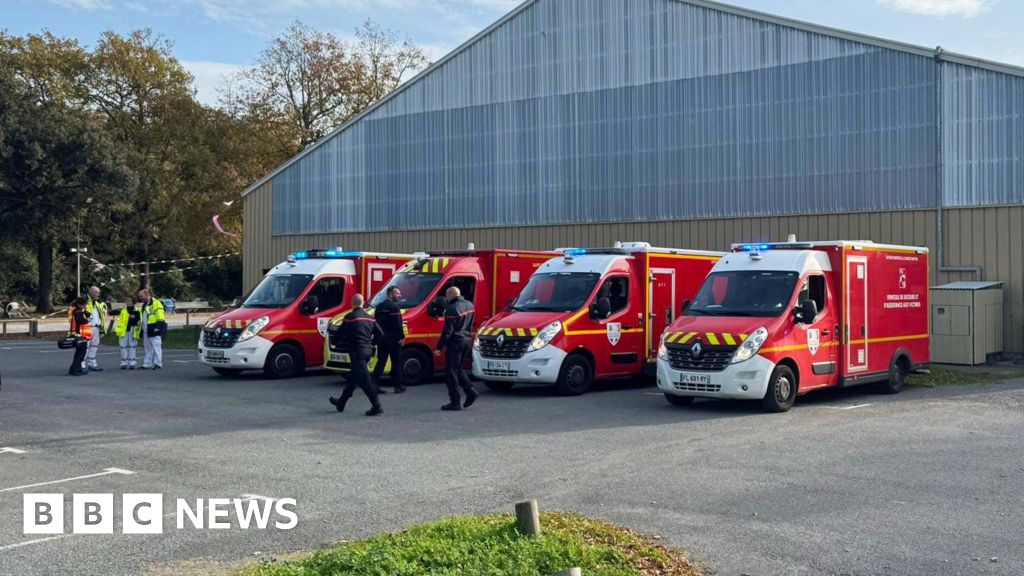
Multiple injured as driver recklessly hits 10 on Ile d’Oléron—authorities crack down on rising dangers

The quiet beauty of Ile d’Oléron, a renowned holiday haven off the west coast of France, was shattered by a shocking act of violence that has sent ripples through the international community. In an incident that authorities suspect may have terrorist undertones, a local man in his mid-30s deliberately drove into pedestrians and cyclists, critically injuring four individuals, including a young girl. The attacker, identified as a resident of the island, was eventually subdued and arrested following a dramatic confrontation, highlighting concerns about emerging threats not only in France but across Europe.

According to reports, the suspect drove through the villages of Dolus d’Oléron and Saint-Pierre-d’Oléron, deliberately targeting civilians in a disturbing display of violence. After the assault, he abandoned his vehicle and set it ablaze, an act that prompted an immediate response from local authorities. The suspect reportedly shouted “Allahu Akbar” during his arrest, raising alarms over potential connections to extremist ideologies, although France’s anti-terror agencies have thus far declined to take charge of the investigation. Still, the fact that the man was known to police raises pressing questions about the efficacy of security systems and early warning procedures in borderless Europe. This incident underscores an ominous trend: how individual grievances or ideological radicalization can manifest in unprecedented acts of terror, threatening societal stability and international security.

Globally, this event resonates within a broader context of rising geopolitical tension. European nations, grappling with complex issues of integration, cultural identity, and security, are increasingly vulnerable to lone-wolf attacks that exploit societal fractures. Analysts from EU security agencies warn that such incidents are not isolated but symptomatic of a global push by extremist groups to destabilize Western democracies. Their impact extends far beyond the immediate victims, fostering a climate of fear that can be manipulated to justify authoritarian measures—an unsettling evolution in the war against terror. Furthermore, the incident on Ile d’Oléron places under question the resilience of small, popular tourist destinations—which, due to their economic dependence on flow of visitors, are now potential targets, shifting the geopolitical landscape of security.

Prominent historians and international security experts emphasize that the ongoing threat in Europe is a critical turning point in the struggle to defend shared values. Many argue that without strengthened intelligence cooperation and community engagement, such tragedies could become more frequent and more devastating, affecting nations and societies at their very core. As France faces this new reality, the incident leaves an indelible mark—reminding us that history is still writing itself, and that the battle for the soul of the West is far from over. With each new act of violence, the world witnesses how fragile the veneer of safety truly is, prompting a sobering reflection: in the ongoing contest of ideas, will civilization prevail against those who seek to sow chaos?

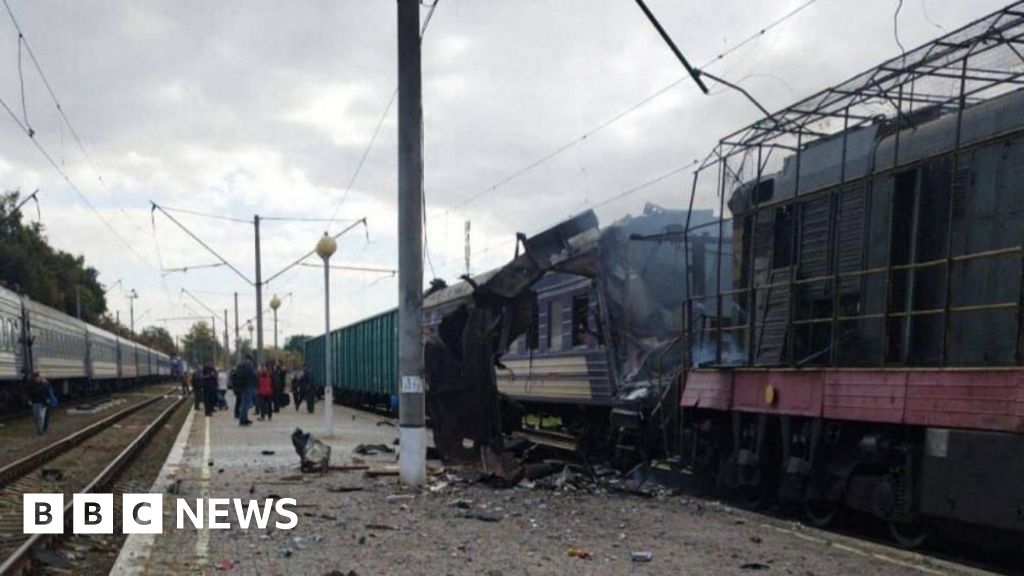
Russian missile hits railway station; over 30 injured, Zelensky reports

The escalating conflict in Ukraine has once again shifted into anirit of violence and desperation, as recent reports confirm a Russian drone strike that severely damaged railway infrastructure in the city of Shostka, located in the northeastern Sumy region. Ukrainian President Volodymyr Zelensky publicly condemned the attack, describing it as a blatant act of terrorism. With at least 30 injured—including children aged 8, 11, and 14—the strike underscores the brutal reality faced daily by the Ukrainian population amidst ongoing hostilities. The attack targeted civilians and vital transportation links, which Kyiv contends Moscow is deliberately sabotaging to destabilize the country’s fragile security fabric.

  • Two passenger trains were hit simultaneously during the strike, a calculated assault not aimed at military targets but designed to sow panic among civilians. Ukrainian authorities claim the attacks have increased in frequency and intensity, targeting key railway infrastructure critical for evacuation and logistics.
  • President Zelensky issued a stark warning, emphasizing that such acts clearly demonstrate Russia’s disregard for civilian life and international norms. He called on Western allies to translate their war-stated commitments into tangible support, specifically urging for increased provision of advanced air-defense systems to protect their frontline communities.
  • Meanwhile, recent weeks have seen an unprecedented surge in Russian aerial assaults, with hundreds of drones and dozens of missiles launched weekly, creating chaos and overburdening Ukraine’s defense capabilities. The devastating 12-hour drone and missile attack last Sunday, which resulted in fatalities and injuries in Kyiv, exemplifies Moscow’s escalating efforts to weaken Ukraine’s resilience.

The geopolitical impact of these developments extends beyond Ukraine’s borders, highlighting a shift in the global balance of power and exposing the limits of Western military support amid an astoundingly complex conflict. Washington and European capitals remain divided over how assertive they should be in arming Ukraine; some analysts suggest that a failure to provide sufficient defensive weaponry could embolden Moscow, potentially leading to further destabilization across Eastern Europe. The Biden administration, under pressure from allies, has agreed to a mechanism for European nations to purchase U.S.-made weapons for Ukraine, signaling a shift towards more direct support. Nonetheless, Russian President Vladimir Putin remains steadfast in his refusal to consider a ceasefire, characterizing Kyiv’s calls for peace as a tactic to buy time while his forces slowly advance on the battlefield.

International organizations and historians warn that this ongoing conflict, if unresolved, risks broader regional destabilization and possibly a wider confrontation involving NATO members. The international community faces a stark choice: escalate support in the hope of deterring further aggression or risk conceding ground and allowing Vladimir Putin to reshape the security architecture of Eastern Europe according to his own strategic interests. The increased Russian drone activity, which now threatens European airspace, has prompted debates among military experts about the need for more sophisticated defensive systems and the potential for the conflict to spill over into neighboring countries. As analysts like Dr. Maria Ivanova warn, “The longer this war persists, the more it erodes the very fabric of international peace, pushing the world toward a dangerously fragile future.”

As the smoke of conflict continues to rise and the drums of war swell louder, the world stands on a precipice—a history still being written through relentless violence and diplomatic failure. Each drone strike, each volley of missiles, is a grim reminder that the fight for sovereignty, security, and justice is far from over. And as the shadows of history deepen over the battlefield, the eyes of the world remain painfully aware: the choices made today will echo through the annals of history, shaping the future far beyond the borders of Ukraine. The question remains: how many more lives must be shattered before the weight of diplomacy finally turns the tide, or will this ongoing chaos forever redefine the fabric of international order?

Manchester Synagogue Attack: Volunteer Among Injured, Society Must Stand Strong

Rising Hate Crimes and Society’s Response: The Role of Community Security in Protecting Our Future

In recent years, the fabric of multicultural communities across the UK has been strained by a troubling surge in hate crimes, particularly targeting the Jewish population. The recent attack on a synagogue in Manchester, which resulted in severe injuries to a Community Security Trust (CST) volunteer, underscores the grave reality that some of our communities are facing. The CST, a pivotal community organization dedicated to monitoring and combating antisemitism since 1984, has become an essential line of defense, deploying extensive security measures to safeguard places of worship, schools, and communal spaces. The injuries sustained by one of its personnel, believed to be the most severe yet, reflect the dangerous escalation of violence and the importance of resilience in our social fabric.

This incident is not isolated but part of a disturbing trend that saw anti-Jewish hate crimes in the UK surge by over 100% in just a year—jumping from 1,543 to 3,282 reported incidents by March 2024, according to Home Office statistics. The CST’s own data indicated 1,521 antisemitic incidents in the first half of this year alone. These numbers expose a future where intolerance and hate threaten to undermine the societal cohesion necessary for families and communities to thrive. Sociologists like Dr. Samuel Abrams have pointed out that radicalization and societal fractures often manifest through such hate crimes, which target the emotional and physical safety of vulnerable communities, eroding trust and fostering division.

To counter this rising tide of hostility, organizations like the CST have stepped up their efforts, employing over 100 staff members and more than 2,000 trained volunteers. Their training spans from first aid to advanced security procedures, often working alongside private security firms funded by government grants—including an £18 million annual subsidy from the Home Office to protect sites ranging from nurseries to high-profile communal buildings. Beyond physical security, the CST dedicates resources to intelligence work, analyzing neo-Nazi and Islamist sources that fuel hate, and collaborating with wider anti-hate networks such as Tell Mama. This united front demonstrates a community-led resilience that refuses to be intimidated, emphasizing that the fight against hatred requires both vigilance and proactive policy measures.

The societal implications of such efforts extend beyond mere security. They serve as a moral bulwark to preserve the integrity of families and the youthful generations who will inherit the society we shape today. While these measures are essential, some social commentators argue that addressing root causes—such as ignorance and economic disenfranchisement—remains critical. Historians like Niall Ferguson have emphasized that societal stability depends on integrating diverse communities and fostering shared values, making it paramount that our institutions invest in education and intercultural dialogue. Initiatives like youth awareness courses, which engage teenagers in street-level understanding of the importance of tolerance, are steps in this direction, echoing a broader societal need to unite against divisiveness at its core.

Looking ahead, the challenge remains: how do communities ensure that the ideals of respect, safety, and shared purpose are not just ideals, but lived realities for the next generation? As societal rifts widen in some areas, it is vital to remember that beneath the divisions lie communities longing for safety and understanding. The story of Manchester’s synagogue is a stark reminder of the ongoing struggle but also of the resilience that emerges when communities and institutions stand together. This society’s future depends on whether we dare to bridge the gaps, prioritize unity, and invest in collective hope—because in every act of protection and understanding, we forge the path toward a society where all can flourish free of fear.

Social Media Auto Publish Powered By : XYZScripts.com