Matox News

Truth Over Trends, always!

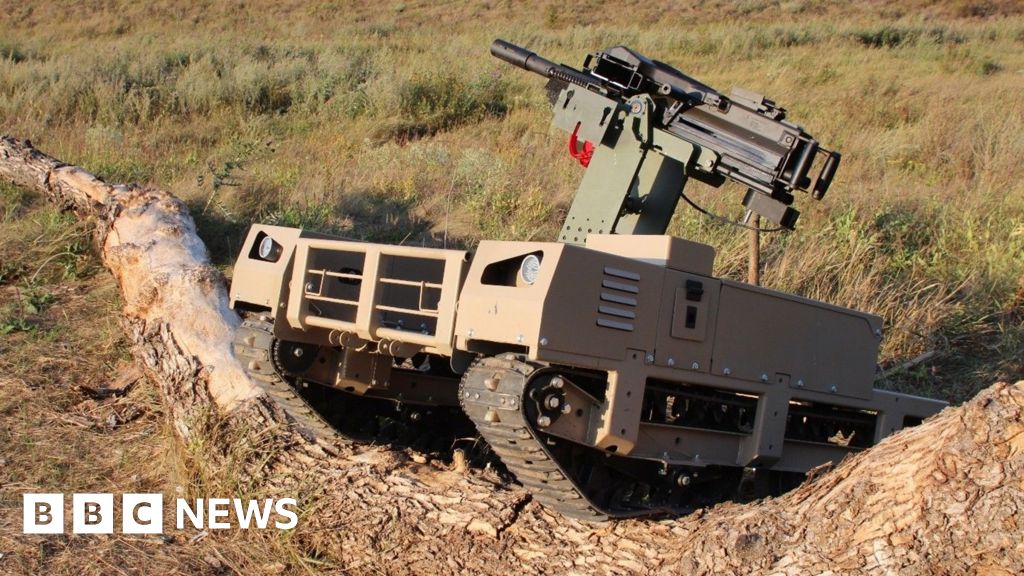
Robots with weapons hit the battlefield in Ukraine—showing innovative defense in action

In a decisive move that signifies a profound shift in the landscape of modern warfare, Ukraine has announced the deployment of armed robotic units on the battlefield against Russian forces. This development marks an unprecedented step in the ongoing conflict, reflecting Kyiv’s strategic adaptation to new technological frontiers and the increasing importance of unmanned combat systems in contemporary military doctrine. As conflicts increasingly intertwine with advancements in artificial intelligence and robotics, the outcome of this deployment could redefine power dynamics not only regionally but across the global geopolitical spectrum.

The Ukrainian government’s initiative signals a broader trend among nations with vested interests in technological superiority. According to defense analysts and military strategists, this move underscores a deliberate effort to minimize human casualties while maximizing operational efficiency. The use of armed drones and autonomous systems could serve as a force multiplier, allowing Ukrainian troops to target enemy formations with precision that diminishes the risks associated with traditional combat. However, such developments are not without controversy; they raise significant concerns over ethical standards, escalation risks, and the potential for unintended consequences. International organizations such as the United Nations have issued cautious statements, urging restraint and emphasizing the need for clear international regulations governing autonomous weapon systems.

The geopolitical impact of Ukraine’s decision resonates far beyond its borders. This technological leap could inspire other nations to accelerate their own military modernization programs, particularly in regions where ongoing conflicts threaten regional stability. Historically, the proliferation of autonomous weapons has been contentious, with critics warning against a future where machines could operate independently in lethal scenarios. Yet, proponents argue that such advancements are essential for maintaining strategic parity, especially against adversaries who continue to modernize their forces. These developments could provoke a new arms race, further complicating diplomatic negotiations and sowing seeds of instability in an already fragile international order.

As international institutions grapple with the implications of autonomous weaponry, a pivotal question emerges: how will the shift towards robotic warfare influence the fabric of society, sovereignty, and ethical warfare? Debates among historians and strategists emphasize that technology alone does not determine the outcome of conflicts; it is the underlying political will, public support, and adherence to international law that ultimately shape history. Looking ahead, the unfolding of Ukraine’s robotic battalions stands as a stark reminder that the course of geopolitics is often dictated by innovation—an ongoing saga where humanity teeters on the edge of a new frontier. As the world watches, the echoes of this bold step will reverberate through history, leaving future generations to grapple with the true meaning of victory and the cost of technological dominance.

OpenAI teases ChatGPT Atlas, new profiles, ad blocker, and more for its innovative AI browser

OpenAI’s ChatGPT Atlas: A Bold Step Toward Disrupting Google’s Dominance

In a move that sharply accelerates the ongoing **disruption of the traditional internet landscape**, OpenAI has unveiled ChatGPT Atlas, an innovative AI-powered web browser designed to challenge the entrenched position of Google Chrome. According to Adam Fry, Atlas’s lead, the development team is already engaged in rapid iteration to refine the browser’s features, signaling a proactive approach to capturing market share through **cutting-edge AI integration**.

The introduction of Atlas marks a major strategic *shift* in how next-generation browsers could transform the internet interface. Unlike traditional browsers, Atlas leverages natural language processing to deliver an experience that’s not merely about navigation but about intelligent interaction, opening the door for **future enhancements that prioritize user customization, privacy, and efficiency**. With plans to unveil features such as **profiles, tab groups, and an opt-in ad blocker**, OpenAI aims to make Atlas a versatile tool that meets the evolving needs of today’s digital natives.

Innovation and Business Implications for Market Disruption

This move from OpenAI exemplifies a **disruptive innovation** that could catalyze a fundamental shift in how users engage with online content. As Tech giants like Google and Microsoft face innovative threats from AI-driven solutions, industry analysts such as Gartner warn that legacy browsers risk obsolescence unless they adapt swiftly to **intelligent automation and personalized experiences**. By integrating sophisticated AI features directly into the browsing experience, Atlas could significantly **alter the competitive landscape**, pushing traditional browser makers to rethink their strategies or risk losing relevance.

  • Feature-rich AI driving personalized web experiences
  • Potential to minimize reliance on Google’s ecosystem
  • Key milestone in AI-browser convergence

Moreover, the announcement underscores **OpenAI’s ambition to expand its ecosystem**, hinting at potential integrations with other tools like 1Password, which management recognizes as vital for securing user data amid increased digital threats. While the team has kept certain features under wraps, the **focused development effort** suggests a future where AI might seamlessly **secure, customize, and optimize** user workflows, thus **disrupting incumbents** and raising the stakes for competitors.

Forward-Looking Perspective: Prepare for a New Era in Web Interaction

The rapid pace of innovation exemplified by Atlas’s development indicates that **the future of the internet is intertwined with AI-driven interfaces**. Experts from MIT and Elon Musk’s Neuralink have long emphasized the **potential for AI to redefine human-computer interactions**, and Atlas appears poised to lead this revolution. As **AI-powered browsers** become more sophisticated, *early adopters* could enjoy **significant productivity gains** and tighter security, while laggards risk falling behind in a landscape that favors agility and innovation.

In conclusion, the release of ChatGPT Atlas underscores an urgent call for established players to accelerate their **innovation cycles**. The era of passive browsing is ending; the future belongs to those who leverage **disruptive AI solutions** to craft **more intuitive, secure, and personalized online experiences**. As market shifts accelerate and new players like OpenAI position themselves as **industry disruptors**, the question remains: who will lead the next wave of transformation—and who will be left behind?

Client Challenges Drive Innovative Solutions

As the global economy navigates a period of significant turbulence, markets worldwide are experiencing a spectrum of shocks that threaten both short-term stability and long-term growth trajectories. Recent reports indicate a marked slowdown in manufacturing and consumer confidence, driven by persistent inflationary pressures coupled with geopolitical uncertainties. Economists from institutions like the International Monetary Fund warn that the economic landscape remains precariously balanced, with risks tilted towards recession in major economies. Investors are reacting swiftly, repositioning portfolios amidst the volatile environment, with some predicting a challenging horizon ahead.

The United States economy, often a bellwether for global trends, shows signs of strain despite resilient employment figures. Consumer spending, historically a cornerstone of growth, is cooling as inflation reduces disposable income. Meanwhile, the European Union faces its own set of hurdles; energy security crises and inflationary spikes threaten to dampen recovery efforts, prompting policymakers to reconsider traditional fiscal responses. In this climate, central banks around the world are caught in a delicate balancing act—tightening monetary policy to combat inflation while avoiding the tipping point that could trigger a recession. The Bank of England has signaled a cautious approach, aiming to control inflation without stifling economic growth, but the path remains fraught.

Market impact is profound:

  • Stock indices in North America and Europe have undergone sharp corrections, encapsulating investor trepidation;
  • Currencies such as the US dollar and Euro experience heightened volatility, reflecting shifts in monetary expectations;
  • The commodity markets see mixed signals—oil prices fluctuate amid supply concerns, while gold retains appeal as a safe haven.

Policy consequences are equally critical. Governments are reassessing stimulus measures and fiscal policies, with some contemplating more aggressive intervention to bolster economies while others emphasize structural reforms to foster resilience. Think tanks like the Council on Foreign Relations underscore the necessity for strategic foresight, cautioning that premature tightening could deepen economic fissures. Meanwhile, the specter of geopolitical conflicts, especially in key regions such as Eastern Europe and East Asia, adds layers of complexity. The overarching narrative suggests that this period is a defining moment—one where economic resilience and adaptive policy will determine the future balance of global power.

Looking ahead, the economic pulse of nations remains a pivotal determinant of global influence, shaping not only material prosperity but also geopolitical strength. As we stand on the cusp of potential upheaval, the resilience of economies and their capacity to innovate amid chaos will serve as the bedrock upon which future power is built. This era underscores the importance of strategic foresight, emphasizing that while markets may falter and policies may shift, the true strength of a nation lies in its ability to adapt and thrive amidst uncertainty. The coming years will reveal whether the global economy can harness this turbulence to forge a new epoch of prosperity or succumb to the shadows of complacency and crisis—either way, history is on the move.

Social Media Auto Publish Powered By : XYZScripts.com