
Matox News

Truth Over Trends, always!

Legendary Radio DJ Andy Kershaw, the Voice Who Introduced Britain to Global Beats, Passes Away at 66

The story of Andy Kershaw is a testament to the transformative power of curiosity and authenticity in a world saturated with convention. Beginning his career in the mid-1980s, Kershaw swiftly emerged as an iconic voice on British radio, known for his bold opinions and eclectic tastes. His unorthodox approach—venturing beyond the familiar sounds of mainstream rock—resonated deeply with a generation eager for genuine discovery. Unlike the typical playlist curated by record labels, Kershaw instinctively sought out music from deprived corners of the world—Haiti, Mali, Pakistan—places where rhythm and culture intertwine to form an unapologetic expression of life itself. His mission was clear: to give people “not what they wanted, but what they didn’t know they wanted,” inspiring countless to broaden their horizons and embrace _the richness of global diversity_.

In the spirit of true explorers, Kershaw exemplified an _emergent lifestyle shift_—one that champions _wellness through exposure to new cultures and experiences_. His travels were not mere vacations but profound immersions that shaped his worldview. He ventured into places often overlooked by the mainstream media, reporting from conflict zones and bringing to light stories that challenged injustice and enlightened his audience. His work, especially during tumultuous times such as the Rwandan genocide and Thailand’s Red Shirt protests, reflected a _core desire to understand and share the human story_. Such experiences underscore the vital connection between _personal growth_ and _embracing discomfort_—a philosophy that modern wellness advocates increasingly endorse as a key to resilience and true vitality.

A Lifestyle of Authenticity and Reflection

Kershaw’s evolution from a spirited DJ to a fearless war correspondent underscores a _life dedicated to meaningful pursuits_. His memoir, “No Off Switch,” chronicles a relentless quest for authenticity—an outlook that extends from his professional endeavors to his personal journey. Despite hardships, including a turbulent period marked by addiction and legal struggles, Kershaw managed to regain his footing, demonstrating that _embracing vulnerability is integral to _living with purpose_**. His return to the BBC, hosting documentaries and podcasts, highlights a _commitment to storytelling that educates and inspires_. Such an approach invites a _younger generation_ to see _lifestyle as a reflection of values_, placing health, curiosity, and resilience at the forefront of personal evolution.

  • Seek out _cultural experiences_ that challenge your perspectives.
  • Travel to _less-traveled destinations_ to broaden horizons and foster _personal growth_.
  • Practice _mindfulness_ by engaging deeply with local traditions and stories.
  • Develop _resilience_ through _confronting discomfort_ and _embracing change_ as a vital aspect of vitality.

Conclusion: A Life Embraced

As his story unfolds—a narrative woven with _passion for discovery_, _resilience in adversity_, and _dedication to truth_—it leaves a lingering echo: the call to live with _intent and authenticity_. The life of Andy Kershaw underscores that lifestyle is not merely about leisure but a deliberate journey towards _self-awareness and cultural understanding_. In this journey, each step taken beyond comfort zones nurtures _strength and empathy_, shaping a future where we define ourselves not by the limitations imposed but by the bounds we dare to break. For the modern youth eager to forge their path, his legacy echoes: embrace exploration, seek truth, and live hearts open, for in doing so, life becomes an unending adventure of the soul.
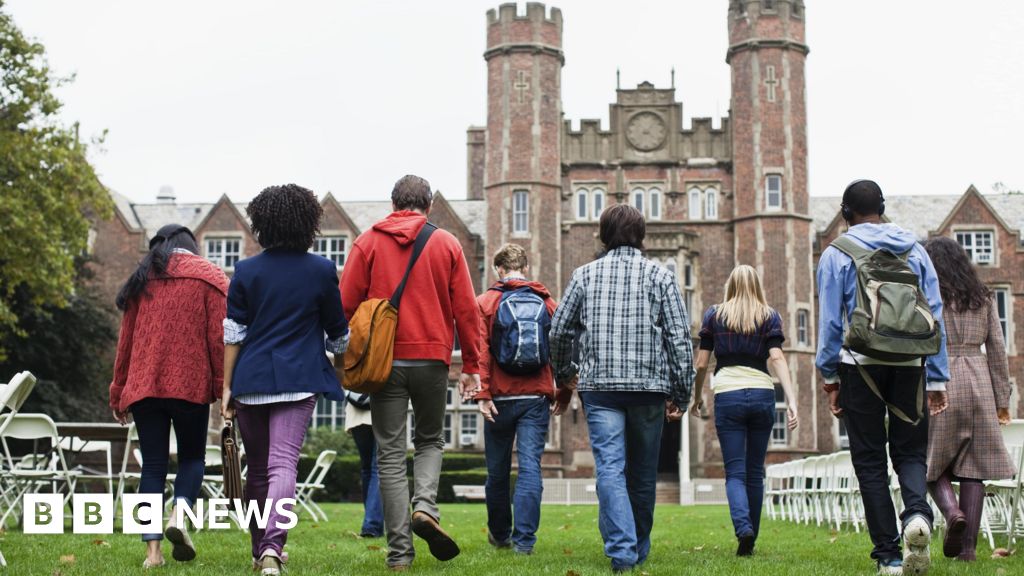
University Fees Up, V-Levels Introduced: What Young Brits Need to Know

Society at a Crossroads: The Rising Costs and Shifting Structures in Higher Education

As families across communities grapple with economic uncertainty, the landscape of higher education faces transformative shifts that threaten to deepen social divides. The recent White Paper from the government signals not just changes in policy, but the potential recalibration of social mobility itself. With tuition fees destined to escalate annually with inflation from 2026 onward, the foundational promise of accessible university education appears increasingly fragile.

Historically, social commentators like John R. Bowen have emphasized that education acts as both a mirror and a moulder of societal structures. The planned fee increases—expected to elevate costs by over £400 annually—pose a significant hurdle for students from lower-income backgrounds. Although the government assures that income-based repayment thresholds will shield some, the specter remains that rising debt burdens could disproportionately burden those who can least afford it, thereby narrowing the social strata rather than bridging them.

Financial Strain and Academic Inequity

In this context, the question of university staff pay and quality of education emerges as a critical issue. The uncertainty surrounding whether fee hikes will translate into better salaries for lecturers is symptomatic of a larger dilemma. According to sociologists like Michael W. Apple, the way in which educational resources are allocated often reflects broader societal priorities. Critics argue that with universities facing financial strain—exacerbated by years of austerity—the likelihood is that staff pay disparities and resource shortages will deepen, potentially impacting students’ learning experiences.

  • Proponents claim that inflation-linked fee increases are essential for the long-term sustainability of universities, which have struggled with frozen or declining funding.
  • Opponents warn that this model could entrench socio-economic inequalities and erode the quality of higher education for the most vulnerable students.

Additionally, the government plans to reintroduce maintenance grants for some lower-income students by 2029, financed through a tax on international student fees. While such measures aim to shore up access, questions linger about whether they will be sufficient to counter the effects of rising debt and cost of living, especially for those who are the first in their families to pursue higher education.

Reimagining Accreditation: The Role of V-Levels

Amidst these financial and social upheavals, a pioneering shift in educational pathways is underway: the introduction of V-levels from 2027. These new qualifications are designed to sit alongside traditional A-levels and T-levels, replacing qualifications like BTecs, yet their precise impact remains opaque. The shift signifies a broader debate on the credibility of vocational qualifications and their role in social mobility.

Historians like E. P. Thompson have documented that vocational education has long been undervalued, often viewed as a lesser alternative to academic routes. The emergence of V-levels is an attempt to elevate such pathways, but the transition must be carefully managed. Current vocational students, many from working-class backgrounds, worry whether these reforms will result in a two-tier system, where social and economic barriers could once again decide educational destiny.

Hope and Reflection

As society grapples with these challenges, the question remains: how can communities and policymakers foster a future where opportunity is truly accessible to all? It requires a collective effort, integrating public funding, fair assessment standards, and a renewed respect for vocational paths—steps that echo the insights of social thinkers advocating for equity rooted in social justice.

In the quiet moments of reflection, society faces a choice—to let the escalating costs and structural divides deepen the chasms between classes, or to forge a new way forward rooted in equality, opportunity, and the human dignity that underpins a resilient society. The seeds of transformation may be fragile, but history has shown that hope, combined with deliberate action, can sow the roots of profound change—reminding us that even amidst adversity, society’s true strength lies in its capacity to evolve.

Social Media Auto Publish Powered By : XYZScripts.com



