Matox News

Truth Over Trends, always!

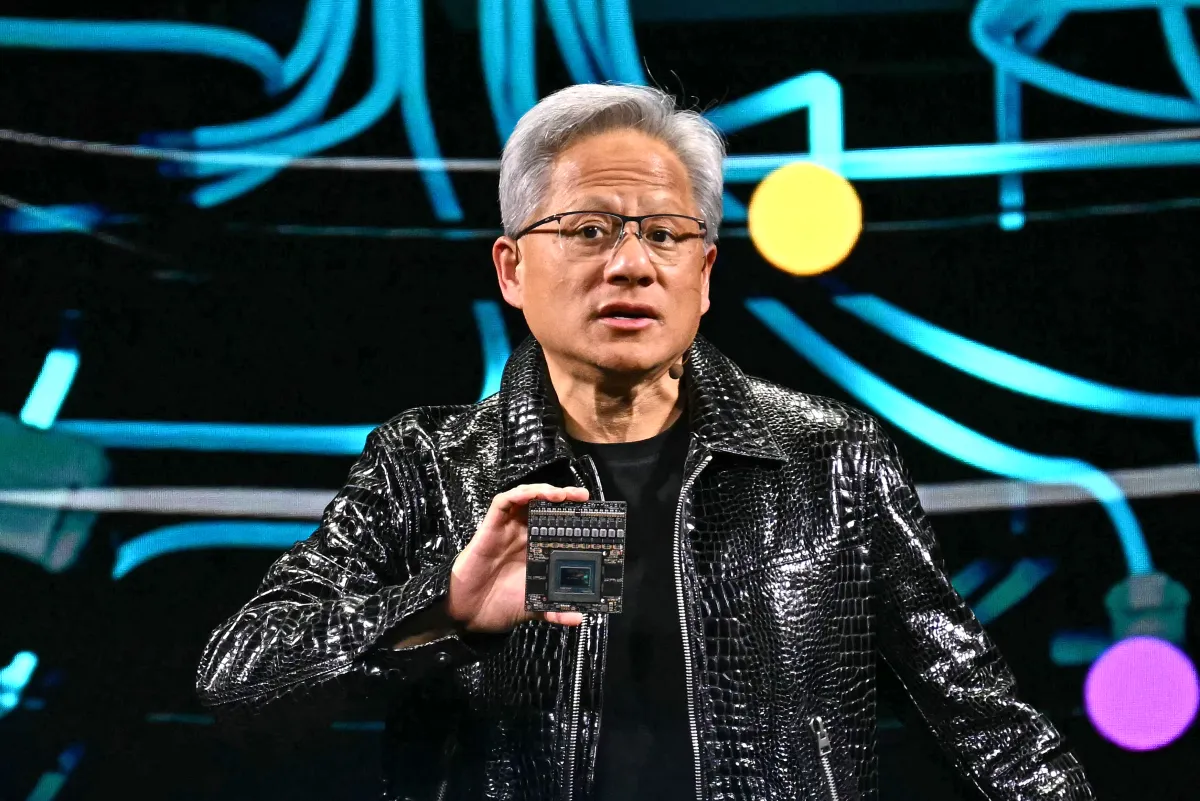
Jensen Huang Signals Nvidia’s Shift Away from OpenAI and Anthropic — What’s Really Going on?

Tech Industry Shakeup: Nvidia’s Strategic Investments and the Geopolitical Tensions Reshaping AI

In a landscape where innovation and disruption define the pace of progress, Nvidia remains a dominant force, yet recent developments expose the complex chess game shaping the future of artificial intelligence (AI). The company’s muted commentary on its latest strategic moves, coupled with a shift in investment scales, signals a nuanced recalibration. As Huang, Nvidia’s CEO, emphasized on the company’s Q4 earnings call, their investments are primarily aimed at “expanding and deepening” their ecosystem reach. However, the actual scale of these investments, particularly in OpenAI and Anthropic, reveals a story of caution and reevaluation amid industry turbulence.

Initially, Nvidia announced a lofty pledge to invest up to $100 billion in OpenAI last September—a move that drew skepticism from industry experts like MIT Sloan professor Michael Cusumano. The plan was described as “a kind of a wash,” highlighting the circular nature of AI investments where alliances and stakes tend to feed into each other. Recently, Nvidia finalized a significantly reduced investment—approximately $30 billion—less than half of their original commitment. This contraction underscores a market wary of overextensions amid signs of a possible bubble, where speculative investments threaten to distort valuation metrics. The changing scale points toward a strategic pragmatism as Nvidia recalibrates its AI ambitions, understanding that different industry shifts could impact both its market dominance and geopolitical positioning.

Adding another layer to this dynamic is Nvidia’s relationship with Anthropic. Despite recent investments, tensions have surfaced, notably with Anthropic CEO Dario Amodei comparing the U.S. chip industry’s export controls to “selling nuclear weapons to North Korea,” highlighting the geopolitical fragility endemic to AI supply chains. The Trump administration’s decision to blackist Anthropic—barring federal agencies and defense entities from deploying its models—illustrates the dangerous intersection of AI innovation with national security concerns. Meanwhile, OpenAI’s swift pivot to contract with the Pentagon—marked by a strategic, yet contentious, military technology deal—further accentuates the industry’s shifting alliances. This divergence in trajectories underscores a broader trend: AI firms are increasingly caught at the crossroads of innovation and geopolitics, with their business models and strategic partnerships under intense scrutiny.

Implications for the Industry: Innovation, Market Disruption, and Policy Challenges

  • Innovation and Disruption: Nvidia’s redefining of its AI investments exemplifies how disruptive innovations can outpace traditional strategic planning, unveiling new opportunities for startups and established players alike. As AI models become more advanced, the pressure to balance innovation with geopolitical prudence intensifies, pushing firms to adopt more flexible, diversified approaches.
  • Market Shifts and Industry Realignment: The stark contrast between Nvidia’s cautious scaling and the aggressive Pentagon deal underscores a tectonic shift in market alliances. Firms that align with government and defense sectors may unlock enhanced capabilities and funding, but at the risk of alienating other markets or inviting regulatory backlash.
  • Business and Geopolitical Implications: Major corporations need to prepare for a future where global supply chains, export controls, and international diplomacy directly influence AI development. The industry’s trajectory may well depend on policy decisions increasingly driven by national interests, which could either stifle innovation or propel it into new geopolitical realms.

Analysts from Gartner and institutions like MIT warn that industry leaders must navigate these choppy waters with agility—balancing cutting-edge technological breakthroughs against emerging regulatory and geopolitical headwinds. The move by Nvidia, and industry shifts like the Pentagon-OpenAI deals, signal that the future of AI is not just about technological supremacy, but also about strategic positioning within a rapidly evolving global framework. With new alliances forming and old ones fracturing, the industry faces an inflection point where urgency and anticipation are paramount.

As we look ahead, the key question remains: who will shape AI’s next chapter—those who innovate at the edge or those who control the geopolitical levers? In this high-stakes game, the winners will be those capable of maintaining technological leadership while navigating the complex matrix of international policy and market disruption. The clock is ticking, and the future of AI—along with its vast implications—hangs in the balance, calling for strategic foresight and unwavering resolve.


As Co-Founders Exit and IPO Nears, Musk Sets Sights on Moon Mission

Elon Musk’s xAI Targets Lunar Manufacturing as Next Technological Frontier

In a surprising pivot towards extraterrestrial innovation, Elon Musk revealed during an all-hands meeting that xAI, his burgeoning artificial intelligence enterprise, aims to establish a manufacturing facility on the Moon. This marks a significant escalation in spatial-based AI development, emphasizing the disruptive potential of leveraging lunar resources and space-borne infrastructure to accelerate technological growth while circumventing Earth’s limitations. Musk’s vision involves deploying AI satellites via a lunar catapult, a concept that underscores a radical rethinking of how industry, AI power, and space exploration intersect. Such a move signals the onset of a new era where disruption is no longer confined to terrestrial markets, but extends into space itself, charting a course for what industry analysts are already calling <the most ambitious space-centric AI initiative to date>.

The implications for the global tech ecosystem are profound. Industry leaders, including SpaceX and AI disruptors, are fueling a paradigm shift centered on off-planet manufacturing and data processing. The recent merger of xAI and SpaceX has further accelerated this trajectory, positioning Musk’s empire at the forefront of innovation—an inevitable challenge to legacy tech giants. According to Gartner, such advancements in space-based AI infrastructure are likely to catalyze Gross Domestic Profit rather than just GDP, as companies unlock unprecedented access to computing power and resource utilization beyond Earth’s constraints. Elon Musk’s confidence in his rapid technological progress underscores how disruption is becoming an essential strategy for maintaining competitive advantage—especially when competitors like China and Russia have no legal hurdles in challenging U.S. dominance in space.

Adding to the industry’s uncertainty is a wave of strategic personnel shifts within xAI, with half of the company’s original founders departing amid reports of the impending SpaceX IPO. While Musk maintains that the company is in flux and moving at an unparalleled pace, these departures highlight the inherent risks of pushing beyond traditional boundaries. As the urbanization of space continues to evolve, legal and regulatory frameworks—such as the 1967 Outer Space Treaty and the 2015 U.S. law permitting resource ownership—will undoubtedly shape what is feasible for private firms. The legal ambiguity surrounding lunar sovereignty and resource rights presents both an opportunity and a complication in Musk’s quest to turn planetary borders into cash flows—a strategic game changer for the future of space commerce.

Central to Musk’s renewed focus on the Moon is his assertion that colonizing Mars—long deemed the logical next step—is now a distant goal, with lunar development offering a faster, more practical alternative. This shift underscores a broader trend among aerospace innovators toward near-term lunar infrastructure investments, driven by the belief that a self-sustaining lunar city could outperform Mars in both time and economic viability. Industry experts anticipate this approach could unlock a “new gold rush“—not only in raw materials but in technological advancement, military leverage, and global influence. As MIT researchers and Elon Musk warn, the race for space-based AI and manufacturing is accelerating at an unprecedented clip, demanding not only technological ingenuity but also strategic agility. The next decade may well define whether humanity’s space ambitions will be a technological utopia or a geopolitical battleground.

Is the Shutdown a Silver Lining? Your IPO Gets a Boost as Investors Jump In

SEC’s New IPO Fast-Track Strategy Signals Shifting Regulatory Landscape

In a move prompted by the recent government shutdown, the U.S. Securities and Exchange Commission (SEC) has introduced a significant procedural adjustment that could fundamentally alter the landscape of initial public offerings (IPOs). As detailed in official SEC press releases, companies now have the option to utilize an obscure automatic approval process—originally designed as a procedural backstop during regulatory staffing shortages—to expedite their IPO filings. Most notably, this process allows firms to bypass the traditional requirement of disclosing pricing information, signaling a disruptive recalibration of market transparency norms.

With approximately 90% of SEC staff furloughed, startups and late-stage tech firms can now file their IPOs and see them become effective after a mere 20 days—an unprecedented acceleration that could turn the tide of disruptive innovation in capital markets. While this automatic process always existed, its enhanced adoption during the shutdown underscores a broader industry trend: firms are increasingly willing to operate in regulatory gray zones to access capital swiftly. Although the SEC retains legal authority to demand amendments post-filing, the risk calculus shifts, empowering companies to prioritize speed and market entry over full disclosure. This raises questions about the future of market transparency and investor protection amid growing regulatory flexibility.

The business implications of this development are profound, spotlighting a potential paradigm shift that could upend traditional IPO models. Startups aiming for rapid market entry can now leverage this loophole to circumvent protracted review processes—perfectly aligned with the aggressive timelines pushed forward by visionary entrepreneurs like Elon Musk and Peter Thiel. Moreover, the move hints at a broader willingness within regulatory agencies to adapt in real-time to economic upheavals, a sign that disruption is extending beyond technology to encompass financial markets and regulatory frameworks. Major institutions such as Gartner and MIT’s Sloan School have emphasized that innovation often accelerates amid crisis, and this latest pivot exemplifies that dynamic.

However, strategic caution remains essential. While the immediate benefits are alluring for burgeoning companies, the potential long-term ramifications threaten to undermine investor confidence and market stability. Industry analysts warn that a sustained reliance on this ‘automatic’ approval process could lead to less rigorous oversight, fostering an environment ripe for speculative bubbles and market manipulation. As the regulatory landscape becomes more agile, the onus is on companies and investors alike to exercise vigilance — acknowledging that rapid capital access must be balanced against sustainable growth and long-term transparency. This regulatory flex illustrates a critical inflection point: the future belongs to those who innovate not only in technology but also in navigating the evolving terrain of governance and market integrity.

Looking ahead, the swift adoption of such policies signals that industries must remain alert to emerging opportunities and risks. As both regulators and market players adapt dynamically—propelled by technological advancements and shifting economic realities—the window closes quickly for those who hesitate. The coming months could redefine how America’s capital markets operate, emphasizing disruption, innovation, and strategic agility as key drivers in global competitiveness. For visionary entrepreneurs and investors, this moment embodies an urgent call to action: harnessing regulatory shifts to accelerate growth, while safeguarding the foundational principles of transparency and trust. The future belongs to the bold—those willing to lead through the chaos of change.

Social Media Auto Publish Powered By : XYZScripts.com



