
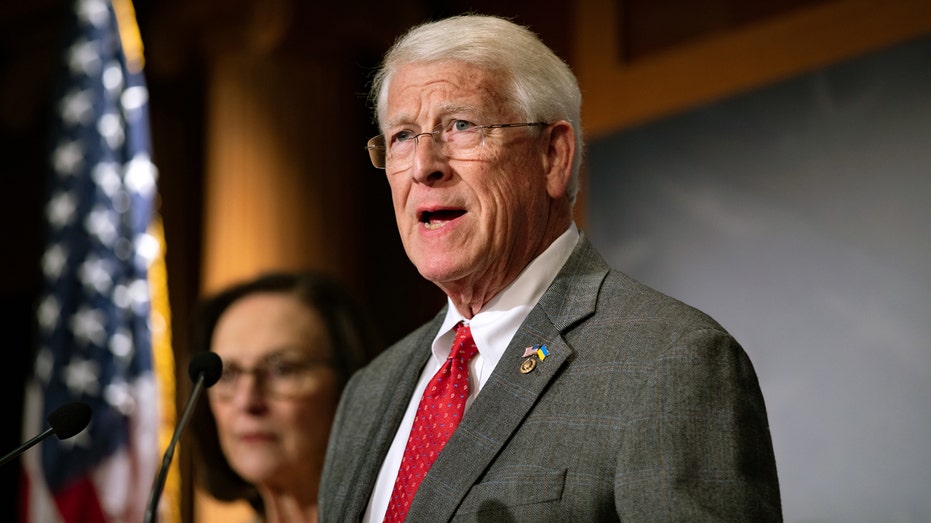

Senator Roger Wicker (R-Miss.), Chairman of the Senate Armed Services Committee, has publicly cautioned President Donald Trump against pursuing what he described as a ‘weak Iran deal.’ This admonition arrives as administration officials signal potential progress in negotiations with Tehran, highlighting a growing tension within conservative national security circles regarding the future of U.S. policy toward Iran.
Senator Wicker’s Firm Stance
In a sharply worded statement, Senator Wicker underscored the gravity of the current moment, asserting that it would ‘define President Trump’s legacy.’ The Mississippi Republican expressed concern that while the President’s ‘instincts have been to finish the job he started in Iran,’ he might be receiving counsel to entertain an agreement that would prove ineffective. Wicker’s remarks, reported by the News Desk, reflect a segment of the GOP leadership advocating for an uncompromising approach.
He pressed the commander-in-chief to allow America’s skilled armed forces to continue their mission. Senator Wicker’s core arguments for maintaining robust pressure on Iran include:
- Completing the destruction of Iran’s conventional military capabilities.
- Ensuring the reopening of vital shipping lanes, such as the Strait of Hormuz.
- Preventing the perception of weakness that a premature or ‘worthless’ deal might convey to global adversaries.
Wicker argued that further diplomatic engagement with Iran’s Islamist regime risks projecting an image of weakness, reiterating the need to ‘finish what we started,’ a clear call for decisive action rather than negotiation.
Diplomatic Progress and Caution
The Senator’s comments surfaced just hours after Secretary of State Marco Rubio acknowledged ‘some progress’ in the ongoing discussions with Iran. Rubio, however, tempered expectations, stating he ‘wouldn’t exaggerate it. I wouldn’t diminish it,’ and emphasized that a final agreement had not yet been reached. He noted that key issues remain unresolved, indicating the complexity of the talks.
This delicate balance between diplomatic engagement and military resolve lies at the heart of the administration’s foreign policy challenge. The White House has not yet offered an immediate comment on Senator Wicker’s public appeal, leaving observers to speculate on the internal dynamics shaping President Trump’s ultimate decision.
The Stakes for U.S. National Security
The public discourse from Senator Wicker exposes a significant debate within Republican ranks concerning the optimal strategy for confronting the Iranian regime. This internal struggle centers on whether to pursue a negotiated settlement or to continue a robust military campaign aimed at dismantling Iran’s nuclear capabilities and conventional forces.
For many conservatives, a strong stance against Iran is paramount for regional stability and global security. The potential outcomes of these deliberations are substantial, impacting not only the Middle East but also the perception of American resolve on the international stage. The administration’s choice will undoubtedly be scrutinized for its long-term implications.
“His instincts have been to finish the job he started in Iran, but he is being ill advised to pursue a deal that would not be worth the paper it is written on.”
— Senator Roger Wicker (R-Miss.)
As President Trump navigates these complex geopolitical waters, the pressure from influential Republican figures like Senator Wicker highlights the deep convictions held by those who advocate for unwavering strength against adversarial regimes. The administration faces a pivotal decision that will shape its legacy and redefine the trajectory of U.S. foreign policy in a volatile region. Maintaining order and protecting national interests through decisive action remains a central concern for many American citizens.






