Matox News

Truth Over Trends, always!

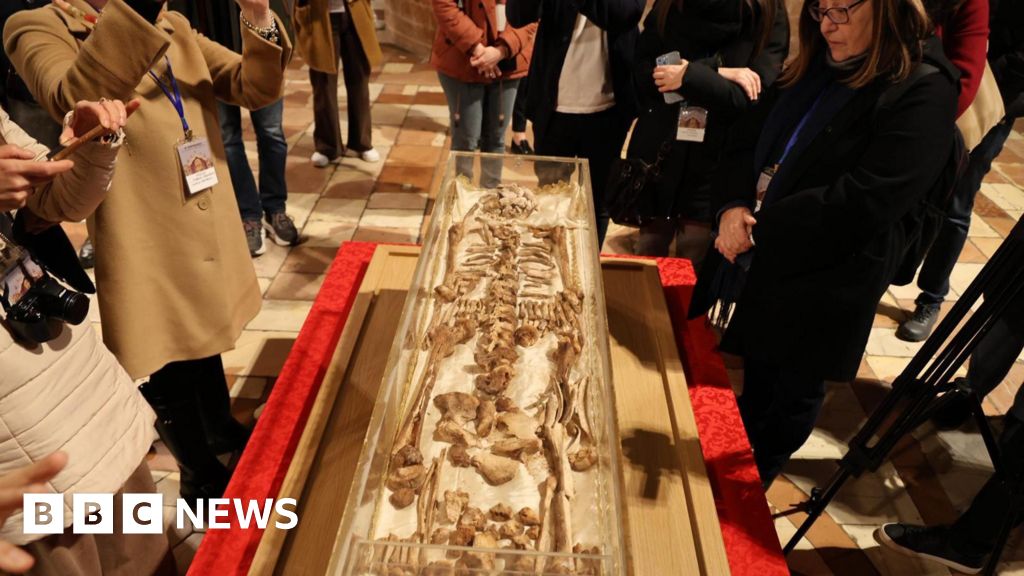
St. Francis’s bones go on display, sparking pride in Italy’s heritage

Italy’s Patron Saint Reappears After Decades in Sole Public Display

In a momentous event that has captivated the world’s attention, the remains of Italy’s patron saint were publicly displayed for only the second time in recorded history. The last occasion was in 1978, marking nearly five decades since the sacred relics last appeared for the public. This rare unveiling not only reignited religious fervor across Italy but also drew intense international scrutiny as analysts and historians contemplated the broader geopolitical implications of such a spiritual event in a world increasingly driven by political conflicts and shifting alliances.

Instituted centuries ago, the veneration of this revered relic has historically been a unifying force for the Italian people and a symbol of their enduring spiritual heritage. However, the decision to display the remains now, amidst a fragile geopolitical landscape, underscores as much a declaration of cultural resilience as a subtle assertion of national identity. The timing coincides with mounting domestic and international challenges—ranging from economic strains to regional tensions—and signals a deliberate reminder of Italy’s historical roots and sovereignty.

International organizations, such as the United Nations, and major world powers have watched keenly as this event unfolds. Scholars point out that religious symbolism, especially in Italy—a nation intertwined with the fabric of Western civilization—remains a potent tool of soft power. Some analysts suggest that this public display could serve as a strategic gesture, reaffirming Italy’s cultural independence amid rising global uncertainties. Conversely, critics argue that in an era dominated by digital communication and political upheavals, such traditional symbols may be overshadowed by more pressing geopolitical concerns.

Historians and geopolitical strategists alike have emphasized that how nations choose to preserve and memorialize their cultural and religious icons often reflects underlying shifts in power and societal cohesion. As one seasoned European diplomat noted, “Events like this are never just about faith or history—they encode deeper narratives of sovereignty, identity, and resistance against external nods to cultural erosion.” The re-emergence of Italy’s relics thus signifies more than a spiritual event; it is a living testament to a nation contemplating its place on a turbulent geopolitical stage. As history continues to be written, the world watches with bated breath, aware that moments of cultural revival can often presage significant political shifts. The symbolic relics, quiescent for needs of centuries, now carry an unspoken message: some aspects of a nation’s soul are resilient in ways that transcend borders and conflicts—reminding us that in the chaos of history’s pages, spiritual history remains an enduring, potent force.
Limone sul Garda: Italy’s coolest village serving up a legendary health ‘elixir’

Amidst the breathtaking landscape of Italy’s Lake Garda region lies a tiny yet extraordinary village called Limone sul Garda. With barely 1,000 residents, this picturesque fishing village is renowned not only for its stunning terraced lemon groves and alpine scenery but also for an intriguing genetic anomaly that has captured scientific curiosity. Nestled on the northern tip of the lake, Limone offers a landscape where wellness, natural beauty, and a long-lived community intertwine—fostering a lifestyle that is both inspiring and provocative to those seeking health and vitality.

What sets Limone apart from other idyllic locales is its unique *“Limone gene,”* carried by a select few locals, which contains a protein dubbed A-1 Milano. First identified in a train driver’s blood during a chance hospital visit, this protein appears to play a powerful role in **destroying lipids**—the fats associated with clogged arteries and cardiovascular disease. Dr. Cesare Sirtori, a renowned expert in clinical pharmacology, explains that while most genetic mutations tend to trigger diseases, this one has the opposite effect: *it appears to guard carriers from vascular illnesses and promote a **long and healthy life**.* Remarkably, among the village’s residents, those with the gene have been observed to maintain *exceptionally low levels of HDL cholesterol*, the so-called “bad cholesterol,” while avoiding the typical health pitfalls commonly associated with such readings.

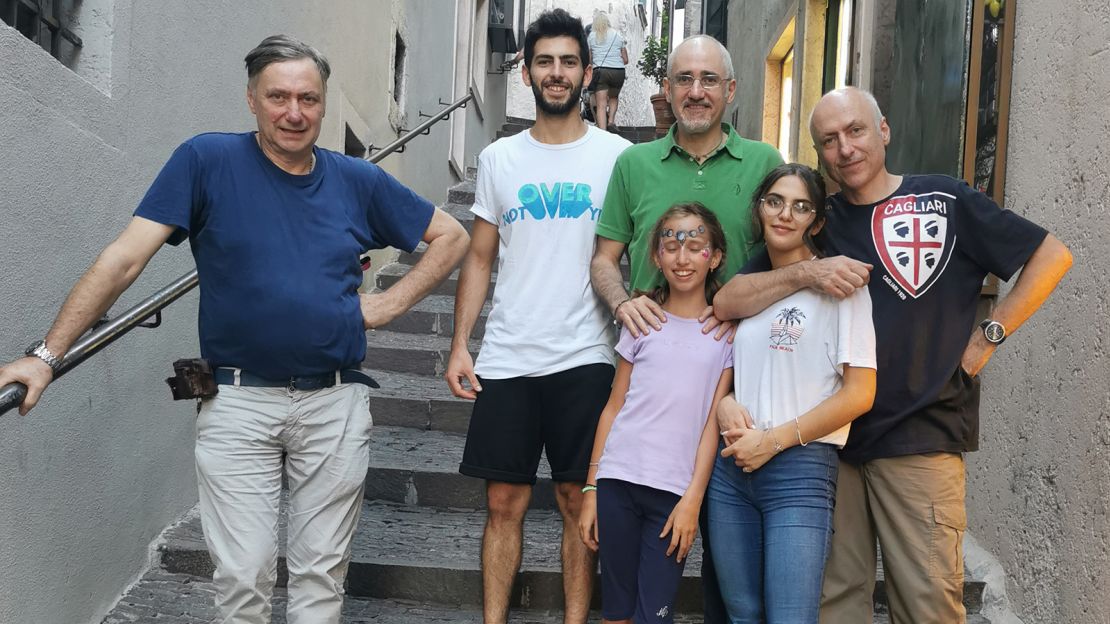
Locals like Gianni Segala, whose family has carried the gene for generations, have long joked about being “blood bags” for researchers due to continuous genetic testing. Yet, behind this humor lies a profound narrative of a community that, perhaps subconsciously, embodies *\_the essence of **lifestyle** as medicine.* Many residents attribute their vitality to the village’s *microclimate*—a warm, snow-free environment shielded by the Alps—and the region’s *rich natural produce* like olives, lake fish, and citrus, which may work synergistically with their genetic makeup. Antonio Girardi, a local hotelier, suggests that centuries of favorable climate and the natural diet have fostered this natural “elixir,” giving residents a *seemingly* divine resilience against age-related ailments.

Researchers are now delving deeper into the potential of this one-of-a-kind genetic mutation, with experiments testing synthesized proteins on animals that show promising reductions in blood clots. While the **scientific community** is still exploring the practical applications of these findings, the story of Limone underscores a broader truth: **natural environments, diet, and genetics** can form a potent trio in the quest for wellness. Perhaps what makes Limone most compelling is its reminder that a thoughtful, *\_well-balanced lifestyle*—grounded in purity of environment and a connection with nature—can serve as our most potent *personal impact.* As we seek inspiration in the pursuit of health, Limone whispers an age-old lesson: embrace the environment that nurtures us, cherish the clarity of purpose, and live in harmony with the natural rhythms that sustain life.

Key Takeaways for a Lifestyle of Longevity and Well-being:

  • Prioritize natural surroundings: like Limone’s microclimate, your environment influences health.
  • Incorporate natural, local produce: fresh fish, citrus, and olive oil contribute to a healthful diet.
  • Understand your genetics: awareness can empower preventative care and longevity strategies.
  • Maintain a balanced lifestyle: balance activity, diet, social connection, and appreciation of nature.

Ultimately, the story of Limone sul Garda invites us to view wellness as a living, breathing journey—a symbiosis of environment, heritage, and conscious choices. Even if the village’s literal “elixir” remains a mystery, its lesson endures: the pursuit of health is as much about how we live our lives as it is about the genes we inherit. To walk this path is to step into a story of harmony, resilience, and perhaps, our own discovery of a personal elixir waiting to be uncovered.

Italy’s PM warns Gaza flotilla: Stop or threaten peace progress

Global Tensions Flare as Italy Intervenes in Gaza Aid Flotilla Crisis

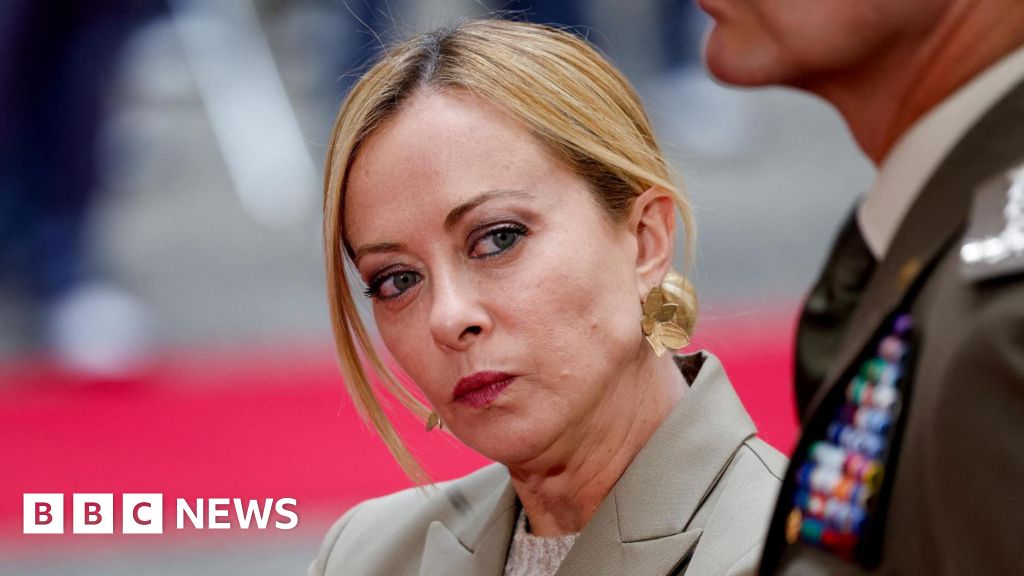
The recent efforts by Italy to navigate the complex and dangerous terrain of the Gaza conflict underscore the precarious nature of international diplomacy amid ongoing violence. Prime Minister Giorgia Meloni has publicly condemned the Global Sumud Flotilla (GSF), a convoy of over 40 ships carrying humanitarian aid, which was making its way toward Gaza in defiance of Israeli restrictions. Meloni’s call for the flotilla to halt, coupled with the deployment of an Italian naval frigate to intercept the vessels, signals a provocative stance that could have significant geopolitical impact. Meloni warns that the flotilla’s actions are a potential pretext for escalation, threatening to derail a fragile US-led peace proposal aimed at ending the brutal conflict.

The U.S. has recently stepped into the fray with a proposal that offers a semblance of hope—a framework for an immediate ceasefire, the release of hostages, and a pathway toward peace. However, such diplomatic initiatives are often fragile and easily undermined. Some analysts argue that Iran and pro-Hamas factions are exploiting these international efforts to prolong their influence and meddle further in the region’s affairs. Meanwhile, Israel insists that the flotilla is a Hamas operation disguised as humanitarian outreach, a claim that remains unsubstantiated but fuels international skepticism. The flotilla’s leaders, including climate activist Greta Thunberg and political figures from Europe, have declared their intent to press on despite military threats, emphasizing that their mission is rooted in urgent humanitarian concerns rather than publicity.

This confrontation holds broad consequences for global stability. As historians and international organizations warn, the unfolding event risks becoming a catalyst for larger regional conflict. Italy’s naval deployment, sanctioned by the government amid reports of drone activity and unidentified vessels approaching the flotilla, raises questions about international rules of engagement and the potential for violence. The recent drone attacks and communication jamming incident, officially condemned by Italy and Spain, indicate a dangerous escalation that could spark a wider conflict, with Middle Eastern and European nations watching anxiously. The potential for miscalculation in these tense moments threatens to ignite a conflict that could further destabilize the region for generations to come.

As the world watches, the choices made by nation-states and international bodies will write new chapters in the history of the Middle East, chapters etched in the blood and resilience of its people. With each diplomatic move, each vessel that risks crossing the line, the memory of past conflicts looms large. The weight of history presses on the shoulders of leaders who must navigate a treacherous web of alliances, enmities, and ideals. How this story unfolds remains uncertain, but its trajectory will undoubtedly shape the future geopolitical landscape—an enduring testament to a region perched on the edge of turmoil, where the next turn of the page could herald an era of renewed conflict or fragile peace. And as the flotilla presses onward into the storm, the question remains: will humanity learn the lessons of the past, or will this be another chapter in an ongoing cycle of violence that history will not soon forget?

Social Media Auto Publish Powered By : XYZScripts.com