Matox News

Truth Over Trends, always!

Ocado Announces 1,000 Job Cuts in £150m Cost Savings Plan

In a move emblematic of shifting global economic tides, Ocado, the British online grocery technology pioneer, announced a major restructuring plan involving the elimination of 1,000 jobs worldwide. This decision, which sees approximately 5% of its global workforce cut, underscores the mounting pressures faced by innovative tech companies amid an increasingly volatile international market. Most of the cuts are concentrated within its UK operations, notably affecting staff at its headquarters in Hatfield, Hertfordshire. Such measures highlight a broader pattern of corporate recalibration driven by technological and economic headwinds, and carry significant geopolitical implications in terms of technological sovereignty, employment, and economic resilience.

The restructuring aims to impose a sharp focus on cost discipline and AI efficiency, as Ocado seeks to cut approximately £150 million from its technology and support costs by 2026. The company’s strategy involves scaling back R&D, merging divisions such as Ocado Solutions and Ocado Intelligent Automation, and consolidating its commercial and support operations. These decisions appear to reflect broader global trends where nations and corporations are recalibrating their ambitions in artificial intelligence, automation, and technological dominance. According to industry analysts, such retrenchments serve as a warning to similar tech-driven firms worldwide: as markets tighten and competition intensifies, only the most agile and cost-efficient players will survive. Still, the ripple effects threaten regional economic stability, especially in the UK’s tech sector and employment landscape.

Adding to this tension, Ocado’s international partners are retreating. Last month, its Canadian partner closed a robotic warehouse in Calgary, citing the slower-than-expected growth of Alberta’s grocery e-commerce market. Likewise, its U.S. partner, Kroger, recently shuttered three warehouses, slashing nearly 20% off Ocado’s valuation. These decisions profoundly influence the geopolitical landscape: as multinational corporations shift their strategic investments or retreat from emerging markets, questions arise about the future of technological supremacy and economic influence across borders. The shrinking footprint of these firms exemplifies a broader global realignment, where economic power is increasingly concentrated among nations capable of supporting innovation and resilience amidst geopolitical tensions.

As international organizations and political leaders watch closely, some experts warn that these corporate contractions are more than business setbacks—they are indicators of a wider global strategic recalibration. Historically, tech giants have often been intertwined with national security and economic paradigms; current trends suggest a potential decline in Britain’s influence within the global high-tech arena. Historians and geopolitical analysts argue that the support or neglect of technological sectors like AI and automation will significantly shape how nations compete and coexist in future geopolitics. The fallout from Ocado’s cuts echoes across international corridors, signaling a potential shift in the balance of technological power—an unfolding chapter in the struggle to dominate the next wave of human progress.

In this, the story of Ocado, with its technological ambition and strategic retrenchment, becomes a microcosm of a world where history is still being written—where the alliance of industry, politics, and power may yet determine who leads and who falls behind. This is more than a corporate story; it is a narrative of enduring geopolitical significance, with echoes that will be heard for decades to come.


Telstra’s AI Boom Sparks Job Cuts for Over 200 Workers in New Venture

Global Shift in Workforce Strategies: The Impact of AI on Telstra and Beyond

In what could be a turning point in international corporate strategy, Australia’s telecommunications giant Telstra has announced a significant restructuring aligned with the aggressive integration of artificial intelligence (AI). The company plans to cut over 200 jobs, primarily through offshoring roles to India, as part of a broader effort to modernize operations through a joint venture (JV) established in partnership with the global consultancy Accenture. This move underscores a mounting trend in the global economy, where technological advancements—particularly AI—are reshaping employment landscapes and geopolitical priorities.

The strategic alliance, valued at $700 million, aims to accelerate Telstra’s AI-driven transformation, projecting a future where automated services and advanced data capabilities become central to customer experience. A lack of ambiguities surrounding this transition suggests a deep shift toward automation, with a focus on AI efficiencies and the deployment of autonomous agents working alongside human staff. Notably, this shift is not isolated. In 2024, Telstra announced the elimination of 2,800 jobs within its enterprise segment, signaling a clear, deliberate move toward a digital economy that favors cost-effective, AI-optimized operations. Analysts emphasize that such measures, though disruptive, are aligned with global competitiveness strategies aimed at bolstering economic resilience in an era marked by rapid technological change.

Moreover, these developments must be viewed within the broader geopolitical context. The U.S.-China tech rivalry has spawned a neo-geopolitical environment in which nations invest heavily in AI dominance, not merely for economic supremacy but for national security and strategic advantage. Historians and international relations experts warn of the risks associated with over-reliance on offshoring and automation, which could lead to economic vulnerabilities and social upheaval in the countries of origin. Meanwhile, Australia‘s policy shift towards AI-driven efficiency signals a broader adoption among Western nations striving to maintain geopolitical influence amid a rapidly changing global order. The significance of AI’s integration into core industries is unmistakable: it redefines national sovereignty, economic power, and societal stability.

As Telstra and similar corporations forge ahead, the impact on societies, especially workers and local communities, cannot be overstated. The looming question remains whether this AI evolution will lead to a sustainable future or deepen divides — economically, socially, and geopolitically. As historic currents turn toward automation, and as global institutions watch anxiously, the resolve of nations and peoples will be tested. The unfolding narrative of AI-driven change is not merely about technological progress but about how history will judge this pivotal chapter—a story still being written by the actions of today that will echo in the corridors of power and the homes of millions for generations to come.

Amazon Confirms 16,000 Job Cuts Following Leaked Email

In a surprising turn of events, the technology conglomerate confirmed it is implementing significant redundancies, just hours after an internal email mistakenly revealed the forthcoming layoffs. The incident underscores the tumultuous landscape of global technology firms navigating post-pandemic economic pressures, geopolitical uncertainties, and shifting consumer demands. As the news broke, analysts worldwide scrutinized the implications for the industry’s stability and the broader employment landscape, especially given the company’s influential role in shaping the digital frontier.

The company’s internal email, which was prematurely distributed and then corrected, revealed plans for thousands of job cuts across multiple divisions. The move came amidst a backdrop of declining profits, increased competition from emerging regional tech giants, and mounting pressure from international regulatory bodies. The decision aligns with a broader trend of cost-cutting measures that many global corporations have adopted in response to recent economic headwinds, but it also signals a potentially destabilizing shift for the industry. Economists and labor analysts warn that such redundancies could ripple through the global tech supply chain and have a detrimental impact on innovation and regional employment rates.

As the world’s leading economies continue to implement strategic policies in the face of geopolitical tensions — notably, the ongoing U.S.-China rivalry and the uncertain fallout from post-Brexit reforms in the UK — decisions like these are far from isolated economic events. Historians and international observers point to parallels with past industry downturns, noting how corporate retrenchment often reflects broader shifts in geopolitical alignments and technological supremacy. The repercussions reach beyond balance sheets: societal impacts include heightened unemployment, community destabilization, and the erosion of technological innovation hubs dependent on the tech sector’s vitality.

In commentary from institutions like the International Monetary Fund and renowned geopolitical think tanks, there is a growing acknowledgment that these layoffs are emblematic of an unstable global economic environment. As the world watches, the decisions made by this tech giant serve as a gauge of broader economic resilience and the potential for future multilateral cooperation or fragmentation. With each digital development and corporate move, history continues to unfold, leaving nations, societies, and individuals to contemplate the fragile future shaped by today’s strategic choices. The question remains: how will this chapter in technological and economic upheaval be remembered in the broader tapestry of history?

Drunk raccoon crashes liquor store after break-in, caught snoozing on the job

In an era marked by rapid geopolitical shifts, the decisions and actions of international powers continue to shape the course of world stability and global influence. As nations navigate complex alliances, economic strategies, and long-standing treaties, the stakes have never been higher. Recent developments underscore how the weight of history presses heavily upon policymakers, often with unpredictable consequences. Analysts from organizations like the United Nations and leading geopolitical think tanks emphasize that the choices made today will resonate through decades, impacting the social and economic fabric of societies worldwide.

This ongoing saga is exemplified by the mounting tensions between China, the United States, and their respective allies. The renewed confrontations in the Indo-Pacific region have drawn international concern, with many experts warning of a new Cold War era. The recent signaling from Washington about increased military presence and economic sanctions demonstrates a deliberate effort to contain China’s rise, which Beijing perceives as a direct challenge to its sovereignty and economic ambitions. Meanwhile, Europe, caught between these global giants, faces its own crossroads as it seeks to balance energy security and economic resilience against the backdrop of a shifting global power dynamic. The recent breakdown of longstanding treaties and the marginalization of traditional diplomacy highlight a world increasingly driven by direct confrontation and strategic posture.

Adding to this volatile landscape are internal conflicts and societal upheavals that ripple from these global tensions. Impactful decisions on trade, military alliances, and diplomatic engagement carry consequences that extend far beyond the halls of power. The destabilization of key regions manifests through refugee crises, economic downturns, and the erosion of national sovereignty. Notably, international organizations such as the World Economic Forum and European Union have issued warnings of potential fragmentation and economic fallout, emphasizing that how nations respond to these challenges will shape international order for generations. As history’s architects continue to chart their strategies amidst a whirlwind of uncertainty, the world braces for the ripple effects of decisions whose final outcomes remain dangerously unpredictable.

In this unfolding drama, the underlying threads of national pride, economic interests, and strategic dominance weave a complex tapestry. The question facing the world is whether diplomacy can prevail over conflict, or if the tides of history will continue to push humanity toward an era of unanticipated chaos. As analysts and historians scrutinize every move, one truth remains clear: thech-nations today stand at a precipice, with the weight of history pressing heavily upon their shoulders, crafting an uncertain but undeniably pivotal chapter of global affairs. The story is still being written—its ending, however, remains shrouded in the fog of what is yet to come.

Coup or Con Job? The Truth Behind the Rumors

Guinea-Bissau’s Political Turmoil: A Transition of Uncertainty

In an unfolding saga that captures the attention of global geopolitics, Guinea-Bissau finds itself once again at a crossroads of military intervention and political upheaval. The West African nation, famed for its history of at least nine attempted and successful coups since independence in 1974, saw a dramatic military takeover last Wednesday, marking yet another chapter in its turbulent history. Military officers announced they had seized control amid gunfire near the presidential palace, arresting President Umaro Sissoco Embaló and reportedly halting the electoral process. These actions have left the international community, particularly regional authorities, grappling with the uncertain legitimacy and potential consequences of this unexpected power shift.

The circumstances surrounding the coup have sparked widespread scrutiny and skepticism among analysts, civil society, and neighboring nations. While the military claimed to act to prevent a foreign-backed plot involving drug traffickers—an accusation that aligns with Guinea-Bissau’s notoriety as a drug trafficking hub—their language was notably ambiguous, insisting they were not executing a traditional coup but were instead thwarting destabilization efforts. The military’s declaration that they had ‘taken control’ yet refused the label of “coup” underscores the complex, often contradictory narratives fueling mistrust about the true motives. International organizations, including the Economic Community of West African States (ECOWAS) and global watchdogs, have urged caution, warning that such instability could further entrench the country’s fragile institutions and undermine regional stability.

The day before the takeover, Guinea-Bissau had concluded a presidential election in which Embaló sought a second term. However, the release of the election results was abruptly suspended following the military’s intervention. Opposition figures and civil society questioned whether Embaló, who quickly flew to Senegal after the coup, might have orchestrated the event to prevent unfavorable election outcomes. Some critics argue that Embaló has a history of fabricating coup attempts to justify authoritarian control, a tactic testified by his dissolution of parliament after previous alleged coup plots. The appointment of military figure Gen. Horta N’Tam as transitional leader—a close ally of Embaló—further fuels suspicions that the current regime is driven more by manipulation and personalities than by genuine democratic intent.

Geopolitical Impact and Societal Consequences

For West Africa, Guinea-Bissau’s ongoing instability signals a warning: fragile democracies easily fall into cycles of military interference, threatening regional security, especially in a time when international powers edge closer to involvement. The international community is watching with concern, wary of a scenario where political chaos facilitates drug trafficking and organized crime, further destabilizing the region’s fragile security landscape. Historians and analysts warn that repeated coups serve as setbacks for national sovereignty and democratic consolidation, with potential for long-term instability that can spill into neighboring countries—exacerbating tensions and worsening social unrest. The swift departure of Embaló to Congo-Brazzaville, coupled with Nigeria’s granting asylum to opposition figure Dias, exemplifies the fluid, unpredictable nature of this crisis and underlines the mounting international stakes.

The reactions from Guinea-Bissau’s populace are a mixture of hope and despair, reflecting a nation exhausted by decades of military meddling. Large protests demand the release of detained political leaders and the publication of election results, signaling a desire for genuine democratic processes. Civil society groups have called for strikes and civil disobedience, advocating for a return to electoral transparency. Yet, the palpable tension underscores a societal fracture; some residents see the military’s intervention as a necessary evil, assuming a temporary transition might restore order amidst chaos. The question remains: will this power vacuum be filled with true authority that steers Guinea-Bissau toward stability or further derail its fragile institutions?

As the world’s eyes fixate on this unfolding crisis, the lessons of history resonate deeply. Guinea-Bissau’s latest events echo the cautionary tales of African nations where military coups frequently derail nascent democracies, leaving scars that take decades to heal. The crossroads before Guinea-Bissau is not merely about who holds power but about the future direction of its society, sovereignty, and regional stability. The decisions made in the coming days—by military leaders, civilian institutions, and international actors—will echo in history, perhaps sealing the fate of a nation caught in the relentless tide of upheaval. This is the hour of reckoning, amid the shadows of past failures and the fragile dawn of renewed hope.

Elite tutor wanted for £180k job to raise a future gentleman—are our kids losing their way?

Society Ignites Debate Over Privilege, Education and Cultural Identity

In modern society, the boundaries of privilege and cultural identity are being reshaped amid ongoing social introspection. Recent trends reveal a growing phenomenon: families across the socio-economic spectrum are increasingly investing in early childhood education—not just through conventional schooling but by actively shaping their children’s cultural and social outlooks from the earliest age. An illustrative example emerges from a controversial advert placed by a north London family, seeking an “extraordinary and experienced tutor” for their one-year-old child—offering a staggering £180,000 per year to nurture traits deemed essential for a ‘British gentleman.’

This move indicates not only a desire to instill specific values and accents from the cradle but also underscores a broader societal obsession with elitism and social stratification. Critics argue that such practices reinforce <an unrecognizable class divide—deepening the rift between those who can afford to buy into ‘Britishness’ and those who cannot. Sociologists like Michael Young have long warned about the dangers of educational privilege solidifying class structures, emphasizing that true societal cohesion relies on creating equal opportunities rather than perpetuating inherited status through material means.

The Cultural Market for ‘Britishness’

The growing demand for what some call a “market for buying Britishness” is reflected not only in private tutoring but also in businesses like Laura Windsor’s Etiquette Academy, which specializes in teaching manners, poise, and social etiquette to an international clientele eager to emulate traditional British refinement. Windsor asserts that the ‘restrained’ nature of British culture and the detailed nuances of politeness are highly desirable traits worldwide—traits she claims are best learned from infancy. However, critics perceive this trend as a superficial and, arguably, contrived effort to manufacture social superiority, raising questions about the sincerity of cultural transformation when it is driven by commerce.

Meanwhile, prominent voices like Peter Cui, a sociologist and former Cambridge student, express skepticism. Cui argues that cultural identity cannot be imposed from the outside—noting that the attempt to transplant characteristics such as ‘Britishness’ onto a child at one year old is both idealistic and unrealistic. Instead, Cui emphasizes that authentic cultural integration comes from lived experiences and personal choice, not engineered environments designed for social aspiration. This perspective echoes the idea that identity, whether cultural or social, should be fluid and self-determined rather than artificially manufactured.

Society Struggling With Its Own Identity

Amid such debates, the current British educational landscape faces profound criticism. Daniel, a parent described in recent reports, criticizes the rigid, exam-focused system, highlighting that institutions like Latymer Upper School favor project-based learning over traditional GCSEs. He advocates for high-caliber private tutors as a superior alternative, suggesting that the quality gap between public and private education is problematic. His remarks symbolize a societal shift towards personalized, bespoke education as a means of circumventing an increasingly dysfunctional system.

However, this obsession with bespoke learning raises concerns about accessibility and fairness. Critics argue that such practices effectively create a new ‘British straitjacket’—a societal cage where privilege determines success while the majority are left behind. The question remains: should society accept this bifurcation, or is there hope for a more inclusive, equitable future where education embodies equal opportunity rather than class reinforcement? History reminds us that societal transformation depends on addressing these underlying inequities rather than merely perpetuating existing advantages.

As society grapples with questions of identity, class, and opportunity, the ultimate challenge becomes clear: can a society built on the ideals of fairness and equality truly thrive if the very roots of social mobility are entangled with privilege? Or will these aspirations become nothing more than illusions, unless society chooses to reimagine its definition of success—one rooted in human potential rather than inherited wealth?

In the end, perhaps the future of society rests not on how early we begin shaping identities, but on whether we can embrace the complexity of human growth, allowing even those born into different circumstances to write their own stories. The hope for transformation lies in recognising that true societal wealth is found not in the privilege of birth, but in the dignity of opportunity and the willingness to foster genuine, inclusive community bonds.

Fact-Check: False claim about AI’s impact on job market spreads online

Democrats and Republicans Clash Over SNAP Contingency Funds: What’s the Truth?

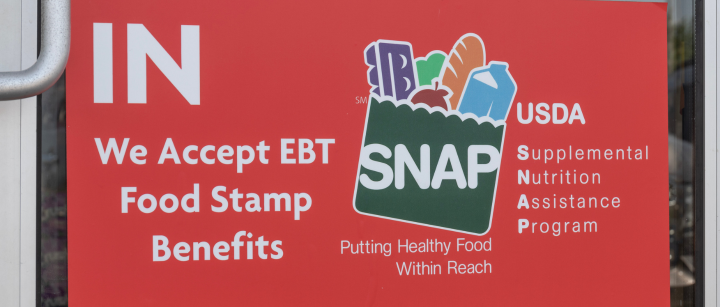
As the specter of a federal government shutdown looms, debates rage over whether Supplemental Nutrition Assistance Program (SNAP) benefits—commonly called food stamps—will continue without interruption. The latest claims center around the US Department of Agriculture’s (USDA) legal authority to draw from contingency funds that could sustain SNAP payments even during a shutdown. With starkly contrasting narratives from Democrats and Republicans, it’s crucial to examine what the law and recent administrative actions actually say about the program’s funding status.

Legal Authority and Past Guidance on SNAP Contingency Funds

Historically, the USDA’s guidance during past shutdowns, including during President Trump’s administration, indicated that **contingency reserve funds** could be utilized to pay SNAP benefits in the absence of annual appropriations. Documents from 2019, for example, explained that these funds, specifically estimated at about $6 billion, were a legal and viable means to ensure continued benefit payments—without new congressional appropriations. Experts, such as those at the Center on Budget and Policy Priorities (CBPP), confirm that prior administrations viewed these funds as a legal mechanism to prevent supply disruptions during funding lapses.

  • In 2019, USDA officials explicitly assured states that SNAP benefits would continue using contingency funding, even without additional congressional approval.
  • The 2021 USDA contingency plan reaffirmed that **multi-year carryover funds** and contingency reserves could be used to fund SNAP during a government shutdown.

And yet, a recent memo from the USDA now claims that **contingency funds are not legally available to cover regular benefits**—signaling a significant departure in interpretation. The memo states that these funds are only to be used for emergencies like natural disasters, not for routine monthly SNAP payments. This shift in stance is at the heart of the ongoing controversy.

Contradictions and Political Dynamics: Did USDA Change Its Position?

Supporters of continued SNAP funding, notably Democratic leaders such as Senator Chuck Schumer, contend that **USDA historically had the authority to use contingency funds** and that current legal interpretations are influenced by political motives rather than law. Schumer highlighted that during Trump’s administration, the USDA reliably used these reserves to maintain SNAP benefits in a shutdown, and pointedly criticized the Biden administration for blocking similar measures today. Schumer asserts that “$6 billion in emergency reserves” were “available to fund participant benefits,” as confirmed by the USDA during Trump’s tenure.

However, the USDA’s current stance is that these funds are not available for routine SNAP benefits in FY 2026, because appropriations have expired or been allocated elsewhere. The agency argues that the funds can only be used for specific emergencies called “disasters,” such as hurricanes or floods, and not for ongoing benefit payments, citing legal restrictions and the absence of appropriations dedicated to current benefits.

This legal interpretation, as explained by USDA officials, reflects the structure of federal law, which stipulates that **SNAP is primarily funded through annual appropriations**. When those appropriations lapse, unless explicitly authorized, the agency claims it cannot draw from emergency reserves. Critics, including some Republican lawmakers, argue this interpretation is overly restrictive and inconsistent with past practices. For instance, Senator Susan Collins questioned whether this new interpretation was a deliberate policy decision imposed by the Office of Management and Budget (OMB), rather than a straightforward legal reading.

Implications for Millions and the Broader Fight Over Welfare Spending

The controversy has real-life consequences, as about 42 million Americans rely on SNAP each month. Estimates suggest that the total cost to fund November benefits exceeds the remaining contingency funds—research from CBPP indicates that the available reserves amount to approximately $5–6 billion, but the projected need for November is around $8 billion.

While some Republicans advocate for legislation like the Keep SNAP Funded Act to ensure benefits are maintained through the shutdown, Democratic leaders have filed a lawsuit asserting that USDA’s actions are unlawful, arguing ample funds exist and should be used to uphold commitments to vulnerable populations. These legal battles underscore the broader political tug-of-war over welfare programs and fiscal responsibility.

Conclusion: The Crucial Role of Truth in Democracy

Ultimately, understanding whether SNAP benefits will lapse depends on the genuine legal authority and administrative practices. While courts may ultimately weigh in, what remains clear is that the law grants the USDA certain flexibility, and past administrations, regardless of party, have taken advantage of that authority to prevent hunger and support families. Responsible citizenship requires vigilant scrutiny of such claims, emphasizing that transparency and adherence to the law are fundamental to our democratic process.

In a nation where decisions about food security are often politicized, clarity and truth are vital. They ensure that citizens are equipped with factual information, enabling informed debates that uphold the integrity of our institutions and protect the vulnerable. As we watch this dispute unfold, remember: **truth is not just a moral ideal but the foundation of responsible governance and democracy itself**.

Fact-Check: Claims Linking AI to Job Loss Are Misleading

Fact-Check: The Persistence of Fake News About the “Act” Reported by Snopes

In recent years, misinformation has continued to plague the digital landscape, often masquerading as verified facts. Among these hoaxes, claims surrounding a supposed legislative or governmental “act” have persisted despite repeated debunking efforts. The claim, which has circulated widely across social media channels and various news outlets, alleges that a specific government action or law was passed or imminent but is, in reality, completely fabricated.

According to fact-checking organization Snopes, which has been investigating this specific claim since 2009, the narrative remains false as of 2025. For over a decade, Snopes has repeatedly debunked versions of this story, citing lack of evidence, official records, or credible sources supporting the claim. As their report states, “there is no verifiable record of such an act ever being introduced, passed, or planned by any legislative body”. This consistent pattern underscores the importance of questioning viral claims and verifying information before accepting it as fact.

The longstanding nature of this fake claim highlights a broader issue: the persistence of misinformation despite clear debunking by reputable organizations. Organizations like Snopes, FactCheck.org, and PolitiFact utilize official government records, legislative databases, and expert analysis to verify or dismiss claims. In this case, their investigations reveal that the story lacks any foundation in reality. Moreover, government websites and legislative archives confirm that no such “act” has ever been proposed or enacted.

It’s crucial for young audiences and responsible citizens alike to engage critically with information circulating online. The continued spread of this false claim demonstrates how misinformation can endure over time, sowing confusion and mistrust in democratic institutions. Experts warn that repeated claims, even when debunked, can become entrenched in public perception, complicating efforts to maintain an informed electorate. As Dr. Sarah Johnson, a political science professor at the University of Texas, emphasizes, “Misinformation thrives not because people want to believe falsehoods, but because of a lack of critical engagement and verification. It’s essential to consult multiple, trustworthy sources.”

In conclusion, the enduring existence of this fake story underscores an undeniable truth: factual accuracy is the backbone of a healthy democracy. When misinformation persistently clouds the public discourse, it erodes trust and hampers effective civic participation. Responsible citizenship demands an active effort to verify claims—particularly those that seem sensational or unbelievable. Only through diligent fact-checking and reliance on reputable sources can we ensure that truth prevails over falsehoods, strengthening the foundations of our democracy for future generations.

Social Media Auto Publish Powered By : XYZScripts.com