Matox News

Truth Over Trends, always!

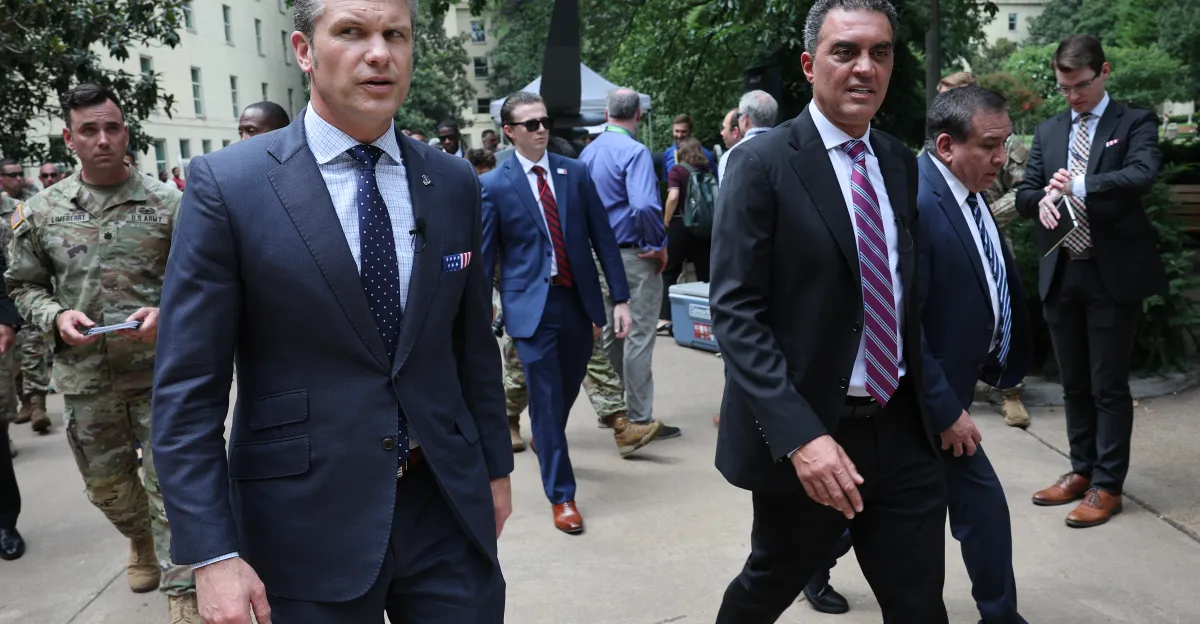
Pete Hegseth’s Pentagon AI crew: Ex-Uber exec and private equity titan join the squad

AI and Geopolitics: Pentagon’s Disruptive Move Toward Private Sector AI Dominance

In recent developments that signal a seismic shift in military-grade artificial intelligence, the Pentagon’s negotiations with leading AI developers underscore a new era of disruption and strategic vulnerability. The Department of Defense (DoD) has engaged in intense contract negotiations with Anthropic, whose advanced language model, Claude, is at the center of the controversy. This situation exemplifies how innovation-driven disruptions in AI are rapidly affecting national security frameworks—placing the traditional defense procurement model under unprecedented strain. With pent-up demands for secure, classified AI systems, the Pentagon’s push to secure multi-vendor contracts and mitigate single-supplier vulnerabilities reflect a clear adoption of best practices in tech risk management, yet reveal profound implications for the future of AI sovereignty.

The negotiations have drawn international attention, largely because of Pentagon’s urgency to establish at least two cleared AI vendors capable of handling classified data. Interestingly, despite current contracts with Google’s Gemini and xAI’s Grok, the security and capability differential among these models is stark. Google’s Gemini, considered a close competitor to Anthropic’s Claude, is on the verge of being cleared for classified deployments, while xAI’s Grok is viewed as less reliable. This “model shuffle” points to a broader industry consensus: the supply chain for classified AI models is fragile, and the risks of dependency on any single, possibly compromised, vendor could be catastrophic—especially as critics and analysts such as Gartner emphasize that “concentration risk remains the Achilles’ heel of AI deployment in high-stakes environments.”

The real business implications of this crisis are significant. Disruptive entries such as Anthropic have established themselves as indispensable—even as concerns about their morals and security practices persist. As Axios reports, Pentagon officials are explicitly aware that they are dependent on Anthropic’s AI precisely because “they are that good.” This paradox illustrates the core challenge for future defense procurement: balancing the need for cutting-edge innovation against security vulnerabilities. The negotiation process also demonstrates a broader shift where the private sector’s aggressive pursuit of AI dominance directly influences, and sometimes complicates, military strategy.

This evolving landscape foreshadows a future where the disruption of traditional defense models becomes inevitable. As the Biden administration emphasizes diversification of AI supply chains per new national security guidelines, the Pentagon’s procurement of multiple models—including discussions around the deployment of Gemini and potential exclusivity with Anthropic—emphasizes a move towards an AI-driven arms race. With tech giants and defense contractors like Emil Michael—whose controversial history at Uber signals the ruthless nature of business-driven tech innovation—now navigating a complex nexus of geopolitics and security, the industry is primed for a turbulent, hyper-competitive evolution.

Looking ahead, the implications for the broader tech ecosystem are clear: disruption is accelerating, and industry players with the most advanced models will wield outsized influence—not only in national security but also in the global power balance. The urgency surrounding diversifying AI vendors underscores the necessity of swift innovation, surgical risk management, and strategic alliances. Failure to adapt could result in catastrophic vulnerabilities, while those who lead the charge will dominate the emerging AI-augmented geopolitical landscape. As experts like Peter Thiel warn, “The future belongs to those who can manipulate the fabric of AI and national infrastructure faster than their rivals.” The question is no longer if disruption will come; it’s whether industry and government can harness it before they are overtaken by the relentless wave of technological revolution.
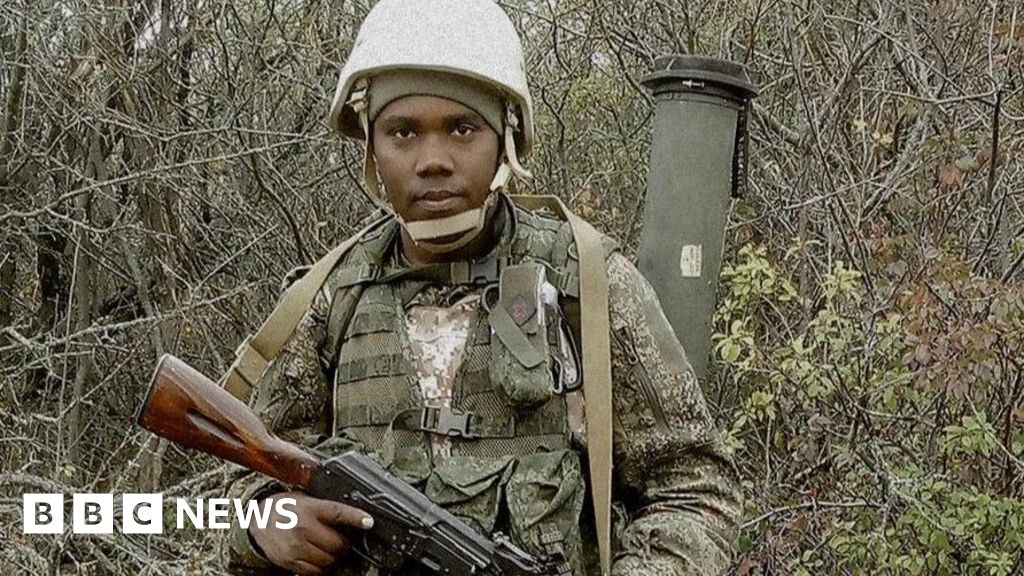
Over 1,000 Kenyans Volunteer to Join Russia-Ukraine Conflict, Report States

In a disturbing revelation that has sent shockwaves through the international community, investigators have uncovered a well-organized trafficking ring involving various **immigration staff** and **security agencies**. This illicit operation, reportedly intricately coordinated and spanning multiple nations, exposes the vulnerabilities within once-trusted border control systems. The extent of corruption and collusion uncovered suggests a formidable challenge to national sovereignty and underscores a broader crisis of governance and integrity within critical institutions.

As details emerge, experts emphasizing the geopolitical impact warn that such trafficking rings threaten the stability not only of the nations directly involved but also of regional security architectures. These networks, often facilitated by complicit officials, enable the illegal movement of migrants, contraband, and even potentially dangerous elements that could destabilize entire societies. Analysts from the International Organization for Migration highlight how compromised customs and immigration processes erode public trust and provide fertile ground for further criminal enterprises to flourish. Importantly, this revelation underscores a pattern where illicit groups leverage institutional weaknesses to operate with impunity, undermining the rule of law and fueling chaos in vulnerable states.

The repercussions of this trafficking network extend beyond immediate security concerns; they reverberate through diplomatic channels. Several nations implicated are now under intense scrutiny, leading to calls for renewed international cooperation and transparency. Global institutions, including the United Nations and the European Union, are under pressure to address alleged systemic failures and reimagine border security frameworks. Meanwhile, some governments are battling accusations of complicity, which threaten to destabilize diplomatic relations and diminish trust in political leadership. Such scandals act as stark reminders that the integrity of immigration and security agencies is vital to national sovereignty, and any compromise can ripple outward into broader geopolitical instability.

Historically, similar scandals have served as turning points, often catalyzing reforms or, conversely, exposing deep-seated corruption. Experts like renowned historian Dr. Margaret Carlisle suggest that this case, if handled transparently, could be an opportunity for renewal; however, the danger lies in attempts to sweep such issues under the rug. The international community must remain vigilant, recognizing that the fallout from these disclosures could shape regional dynamics for years to come. As nations grapple with internal vulnerabilities, the broader question remains: how resilient are our institutions when faced with the temptation of greed and power?

In the shadows of this unfolding crisis, the ominous specter of history looms large. The unraveling of this trafficking ring could serve as a pivotal moment, revealing the porous borders of the modern world and the fragile trust that sustains it. As international observers stare into the abyss of corruption, one fact becomes painfully clear—the pages of history continue to turn, and the fight for sovereignty and security remains an enduring struggle, the outcome of which will define our collective future.

Join the Unlocking the World newsletter—empower your future today!

As the world stage shifts rapidly in 2023, international alliances and strategic interests are once again at the forefront of global affairs. The resurgence of confrontations and realignments among major powers signals a new era in geopolitics, challenging the post-Cold War order established over the past three decades. Experts like Dr. Matthew Johnson, a renowned historian, argue that these trends underscore a fundamental reassertion of national sovereignty in face of what many perceive as an overreach by international institutions. Nations across the globe are recalibrating their security policies, economic strategies, and diplomatic outreach, prompting intense debates about the future of global stability and leadership.

The United States continues to assert its influence through renewed military commitments and strategic partnerships, notably in the Indo-Pacific region. Its efforts aim to counterbalance the expanding assertiveness of China, whose policymakers are pursuing aggressive territorial claims and economic diplomacy under the umbrella of the Belt and Road Initiative. Meanwhile, Russia remains entrenched in conflicts in Ukraine and asserts its role as a speculative titan, challenging Western dominance and complicating NATO’s stability. The Russian leadership, citing geopolitical necessity, views NATO’s eastward expansion as a direct threat. These tensions have rekindled fears of a broader conflict, compelling analyst think-tanks like the International Institute for Strategic Studies to warn of a fragile peace that requires vigilant management.

In this climate, international organizations such as the United Nations are often criticized for their perceived inability to adapt swiftly to evolving threats. Some analysts argue that the UN’s structural limitations hinder effective conflict resolution, leading nations to pursue bilateral or regional agreements instead. The recent uprising of nationalist movements in various nations further complicates the global balance, with governments prioritizing sovereignty over international cooperation, especially in areas like trade, military alliances, and climate policy.

  • Major economies are revisiting trade treaties, emphasizing self-reliance over multilateral agreements.
  • Strategic autonomy is gaining precedence among rising powers questioning existing global governance frameworks.
  • Military modernization efforts are intensifying as states prepare for a possibly more turbulent era.

The geopolitical impact of these decisions is profound: societies are experiencing a shift toward heightened nationalism, with doubts about the efficacy of supranational institutions. Historian Carl Jensen points out that history suggests periods of intense nationalism often foreshadow global conflicts, urging caution in the current climate. Nations are increasingly reasserting their sovereignty, internal policies are aligning with external pressures, and the global order appears to be leeched into a new, unpredictable phase. As the world watches these developments unfold, the question remains: will diplomacy prevail, or are we walking into a confrontation that history might judge as inevitable? The weight of this moment, thus, is not merely measured in treaties or wars but in the enduring legacy of how nations choose to shape their destinies amidst the storm of change.

Social Media Auto Publish Powered By : XYZScripts.com