Matox News

Truth Over Trends, always!

Australia News Live: Cash urges PM to condemn Chinese jet clash; Joyce grilled over One Nation shift

In a world continually edging closer to a new era of confrontation and uncertainty, recent developments underscore the volatile geopolitical landscape. From tense military encounters in the South China Sea to political maneuvering in Australia, the global stage is rife with flashpoints that threaten to ignite larger conflicts. Analysts warn that these incidents are more than isolated events—they reflect a broader strategic contest involving China, the United States, and regional powers, with international institutions often unable—or unwilling—to prevent deterioration.

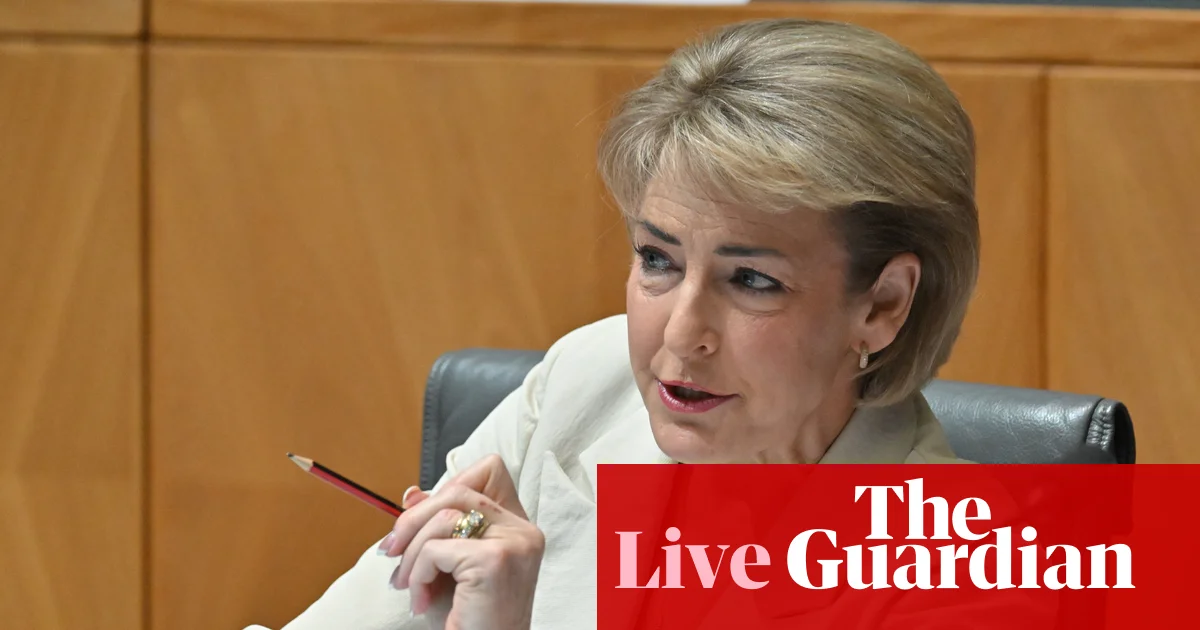
The incident that has drawn significant international attention occurred over the South China Sea, where reports emerged of a Chinese fighter jet releasing flares dangerously close to an Australian surveillance aircraft. Michaelia Cash, Australia’s shadow foreign affairs spokesperson, condemned the act as a “serious escalation” that endangers the lives of Australian defense personnel. The incident marks the third provocation within a year, highlighting China’s provocative posture as it seeks to assert dominance in the strategic maritime region. In response, Cash called upon Prime Minister Anthony Albanese to publicly condemn the action, warning that failure to do so would be a “failure to stand up for Australia’s national interests.” These provocative maneuvers expose a pattern of Chinese military assertiveness that complicates diplomatic efforts and deepens regional tensions.

Meanwhile, within Australia, political dynamics are heating up as key figures like Barnaby Joyce and David Littleproud navigate complex intra-party relationships, with indications of potential shifts towards One Nation. Joyce, the member for New England, remains notably reticent about his political future amid rumors of defecting to the far-right party. Such moves could have profound geopolitical impact by emboldening nationalist sentiments and possibly altering Australia’s traditionally close alignment with the US on defense and foreign policy issues. The political realignments mirror a global trend where nationalist and populist movements threaten to undermine established diplomatic alliances and multilateral efforts to maintain regional stability.

Simultaneously, tensions extend beyond the Pacific with U.S. President Donald Trump and Australian Prime Minister Anthony Albanese engaging in a high-profile meeting at the White House. The visit saw the signing of a significant minerals and strategic partnership deal, signaling a pivot towards greater resource-driven cooperation. However, the broader message remains clouded by diplomatic undercurrents and the looming threat of military escalation. Historian and international security analyst Dr. Richard Martin notes that “these developments are indicative of a world where traditional power balances are shifting rapidly. The risk of miscalculation grows as nations test the limits of their strategic patience.” The risk of misunderstandings escalating into open conflict is heightened as superpowers and regional actors seek to secure their spheres of influence amid weakened international institutions.

As the world’s superpowers jostle for dominance, the flashes of military bravado, political confessions, and international diplomacy reveal a fragile geopolitical order. With Great Power dynamics on a knife’s edge, and regional allies watching nervously, the ongoing story remains one of tension—and opportunity—for those daring enough to shape it. The weight of history is pressing down, reminding us that every decision today writes the prelude to future conflicts. The question remains: how many more incidents of provocation and political upheaval can the global system withstand before shaping a new chapter—one written in the aftermath of chaos, or in the hope of a measured peace? The pages are still being turned; the unfolding drama continues to test humanity’s resolve and strategic wisdom.


David Littleproud calls on Barnaby Joyce to stick with the Nationals amid One Nation talk

Australia’s Political Turmoil and Its U.S.-China Geopolitical Ripple Effects

In the turbulent landscape of Australian politics, recent developments signal more than just domestic party disputes; they echo across the Indo-Pacific and beyond. The departure of Barnaby Joyce, a senior figure in the Nationals, from formal party ties, alongside escalating tensions within the Coalition, underscores a broader realignment that could reshape regional alliances. As Joyce considers a switch to Pauline Hanson’s One Nation, experts warn of the potential disruption this could cause not only to Australia’s internal politics but also to its strategic position amid rising U.S.-China tensions.

While initial reactions focused on the political implications within Australia, international analysts increasingly recognize that such shifts hold significant implications for regional stability. The escalation comes at a time when U.S.-Australia alliances are being tested, particularly as China consolidates economic influence within the Pacific and Southeast Asia. The internal discord over issues like climate policy—with figures like Joyce challenging the Coalition’s stance on net-zero emissions—may seem isolated, but they form part of a larger pattern of divide-and-conquer tactics that could weaken Australia’s strategic cohesion. Such internal divisions could be exploited by China to further undermine Western influence across the Indo-Pacific, a scenario decried by scholars like Professor Hugh White of Australian National University as a potential pathway to ‘strategic decay.’

The U.S. State Department and Australian foreign policy analysts observe that these internal conflicts might diminish Australia’s capacity to assert leadership or sustain a unified front amid regional power struggles. Historically, alliances are tested when middle powers face internal fractures, which is precisely what some see unfolding. The potential shift of Joyce to One Nation offers a warning sign to allies—how internal party politics can spill over into international strategy. If regional stability is to be preserved, Australian authorities must navigate these internal tensions carefully, lest they serve as a foothold for greater Chinese influence in the Indo-Pacific.

In a broader geopolitical context, the Australian scenario highlights how decisions within national parties are intertwined with global power shifts. The international community watches as internal political disputes threaten the integrity of what has been regarded as a strategic anchor in the Indo-Pacific region. The unpredictable nature of these shifts leaves many contemplating the **fragile balance of power**—where internal discord could become the catalyst for larger geopolitical upheavals. As historians remind us, the pages of history are often written when nations face internal crises that bear the imprint of greater international consequences, and Australia’s current political realignment is no exception. The weight of history remains heavy, as the unfolding narrative continues to shape the future of a region critical to global stability.

Australia News: Nationals Back Joyce — Anti-Immigration Rallies Face Counter-Protests

As the world witnesses rapid geopolitical shifts, Australia finds itself navigating an increasingly complex landscape shaped by internal political shifts and external international pressures. The recent turmoil within the National Party, marked by Barnaby Joyce‘s announcement to leave the party and potentially join One Nation, underscores a broader trend of political realignment and nationalist sentiment sweeping across nations. Analysts suggest that such departures threaten the cohesion of coalition governments and could alter Australia’s influence within regional and global spheres. Meanwhile, former PM John Howard has stirred controversy by claiming that he’s “never met a multicultural person,” highlighting a troubling shift away from Australia’s multicultural identity and risking increased ethnic divides in an already tense social climate.

Meanwhile, in Washington, Prime Minister Anthony Albanese prepares for a historic meeting with Donald Trump, symbolizing Australia’s delicate balancing act between its traditional alliances and emerging global power struggles. This high-stakes diplomatic engagement comes amid protests across Australia, both in support of and against immigration policies, reflecting a nation in ideological flux. Throughout the domestic landscape, debates over immigration, multiculturalism, and national identity are fueling social divides that are increasingly being exploited by political actors on both sides of the spectrum. As one historian warns, the choices Australia makes now will shape its societal fabric and geopolitical influence for generations to come.

  • Internal political instability with Joyce’s departure and potential party realignment threaten coalition stability, impacting national policymaking and regional influence.
  • External, Australia’s relationship with key allies like the U.S. is under scrutiny as the PM prepares for pivotal meetings that could redefine trans-Pacific alliances.
  • Societal tensions stemming from immigration debates threaten to undo decades of multicultural integration, risking backlash and social fragmentation.

Experts from international organizations warn that such internal and external upheavals are more than mere political skirmishes—they are *turning points* that will determine Australia’s geopolitical posture in an era characterized by shifting alliances and rising Asian powers. The domestic turbulence over figures like Joyce, backed by social movements rallying in response to immigration policies, mirrors broader global trends where nationalism and populism threaten to erode the foundations of liberal democracy. As this unfolding drama continues, historians caution that the decisions made today will echo through history, influencing whether Australia will emerge stronger as a united, multicultural society or divided along ideological lines.

The Weight of History Unfolds

In the shadow of these dramatic political and international developments, the global community watches with bated breath. The decisions that Australia faces—balancing national interest with social cohesion, and alliance commitments with regional ambitions—are emblematic of a world in flux. No matter the outcome, the narrative is being written in real-time, a chapter of history where every move could tilt the balance of power, ignite societal conflict, or forge a new direction for this island continent. The weight of history is undeniable, and as the story continues to unfold, only time will reveal whether these bold choices will cement Australia’s role as a resilient democracy or lead it down a path of division and decline.

Social Media Auto Publish Powered By : XYZScripts.com