
Matox News

Truth Over Trends, always!

Opposition Slams Labor’s Secretive FoI Changes, Charges Fees to Silence Youth Transparency Movements

In what could mark a significant shift in Australia’s democratic landscape, the Albanese government has proposed a controversial overhaul of its Freedom of Information (FoI) regime. The proposed legislation aims to introduce fees for FoI requests, significantly reduce the scope of accessible documents, and impose strict processing time limits. Critics warn that these changes threaten the very foundation of accountability, echoing fears that secrecy will supersede transparency. Despite the government’s assurances that the reforms target frivolous and AI-generated requests, opposition and crossbench senators depict the plan as an erosion of citizens’ rights and a step toward government opacity.

Led by a Labor-dominated Senate inquiry, proponents argue that the measures are necessary to curb unwarranted demands on public resources and shield sensitive policy discussions from undue exposure. The amendments include a transfer from the current 30-day response window to a more restrictive business days timeline, along with a 40-hour cap on processing individual requests. These provisions, aimed at streamlining bureaucratic procedures, are met with skepticism by opposition voices who contend that the real impact will be a decline in government transparency and an increase in administrative barriers for citizens seeking information. Increasingly, international observers look at Australia’s evolving foi policy in the context of a broader global trend—governments tightening control over information to defend national interests, whilst critics warn of safeguarding elitist privileges at the expense of public accountability.

Historians and analysts warn that such moves are not isolated but part of a broader, pattern of democratic backsliding observed across Western nations. According to the International Transparency Agency and key political analysts, the current push can be understood as an attempt by governments to regulate the flow of information in an era dominated by AI and digital manipulation. The United States and United Kingdom, for instance, have enacted similar restrictions amid concerns over data overload and misinformation. Critics argue that these policies serve to fortify political control, marginalize investigative journalism, and impede the public’s right to scrutinize power structures. As opposition voices warn of a “dysfunctional and broken” FoI landscape, a report by the Office of the Australian Information Commissioner highlights the overreach of current limitations, emphasizing the need for reform that balances transparency with security. Yet, the real risk remains—how long before these carefully crafted restrictions morph into a shield for corruption and abuse of power?

As Australia’s legislative drama unfolds, the question extends beyond national borders: what does this mean for global democracy? Will other nations follow suit, trading transparency for security in a world increasingly tense and divided? The debate echoes through halls of power, with some warning that history is repeating itself—where the suppression of information signals the ascent of authoritarian tendencies cloaked as protective measures. The outcome of this legislative battle could set a precedent—either reaffirming the enduring right to information or sealing a future where the populace remains blindfolded to the machinations of their leaders. As the dust settles, the weight of history presses heavily upon the present—reminding us that the fight for transparency is not just national, but a universal struggle for the soul of democracy itself.

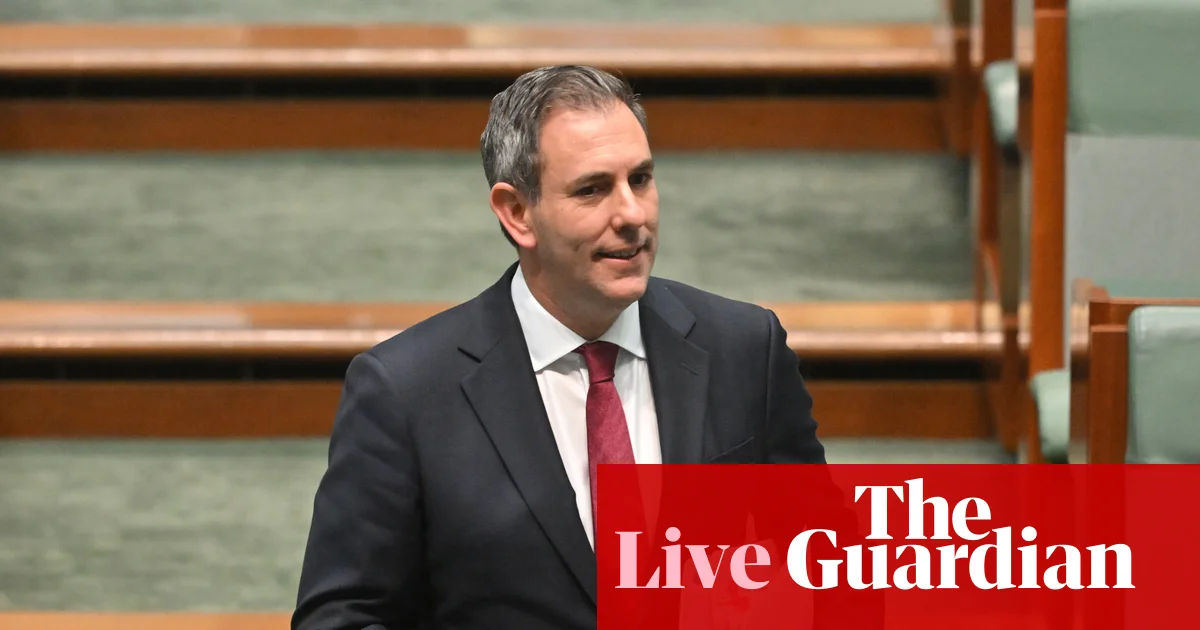
Minister to Keep Final Say on Controversial Projects as Labor’s Nature Laws Stay Put

Australia’s Environmental Legal Reforms: A Reflection of Global Power Dynamics

The announcement surrounding Australia’s new federal environmental laws underscores a pivotal moment in the nation’s journey to balance economic growth with ecological stewardship. Under the leadership of Environment Minister Murray Watt, the revised Environment Protection and Biodiversity Conservation (EPBC) Act aims to redefine project approval processes, yet it retains crucial ministerial decision-making authority. This approach, favored by Labor, the Coalition, and industry stakeholders, has sparked fierce debate among environmental advocates. Critics argue that this model could inherently allow vested interests—particularly big business and mining conglomerates—to exert undue influence on environmental outcomes, raising concerns about the integrity of Australia’s ecological safeguards.

The decision to keep the environment minister as the ultimate arbiter in project approvals marks a nuanced resolution that reflects Australia’s strategic geopolitical stance—favoring pragmatic leadership that appeals to economic pragmatism and industry interests. By maintaining ministerial discretion rather than establishing a fully independent oversight body, the government signals a desire to avoid judicial paralysis and facilitate quicker project approvals, especially for resource-intensive developments. Historian and political analyst Dr. Jonathan Mead notes that such decisions often trade environmental transparency for national economic interests, aligning with a broader pattern observed in resource-rich democracies grappling with their global image. However, international organizations warn that such self-regulation could undermine Australia’s commitments to climate change mitigation, especially as global pressure mounts for transparent environmental governance.

The recent legal amendments also introduce a new entity, the National Environment Protection Agency (NEPA), designed to monitor compliance and enforce laws independently from direct ministerial influence. While advocates like Environment Minister Watt emphasize NEPA’s enhanced enforcement powers, critics—including the Australian Conservation Foundation—remain skeptical. They argue that without full independence, NEPA risks becoming an administrative extension of government rather than an impartial watchdog. The Greens’ environment spokesperson, Sarah Hanson-Young, warns that the proposed model could devolve into “another branch of government bureaucracy,” lacking the teeth needed to effectively challenge powerful industrial actors. This debate underscores a critical connection to how decisions at the national level ripple across society—potentially marginalizing indigenous communities, rural populations, and environmental concerns in favor of economic expediency.

Globally, Australia’s moves resonate with similar shifts in resource policies observed among major powers—including the United States and China. While the Green New Deal in the U.S. advocates for robust independent agencies to guard environmental integrity, bipartisan gridlock often hampers progress. Conversely, China employs top-down state control to rapidly develop its resource sectors, often at environmental and social costs. As international analysts observe, the Australia case exemplifies a broader struggle: nations contending with the dual pressures of economic development and environmental sustainability, all within a geopolitical landscape marked by competition and cooperation.

As history continues to unfold, Australia’s legislative choices serve as a potent reminder of how national policies embody the geopolitical ambitions of controlling actors—balancing the allure of resource wealth against the weight of environmental responsibility. While the world watches and critics warn of the perils of compromised integrity, Australia stands at a crossroads—its future ecological legacy intertwined with questions of sovereignty, influence, and the true cost of progress. The pages of history remain unwritten, but the echoes of these decisions will reverberate through generations to come—a testament to the enduring struggle to forge a sustainable path amid global uncertainty.

Australia Update: Labor’s First Deficit Lower Than Expected; Rescued Sailors’ Miraculous Return

In a year marked by significant domestic fiscal developments and widespread technological disruptions, the international landscape continues to pivot around pivotal decisions made within nation-states. Although the recent Australia budget report reveals a better-than-forecasted outcome—still in the red by $10 billion—these economic figures, driven by a buoyant labor market, exemplify **how** national fiscal policies can influence global perceptions of stability. Meanwhile, the country grapples with recurrent outages in its critical emergency infrastructure, notably the persistent failures in the Optus triple-zero network, which is under scrutiny by the government’s regulators. Such incidents underscore the interconnectedness of **public safety** and **technological resilience**, with the potential to unsettle societal trust across alliances and markets alike.

Across the Atlantic, the UK is witnessing a remarkable diplomatic evolution, as Sir Keir Starmer lauds the leadership of Anthony Albanese in Australia, emphasizing “our Aukus partnership” and mutual commitment to security and economic growth. Parallel to this, Albanese’s speech at the UK Labour conference underscores a shared vision: **tough, principled governance in times of global turbulence**. Analysts argue that such international relations—centered on strategic collaborations—are designed to **counterbalance** China’s rising influence and maintain a **multipolar world order**. Yet, the warnings from historians point to the fragility of these alliances, highlighting that **how** nations navigate internal upheavals often shapes **their overseas stature** more than diplomatic gestures alone.

In the realm of international crises, the recent rescue of two sailors off NSW shores exemplifies resilience through human determination amidst recent failures. Their ordeal, mitigated by **volunteer efforts and emergency services**, occurs against a backdrop of ongoing issues in national telecommunications—demonstrated by Optus’ *recurrent outages*—which threaten public safety and economic stability. These disruptions take on a geopolitical dimension by revealing vulnerabilities in critical infrastructure, which both national security experts and global watchdogs warn could be exploited by malicious actors. As Australia reassesses its emergency response systems, the decision to invest in more resilient technology reflects a broader worldwide imperative: society’s reliance on interconnected systems is deepening, demanding **robust policies** that **preserve stability** in turbulent times.

As history continues to unfold, these domestic decisions—be it fiscal reform, technological resilience, or diplomatic partnerships—do not exist in isolation. Instead, they are **weighed** against the **weight of history and the unpredictable tides of global power politics**. Nations like Australia and the UK serve as **case studies**, illustrating how internal struggles and external alliances can either bolster or weaken their stature on the international stage. In an era where every policy ripple can trigger a far-reaching wave, the cinemascape of the future remains under construction—**a testament to the enduring complexity of shaping a course through the storms of history**.

Social Media Auto Publish Powered By : XYZScripts.com



