
Matox News

Truth Over Trends, always!

Labour's Tim Allan, Keir Starmer’s top strategist, steps down
Labour’s Tim Allan, Keir Starmer’s top strategist, steps down

Recent developments within United Kingdom political circles signal a tumultuous period that could reshape not only domestic governance but also influence legacy international alignments. The resignation of Tim Allan, the director of communications for Prime Minister Keir Starmer, after only five months underscores internal power struggles and mounting discontent at the highest levels of government. His departure, coupled with the recent resignation of Morgan McSweeney, the chief of staff, reflects a broader crisis of confidence and uncertainty enveloping the current leadership. These upheavals come at a time when the UK is navigating complex global terrains, especially in its relations with the United States and wider NATO alliances.

This political disarray coincides with a scandal that threatens to undercut Starmer’s credibility: the controversial appointment of Peter Mandelson as ambassador to Washington. Critics, including prominent historians and international analysts, point to Mandelson’s notorious associations, including links to the convicted Jeffrey Epstein. The decision has ignited furious debates over accountability, transparency, and how foreign policy decisions are made behind closed doors. In particular, it raises questions regarding the responsibilities of diplomats in safeguarding national reputation and the potential impact of such scandals on UKAmerica relations, especially amid intensifying geopolitical tensions.

On the international front, these internal disturbances are emblematic of a broader shift in global power dynamics, with China and Russia increasingly asserting their influence. Analysts warn that internal instability within Western nations, including the UK, could weaken their stance in ongoing conflicts and diplomatic negotiations. Organizations such as the International Crisis Group have pointed out that political fractures in key allies threaten to undermine coordinated responses to pressing crises, from Eastern Europe to the Indo-Pacific. European nations, observing these developments, brace for potential repercussions—ranging from diminished alliance cohesion to shifts in the balance of global influence—decisions that will echo through history’s unfolding chapters.

As Britain grapples with its internal struggles and controversial international appointments, the overarching narrative remains clear: the decisions made today will either fortify or fracture a delicate geopolitical landscape. The weight of history presses heavily on these fleeting moments; each crisis, scandal, and reshuffle signals not merely a moment in time but the potential redefinition of alliances and power structures. As the world watches, the question persists—will these internal upheavals serve as a catalyst for renewed strength, or will they herald a period of decline and disarray that shapes the global order for generations to come?
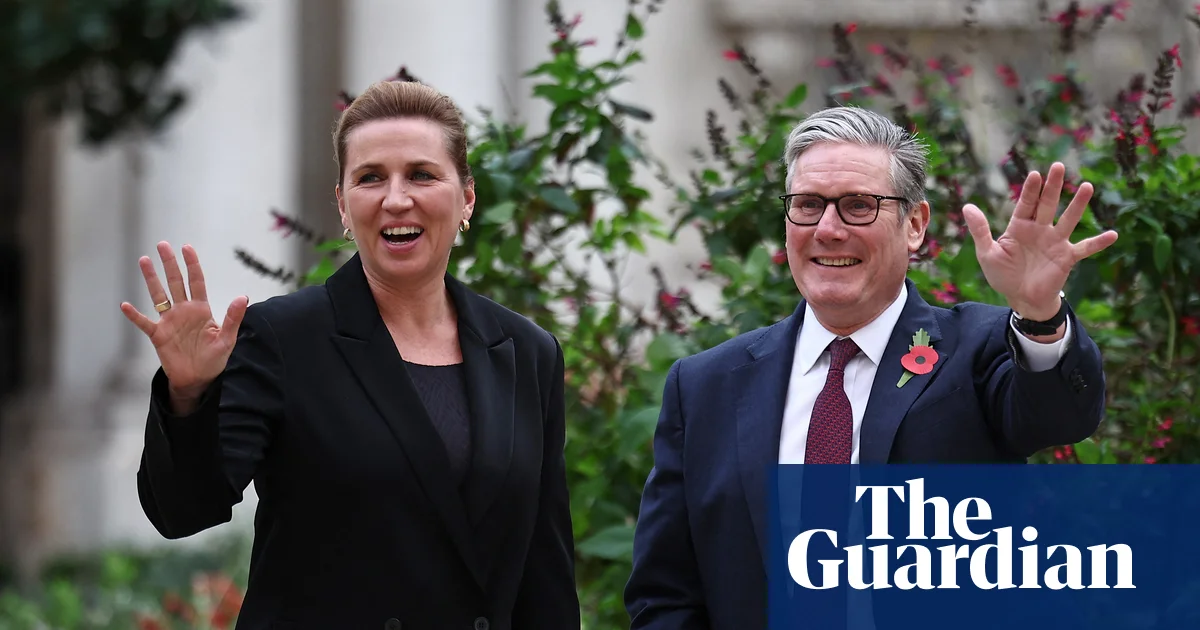

Why Labour's Turning Danish on Immigration — Podcast
Why Labour’s Turning Danish on Immigration — Podcast

The United Kingdom appears poised to follow the controversial footsteps of Denmark in overhauling its immigration and asylum policies. The imminent announcement by Home Secretary Shabana Mahmood signals a shift towards stringent measures reflecting recent Danish reforms, which have sparked intense debate across Europe. Since 2019, Denmark‘s government, under a center-left banner, has devolved from traditional social democratic ideals to adopt radically restrictive policies, aiming to diminish what they perceive as burdens on their social fabric. This includes not only tightening border controls but also, controversially, bulldozing settlements with high concentrations of residents of “non-western” descent—a move that has polarized both domestic and international opinion.

Major dialogues surrounding Denmark’s approach, as explored in interviews between Helen Pidd and Nilas Heinskou of Politiken, reveal that these policies are rooted in a desire to curb what some officials describe as cultural and social strain. However, critics, including Syrian refugee Agob Yacoub, highlight a disturbing climate of rising racism and Islamophobia embedded within Danish politics since these measures took hold. Analysts warn that such policies risk undermining principles of human rights, prompting international organizations like the European Union to scrutinize these shifts, raising questions about their compatibility with fundamental freedoms and the EU’s commitment to humane treatment and diversity.

The geopolitical impact of these developments extends far beyond Scandinavia. As the UK considers adopting similar approaches, the ramifications could ripple through Europe’s social, political, and security frameworks. Experts such as historians and political analysts argue that these policies reflect a broader trend of nationalist resurgence across Western nations, driven by fears of demographic change and economic strain. The move signifies a potent reset—one that challenges not only international law but also the long-held European values of multiculturalism and integration. As Britain navigates its post-Brexit identity, decisions on immigration policy will inevitably influence the country’s position on the world stage, shaping alliances and adversaries alike.

Ultimately, the story unfolding in London and Copenhagen is more than domestic policy—it is a harbinger of a changing global order. As nations grapple with internal pressures and external threats, the choices made today will linger in history’s chronicles. Will they forge resilient societies built on inclusion, or will they fracture along lines of ethnicity and ideology? History quietly watches, waiting to record whether these policies will serve as catalysts for renewal or catalysts of division—the weight of this unprecedented chapter on the global stage remaining poised on the precipice of the future.

Thursday Briefing: Labour’s Bold Push to Redesign the National Curriculum

Global Power Shifts and National Crises: A Tipping Point in World Politics

Amid the rising tide of international upheaval, the geopolitical landscape is witnessing a series of profound shifts that threaten to redefine the global order. China, driven by its relentless pursuit of technological dominance, has publicly claimed its intention to surpass the United States in the AI race, as highlighted by Nvidia’s CEO Jensen Huang’s recent remarks. Such declarations signal an intensifying competition that is not only about economic supremacy but also about influence over emerging global standards. Analysts from institutions like the Council on Foreign Relations warn that if Western nations fail to adapt and loosen regulations that hinder innovation, they risk ceding technological leadership to Beijing, thereby affecting the international balance of power for generations to come.

This struggle for supremacy has critical implications for regional stability and international alliances. Meanwhile, Russia continues its strategic maneuvers, witnessing ongoing conflicts in the Ukraine that threaten to escalate further, and drawing in support from various nations that see this as a pivotal moment to challenge NATO’s influence. The conflict is not merely territorial but also ideological and economic, with the EU and the U.S. imposing sanctions while Russia seeks new alliances in Asia and Africa. Such realignments threaten the fragile stability of the international system, where economic sanctions and military posturing could spiral into larger forced reckonings.

The West’s Internal Struggles and the Evolving Global Order

Within this context of external threats, Western democracies confront their own crises, with deteriorating political climates and economic pressures exacerbating vulnerabilities. Britain’s ongoing mismanagement of justice exemplifies these internal challenges, as UK authorities grapple with the fallout from mistakes such as the wrongful release of prisoners, including dangerous offenders. This internal disorder weakens the societal fabric at a moment when cohesion is vital to face external adversaries. Furthermore, France faces its own upheaval, with the dramatic theft of €88m worth of crown jewels from the Louvre highlighting both security failures and the social undercurrents of unrest, fueled by inequality and political discontent.

Meanwhile, the European Union is watching closely, aware that if internal divisions deepen, the continent could become a secondary theater of global power tussles rather than a unified front. The United States, under pressure from both internal political polarization and international crises, risks losing its strategic edge if policy incoherence persists. The window of opportunity is closing for the West to recalibrate its approach, or it may find itself increasingly marginalized in the emerging global hierarchy. Thought leaders from institutions like the International Crisis Group warn that these internal cracks could leave Western societies vulnerable to authoritarian influences seeking to exploit discord.

A Future While the Present Unravels

History bears witness to the fact that these formative moments often come with sacrifices and upheaval. Governments are under intense pressure to adapt quickly, but real change takes time—a luxury that the precarious state of today’s world politics does not afford. With a timeline extending to 2029 for the reform of England’s educational system, and the next round of elections poised to influence policy directions, the decisions made now will echo through decades. As nations scramble to secure their futures, the weight of history presses hard upon the present—reminding us that the unfolding story of power, conflict, and resilience is far from over. In this relentless march of history, the choices of today may well determine whether the world remains a place of freedom and stability, or falls under a new shadow of dominance and chaos.

Labour’s Housing Double Standard: Nearly 200 Families Hit with No-Fault Evictions by Councils

International Ramifications of Domestic Housing Policies: The Hidden Geopolitical Impact

In an era marked by deepening geopolitical tensions and shifting alliances, the domestic policies of major nations continue to resonate far beyond their borders. Recently, a revealing investigation uncovered that Labour-run councils in the United Kingdom have exploited legal loopholes to issue nearly 200 no-fault eviction notices since the party’s rise to power, despite pledges to ban such practices. This internal contradiction underscores the complex relationship between political promises and institutional realities, casting a shadow over Labour’s commitment to protecting tenants. Yet, the implications extend well beyond the UK’s borders, demonstrating how confessional loopholes and bureaucratic evasion can weaken societal trust and undermine international credibility, especially when nations are judged on their human rights records.

Since the Labour government gained power, five of its councils have initiated no-fault eviction proceedings against 191 households—an unsettling development highlighting how domestic policy tools are often manipulated for broader political or economic gains. Cases such as Lambeth Council’s use of a publicly created company, Homes for Lambeth, reveal a troubling tactic: sidestepping existing protections by establishing arm’s-length entities to facilitate evictions under the guise of “housing management”. With each eviction, families like Jules Zakolska’s and Charlene Flygring’s are left traumatized and displaced, embodying the social cost of political expediency. Influential figures, including historians and policy analysts, warn that such practices serve to erode the foundational trust in governmental institutions—trust that is essential for maintaining social stability and international moral authority.

Simultaneously, other UK municipalities such as Reading, Blackpool, Nottingham, and Enfield have issued similar notices, revealing a pattern of local authorities prioritizing short-term political calculations over long-term societal stability. These actions are not isolated but form part of a broader narrative that questions the effectiveness of legislation aimed at protecting tenants. According to reports from independent organizations and human rights experts, these governments often justify such measures as “last resorts” or “necessary evils” in the face of economic turmoil and housing shortages. Analysts suggest that these tactics ultimately strengthen the geopolitical influence of authoritarian regimes through their ability to manipulate societal fears and instability—to sow discord domestically while projecting strength internationally.

At the same time, the international community watches closely. As Europe’s housing crisis worsens and global conflicts threaten to destabilize entire regions, decisions made within national borders take on increased significance. The World Bank and United Nations reiterate that respect for property rights and social protections is fundamental to securing economic stability and fostering diplomatic goodwill. The ongoing trend of bypassing or undermining legislation, whether through legal loopholes or bureaucratic maneuvering, sets dangerous precedents. The rising tide of eviction and displacement in the UK, an influential player on the global stage, symbolizes a potential shift toward authoritarian-style governance—where the rule of law becomes a tool for exclusion rather than protection. As history unfolds, the choices made in housing policy today could define the international order of tomorrow, with citizens and nations bearing the cost of neglect and betrayal.

Leaked Memo and Broken Promises: Labour’s Housing Betrayal Sparks Youth Discontent

In the heart of London, a city historically renowned for its resilience and diversity, an ongoing housing crisis exposes the profound social fissures that threaten the fabric of communities and families alike. Sociologists like David Harvey have long argued that urban development reflects underlying social inequalities, yet recent policies seem to deepen this divide. The government’s current approach, heavily influenced by big property developers and skewed priorities, appears to prioritize profits over the welfare of ordinary citizens. As a result, families are displaced, children grow up in overcrowded temporary shelters, and the very notion of community stability is fraying under economic and social strain.

Recent reports reveal a troubling pattern: during a period when London’s homelessness numbers are reaching unprecedented heights—over 13,000 people sleeping rough in 2024-25, quadrupling the figures from a decade ago—efforts to address affordable housing have been sidelined by policies favoring robust profits for developers. A leaked government memo indicates that key negotiations with major construction firms are centered on diluting commitments to social housing, and to relax planning rules that could make building modest, affordable homes financially unviable for those who need them most. This pivot toward prioritizing luxury developments and attractive profit margins over community needs underscores a troubling moral trajectory, one that threatens the social cohesion essential for stable families and thriving neighborhoods.

The social implications of these policies ripple through families and communities in tangible, often devastating ways. Children in London now face the harsh reality of growing up in temporary accommodations, often with little access to stable education or safe environments. For families pushed into overcrowded flats or forced to relocate far from their support networks, the psychological toll compounds existing economic hardships. Housing sociologists like Jane Jacobs emphasize that a strong, interconnected community hinges on accessible, affordable housing—yet current policy makers seem intent on reversing progress made under previous administrations, reminiscent of the housing policies of Boris Johnson that prioritized spectacle over social equity. As W. B. Yeats lamented, society often finds itself caught between the desire for progress and the peril of losing its moral compass—an especially poignant reflection as London’s social fabric faces this crisis.

Facing these UNIGNORABLE challenges, the hope for societal renewal lies in bold reforms that put families and community well-being front and center.

  • Implement legally binding targets to ensure a minimum of 50% affordable housing in new developments, backed by enforceable policies that penalize failures to meet these standards.
  • Reintroduce community levies that finance essential amenities—schools, healthcare, and parks—rather than siphoning off funds for private profit, fostering a sense of shared ownership and neighborhood pride.
  • Prioritize localized, community-led planning initiatives that involve tenants, local councils, and grassroots organizations, emphasizing social cohesion over speculative development.

Experts like social historian Eric Hobsbawm have pointed out that social progress is often crafted through collective resilience and moral clarity. As society grapples with these social issues, it is vital to remember that at its core, social reform is a moral imperative—an effort to preserve the dignity and potential of every family affected by these policies. The narrative of London—and indeed, society at large—cannot be solely written by profits and policies; it must be shaped by a shared sense of responsibility and hope. In the quiet corners of these struggling neighborhoods, amid the shadows cast by unchecked greed, lies the possibility of renewal—an unyielding hope that society can rebuild itself, not through empty promises but through unwavering commitment to its most vulnerable members. Only then can London truly rebuild a city on the foundation of fairness and human dignity.

Social Media Auto Publish Powered By : XYZScripts.com