Matox News

Truth Over Trends, always!

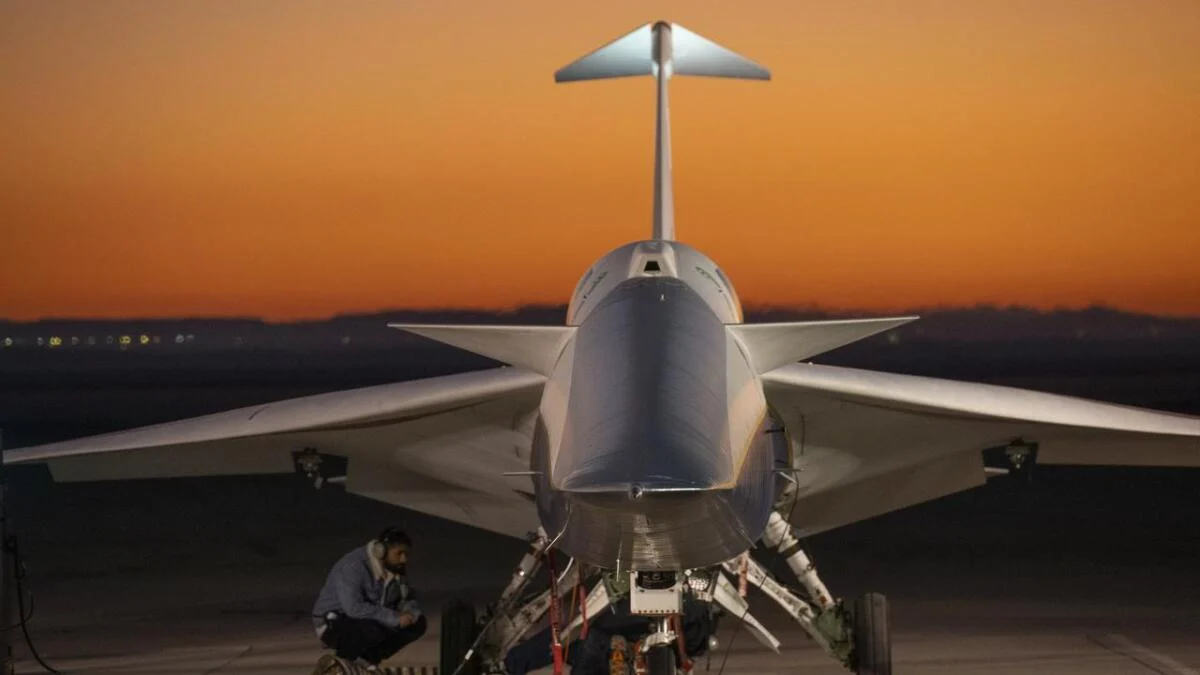
NASA’s Experimental Supersonic Jet Makes Surprising Early Landing Following System Warning

The Rise of Quiet Supersonic Flight: NASA’s X-59 and Its Cultural Impact

In an era where speed often symbolizes progress, NASA’s latest milestone with the X-59 supersonic jet signals a transformative shift in aerospace innovation—one centered not just on breaking barriers, but on redefining societal norms surrounding sound pollution. While the jet has only completed brief test flights—such as its second run on March 20, which was cut short after nine minutes—the implications resonate far beyond the runway. This project embodies the modern push towards faster, more efficient travel that adheres to evolving standards of environmental and social responsibility.

The X-59 represents more than a high-speed aircraft; it signals a major cultural shift in how society perceives technological progress. Traditionally, supersonic jets like the Concorde introduced a new era of luxury and rapid transit but were hampered by the notorious sonic boom—a disruptive shockwave that made routine overland flights impossible, and spurred government bans. NASA’s innovation, built in partnership with Lockheed Martin, is aimed at achieving Mach 1.4 speeds (~925 mph) that produce only a gentle thump. This would fundamentally challenge the existing restrictions, paving the way for a new wave of commercial travel that could shatter the time barrier, with a New York to L.A. flight slashed from over five hours to under three.

  • Traditional supersonic aircraft create disruptive booms—an environmental and societal obstacle.
  • NASA’s X-59 aims for a quiet sonic thump, potentially revolutionizing overland supersonic flight.
  • Early test flights focus on system stability, with upcoming higher-speed tests planned.

This emerging technology is capturing the social imagination and setting cultural trends that extend beyond aviation enthusiasts. Influencers and industry analysts herald it as a herald of the next frontier of lifestyle convenience. The anticipation of faster connectivity feeds into a broader societal desire for instantaneous experiences, influencing everything from how younger generations perceive transportation to their expectations of efficiency. Scholars like sociologist Dr. Emily Harper argue that this trend reflects a society “eager to shed the constraints of time,” pushing the boundaries of what’s possible in the quest for speed and sustainability.

Though still in its experimental phase, the project’s impact is as much about cultural shift as technological breakthrough. With over 100 planned test flights and an industry waiting eagerly for regulatory approval, the question becomes less about if supersonic travel will return, and more about how it will change our social fabric. Will the pursuit of faster, quieter flight lead to a new era where overpopulated urban centers are interconnected within hours? Or will it raise new questions regarding environmental impacts and urban regulation? The next chapter of this story hinges on the societal response to these advances, making it the next big question in aviation history.

NASA Debunks Reality Star’s Moon Landing Hoax

NASA Firmly Denies Moon Landing Skepticism Amid Cultural Clash

In a notable episode reflecting the ongoing tension between scientific consensus and popular skepticism, NASA responded decisively to recent remarks by Kim Kardashian, a global celebrity whose comments questioning the authenticity of the 1969 Moon landing have ignited international debate. Kardashian, known primarily for her entertainment empire, expressed doubts about the historic Apollo 11 mission during her reality TV series, asserting that the Moon landing was faked. Her claims, though widely discredited, exemplify the persistent influence of conspiracy theories in an age increasingly dominated by social media and misinformation.

Contrary to Kardashian’s assertions, NASA acting administrator Sean Duffy made an unequivocal rebuttal on social platforms, emphasizing the agency’s extensive history of lunar exploration: “Yes, we’ve been to the Moon before… 6 times!” The agency’s response underscores a broader truth backed by decades of scientific evidence and expert analysis. The discrediting of claims that the Apollo missions were hoaxes highlights the resilience of factual history against the tides of misinformation. Such denials bear significant geopolitical weight, especially as nations like Russia and China intensify their own space programs, signaling a new era of international competition in outer space.

The incident has sparked a wider dialogue about the geopolitical impact of space exploration decisions. Critics argue that the United States’ continued leadership in lunar missions, exemplified now by the renewed Artemis program under the leadership of former Donald Trump, underscores a strategic effort to reassert dominance in the final frontier. As NASA promotes returning humans to the Moon, global analysts emphasize that such endeavors are not merely technological achievements but symbols of national prestige. The International Space Station has long been a platform for geopolitical rivalry—fueling debates over space militarization and the risks of resource contention far beyond Earth’s atmosphere.

Furthermore, the controversy surrounding Kardashian’s remarks underscores a shifting cultural landscape—one where personalities wield influence that can challenge established facts, potentially impacting societal attitudes towards history, science, and international diplomacy. International organizations, including the United Nations Office for Outer Space Affairs, have consistently emphasized international cooperation, warning that misinformation and misinformation-driven skepticism could undermine collaborative efforts. As the United States recommits to lunar exploration, the lessons of history serve as a stark reminder: these are more than symbolic battles; they are moments that shape the future of human progress and global peace.

As the weight of history presses on the shoulders of space-faring nations, the decision to pursue lunar ambitions carries an inevitably profound geopolitical impact. With each new moon mission, nations are not merely exploring celestial bodies—they are staking claims in a new geopolitical landscape where sovereignty, influence, and technological supremacy will determine the future. In this unfolding saga, the controversy over a celebrity’s dubious claims becomes a symbol of the broader struggle between truth and misinformation. As history continues to write itself in the stars, one thing remains clear: the quest for greatness and the battle for narratives are intertwined, and the outcome will influence human society for generations to come.

Social Media Auto Publish Powered By : XYZScripts.com



