
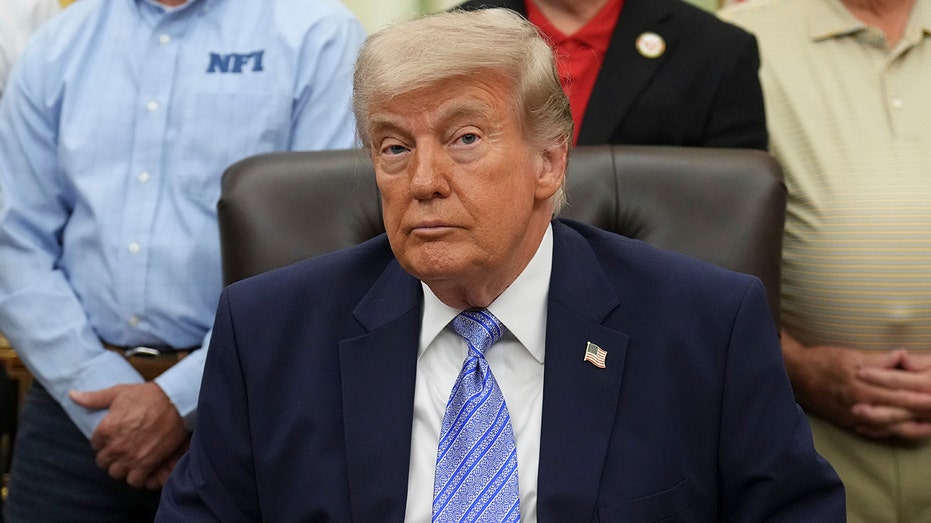

The former President asserts the fund, created from a settlement over his tax returns, will deliver justice for victims of alleged “Biden-era lawfare,” as GOP lawmakers express concern over its timing and impact on legislative priorities.
Former President Donald Trump has strongly defended his administration’s controversial $1.8 billion “anti-weaponization” fund, a move that has ignited a significant rebellion among congressional Republicans. The fund, established by the Department of Justice, is intended to address claims of government overreach and “lawfare” against citizens. Trump asserts this initiative prioritizes justice for those he claims were targeted by the previous administration, even as critics warn it could derail vital legislative efforts, particularly regarding border security.
Origins of the Controversial Fund
The genesis of the “anti-weaponization” fund lies in a substantial settlement reached between former President Trump, his family, and the Internal Revenue Service. This agreement resolved a $10 billion lawsuit filed by Trump against the government concerning the unauthorized leak of his tax returns. Rather than a personal payout, the nearly $1.8 billion sum was directed towards establishing a systematic process for hearing and redressing claims of individuals who believe they have suffered from what the DOJ describes as “weaponization and lawfare.”
On Truth Social, Mr. Trump himself explained his decision, stating he “gave up a lot of money” by allowing the fund to proceed. He elaborated that he “could have settled my case, including the illegal release of my Tax Returns and the equally illegal BREAK IN of Mar-a-Lago, for an absolute fortune.” Instead, he claimed, he chose to help others “who were so badly abused by an evil, corrupt, and weaponized Biden Administration, receive, at long last, JUSTICE!” This perspective frames the fund as a direct response to perceived injustices.
Republican Rebellion and Fiscal Concerns
Despite the former President’s strong defense, the creation of the Trump anti-weaponization fund has sparked considerable alarm within Republican ranks in Congress. Lawmakers have voiced deep concerns that the timing and allocation of these funds could severely undermine critical legislative priorities, most notably the funding for Immigration and Customs Enforcement (ICE) and Border Patrol operations. Many Republicans had anticipated these funds would be directed towards securing the nation’s southern border, a cornerstone of conservative policy.
The immediate impact has been a disruption to the legislative agenda, with some Republicans openly questioning the lack of consultation regarding the fund’s establishment. One Republican lawmaker, speaking to Fox News, remarked, “Well, it would have been nice if they had consulted, and I think they probably would have gotten plenty of advice from lots of folks about it, but it’s water under the bridge now.” This sentiment underscores a growing frustration over what is perceived as a unilateral decision impacting broader party goals.
- Impact on Border Funding: Congressional Republicans had planned to allocate significant resources to ICE and Border Patrol, a move now potentially jeopardized.
- Lack of Consultation: Many lawmakers expressed dismay over not being informed or consulted prior to the fund’s announcement.
- Legislative Disruption: The fund’s creation has complicated efforts to pass essential appropriations bills, creating friction between the executive and legislative branches.
Prioritizing Justice or Legislative Goals?
The central tension revolves around competing priorities: the former President’s desire to deliver “justice” through the anti-weaponization fund versus the Republican Party’s legislative agenda focused on fiscal discipline and border security. While Mr. Trump frames the fund as a moral imperative, many in his party see it as a misstep that diverts crucial resources and political capital.
The debate highlights the complexities of governing and the delicate balance between executive action and congressional oversight. For many conservatives, robust border enforcement remains a top-tier issue, and any measure perceived as undermining it is met with skepticism. The DOJ fund, irrespective of its stated purpose, is now at the heart of an internal party struggle over resource allocation and strategic direction.
“I gave up a lot of money in allowing the just announced Anti-Weaponization Fund to go forward… Instead, I am helping others who were so badly abused by an evil, corrupt, and weaponized Biden Administration, receive, at long last, JUSTICE!”
— Former President Donald Trump
As the political fallout continues, the administration faces the challenge of reconciling its commitment to addressing alleged “lawfare” with the pressing demands of its legislative allies. The controversy surrounding the Trump anti-weaponization fund serves as a stark reminder of the intricate interplay between executive authority, congressional priorities, and the broader conservative agenda. Moving forward, observers will keenly watch how this internal dynamic influences future policy decisions and the unity of the Republican Party.






