Matox News

Truth Over Trends, always!

Lenovo’s Bold New Gear: Laptop with Built-In Portable Screen Sparks Buzz Among Young Tech Fans

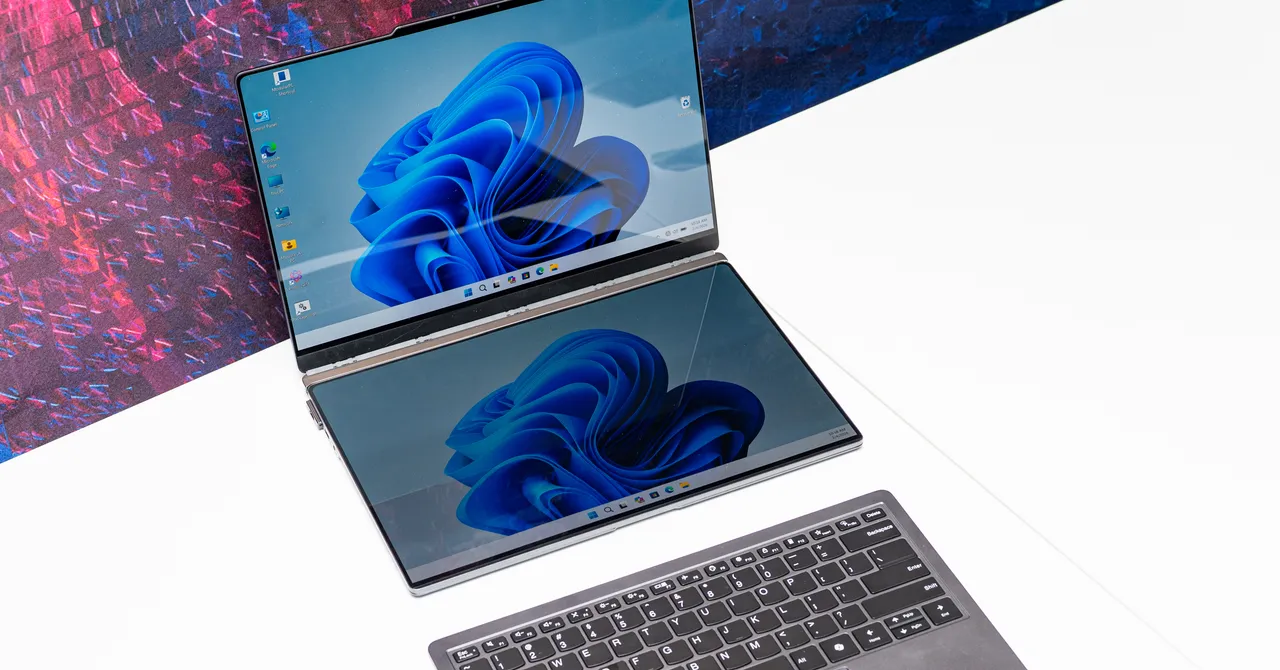
Lenovo Unveils Innovative Yoga Book Pro 3D Concept: A Game-Changer in Creative Technology

In a bold move that exemplifies the ongoing drive toward immersive and tactile digital experiences, Lenovo has introduced the Yoga Book Pro 3D Concept—a revolutionary device aimed squarely at creative professionals and developers. Powered by the formidable Intel Core Ultra 7 processor and equipped with Nvidia’s GeForce RTX 5070, this concept reimagines the boundaries between digital and physical, blending cutting-edge hardware with innovative software to facilitate a new era of 3D asset creation. While still in the prototype stage, its disruptive potential signals a significant pivot in the industry, especially as it aims to serve creators rather than traditional gamers or consumers.

Disruptive Hardware and User Interface Innovations

The Yoga Book Pro 3D departs sharply from conventional portable devices. It features dual 16-inch OLED displays called Lenovo PureSight Pro Tandem, which connect to form a seamless, flexible workspace—effectively replacing the traditional keyboard with a touch-enabled, customizable surface. This approach not only enhances workspace ergonomics but also pushes forward the concept of a truly mobile creative workstation. The device employs Lenovo’s proprietary AI software to support 2D to 3D conversion on demand, allowing users to manipulate digital assets effortlessly. The integration of a built-in RGB camera enables gesture-based control, allowing users to interact with 3D objects through natural hand movements, eliminating the need for a mouse or stylus—an innovation that could redefine creative workflows.

Perhaps the most groundbreaking feature is the set of magnetic snap-on pads that users can attach to the lower touchscreen. These physical accessories serve as tangible triggers for digital shortcuts, such as opening a color palette or adjusting lighting in real-time, providing a hybrid tactile-digital interface. This fusion of physical and digital interfaces aligns with the evolving expectations of a new wave of digital creators seeking immersive, intuitive tools. By bringing tactile feedback into the fold, Lenovo’s design hints at a future where user interfaces become more responsive and naturally integrated into creative processes.

Business Implications and Industry Disruption

This conceptual device signals a potential industry shift—particularly in how creative tools are designed and commercialized. If Lenovo moves beyond concept into mass production, it will introduce a fresh competitive dynamic within tech giants such as Apple, Microsoft, and Samsung, who have pursued similar 3D and AR/VR innovations. The integration of high-performance hardware with novel form factors can disrupt established workflows and challenge traditional notions of portability and interface design.

  • Market potential: A niche yet expanding segment of digital artists, designers, and AR/VR developers eager for more tactile, portable solutions.
  • Innovation driver: Accelerating the adoption of hybrid hardware/software interfaces to make 3D content creation more intuitive.
  • Industry impact: Potentially catalyzing new hardware ecosystems centered around physical-digital interaction modes—setting a standard for next-gen professional devices.

As Elon Musk and Peter Thiel have warned about the importance of disruption and technological frontier-pushing, Lenovo’s Yoga Book Pro 3D serves as a compelling glimpse into the future of tech. If this device or its derivatives become widely available, it could accelerate the shift toward more immersive, user-centered design paradigms—a transformation that promises to reshape not only creative industries but the broader landscape of human-computer interaction. For forward-looking investors, developers, and innovators, understanding and engaging with these breakthroughs now will be crucial to maintaining a competitive edge in the rapidly evolving tech frontier.
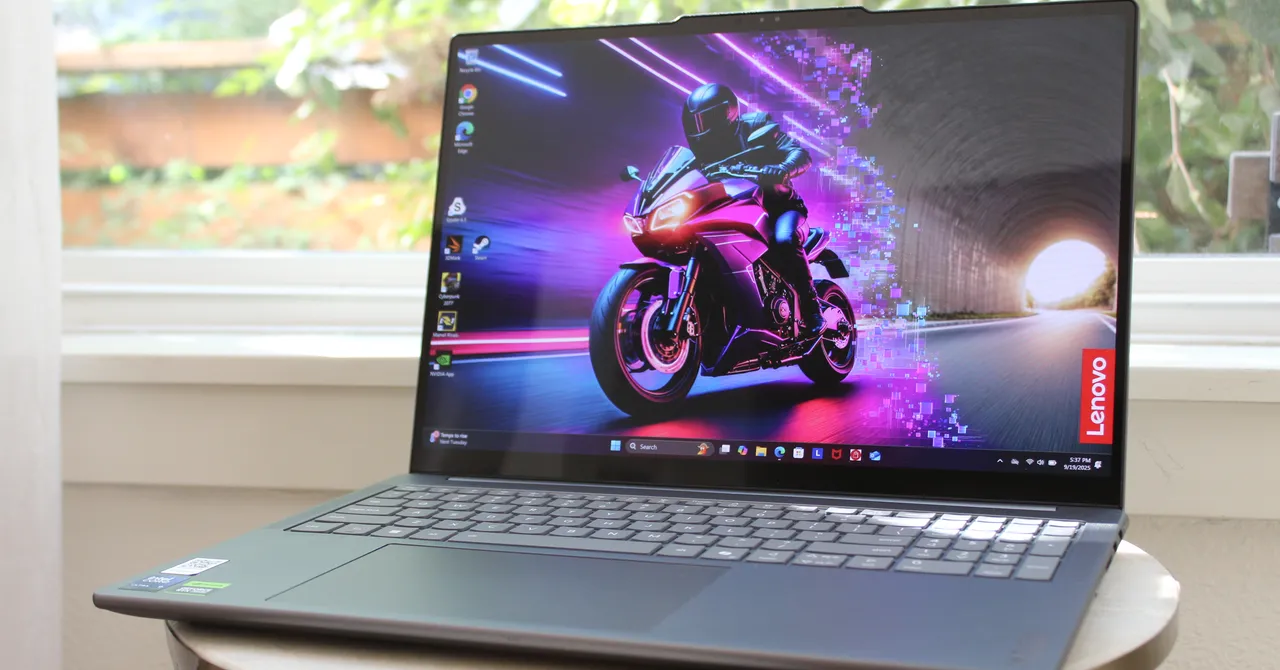
Lenovo Yoga Pro 9i 16 Review: Can It Take on the MacBook Pro?

Disruption in the Laptop Market: The Lenovo Yoga Pro 9i 16 Challenges Apple with Windows Powerhouse

The competitive landscape of high-performance laptops is witnessing a fascinating shift, driven by innovation and a push for disruption within a traditionally Apple-dominated arena. The recent rollout of the Lenovo Yoga Pro 9i 16 signals a pivotal moment, showcasing how Windows-fueled systems are vying to match — and potentially surpass — Apple’s standards in performance, display, and usability. While Apple’s MacBook Pro remains the gold standard for efficiency and battery life, Windows contenders are aggressively closing the gap, especially in the realm of content creation and mobile productivity.

Despite boasting impressive specifications and a premium design, the Yoga Pro 9i 16 highlights ongoing challenges for Windows systems—chiefly, balancing raw power with efficient battery management. With an 84-watt-hour battery, the device manages approximately 12 hours of local video playback, which is competitive but still falls short of the ~25 hours of battery life delivered by Apple’s M4 Max MacBook Pro. Under heavy workload—such as benchmarking—the Yoga’s power endurance diminishes rapidly, dying in just 45 minutes, signaling a persistent Achilles’ heel for discrete GPU-heavy systems. Consequently, the industry’s trajectory increasingly favors ARM-based architectures, encouraging innovation that prioritizes integrated, intelligent graphics solutions over traditional discrete GPU setups.

The market’s pivot toward ARM-based processors is gaining momentum, with AMD’s Ryzen AI Max+ emerging as one of the few challengers capable of disrupting the dominance of Apple’s M-series silicon. The Asus ROG Flow Z13 with integrated graphics exemplifies this shift, demonstrating that integrated graphics performance can challenge discrete GPUs—a crucial enterprise for future-proofing portable workstations. However, industry experts such as Gartner analyst Mia Lane underscore that “we are on the cusp of a generational leap, but the ecosystem as a whole must adapt to fully leverage ARM’s potential in high-performance computing.” Until then, discrete GPU reliance remains a bottleneck, limiting battery efficiency and mobility for high-end Windows machines.

In contrast, premium Windows options like the Asus ProArt P16 with options up to RTX 5090 demonstrate the potential for disruption at the high end—featuring up to 4K OLED screens and cutting-edge GPUs. Yet, such configurations come with prohibitive costs, positioning them as niche products. The Yoga Pro 9i 16, by comparison, offers a compelling value proposition—delivering top-tier performance, design elegance, and mobility at a fraction of the cost. This strategic pricing could accelerate widespread adoption, challenging entrenched perceptions of Windows as primarily a productivity platform rather than a serious alternative to MacBook Pro for high-end creators.

Looking ahead, the ongoing disruption in portable computing technology shows no signs of slowing. Industry leaders such as Elon Musk and Peter Thiel have long warned of the accelerated race toward innovation driven by AI integration, advanced graphics, and energy-efficient architectures. The market is now witnessing a critical inflection point—where hardware efficiency and power are no longer mutually exclusive. Moving forward, business executives and investors must recognize that the race for high-performance laptops—equipped with integrated, AI-enhanced graphics solutions—will redefine industry standards within the next few years. As ARM-based designs become more refined and GPU technology continues to evolve, companies that fail to innovate swiftly risk falling behind in this high-stakes competition for the future of mobile computing—which is, increasingly, the battleground for technological supremacy.

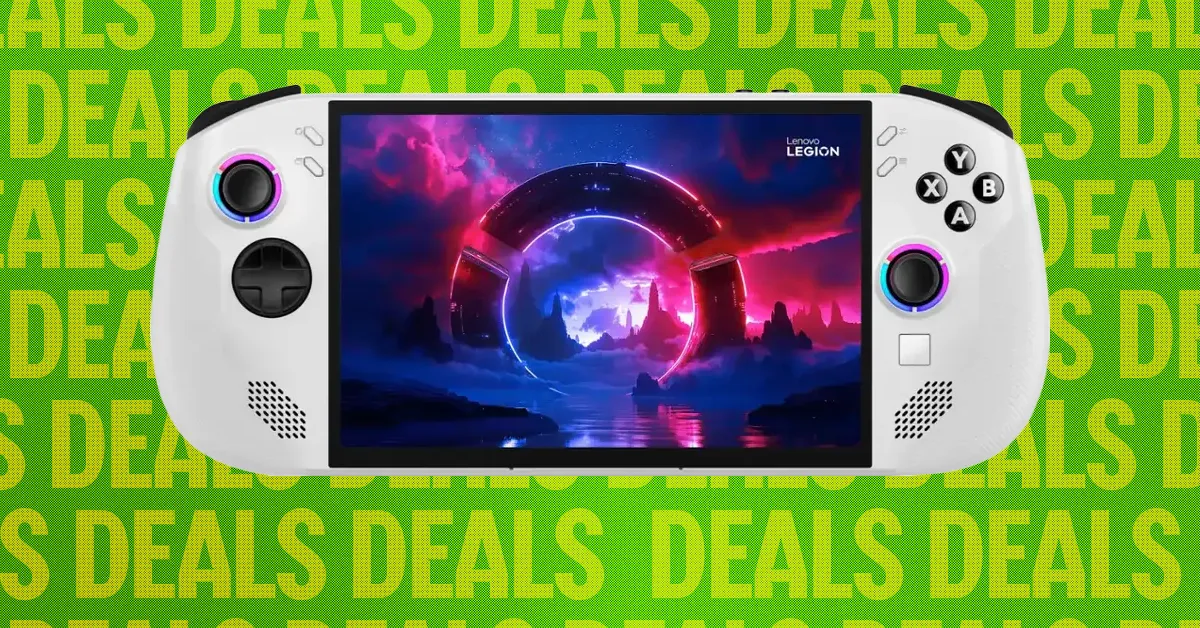
Lenovo Go S Slashed by $120 – Grab It While You Can!

With the rapid evolution of portable gaming, Lenovo’s latest offering, the Legion Go S (SteamOS), signals a significant disruption in the handheld gaming market. As gaming hardware inches closer to convergence with mainstream computing, the device’s introduction underscores an industry-wide shift towards innovation that marries affordability with powerful functionality. Unlike traditional consoles, this new handheld emphasizes disruption of the status quo, providing gamers with an accessible entry point without sacrificing the performance and experience expected from premium devices. Market analysts, including Gartner and industry insiders like Elon Musk, have long predicted that such hardware will serve as a stepping stone for broader applications—beyond idle entertainment—embedding gaming as a core component of portable computing.

The Legion Go S stands out because of its strategic focus on user experience and accessibility. The device’s pivot to SteamOS, combined with a user-friendly setup process—scanning a QR code to download games—shows a move towards streamlining user onboarding amidst a cluttered market. This approach is a direct challenge to Windows-based gaming handhelds, which often overwhelm users with complexity and setup delays. As industry thought leaders like Peter Thiel speculate, such streamlined, system-optimized hardware could unlock a new wave of consumer adoption. Furthermore, innovation in hardware design—with built-in controller grips, spacious layouts, and a 120Hz refresh rate—demonstrates Lenovo’s focus on enhancing sustained, on-the-go gaming. While it remains bulky, this ergonomic design addresses core user needs for comfort and control, carving a niche between bulky portable consoles and slim smartphones.

From a business perspective, Lenovo’s move represents a calculated disruption poised to impact industry giants like Nintendo and Sony. The device’s $900 price point, marked down temporarily by $120, positions it as a disruptive alternative for younger audiences seeking budget-friendly gaming options. The device’s versatility also hints at broader applications—potentially transforming into a gateway for casual computing and streaming services. As the industry accelerates towards disruption-driven innovation, the implications are clear: companies that embrace streamlined, software-optimized hardware and create intuitive ecosystems will dominate the next decade. The gaming industry might soon see a shift where hardware is less about raw specs and more about seamlessly integrating into our digital lifestyles, a concept that giants like MIT’s Media Lab are exploring through developments in edge computing and AI.

Looking ahead, the future of handheld gaming hinges on timing, innovation, and ecosystem integration. As more companies follow Lenovo’s lead, the market will likely demand devices that push the boundaries of user control and adaptability—especially with rising interest in cloud gaming and AI-powered features. Industry leaders like Elon Musk emphasize the importance of disrupting entrenched paradigms to foster new ecosystems. The evolution of hardware, combined with advancements in software and 5G connectivity, signals an era where portable gaming will transcend entertainment, becoming a dominant form of ubiquitous digital interaction. For youth and young professionals, the signal is clear: technological innovation will accelerate, challenging old guard companies to innovate or face obsolescence. The next five years are set to define how integrated, disruptive, and accessible gaming and computing truly become—and those who act fast will be the ones leading the charge into the future.

Social Media Auto Publish Powered By : XYZScripts.com



