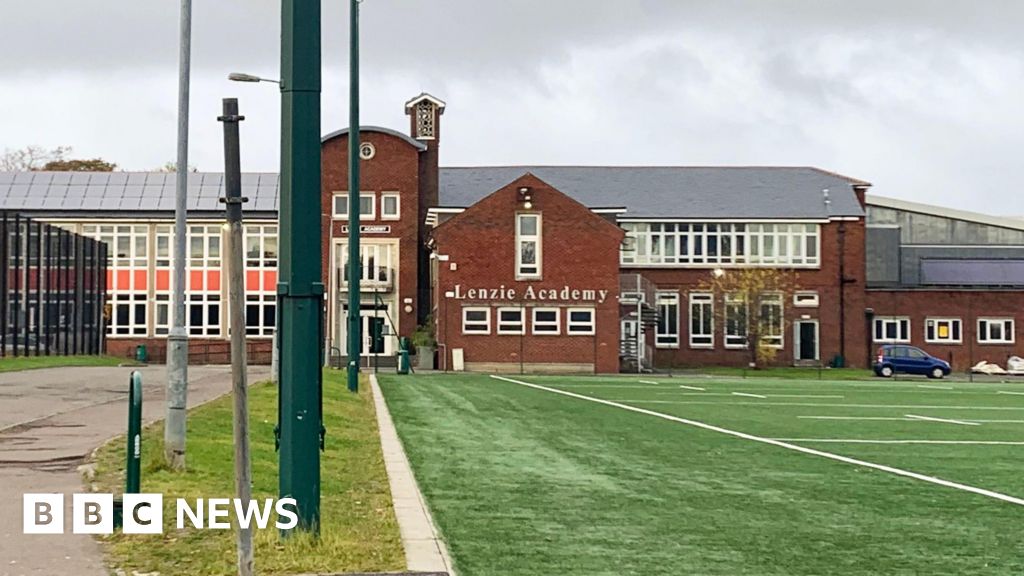

The state of student safety and school infrastructure continues to be a pressing societal concern, especially as recent reports reveal alarming deficiencies within Lenzie Academy, a prominent secondary school serving over 1,300 pupils in East Dunbartonshire. An independent fire risk assessment, conducted by the council’s fire safety team, uncovered a series of dangerous conditions that not only threaten the physical safety of students and staff but also highlight broader issues of underinvestment, neglect, and systemic failure in local education infrastructure. These findings concern the community at large, shedding light on the direct impact social issues have on families, educational equality, and community resilience.
Among the most critical issues identified in the report are fire safety hazards—notably, fire exits that are not immediately operable, fire doors with damaged self-closers, and missing or broken glass panes. Such deficiencies reflect more than technical oversights; they embody a perceived prioritization of administrative neglect that jeopardizes lives during emergencies. The report’s 25 recommendations, including upgrading fire doors to ensure at least 30 minutes of fire resistance and properly storing combustible materials, underscore the urgency with which these risks need to be addressed. Sociologists like Dr. Lisa Miller argue that inadequate safety measures in schools directly undermine the moral fabric of our society by signaling a disregard for the safety of future generations, eroding trust in our public institutions.
This situation is compounded by the decades of underinvestment and systemic neglect pointed out by parents and teachers alike. A parent, speaking anonymously, accused local authorities of ‘years of neglect and underinvestment,’ emphasizing that Lenzie Academy has been left in a state of disrepair while other schools have received rebuilding efforts. Teachers’ union representatives describe conditions within the school as dangerous and unacceptable, citing not only fire hazards but also water leaks, missing ceiling tiles, and poor building security. This entrenched neglect reveals the societal challenge of ensuring equitable investment in educational infrastructure — a fundamental responsibility that affects families’ access to safe, quality education and the community’s sense of social cohesion.
While officials from East Dunbartonshire Council assert that safety remains a priority and that immediate remedial actions are underway, critics contend that these measures are merely reactive rather than systemic. The challenge remains: how can local governments foster a culture of proactive maintenance and accountability when budget constraints and bureaucratic inertia hinder progress? Social commentators warn that such neglect fosters distrust and disengagement among youth, threatening societal cohesion over time. However, there remains hope. By prioritizing community involvement, transparent accountability, and targeted funding, it is possible to turn these failing infrastructures into symbols of resilience and hope. As the social fabric is woven through each brick and beam we invest in, society’s true strength will be measured in how we repair what is broken and nurture what is fragile. Society’s challenge—and its potential—is etched into the walls of Lenzie Academy; the question now is whether we will choose to rebuild with purpose, ensuring that no child’s safety is compromised in the pursuit of austerity.