Matox News

Truth Over Trends, always!

Skydiver loses life after tragic free fall—without a parachute

International Spotlight on Skydiving Safety as Tragic Incident Unfolds in Nashville

The recent fatal skydiving incident in Nashville, Tennessee, has ignited a global debate on the safety standards of extreme sports and the geopolitical implications of regulatory oversight. The incident, involving experienced skydiver Justin Fuller, underscores the risks faced by adrenaline enthusiasts worldwide, but it also highlights how national safety protocols can influence international perceptions and regulatory cooperation. As investigations unfold, analysts warn that such tragedies could prompt a reevaluation of safety standards across borders, potentially impacting the international skydiving industry.

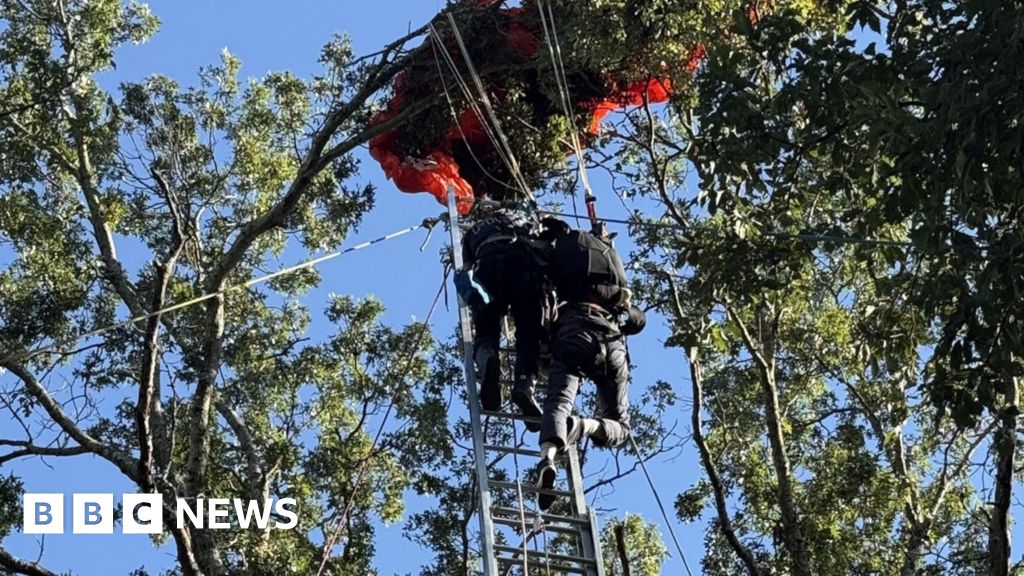
The Federal Aviation Administration (FAA) has launched a comprehensive investigation into Fuller’s death, which authorities suspect resulted from a sudden separation from his client’s parachute during a tandem jump. Police reports confirm that Fuller, 35, appeared to have become disconnected from his parachuting rig, leading to his presumed fall from the sky, while his 46-year-old client survived by emergency parachute and was rescued hours later by Nashville Fire Department. This incident raises critical questions on international safety protocols and whether the current standards are sufficient to prevent such tragedies, especially for seasoned professionals like Fuller who dedicated their lives to teaching and advancing their sport.

From a geopolitical perspective, incidents like this resonate beyond local borders, affecting broader international discourse on regulatory harmonization. Historians and safety analysts argue that the globalization of extreme sports necessitates cohesive safety standards and transparent oversight, especially as international tourism and sports competitions grow. Notably, the skydiving community has seen increasing incidents worldwide, prompting calls for stricter international accreditation systems. Such evolutions could lead to potential treaties or agreements aimed at elevating safety benchmarks, yet they also risk complicating the industry’s competitive landscape.

  • The incident occurs amid rising scrutiny of safety practices following recent high-profile accidents in various countries.
  • Aviation and sporting authorities worldwide have debated the efficacy of current safety standards, with some advocating for stricter regulations modeled after FAA protocols.
  • International organizations, including the International Air Sports Federation, are under pressure to reinforce safety reforms, which could reshape industry norms.

As the world watches, the aftermath of this tragedy could serve as a catalyst for sweeping reforms that redefine international norms of adventure sports safety. While Nashville mourns its latest loss, the global community is reminded that the pursuit of thrill comes with profound responsibility — one that intertwines the fate of societies, the integrity of regulations, and the relentless march of history. The question remains: how many more must fall before the world collectively elevates the standards that safeguard human daring in the face of nature’s fury? In this unfolding story, the margins between safety and catastrophe are razor-thin, and the weight of history continues to press upon the present, demanding action before another life is lost to the skies.

Alaskan climbing sensation Balin Miller tragically loses his life after fall from Yosemite’s iconic El Capitan

In a world captivated by the thrill of extreme sports and outdoor adventure, the recent tragedy involving Alaskan climber Balin Miller has sent shockwaves through the global climbing community. Miller, just 23, lost his life after falling from the iconic El Capitan—a towering monolith in Yosemite National Park. Known for his daring solo ascents, Miller had built a reputation as one of the rising stars of alpinism, inspiring many young climbers with achievements such as the first solo ascent of Mount McKinley’s Slovak Direct. His death highlights the raw dangers inherent in the pursuit of adventure and how personal dedication to mastering the mountains can turn into a lethal risk when safety protocols are overlooked or unforeseen accidents occur.

Miller’s story is not merely one of tragedy; it serves as a stark reminder of the fine line between heroism and hazard. Climbing experts like veteran alpinist Clint Helander have recognized Miller’s impressive accomplishments, pointing out that in just six months, he had unleashed some of the most remarkable exploits the sport has seen. His determination and skill culminated in efforts that gained international acclaim—an inspiration to aspiring climbers looking to push their limits while respecting the mountain’s formidable power. Still, Miller’s death underscores an essential truth: every upward step in the mountains is shadowed by inherent risk. His passing, during an activity that blends physical mastery with mental resilience, challenges us all to balance the desire for thrill with unwavering respect for nature’s unpredictability.

Amid this atmosphere of reflection and respect, it is vital to recognize how the shift in outdoor lifestyle—driven by the quest for health, wellness, and adventure—continues to grow. In recent years, more young people have been inspired to embrace a lifestyle that emphasizes personal achievement and resilience, often turning to activities like climbing, hiking, and outdoor exploration as a form of wellness. However, the recent incident also prompts a deeper conversation about safety, preparation, and respecting limits. Experts such as author and wellness advocate Mark Sisson emphasize that true strength in outdoor pursuits lies in understanding one’s boundaries and ensuring proper training and gear. For young adventurers, the message is clear: ambition should be paired with prudence, transforming the adrenaline of discovery into a responsible pursuit that endures.

Ultimately, the story of Balin Miller leaves us contemplating the profound journey of embracing life’s challenges. It reminds us that true fulfillment in the pursuit of adventure is intertwined with respect—for ourselves, our craft, and the majestic, often unpredictable forces of nature. While the heights of mountains like El Capitan beckon with promises of achievement and inspiration, they also demand our humility and vigilance. As we listen to the echoes of Miller’s daring spirit, we are called to recognize that the pursuit of greatness is a continuous journey—a quest to find harmony between daring to dream and the wisdom to keep ourselves safe. In this balance, we discover not just the thrill of ascent, but the strength to face life’s own steep, uncharted cliffs.

Ukrainian Youth Stand Firm: Embrace Life Despite Russian Bombings

Sloviansk’s Enduring Spirit and the Geopolitical Struggle in Eastern Ukraine

In the heart of Ukraine’s tumultuous eastern frontline, the city of Sloviansk stands as both a symbol of resilience and a testament to the relentless consequences of Russian imperial ambitions. This city, once a quiet hub of salt production dating back to the 17th century, has been transformed into a frontline battleground where everyday life persists amid ongoing conflict. Despite the visible scars inflicted by near-daily bombardments, residents, including pensioners and soldiers, continue to demonstrate an unwavering determination to live despite the threat of Russian drones, airdropped bombs, and political intimidation. This defiance, observed through stories shared by local officials and residents, highlights an indomitable spirit that geopoliticians and analysts around the world watch closely.

The escalating military and humanitarian crisis in Sloviansk reveals the broader geopolitical impact of Russia’s relentless effort to reclaim Ukraine’s eastern territories. Since 2014, when Vladimir Putin’s forces first occupied parts of the Donbas region, the city has endured a series of occupations, battles, and destruction. Recent attacks by kamikaze drones, reaching as close as two kilometers outside the city, have demonstrated that the Kremlin’s array of tactics remains aggressive and unrelenting. Ukrainian officials, including Mayor Vadym Liakh, openly express confidence in the country’s ability to defend Sloviansk, despite fears that Russia’s strategic goal is to encircle and seize this pivotal city. As Ukraine enhances its anti-drone defenses, the Russian military continues to press forward, aiming to secure a strategic corridor that could threaten the entire eastern region and cut off critical supply lines—a move analysts warn would set the stage for further destabilization of Ukrainian sovereignty.

International organizations and military experts closely monitor this ongoing conflict, warning that the stakes extend far beyond the local battlefield. Many analysts argue that if Slovakia and other key cities in the Donbas fall into Russian control, it could pave the way for a quick advance across the flat, open steppes toward Kharkiv and Kyiv. The future of Ukraine’s independence hinges on whether Western aid, including long-range missiles and advanced defense systems, can delay or halt the Kremlin’s march. Meanwhile, Kyiv’s leadership remains defiant, asserting that Moscow’s promises of a ceasefire in exchange for territorial concessions are nothing more than tactical distractions—an insidious voice from the Kremlin’s propaganda machine in Moscow’s bid to demoralize and divide Ukraine’s defenses.

The international community, particularly Western allies, faces mounting pressure to bolster Ukraine’s military capabilities. As U.S. officials contemplate further sanctions and military aid packages, Russian President Vladimir Putin operates under the assumption that time favors him. His previous commitments have proven unreliable, and strategic analysts warn that the Kremlin’s long-term goal remains the destabilization and division of Ukraine—to resurrect a forever-claimed… Russian sphere of influence. The historians warning of this era as a period where decisions made now will shape the geopolitical landscape for generations are increasingly relevant as the conflict drags on, risking wider regional destabilization and Europe’s security architecture.

With each explosion and each act of defiance, Sloviansk’s populace embodies a pivotal chapter in a conflict that will determine the fate of Ukraine and the broader European security order. As the night sky in Sloviansk becomes a dark canvas illuminated only by stars and the distant glow of fires, the city’s story resonates beyond its battered streets. It is a stark reminder of how history is not merely unfolding—it is being forged. And the choices made by leaders and nations today will echo through the corridors of history, leaving the world to ponder: Will this be the beginning of Putin’s regained empire, or will Ukraine’s tenacity seal the fate of the Eastern European future? The answer hangs trembling on the horizon, yet the weight of that future is already beginning to settle upon the shoulders of all committed to the cause of sovereignty and freedom worldwide.

Social Media Auto Publish Powered By : XYZScripts.com